

The first question most new patients ask when they call our Lakewood Ranch office is not about the treatment. It is: "Do you take my insurance?" That is a reasonable starting point. But it is not the whole question. The follow-up questions that actually determine what you pay are: What is my deductible? Does chiropractic count toward it? Is this clinic in-network? What services are actually covered?
If you have not asked those questions yet, this post will help you do it. We will walk through how chiropractic insurance coverage typically works, when a cash-pay arrangement ends up costing less than your supposed "covered" benefits, and what a first visit at our clinic looks like regardless of how you pay.
Nothing here is legal or financial advice. Insurance plans vary enormously by carrier, employer, state, and plan year. Always verify the specific details of your plan before assuming anything.
How Chiropractic Insurance Coverage Actually Works
Health insurance for chiropractic care is not as simple as "covered or not covered." Most plans that include chiropractic benefits layer several cost controls on top of each other, and each layer reduces what the insurer actually pays.
The deductible layer
Your deductible is the amount you pay in full before your insurance starts contributing anything. If your deductible is $2,000 and you have not had other medical expenses this year, you are paying the first $2,000 of chiropractic care yourself, at the insurer's "negotiated rate" (more on that below). This catches a lot of people off guard in January and February, when deductibles reset.
The copay and coinsurance layer
Once your deductible is met, you still typically owe a copay (a flat amount per visit, commonly $30 to $60) or coinsurance (a percentage of the allowed amount, often 20%). At $50 per visit with an already-met deductible, a 12-visit course of care costs you $600 in copays alone. With 20% coinsurance on an $80 allowed amount, you are paying $16 per visit but that math only holds once the deductible is behind you.
The visit limit layer
Many plans cap chiropractic at 10 to 20 visits per calendar year, combined across all chiropractic, physical therapy, and sometimes acupuncture. If your condition requires more than the allotted visits, everything after that limit is out-of-pocket anyway, regardless of what you have paid in premiums.
The in-network requirement
If your plan is an HMO or a narrow-network PPO, going out of network may mean the insurer pays nothing. Or it pays at a much lower rate (say, 50% after a separate, higher out-of-network deductible). Choosing a clinic that is out of your network can make the "covered" benefit effectively worthless.
What Services Chiropractic Insurance Typically Covers (and What It Does Not)
Even when chiropractic is "covered," most plans cover a narrow slice of what a modern chiropractic and wellness clinic actually offers. The standard covered service is a spinal manipulation (the adjustment itself). Extended exam time, functional reassessment, and condition-specific counseling may or may not be included depending on how they are coded.
More importantly, many of the most effective tools in a multimodality practice are excluded entirely from standard insurance plans:
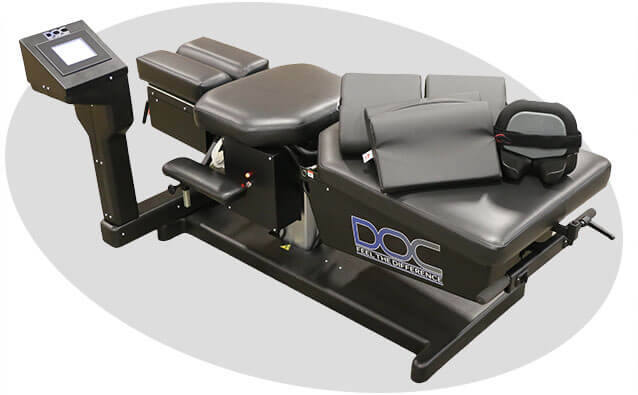
- Spinal decompression therapy is not covered by most commercial carriers because it is classified as a non-covered or investigational service, even though the research base for disc-related conditions is well-established.
- Class IV laser therapy is excluded by the majority of plans under "physical modalities not covered."
- Hyperbaric oxygen therapy (HBOT) for musculoskeletal and neuropathy applications is not covered outside a narrow set of wound-care and decompression illness diagnoses.
- Shockwave and Softwave therapy are generally not covered.
- Whole-body vibration is not covered.
- Electrical muscle stimulation (EMS) is sometimes covered when administered by a physician, but coverage varies widely.
If your treatment plan is likely to include any of these modalities, the insurance question becomes less relevant. You will be paying for those services directly no matter which route you take for the adjustment itself.
The most common scenario we see: a patient uses insurance for the adjustment portion of their care, which reduces their copay per visit. But the portion of their program that is actually moving the needle (decompression, laser, HBOT) comes entirely out of pocket. Running the numbers first saves a lot of confusion later.
What Cash Pay Looks Like at a Chiropractic Clinic
Cash pay (also called self-pay or direct pay) means you pay the clinic directly without involving an insurer. No claims, no pre-authorizations, no explanation-of-benefits letters, no fighting over what the carrier considers "reasonable and necessary."
At most clinics, cash-pay rates are either posted as a flat per-visit fee or structured as a package or care plan with a discounted rate per visit. The rate you pay is typically the clinic's discounted self-pay rate, which is often meaningfully lower than the "billed charge" that insurance companies start from in their negotiation.
Cash pay has a few structural advantages worth knowing about:
- No visit limits. If your condition requires 30 visits over six months, no insurer cuts you off at visit 20.
- No pre-authorization delays. You schedule, you come in, care starts.
- Access to the full menu of services without worrying which are covered on any given date of service.
- Pricing transparency. You know before you start what each visit costs. There is no "you owe $14, wait, actually you owe $187 because of how the deductible applied" surprise bill three months later.
- Freedom to choose the clinic that is the best fit for your condition, not just the clinic that happens to be in your plan's network.
Three Situations Where Cash Pay Often Costs Less Than Insurance
This surprises many patients. Here are the scenarios where cash pay comes out ahead, or at least equal, after you do the full accounting:
1. Your deductible is high and not yet met
If you have a $3,000 deductible and it is March, you are paying cash anyway until you clear that deductible. The only difference is whether you are paying the carrier's negotiated rate or the clinic's self-pay rate. Depending on the clinic and the plan, self-pay rates can be comparable to or lower than the insurer's negotiated rate. The administrative friction of filing claims on every visit just to apply them to a deductible you may not clear by year end often adds no value.
2. Your clinic is out of network for your plan
Out-of-network benefits, when they exist, often come with a separate higher deductible and a lower reimbursement percentage. It is not unusual for the math to work out to nearly the same out-of-pocket cost as self-pay, but with more paperwork and a multi-month wait for reimbursement.
3. Your care plan includes services insurance does not cover
If your treatment is likely to include spinal decompression, laser, or HBOT alongside adjustments, the portion of your care that insurance touches may be small. Some patients find it simpler to pay a flat per-visit rate that covers the full session rather than splitting the bill into a covered adjustment and a stack of non-covered line items billed separately.
When Using Your Insurance Is Worth It
Insurance is not a bad option. It can genuinely reduce your out-of-pocket cost in the right circumstances:
- Your deductible is already met. If you have had other medical expenses this year and your deductible is behind you, chiropractic copays of $30 to $50 can be significantly lower than self-pay rates. This is usually the clearest win for insurance.
- The clinic is firmly in-network. Confirm this directly with both the clinic and your insurer. "We accept most insurances" is not the same as "we are in-network for your specific plan and product type."
- Your plan has a low visit limit that matches your expected treatment length. If your condition is likely to resolve in 8 to 10 visits and your plan covers 20, you may come out well ahead.
- Your care does not depend heavily on non-covered services. If your primary intervention is chiropractic adjustments and nothing else, insurance coverage for adjustments can meaningfully lower your bill.
Questions Worth Asking Before You Book
Whether you intend to use insurance or pay directly, these questions will clarify the actual cost before you commit to a care plan:
- Is this clinic in-network for my specific plan product? (Not just the carrier; in-network status varies by HMO, PPO, HDHP, Marketplace plan, employer plan, and Medicare Advantage plan even under the same insurer.)
- What is my chiropractic benefit, and is it a separate benefit or does it share my medical deductible?
- What is my copay or coinsurance for chiropractic visits after my deductible is met?
- How many chiropractic visits does my plan cover per year, and have any been used?
- Which specific services at this clinic are covered under my plan, and which are billed separately?
- What is the clinic's self-pay rate, and does it offer a package or care plan rate?
Calling your insurer's member services line and calling the clinic's billing team with these questions before your first visit will give you a clear picture. It takes 20 minutes and it eliminates most billing surprises.
What We Do at Spine and Wellness Center Lakewood Ranch
Our clinic accepts a range of major insurance plans and also offers straightforward self-pay options. Regardless of how you pay, every patient sees Dr. Banman directly. There is no junior staff substitution, no high-volume turnstile model. A new patient exam includes a full history, a functional assessment relevant to your complaint, and a clear explanation of what is driving your pain before any treatment decision is made.
For conditions that are likely to require a multimodality approach, we explain upfront which services fall under insurance coverage and which do not, so you can make an informed decision about your care plan before you start. We do not believe in discovering the financial picture partway through a program.
Patients who want to understand their options in full before booking can review our new patient information page or call us directly. We are happy to answer billing questions before you come in.
For those coming in after an auto accident, a separate path applies: Florida PIP covers up to $10,000 in injury care regardless of your standard health plan. See our auto-injury care page for more on how that process works.
The short version: there is no single right answer between cash pay and insurance. The right answer depends on your specific plan, your deductible timing, the services your condition needs, and whether our clinic participates in your network. Run the numbers specific to your situation before assuming one path is better than the other.