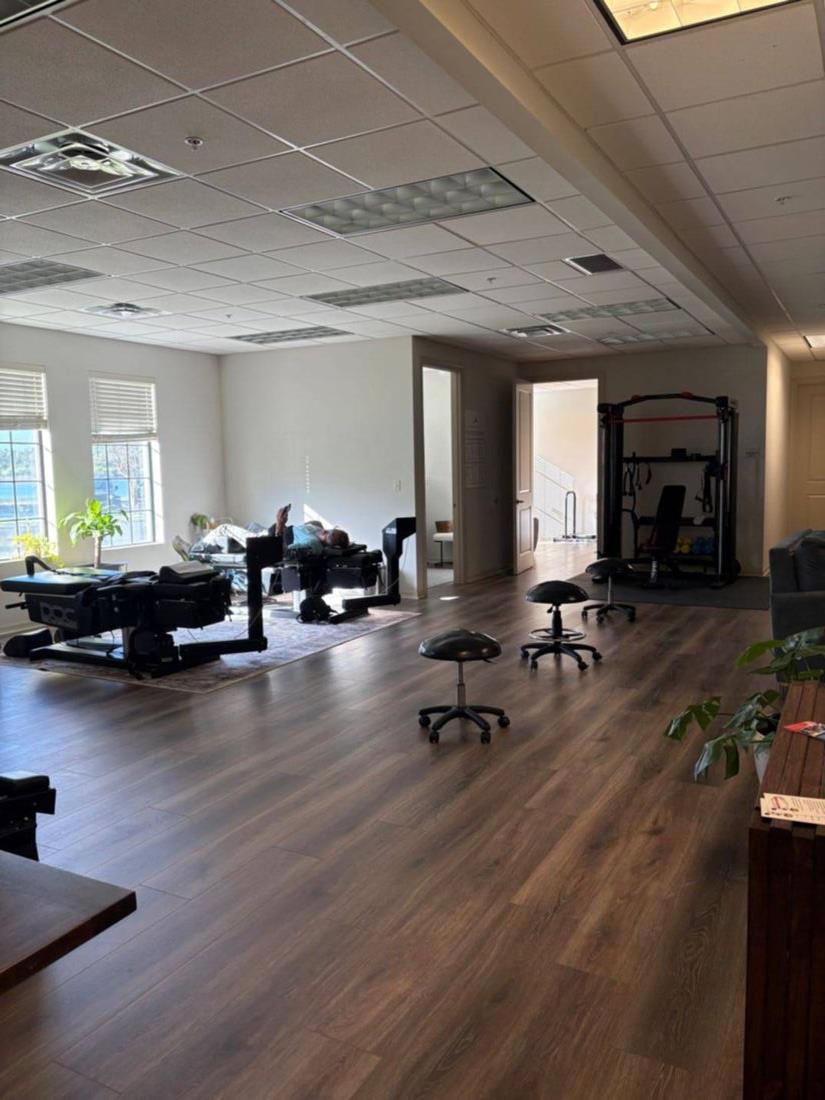


If you have been in a car accident in Florida, your auto insurance covers your injury treatment, regardless of who caused the crash. That coverage is called Personal Injury Protection (PIP), and it is required by law on every Florida auto policy. But most patients we see in our Lakewood Ranch office have no idea how PIP actually works, and the misunderstandings cost them treatment time, treatment quality, or both.
Here are 5 things almost every Florida driver should know about PIP before (or right after) an accident.
1. You have only 14 days to seek medical care
This is the single most important rule in Florida PIP. Florida Statute 627.736 requires that you receive initial medical care within 14 days of the accident. Miss that window and your PIP coverage is reduced to ZERO. Not reduced. Zero.
That is true even if you were genuinely hurt. Even if your symptoms got worse over time. Even if you "wanted to see if it would heal on its own first." Insurance companies use the 14-day rule aggressively to deny claims that would have been valid 24 hours earlier.
What counts as "initial care"? An exam by a licensed provider (physician, chiropractor, dentist for facial injuries, or hospital). The exam can find that you are fine. What matters is that you got it on record within 14 days. Without that visit, the coverage is gone.
If you are unsure whether you are hurt: see a provider anyway. The exam is covered under your PIP benefits, and it preserves the option to use the coverage later if symptoms develop. Whiplash and disc injuries from rear-end collisions often do not present until 48 to 72 hours after the crash.
2. PIP covers $10,000 (sometimes $2,500)
Florida PIP medical benefits go up to $10,000, BUT only if a qualifying provider determines that you had an "emergency medical condition" (EMC). This is a clinical term that essentially means: there is a real injury here that without treatment could result in serious dysfunction.
Without an EMC determination, your PIP medical benefits are limited to $2,500. That distinction matters enormously when you are looking at a multi-modality recovery program for a serious injury.
Under Florida Statute 627.736, the EMC determination can be made by a medical doctor (M.D.), osteopathic physician (D.O.), dentist, physician assistant, or advanced practice registered nurse. Chiropractors are not on that list, so a chiropractor cannot make this determination.
3. PIP pays 80% of "reasonable and necessary" medical bills
PIP does not pay 100%. It pays 80% of reasonable medical expenses. The remaining 20%, plus any deductible, depends on your policy and any other coverage you carry.
"Reasonable and necessary" is the magic phrase. The insurer can dispute charges they think exceed reasonable amounts or are not necessary for the documented injury. This is where billing knowledge matters. We use ClaimMD as our clearinghouse and handle the documentation so claims are not denied for sloppy paperwork.
4. Your insurance, not the other driver's, is what pays
This catches a lot of people. Florida is a "no-fault" state, which means YOUR auto insurance pays your initial medical bills, regardless of who caused the accident. The other driver's insurance only comes into play later if you have damages exceeding the PIP cap and meet the threshold for a personal injury lawsuit.
Practical takeaway: do not wait to "find out who is at fault." Do not wait for the police report. Do not wait for the other driver's insurance to call. Get to a provider, file your PIP claim, get treated. The fault question is for lawyers and insurers to sort out separately.
5. You can choose your own provider (and you probably should)
Your PIP carrier may give you a list of "preferred" providers. You are NOT required to use them. Florida law gives you the right to choose your own healthcare provider for PIP-covered treatment.
Why this matters: insurer-preferred providers are often high-volume, low-touch clinics where you are processed through quickly. For a real injury, you want a clinic that can actually deliver multi-modality care: chiropractic adjustments where appropriate, spinal decompression for disc injuries, laser therapy for soft-tissue inflammation, EMS, HBOT for severe cases. Not every clinic offers that range.
At our Lakewood Ranch office, we treat PIP cases under the same standard of care as cash-pay patients. Same exam protocol, same treatment options, same Dr. Banman. For a deeper look at how PIP and chiropractic care fit together, including what happens after the initial exam, see our Florida PIP chiropractor page.
What to do today if you have just been in an accident
- Get evaluated within 14 days. Even if symptoms are mild. Even if you feel fine. The 14-day clock is the only one that matters legally.
- Document everything. Photos of the vehicles, the scene, your visible injuries. Names and contact info of everyone involved. Police report number when issued. Save your medical visit summaries.
- Notify your insurer. Most policies require prompt notice of an accident. Call them; do not just file the PIP claim and assume the rest is handled.
- Choose your provider deliberately. Pick a clinic that has experience with PIP, can do the multi-modality care a real injury needs, and will document your injuries and care clearly.
- Do not sign anything from the other driver's insurance without legal review. Settlement offers in the first 30 days are almost always lower than what your case is worth.
Common Florida PIP situations we see
Rear-end collision, low-speed: Patient feels okay at the scene, drives home, wakes up the next morning with neck stiffness and headache that worsens over a week. Classic whiplash. Get in within 14 days, get a thorough exam, follow a real treatment program. Most cases resolve in 8 to 12 weeks with proper care.
T-bone or side impact: Often involves rotational forces that affect the lumbar spine more than the cervical. Sciatica showing up 2 to 4 weeks post-accident is common. Decompression-based programs work well here.
Pedestrian or cyclist hit by vehicle: If you were on foot or on a bike, your PIP from your own auto policy still covers you in many cases (or if you do not have an auto policy, the at-fault driver's PIP applies). Do not assume you are not covered just because you were not driving.
How we can help
If you are local to Lakewood Ranch, Bradenton, or Sarasota and you have been in a car accident, call us at (727) 213-2982. We have 24-hour response on new auto-injury cases. We handle the PIP documentation, the ClaimMD billing, and the multi-modality treatment under one roof. Our auto-injury patients see Dr. Banman directly; same provider as our cash-pay patients.
For more on the auto-injury treatment process, see our auto and whiplash care page.