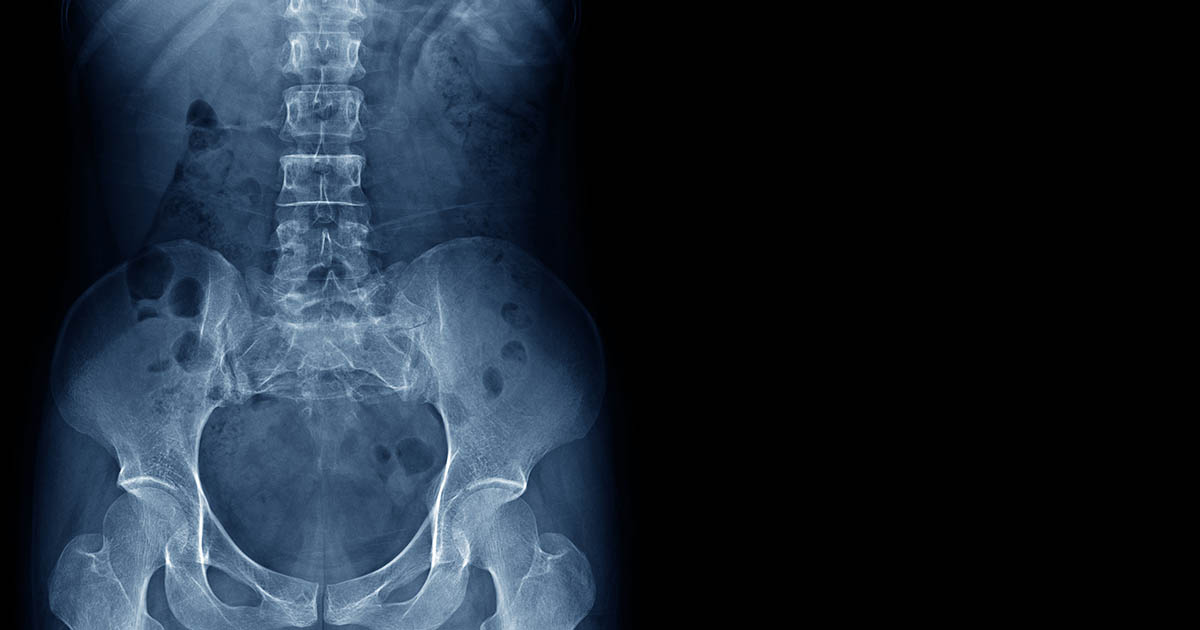


The thoracic spine is the section of your back that runs from the base of your neck to the bottom of your ribcage, roughly the 12 vertebrae between T1 and T12. When patients describe aching, tightness, or sharp pain "between the shoulder blades" or "in the middle of the back," they are almost always pointing at this region.
What makes thoracic pain different from lumbar (lower back) pain is the anatomy. The thoracic spine is built for stability, not mobility. Each thoracic vertebra is attached to a rib on both sides, which creates a rigid cage that protects the heart and lungs but severely limits the spine's ability to flex, extend, and rotate. That structural rigidity is a feature. But it also means the joints and muscles in this region respond very differently to strain, posture problems, and disc injury than the lumbar spine does.
Here is what drives most thoracic pain, how to recognize each pattern, and what actually changes the outcome.
The thoracic spine is not supposed to move much. That is the problem.
The lumbar spine is designed for flexion and extension. The cervical spine is designed for wide rotation and tilt. The thoracic spine is designed to stay relatively still while those other two regions move. This means that when thoracic mobility is reduced further (by desk posture, chest-forward sitting, or months of forward-head slouch), the joints become compressed, the facets become irritated, and the deep muscles running along either side of the spine go into a sustained, low-level contraction that most people call "tightness" or "a knot."
That persistent muscle contraction is the body trying to stabilize a region that feels unstable. It is not the cause. It is the response. Treating the muscle without addressing the joint mobility problem is why many thoracic complaints return within days of a massage or stretching session.
Five structures that drive thoracic pain
Not every mid-back complaint comes from the same place. These are the most common structures involved, in roughly descending order of frequency in a general chiropractic practice.
1. Thoracic facet joints
The facet joints are small paired joints at the back of each vertebral level that guide and limit motion. In the thoracic spine, the facets are oriented at about 60 degrees to the horizontal, allowing some rotation but resisting forward flexion. When these joints are restricted or irritated (often from prolonged forward-bent posture), they produce a dull ache that is usually unilateral or bilateral near the midline, worsens with extension or deep breathing, and is reproduced when you press on the area around the spinous processes.
Facet restriction is probably the most common cause of non-traumatic mid-back pain in adults under 50. It responds well to chiropractic mobilization and manipulation targeted at the restricted segments.
2. Costovertebral joint dysfunction
Each rib attaches to the thoracic spine at two points: where the rib head meets the vertebral body (costovertebral joint) and where the rib neck meets the transverse process (costotransverse joint). These joints can become restricted, inflamed, or acutely "locked" after a sudden twist, a cough that caught you off guard, or hours of unbroken sitting.
The pain from a locked costovertebral joint is often sharp, can be triggered by deep breathing, and sometimes wraps around toward the front of the chest. Many patients who show up in an urgent care thinking they have a cardiac or pulmonary problem turn out to have a mechanical rib-head dysfunction. This is one of the reasons that any chest pain with a breathing component warrants a clinical exam before assuming a musculoskeletal cause.
Any chest pain that radiates down the left arm, is accompanied by sweating or nausea, or does not have a clear positional component should be evaluated by a physician or emergency provider before pursuing manual treatment. Thoracic spine pain and cardiac pain can feel similar. When in doubt, rule out the cardiac cause first.
3. Thoracic disc irritation
Thoracic disc herniations are much less common than lumbar herniations because the ribcage limits the flexion forces that drive disc displacement. But disc irritation, particularly at the lower thoracic levels (T8-T12) where the spine transitions toward the more mobile lumbar region, does occur. Thoracic disc problems often present as a burning or pressure-type pain in the mid-back, sometimes with radiating symptoms around the ribcage that follow the dermatomal distribution of the affected nerve root.
True thoracic disc herniations with neurological signs (leg weakness, changes in bowel or bladder function, bilateral leg symptoms) are relatively rare but serious. If you have mid-back pain along with any leg neurological symptoms, that warrants prompt imaging rather than a watchful waiting approach.
4. Thoracic muscle imbalance and postural strain
The muscles of the mid-back, particularly the rhomboids, middle and lower trapezius, and erector spinae, are responsible for holding the thoracic spine in extension while you sit, stand, or look at a screen. Over time, especially in people who sit 6 to 10 hours per day with a rounded upper back, these muscles become lengthened and weak. The pectorals and anterior shoulder muscles shorten and tighten, pulling the thoracic spine into a kyphotic curve.
The result is a thoracic spine that is chronically flexed, the facets are loaded asymmetrically, the costovertebral joints are compressed anteriorly, and the extensor muscles are firing continuously to try to fight the forward pull. This is the most common postural driver of thoracic pain in the 30-to-60 age group, and it is entirely addressable with a combination of chiropractic mobilization, targeted strengthening, and corrective movement patterns.
Learn more about how posture affects the spine over time in our article on tech neck and forward head posture.
5. Referred pain from the cervical spine
The lower cervical segments (C5-C7) refer pain into the upper thoracic region and interscapular area. A patient who reports mid-back pain between the shoulder blades may have a cervical disc problem rather than a thoracic one. This pattern is common enough that in our Lakewood Ranch clinic, any mid-back evaluation includes a cervical screen.
Clues that suggest cervical referral rather than primary thoracic pathology: the pain is worse when you turn your head or tilt it laterally, there is associated neck stiffness, symptoms change when you change head position, and the interscapular pain is more diffuse rather than pinpoint. If you have a neck pain or headache component alongside the mid-back complaint, the two are often connected.
What makes thoracic pain worse: the posture feedback loop
Thoracic pain has a self-reinforcing quality that makes it frustrating to manage without addressing root causes. Here is the typical progression:
- Forward-bent posture (screen work, phone use, driving) compresses the anterior thoracic structures and creates facet loading posteriorly.
- The deep spinal muscles contract to limit range of motion, which people feel as "tightness."
- Because movement is painful, the person moves less through that segment of the spine.
- Reduced movement further decreases joint mobility, increases joint sensitivity, and perpetuates the protective muscle contraction.
- Pain perception increases because sensitized joints and muscles now fire from smaller stimuli.
This feedback loop means that the thoracic spine can become meaningfully more restricted and symptomatic over a period of months without any single traumatic event. By the time a patient walks into our office saying "my mid-back has been bothering me for a year," the mobility deficit is often significant and the muscles are functioning in a chronically guarded pattern.
Why rest does not fix thoracic pain
Unlike some lumbar disc injuries, thoracic pain rarely responds well to complete rest. The thoracic joints need movement to maintain synovial fluid distribution and facet health. A day or two off a heavily physical job may give temporary relief, but most patients find that prolonged rest, or lying flat for extended periods, makes mid-back pain worse rather than better.
What tends to help in the short term: gentle extension over a foam roller, deliberately sitting tall and pulling the shoulder blades back, short walks that promote thoracic extension through arm swing, and heat applied to the paraspinal muscles to reduce guarding. What does not help: staying in the same chair all day even if you add a lumbar roll, stretching forward (most thoracic patients already have too much forward flexion), and anti-inflammatory medications in isolation without addressing the mechanical driver.
Thoracic treatment at Spine and Wellness Center Lakewood Ranch
When a new patient comes in with thoracic spine complaints, our evaluation includes:
- Segmental mobility testing across T1-T12 and the rib articulations to identify specifically which levels are restricted and in which direction
- Postural assessment looking at thoracic kyphosis angle, shoulder protraction, and forward head position
- Cervical screening to rule out referred pain from C5-C7
- Orthopedic testing to differentiate facet, rib, disc, and muscular sources
- Neurological screen if there are any radiating symptoms or breathing-related sharp pain
Based on what the evaluation shows, a thoracic care plan at our clinic typically combines chiropractic adjustments and mobilization directed at the restricted segments, soft-tissue work for the chronically contracted paraspinal and rhomboid musculature, and postural corrective exercises that the patient can do between visits.
For patients whose thoracic pain has a disc component at the lower thoracic levels, we also use spinal decompression therapy to address intradiscal pressure at T10-L1, which responds well to the same computer-guided traction used for lumbar disc injuries.
Class IV laser therapy is used in cases where the paraspinal inflammation is significant and the joints are acutely reactive. The laser reduces local inflammatory mediators and generally makes the manual work more comfortable by the second or third visit.
When to get imaging for thoracic pain
Most mid-back pain does not require imaging. The thoracic region has a lower disc herniation rate than the lumbar spine, and the majority of thoracic complaints are mechanical (facet, rib, postural) and respond to conservative care within 4 to 8 weeks.
Imaging is warranted when:
- There is associated leg weakness, changes in coordination, or difficulty with bladder or bowel function
- Pain is bilateral and follows a band-like or girdle distribution around the trunk
- The pain is progressive despite 4 to 6 weeks of active conservative care
- There was significant trauma (fall, motor vehicle accident, compression force)
- The patient has a history of cancer, immunosuppression, osteoporosis, or prolonged corticosteroid use
- There is unexplained weight loss, night sweats, or fever accompanying the spinal pain
If any of the above apply to your situation, imaging before or alongside conservative care is the appropriate path. We coordinate X-ray and MRI referrals for patients when clinical findings suggest they are needed.
How thoracic and lumbar problems interact
The spine functions as a kinetic chain, not a collection of independent segments. Thoracic restriction has downstream effects on the lumbar spine: when the thoracic region cannot rotate and extend normally, the lumbar spine compensates by taking on excess rotation demand. Over time this overloads lumbar facets and accelerates lumbar disc wear. Patients who come in with lumbar complaints often have thoracic mobility deficits that, once addressed, significantly improve the lumbar pain without the lumbar segment ever being treated directly.
The reverse is also true. Lumbar disc injury can alter gait and sitting mechanics in ways that increase thoracic loading. A comprehensive evaluation looks at the full spine, not just where the patient currently reports pain.
If your primary complaint is lower back or sciatica, our article on lower back pain care and our overview of spinal decompression give more detail on how we address the lumbar component.
What does improvement actually look like?
In our experience with thoracic presentations, patients with primarily facet or rib-related pain often notice meaningful improvement within the first 2 to 4 visits as joint mobility is restored and the protective muscle guarding reduces. The mid-back "tightness" that was there every morning tends to diminish first; the sharper provoked pain (from twisting or deep breaths) tends to follow.
Patients with a longer-standing postural component generally take longer: 6 to 10 weeks to see durable improvement, because the muscular imbalance that created the problem takes time to correct. The improvement is measurable though. We use range-of-motion and postural assessments at regular intervals so the patient can see the change on paper, not just feel it subjectively.
Patients who have had thoracic pain for more than 6 months, or who have a significant postural kyphosis, benefit most from a maintenance plan once the acute phase resolves. One visit every 3 to 6 weeks keeps the thoracic segments mobile and catches restrictions before they accumulate into another pain cycle.