
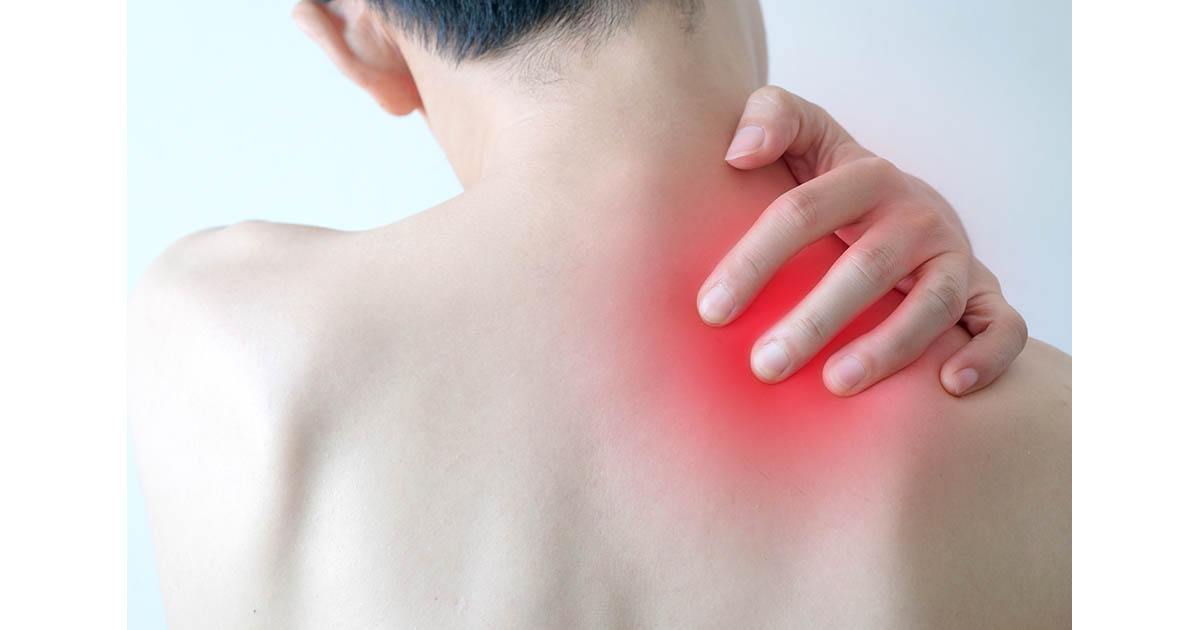
Almost everyone who has carried tension in their neck or upper shoulders knows the pattern: you find the knot, press on it, maybe get a massage, feel some relief, and then two days later it is back. Sometimes in the exact same spot. Sometimes slightly higher or lower, but always in that same general zone.
The standard explanation is "stress" or "posture" or "sleeping wrong," and while those things contribute, they don't explain why the knot keeps returning at the same location with the same quality of pain. For that, you need to understand what a muscle knot actually is and, more importantly, what is telling the muscle to stay contracted.
What a Muscle Knot Actually Is
The clinical term is a myofascial trigger point: a discrete band of contracted skeletal muscle fibers that has lost the ability to fully release on its own. The physiology behind it involves a calcium-channel disruption at the level of individual sarcomeres (the contractile units inside muscle fibers). When the nervous system sends a sustained or overloaded signal to contract, calcium floods into the sarcomere and the actin-myosin cross-bridges lock. Under normal circumstances, the nerve signal stops, calcium pumps back out, and the fibers relax. In a trigger point, that calcium cycling is disrupted. The fibers stay contracted even after the signal theoretically ends.
That sustained contraction creates a local zone of ischemia (reduced blood flow) inside the muscle. Oxygen delivery drops, metabolic waste products build up, and local sensory nerves become sensitized. This is why pressing on a trigger point produces that distinctive sharp, referral-quality pain that can shoot to the temple, behind the eye, or down the arm, depending on which muscle you are pressing. The knot is not just tight tissue. It is a zone of local hypoxia with a sensitized nerve supply.
Understanding this explains why heat and massage feel good in the moment: both temporarily increase blood flow to the ischemic zone and can mechanically break the calcium-locked cross-bridges. The problem is that neither addresses what keeps sending the signal to contract in the first place.
Why the Knot Keeps Coming Back: The Joint Behind the Muscle
The most clinically important thing to understand about persistent myofascial trigger points in the neck and upper shoulder is this: the muscle is almost never the root problem. It is the output of a problem above or below it.
When a cervical or upper thoracic facet joint is restricted (not moving through its normal range), the nervous system reflexively increases the tone of the muscles that cross that joint. This is a protective response, the body's version of biological splinting. The upper trapezius, levator scapulae, scalenes, and suboccipitals are all part of this reflex arc. When C4-C5, or C6-C7, or the C7/T1 junction is not moving normally, the muscles attached to those segments will chronically guard.
This is why massage provides temporary relief and not lasting resolution: it relaxes the muscle but does not change the joint mechanics driving the contraction reflex. The joint keeps sending the signal, and the muscle keeps responding. Within a day or two, the trigger point is back.
In clinical practice, the most reliable way to quiet a persistent upper trapezius trigger point is to restore normal movement to the cervical and upper thoracic segments that muscle attaches to. The trap often releases without ever directly pressing on it.
This is not just a chiropractic philosophy. It is consistent with how motor neuroscience understands afferent-driven muscle tone. Joint mechanoreceptors (the sensory receptors inside joints) feed continuous input into the spinal cord, and that input influences motor output to the surrounding muscles. A restricted joint sends altered input. The muscles respond by staying guarded. Fix the joint, normalize the input, and the muscle tone follows.
Where Neck and Shoulder Knots Most Commonly Form
Certain muscles develop trigger points far more often than others in the neck and shoulder region. Knowing which ones are involved can help you understand the referral patterns you are experiencing.
Upper trapezius is the most frequent site. Its fibers run from the base of the skull and cervical spine down to the acromion (tip of the shoulder). Trigger points in the upper trap refer pain to the temple, the angle of the jaw, and behind the eye. Many people with chronic tension headaches on one side of the head have an upper trap trigger point on that same side. Forward head posture, sustained by hours of screen time, chronically overloads the upper trap because the head's weight is no longer balanced over the spine. See our breakdown of tech neck and what it does to the cervical spine for more on this mechanism.
Levator scapulae runs from C1-C4 down to the superior angle of the shoulder blade. When this muscle develops a trigger point, patients typically describe a stiff neck that limits rotation to one side and a deep ache at the top corner of the shoulder blade. The "I can't turn my head without pain" presentation is often levator. This muscle is under particular stress from sustained forward head posture and from carrying bags on one shoulder.
Suboccipitals are four small muscles at the base of the skull. They are responsible for fine postural adjustments of the head. When chronically loaded by forward head posture or by cervical segment restriction at C0-C2, they develop trigger points that contribute to tension headaches, a "heavy head" feeling, and the stiffness that is often worst first thing in the morning. Related: why neck pain is worst when you first wake up.
Scalenes are three muscles on the side of the neck. When tight, they can narrow the space between the clavicle and first rib (the thoracic outlet), compressing the brachial plexus and producing tingling and numbness into the arm and hand. Patients who feel like their arm "falls asleep" while working at a desk or while sleeping often have scalene involvement.
Rhomboids are less commonly the primary site but become trigger-point-prone in people who spend hours at a desk. When the serratus anterior (the muscle that stabilizes the shoulder blade against the ribcage) becomes inhibited, the rhomboids are forced into chronic overwork to hold the scapula in place. This produces a deep ache between the spine and the shoulder blade.
What Makes Them Worse
Several factors consistently reinforce the pattern:
- Forward head posture. For every inch the head travels forward of the shoulder line, the effective load the posterior neck muscles must resist increases by roughly 10 pounds. A head that sits 2-3 inches forward (common in regular screen users) is effectively a 30-pound load being managed by muscles designed for 10-12 pounds. That imbalance is what drives the chronic overload. The tech neck post covers this in detail.
- Sustained postures (any posture). The neck is not designed to hold a position for hours, even a "good" one. Sustained posture repetitively loads the same fibers and inhibits normal lymphatic and blood flow. The fix is not better posture but more movement: micro-breaks, chin tucks, and position changes every 30-45 minutes matter more than a perfectly arranged workstation.
- Stress and elevated cortisol. Cortisol has direct effects on muscle tone. Patients under high psychological stress often report that their knots feel harder and more painful even when their physical habits have not changed. This is not imaginary. Chronic cortisol elevation changes the sensitivity of muscle afferents and lowers the pain threshold of existing trigger points.
- Poor sleep or sleep position. Trigger points should partially resolve during sleep, when muscle activity drops and circulation is restored. Interrupted sleep, stomach sleeping with the neck rotated for hours, and using a pillow that doesn't support cervical lordosis all interfere with that nocturnal recovery process.
- Dehydration. Muscle tissue is roughly 75% water. Fascia (the connective tissue that wraps and separates muscles) depends on hydration to stay pliable. Mildly dehydrated myofascial tissue is stiffer, less mobile, and more prone to trigger-point formation. Florida summers make this particularly relevant: heat-related dehydration can noticeably worsen musculoskeletal pain patterns.
What Actually Helps vs. What Only Provides Temporary Relief
Most people have tried one or more of the following approaches before coming in for evaluation. It is worth being clear about what each one can and cannot do.
Self-massage, foam rolling, and massage therapy provide genuine short-term relief by restoring blood flow, mechanically releasing the contracted sarcomeres, and calming sensitized nerve endings. The limitation is that they don't address the joint restriction feeding the contraction reflex. In a joint-driven trigger point, the benefit from massage typically lasts 1-3 days. Massage is a useful adjunct to care but not a stand-alone resolution for a recurring pattern.
Heating pads and hot showers increase local blood flow and reduce muscle guarding. Same limitation as massage: they address the output, not the input. Valuable for pain management, less valuable for long-term resolution.
Stretching can temporarily lengthen the muscle and reduce trigger-point tenderness. It is most effective when the restriction driving the contraction has already been addressed. Stretching a muscle while the joint above it is still restricted is like putting a bandage over a splinter without removing the splinter.
What tends to produce lasting improvement:
- Chiropractic adjustment to the restricted cervical and upper thoracic segments. Restoring normal joint mobility removes the aberrant afferent signal that keeps the surrounding muscles in a guarded state. Many patients notice that the upper trap or levator releases almost immediately after an adjustment to C4-C5 or the upper thoracic spine, without any direct muscle work.
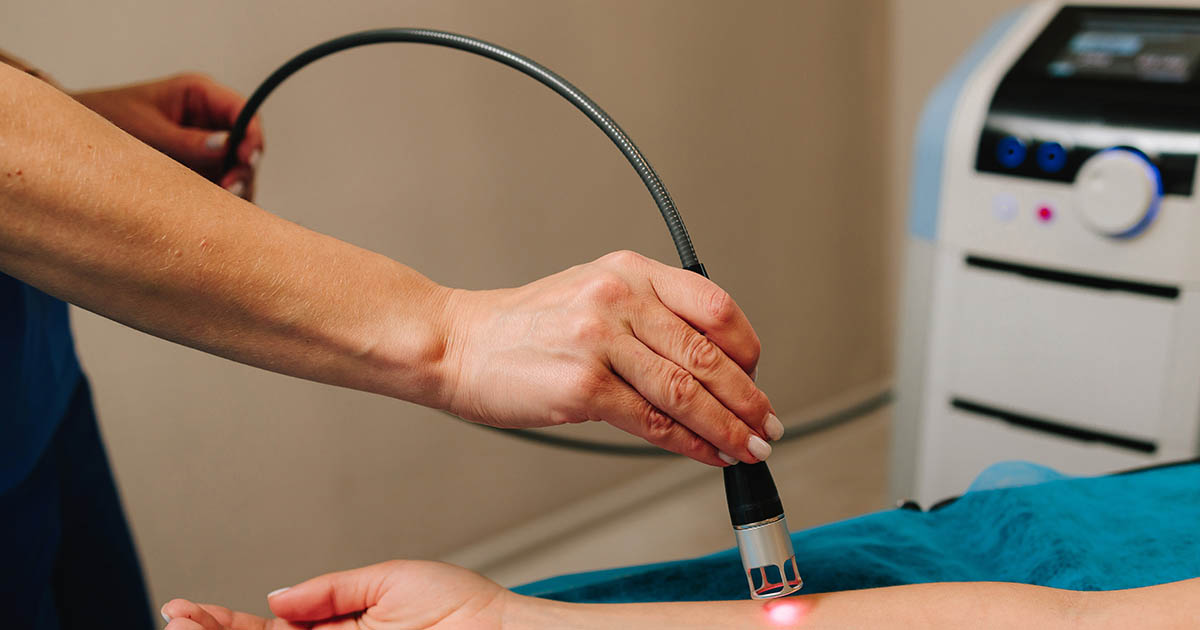
- Class IV laser therapy. Delivers photonic energy at therapeutic depths into the trigger point zone, accelerating ATP production in the mitochondria, reducing local inflammation, and normalizing calcium-channel function at the sarcomere level. Unlike surface heat, Class IV laser reaches the depth of the levator and upper trap. See the full comparison of Class IV vs. cold laser for more detail on why wattage matters.
- Softwave or shockwave therapy. Delivers radial pressure waves into the trigger point area, mechanically breaking up chronic contracture, stimulating tissue remodeling, and reducing the density of sensitized afferent nerve endings. Particularly effective for long-standing trigger points that have been present for months to years. See our guide on shockwave vs. softwave: what is the difference.
- Posture retraining and progressive strengthening. Once joint mobility is restored and the trigger point is quiet, the muscles that have been in protective guarding need to be reconditioned. Deep cervical flexor activation and mid-trapezius strengthening are typically the priorities. Without this phase, patients often relapse when they return to the activities that loaded the pattern originally.
When to Get It Evaluated Rather Than Waiting
Most neck and shoulder muscle knots are benign. They respond to conservative care without requiring imaging or specialist referral. But certain presentations warrant a clinical look sooner rather than later:
- Numbness, tingling, or weakness that runs into the arm or hand (possible disc involvement at C5-C7, or brachial plexus compression from the scalenes).
- Headaches that are increasing in frequency or severity, or headaches that are present on waking without a clear positional explanation.
- Muscle weakness, not just tightness. If you notice the arm feeling weaker than usual or dropping things, that is a different clinical conversation.
- A firm, non-tender lump that does not move easily and does not fit the usual trigger-point description. Most muscle knots are tender on palpation. One that is not may not be a trigger point at all.
- Symptoms that have not responded to any intervention after 4-6 weeks of consistent effort.
These are not meant to alarm you. The vast majority of neck and shoulder knots are exactly what they feel like and respond well to the approach described above. The list is here because "wait and see" has a cost when the underlying driver is something that imaging would clarify.
How We Approach It at Spine and Wellness Center Lakewood Ranch
When a patient comes in with the pattern described above (recurring knots in the same location, massage that helps temporarily, ongoing neck tightness), Dr. Banman's evaluation focuses first on the joints, not the muscles. Cervical range of motion, segmental mobility testing at each level, and a posture and gait assessment identify which joints are restricted and which postural patterns are sustaining the load.
In most cases, there are restricted segments at multiple cervical levels, often including the upper thoracic spine around C7-T3, even when the patient's pain is localized to the upper trap or the angle of the neck. The C7/T1 junction in particular is a common pain generator that refers pain upward into the upper trap and levator territory, creating the impression that the problem is higher than it actually is.
Once the joint picture is clear, the care plan typically combines chiropractic adjustment with Class IV laser or softwave therapy for significant trigger-point involvement, and a progressive home program that starts with simple mobility drills and builds toward strengthening. Many patients in our Lakewood Ranch office notice a meaningful reduction in the frequency and intensity of their knots within the first 3-4 weeks of care. For patients whose pattern has been present for years rather than weeks, the timeline is longer and expectations should be calibrated accordingly.
We also address the contributing factors directly, including screen posture, pillow and sleep position, and hydration habits, because the clinical work will be undermined if those inputs continue at the same level.