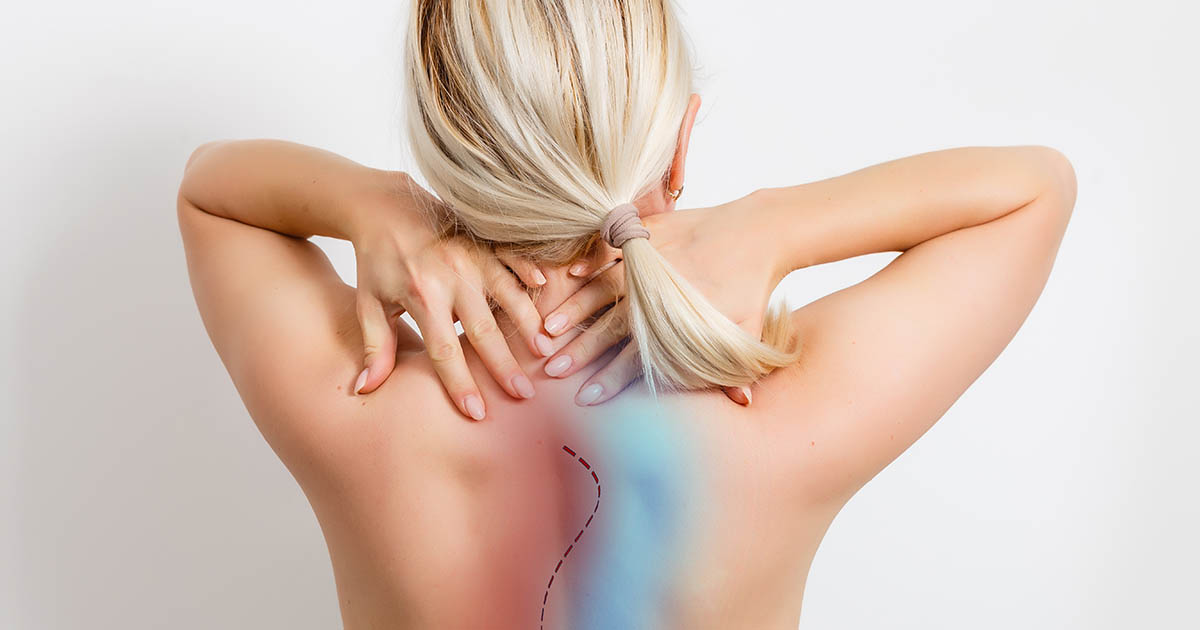


Each school year, gym teachers and school nurses across Manatee and Sarasota counties run the Adam's forward-bend test: a 30-second screen where the student bends at the waist while the examiner looks for a rib hump. When one shows up, a note goes home. The note says something like "possible scoliosis, please follow up with your doctor." Parents read it, get worried, and then spend the next week convinced their child is heading straight to a back brace or surgery.
Most of the time, neither is true. But the parents who do need to act are often the ones who wait. Adolescent idiopathic scoliosis (AIS) has a narrow treatment window tied directly to your child's remaining growth. The difference between catching a 15-degree curve at 12 years old and catching a 35-degree curve at 16 years old is the difference between a watch-and-wait protocol and one that requires serious intervention.
This post covers what AIS actually is, how clinicians measure it, what the Cobb angle numbers mean practically, and how to know whether your child needs scoliosis bracing in Lakewood Ranch or simply monitoring. Dr. Banman holds a master-level scoliosis certification and has managed adolescent spinal curves for more than 23 years. This is a topic he evaluates routinely.
What is adolescent idiopathic scoliosis?
Scoliosis is a lateral (side-to-side) curvature of the spine that, when measured on an X-ray, exceeds 10 degrees. "Idiopathic" means the cause is unknown. In adolescents, it typically appears during the pre-pubertal growth spurt (ages 10 to 16) and has no single identifiable trigger. Genetics plays a role: a child with a parent or sibling who has scoliosis is roughly three times more likely to develop a curve themselves.
AIS accounts for roughly 80% of all scoliosis cases. It affects about 2 to 3% of adolescents, making it one of the most common spinal conditions in that age group. Girls develop curves that require treatment at a rate about eight times higher than boys, though the condition appears in both sexes at similar rates initially. The reason girls are more affected is primarily curve progression: girls tend to progress faster through the adolescent growth spurt, which is when curves accelerate.
The most important thing for parents to understand: AIS rarely causes significant pain in adolescents. The spine is young and the surrounding muscles adapt well. Pain is not a reliable early warning sign. By the time a curve causes noticeable discomfort, it is often well past the range where conservative care produces its best results.
How clinicians actually measure a scoliosis curve
The standard measurement is the Cobb angle, named after orthopedic surgeon John Cobb, who described the technique in 1948. It is still the universal measurement used today.
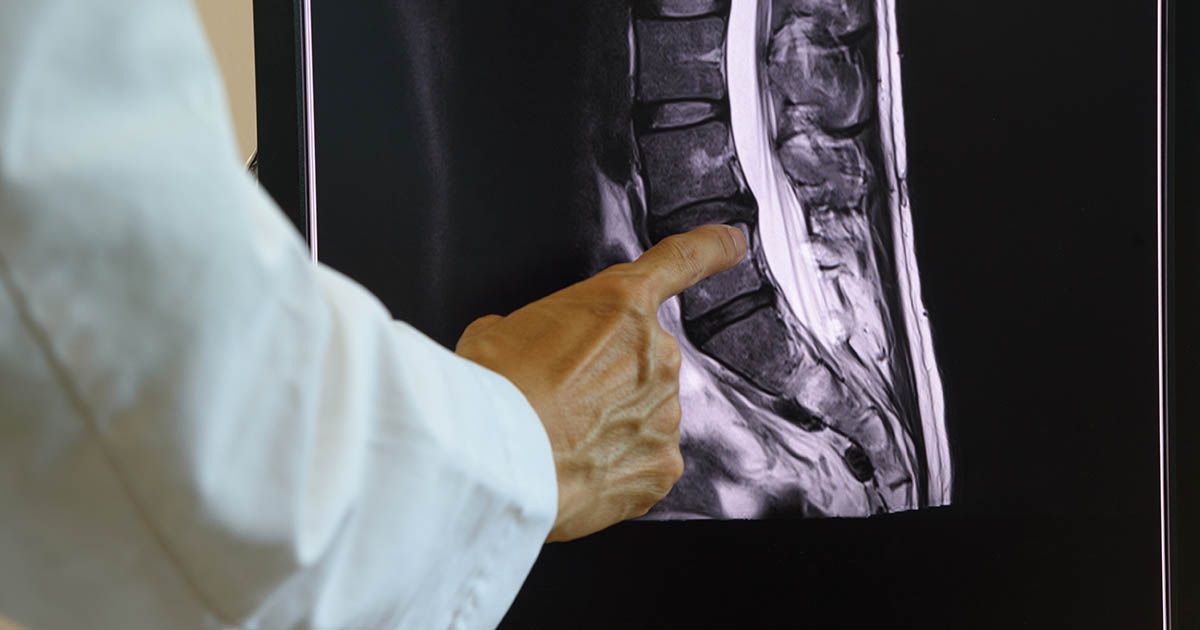
On a standing full-spine X-ray, the clinician identifies the most tilted vertebrae at the top and bottom of the curve. Lines are drawn parallel to the end plates of those vertebrae. The angle where those lines would intersect (or where perpendiculars to them intersect) is the Cobb angle. A curve under 10 degrees is considered normal spinal variation, not scoliosis. Ten degrees or more is the diagnostic threshold.
A few things parents should know about Cobb angle measurements:
- Curves of the same degree look dramatically different on different body types. A 20-degree curve in a lean 11-year-old may be more visible than a 28-degree curve in a larger 15-year-old.
- Measurements can vary by 3 to 5 degrees between different clinicians on the same X-ray. A curve measured at 23 degrees by one provider and 27 degrees by another is within normal measurement variability.
- The X-ray must be taken standing, not sitting or lying down. Lying-down X-rays underestimate curve magnitude because the spine straightens with gravity removed.
- Rotation matters as much as lateral tilt. The Cobb angle does not capture spinal rotation, which is what produces the rib hump and the cosmetic asymmetry parents notice most.
What do the numbers actually mean?
Here is the practical interpretation framework clinicians use:
Less than 20 degrees: Observation. The child is monitored with repeat X-rays every 4 to 6 months during active growth. No bracing is typically recommended unless the curve is progressing rapidly (more than 5 degrees per measurement period) or has specific characteristics that predict progression.
20 to 40 degrees: Bracing is generally indicated, provided the child has significant growth remaining. The brace applies corrective forces that reduce progression during the growth spurt. Research supports bracing in this range as the primary conservative intervention that measurably reduces the likelihood of reaching the surgical threshold. The landmark BRAIST trial (published in the New England Journal of Medicine, 2013) found bracing significantly more effective than observation at preventing curve progression to the surgical threshold.
40 degrees and above: Surgical consultation is typically recommended. Curves in this range have a meaningful risk of continuing to progress into adulthood even after skeletal maturity. Surgery (most commonly spinal fusion) is the standard intervention above 45 to 50 degrees. Conservative care at this stage is still pursued in some cases but with different goals: maintaining function and quality of life rather than preventing progression.
The Cobb angle gives you a number. What actually drives the clinical decision is that number in combination with two other factors: how much growth remains, and whether the curve is progressing. A 25-degree curve in a child at Risser stage 0 (no bone maturation, maximum growth ahead) is a very different situation than a 25-degree curve in a child at Risser stage 4 (near skeletal maturity).
The Risser sign: why growth stage matters more than age
Skeletal age and chronological age do not always match. A 13-year-old can be at Risser stage 3 (two-thirds of the way through skeletal maturity) while another 13-year-old is at Risser stage 0 (just entering the growth spurt). The same Cobb angle carries a very different prognosis depending on which stage the child is in.
The Risser sign grades the maturation of the iliac apophysis (a band of bone along the crest of the hip) from 0 to 5:
- Risser 0: No ossification visible. Pre-peak growth. Highest risk of progression.
- Risser 1-2: Active growth. Elevated risk of progression. Bracing most critical here.
- Risser 3-4: Growth decelerating. Intermediate risk. Bracing may still be indicated depending on curve magnitude.
- Risser 5: Skeletal maturity. Growth complete. Curve is unlikely to progress significantly during adolescence (though adult degenerative progression is a different topic).
A child at Risser 0 or 1 with a 22-degree curve is in a high-risk window. That same child at Risser 4 would typically just be observed. Risser staging is one of the reasons a full evaluation includes standing X-rays, not just the school screen. The school screen tells you there might be a curve. The X-ray and Risser staging tell you what to do about it.
What the physical signs actually look like
Parents often ask: what should I be watching for at home? Here are the signs that warrant scheduling a scoliosis evaluation rather than waiting for the next school screen:
- Uneven shoulder height. One shoulder sits visibly higher than the other when the child stands straight. This is most noticeable when the child is relaxed, not when they are trying to stand "correctly."
- One shoulder blade that protrudes more than the other. The winged appearance, especially visible in a tank top or bathing suit.
- Uneven waistline or hip height. One side of the waist appears higher, or one hip is visibly more prominent.
- A rib hump on one side. When the child bends forward at the waist with arms hanging free, one side of the upper back is higher than the other. This is what the Adam's forward-bend test detects.
- Clothing that does not hang evenly. Jeans that seem to twist, shirts that pull to one side, hemlines that are uneven. Parents often notice this before any other sign.
- Head that does not appear centered over the hips. The body appears to lean slightly to one side from the front or back.
None of these signs alone confirm scoliosis. They indicate that a standing spinal X-ray is warranted. A Cobb angle measurement from a proper X-ray is the only way to confirm and quantify a curve.
Bracing: what it is and what it is not
Modern scoliosis bracing bears little resemblance to the bulky Milwaukee brace that older patients or their parents might remember from the 1970s and 1980s. Contemporary braces for adolescent scoliosis are most commonly thoracolumbosacral orthoses (TLSOs), which fit under clothing and apply corrective forces to the spine from the ribcage and pelvis.
A few things the evidence supports about bracing:
- Bracing does not straighten a scoliotic curve. The goal is to prevent the curve from progressing during growth.
- Compliance is the single strongest predictor of brace effectiveness. The BRAIST trial found a clear dose-response: patients who wore the brace 13 or more hours per day had significantly better outcomes than those who wore it less.
- In-brace correction matters. A good brace fitting produces meaningful in-brace correction (often 30 to 50% of the original Cobb angle). If an X-ray taken in the brace shows little to no correction, the brace is not doing its job.
- Bracing is not a permanent intervention. Once skeletal maturity is reached, bracing is discontinued. The spine retains whatever correction was achieved.
What bracing is not: it is not a punishment, a cosmetic tool, or a guarantee. Curves can progress even with excellent compliance. Bracing is a probabilistic intervention that shifts the odds meaningfully in the child's favor during the window when it can work.
What Dr. Banman's scoliosis certification means for your evaluation
Most chiropractors can identify scoliosis on an X-ray. Fewer have specific training in scoliosis management: the Cobb measurement protocols, the Risser staging, the brace prescription parameters, and the monitoring schedule that the research supports.
Dr. Banman holds a master-level scoliosis certification, which represents advanced post-graduate training in the clinical management of spinal curves across the age spectrum: adolescent, adult, and degenerative. That certification is not a marketing credential. It means he has completed specific coursework in scoliosis measurement, radiographic interpretation, brace indications, and monitoring protocols that go well beyond what a standard chiropractic or physical therapy education covers.
In practice, what this means for a parent coming into Spine and Wellness Center Lakewood Ranch with a school screening result is this: the evaluation is not a quick look at the child's posture and a referral to an orthopedic surgeon. It is a clinical assessment that includes radiographic review if appropriate, Cobb angle measurement, Risser staging, a physical exam of the curve pattern, and a genuine conversation about what the numbers mean and what the options are.
For families in Lakewood Ranch, Bradenton, and Sarasota looking for scoliosis evaluation and bracing options, that level of specificity matters.
The role of chiropractic care in AIS management
Parents sometimes ask whether chiropractic adjustments can straighten a scoliosis curve. The honest answer is: not in the way most people mean. A chiropractic adjustment does not move the vertebrae into permanent alignment. What chiropractic care does in the context of AIS management is support the musculoskeletal system around the curve: reducing compensatory muscle tension, improving segmental mobility, and in some cases improving the child's posture and movement patterns in a way that makes brace wear more tolerable.
At our clinic, chiropractic care for adolescent scoliosis is part of a coordinated plan, not a standalone treatment. The curve requires a brace if the numbers indicate it. The chiropractic work supports the child's function, comfort, and compliance with the brace. Those are real and meaningful contributions, but they are not a substitute for the intervention the data supports when the Cobb angle is in the treatment range.
This is the same approach Dr. Banman takes to most complex presentations: honest about what each intervention does, and focused on the combination that actually serves the patient.
When to act and what the timeline looks like
The single most important thing parents can do after a school scoliosis screen is get a standing full-spine X-ray and a clinical evaluation promptly. Not in three months when you find a good time. Promptly.
Here is why timing is so concrete: the adolescent growth spurt averages 18 to 24 months in duration. That is the window when curves accelerate fastest and when bracing has its maximum effect. A curve found early in the growth spurt, properly managed, may end up at 20 degrees at skeletal maturity. The same curve found late in the spurt, or not managed during it, may be 40 degrees by the time the child stops growing. The X-ray result from that school note is not an emergency, but it is not something to defer until the next semi-annual well-child check either.
For families who have had the conversation already with a pediatrician but are uncertain about next steps, especially those who were told to "just watch it," a second opinion from a clinician with specific scoliosis training is reasonable and often clarifying. Watching is appropriate for many curves. But "watching" should mean scheduled follow-up X-rays at defined intervals, not a vague "come back if it gets worse."
Additional resources at our clinic for spine-related conditions: our team also evaluates general back pain, neck pain and headaches, and a range of other spine and nerve conditions in patients of all ages.