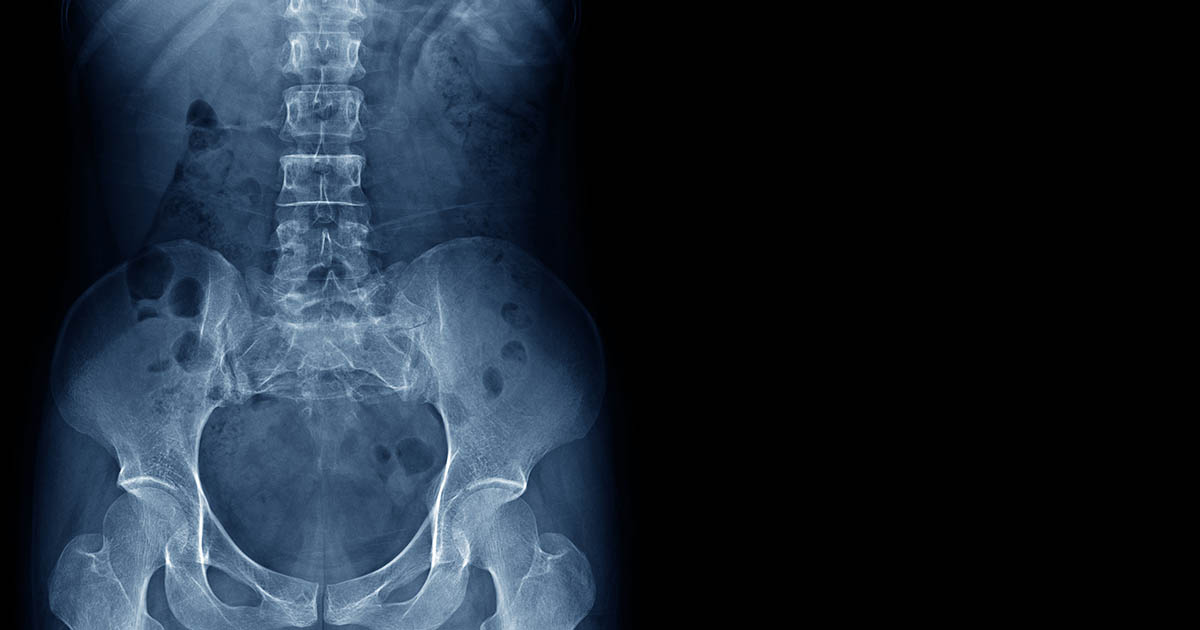


Most people who come in with tailbone pain have been sitting on it for months. Literally. They describe the same pattern: a deep ache right at the base of the spine that gets worse when they sit for long stretches, spikes when they stand up, and never fully disappears. Some had a fall they remember. Others have no event to point to at all. A fair number have been told to "just put a donut cushion on your chair and wait."
At our Lakewood Ranch office, we see coccydynia show up in desk workers, postpartum patients, older adults who took a hard landing during a pickleball game, and people who simply sat on a bleacher at the wrong angle. The common thread is that the pain is real, often undertreated, and usually driven by one of a handful of identifiable causes. A thorough evaluation of lower back and pelvic pain in Lakewood Ranch gives you an actual answer rather than a default "rest and anti-inflammatories."
Here is what we know about coccydynia: what the coccyx is, why it hurts, and what actually helps.
What the Coccyx Is (and Why It Matters More Than People Think)
The coccyx is the small triangular bone at the very base of your spine. It is made up of three to five fused vertebrae and sits just below the sacrum. Most people forget it exists until something goes wrong with it.
Despite its small size, the coccyx is a genuine structural player. Several important muscle groups attach to it, including parts of the gluteus maximus and the levator ani muscles that form the floor of the pelvis. Ligaments anchor it to the sacrum above. And the coccygeal nerve plexus passes close enough that irritation at or near the coccyx can produce pain that radiates into the perianal area, the inner thighs, or down toward the buttocks.
When you sit, especially on a firm surface, your weight transfers through the ischial tuberosities (the sitting bones) and, depending on your posture, onto the coccyx itself. That is why sitting tends to be the biggest aggravating factor. Standing up is often worse than sitting because the coccyx shifts position during that transition.
What Actually Causes Coccydynia
There is no single cause. The pattern we evaluate for covers several distinct drivers, and getting the right one matters for treatment decisions.
Direct trauma from a fall
This is the most straightforward cause: you landed hard on your tailbone. Ice, a concrete step, gym flooring, a boat seat. The impact can fracture the coccyx (though this is less common than people assume) or, more often, cause a ligamentous sprain at the sacrococcygeal joint. The bone does not have to break to become very unhappy. Many people are told their X-ray is "normal," which is accurate, but does not mean the joint is stable and pain-free.
Prolonged sitting on hard or poorly padded surfaces
Florida in the summer means bleacher seats at youth sports events, hours in the car on I-75, and long boat rides on hard fiberglass benches. Sustained pressure on the coccyx, especially in a posterior pelvic tilt (slumped posture), loads the joint beyond what the surrounding ligaments handle well. This produces a slow-onset ache rather than an acute injury, but the underlying mechanics are the same: excessive compressive force on a small joint.
Childbirth-related coccygeal injury
During vaginal delivery, the coccyx moves posteriorly to make room for the baby. In most deliveries this resolves without lasting consequences. In some, particularly with larger babies, prolonged labor, or instrument-assisted delivery, the sacrococcygeal joint can be sprained or the coccyx can be pushed into a position it does not fully recover from. Postpartum tailbone pain that persists beyond six weeks warrants evaluation rather than a "wait and see" approach.
Degenerative changes at the sacrococcygeal joint
The sacrococcygeal joint is a cartilaginous joint, similar in structure to the disc joints elsewhere in the spine. It degenerates with age and mechanical load just as lumbar discs do. Patients over 50 who have coccydynia without a specific injury event often have some degree of sacrococcygeal joint degeneration visible on imaging. The joint can become hypermobile (too much movement during sit-to-stand transitions) or hypomobile (stiff and restricted), and both patterns produce pain.
Coccyx shape and angle
Some people have a coccyx that is naturally angled forward rather than pointing straight down. This anatomical variation increases direct contact between the coccyx tip and hard surfaces during sitting. It is not a disorder, but it creates a structural predisposition to coccydynia with prolonged sitting or minor trauma.
When the Pain Is Not Coming Directly From the Coccyx
This is where evaluation earns its cost. Roughly 30 to 40 percent of patients who describe "tailbone pain" are actually experiencing referred pain from a structure above the coccyx. The pain lands at the bottom of the spine, but the generator is somewhere else entirely.
The sacroiliac (SI) joint is the most common culprit. SI joint dysfunction causes pain in the low back, buttock, and sometimes the area right around the tailbone. Because the SI joint and the coccyx sit close to each other anatomically, patients often cannot tell which one is actually hurting. The distinction matters a great deal for treatment. Read more on how we evaluate and treat SI joint pain at our Lakewood Ranch clinic.
The lower lumbar discs are the second most common referral source. An L4-L5 or L5-S1 disc problem can produce pain that radiates into the sacral and coccygeal region without producing the classic leg-dominant sciatic pain most people associate with disc injuries. If there is any leg involvement, tingling, or if the pain behaves more like a disc problem (worse with prolonged sitting, better with walking), a lumbar disc source needs to be ruled out before treating the coccyx itself. Spinal decompression can be highly effective when the lumbar disc is the actual driver.
Pelvic floor muscle spasm is a third pattern, more common than most clinicians recognize. The levator ani and coccygeus muscles attach directly to the coccyx. When those muscles are in chronic spasm, they pull on the coccyx and produce pain that mimics a joint injury. Patients with this pattern often describe pain that worsens with bowel movements, prolonged standing, or stress, not just sitting.
The single most common reason tailbone pain does not resolve is that the actual source was never correctly identified. Treating a sprained sacrococcygeal joint when the problem is an L5-S1 disc produces no improvement. Getting that distinction right on the first visit changes the entire treatment trajectory.
What Makes Coccydynia Worse
Understanding the aggravating pattern helps confirm the diagnosis and also gives practical guidance for daily life while treatment is underway.
- Sitting on hard surfaces for more than 20-30 minutes. This is the most universal aggravator. The pressure accumulates gradually, which is why patients often say, "I was fine at the start of the meeting but could barely walk by the end."
- The moment of standing up. The sit-to-stand transition is reliably painful because the coccyx shifts position during that movement. A slow, supported rise from the chair reduces this.
- Leaning backward while sitting. Slouching or reclining posteriorly increases direct contact between the coccyx and the seat. Leaning slightly forward, with weight on the ischial tuberosities rather than the coccyx, reliably reduces pressure.
- Bowel movements. The straining involved in a bowel movement increases intra-abdominal pressure and recruits the pelvic floor muscles, both of which load the coccygeal region.
- Sexual intercourse. Many patients with coccydynia mention this reluctantly. It is common, and it matters for treatment decisions.
- Prolonged driving, especially on rough Florida roads. Road vibration combined with sustained sitting amplifies the mechanical load on the sacrococcygeal joint.
What Conservative Care Can Do
The good news is that coccydynia responds well to conservative treatment in the majority of cases, particularly when the specific driver has been correctly identified.
Chiropractic evaluation and joint mobilization
The sacrococcygeal joint can be restricted, hypermobile, or malaligned. A chiropractic evaluation includes assessing joint mobility, the position of the coccyx relative to the sacrum, and whether the surrounding musculature is in spasm. When there is restriction, specific mobilization of the sacrococcygeal joint can restore normal movement and significantly reduce pain. Many patients report meaningful relief after two to three sessions when the mechanical problem is primarily at that joint.
Soft tissue work for pelvic floor involvement
When muscle spasm of the levator ani or coccygeus is contributing, direct soft tissue treatment to the surrounding gluteal and piriformis muscles is part of the picture. Dr. Banman addresses this through external soft tissue protocols at our clinic.
Therapeutic modalities
Class IV laser therapy reduces local inflammation and accelerates tissue healing in soft tissue injuries around the coccyx. Shockwave therapy can be applied to chronically thickened or fibrosed ligamentous tissue around the sacrococcygeal joint. For disc-driven referred pain to the tailbone region, spinal decompression addresses the actual source rather than the referral site.
Postural and loading modifications
While in treatment, seat wedge cushions (coccyx cutout cushions) reduce direct pressure on the tailbone. The goal is not permanent reliance on a cushion but reduction of mechanical load while the joint heals. Sitting posture coaching, specifically weight shift to the ischial tuberosities and gentle anterior pelvic tilt, reduces contact between the coccyx and the seat.
When conservative care is not enough
A small percentage of coccydynia cases do not respond to conservative treatment. These typically involve a significantly displaced fracture, severe hypermobility of the sacrococcygeal joint, or advanced degenerative changes. In those situations, we discuss referral to a physiatrist or orthopedic specialist who can consider corticosteroid injection into the sacrococcygeal joint or, in rare refractory cases, surgical removal of the coccyx (coccygectomy). That is genuinely a last resort and is uncommon when patients receive appropriate conservative care early.
When to Get Coccydynia Evaluated
See a provider if:
- Tailbone pain has lasted more than four to six weeks without meaningful improvement
- Pain is severe enough to limit your ability to sit for a full workday
- You have any symptoms that could indicate a more serious cause: unexplained weight loss, pain at night that wakes you, fever, or bowel or bladder changes
- You are postpartum and still experiencing significant coccyx pain beyond six weeks after delivery
- The pain is worsening over time rather than gradually improving
A few red flags are worth naming because they change the clinical picture entirely. Coccyx pain accompanied by lower extremity weakness, saddle anesthesia (numbness in the groin and inner thighs), or loss of bowel and bladder control requires immediate emergency evaluation. These findings suggest spinal cord or cauda equina involvement, not a local coccygeal problem.
For straightforward coccydynia in Lakewood Ranch, Bradenton, or Sarasota, the evaluation process at our office takes less than an hour. We assess joint mobility, check for referred pain patterns from the lumbar spine and SI joint, and walk you through what we think is driving the pain and what the realistic options are. Many patients leave that first visit with a plan they did not have when they walked in, and for most, that clarity is the thing that was missing.