

Most Florida drivers know they have PIP coverage. Some know about the 14-day rule. Far fewer understand the Letter of Protection, which is often the bridge between "PIP ran out" and "I can still get the treatment I actually need."
If a personal injury attorney has mentioned an LOP to you, or if you are trying to understand how to continue care after a Florida auto accident, this is what you need to know before you make any decisions.
What Is a Letter of Protection?
A Letter of Protection (LOP) is a written legal agreement between three parties: a patient, the patient's personal injury attorney, and a healthcare provider. The provider agrees to render medical or chiropractic treatment now, without requiring upfront payment. In return, the attorney commits in writing to pay the provider's outstanding bill directly from any settlement or court judgment, before the patient receives the remaining funds.
It is not insurance. It is not a loan. The patient does not owe money until the case resolves, and even then the provider is paid from the settlement proceeds rather than from the patient's pocket.
The LOP is a common arrangement in Florida personal injury cases because it aligns everyone's interests: the provider gets paid if the case settles, the attorney has documented medical evidence to support the claim, and the patient can receive the care they need without financial barriers.
A Letter of Protection is a contractual commitment, not a guarantee. If the case does not settle or results in a verdict for the defense, the patient may remain responsible for the provider's bill. That is a real risk, and your attorney should explain it clearly before you enter any LOP arrangement.
How a Letter of Protection Works in Practice
The typical flow in a Florida auto-injury case with an LOP looks like this:
- The accident occurs. The patient seeks initial care, often under PIP, within the critical 14-day window.
- A personal injury attorney is retained. The attorney evaluates the case and, if the injuries are significant, contacts healthcare providers about a Letter of Protection.
- The provider agrees to the LOP terms. Not every clinic accepts LOPs. Those that do review the case, confirm the injury documentation, and sign the agreement.
- Treatment begins or continues. The patient receives care under the same standard as any other patient. Bills accrue but are not sent to the patient for payment.
- The case resolves. When the settlement is reached or the case goes to judgment, the attorney pays the provider from the proceeds before distributing the remainder to the patient.
The timeline can range from a few months to several years, depending on the complexity of the case and whether litigation is necessary. During that time, the patient is not receiving collection calls for the medical bills under the LOP.
LOP vs. PIP: Understanding How They Work Together
PIP (Personal Injury Protection) and an LOP are not competing mechanisms. They are sequential. Understanding which one applies at each stage of your care matters.
Under Florida Statute 627.736, every Florida auto policy must carry at least $10,000 in PIP coverage. PIP pays 80 percent of "reasonable and necessary" medical bills up to that cap, regardless of who caused the accident. PIP is your first layer of coverage and it activates immediately after an accident. We cover that first layer in depth on our Florida PIP chiropractic care page.
For mild to moderate injuries, PIP may cover the full course of treatment. For more serious injuries, including disc herniations, nerve involvement, or conditions requiring extended rehabilitation, $10,000 runs out quickly. A multi-modality program involving chiropractic care, spinal decompression, and laser therapy can exhaust PIP within a few months.
When PIP is exhausted and a personal injury claim is active, an LOP takes over. The provider continues treating the patient; the billing shifts to the settlement side of the ledger rather than the insurance side.
Some cases involve both PIP and an LOP running concurrently from the start, if the attorney anticipates a large claim and wants to ensure continuity of care from day one. Others transition to an LOP only after PIP is exhausted. Your attorney and provider should coordinate on which approach fits your situation.
Which Injuries Most Often Involve an LOP in Auto Cases
Not every auto-injury case involves a Letter of Protection. LOPs are most common when:
- The injuries are significant. Disc herniations, nerve compression, sciatica triggered or worsened by the accident, and whiplash with persistent soft-tissue involvement often require care well beyond the PIP cap.
- A personal injury attorney is involved. LOPs require attorney involvement because the attorney is a party to the agreement and responsible for directing payment from the settlement.
- The liability picture is reasonably clear. Providers take on financial risk by treating under an LOP. Most require that the case have a reasonable likelihood of settlement before agreeing.
- PIP alone is insufficient. If the treatment plan is expected to exceed $10,000 in reasonable medical costs, an LOP is often the practical path forward.
Conditions we commonly treat in our auto injury care program under LOPs include:
- Cervical disc injuries from rear-end collisions
- Lumbar disc herniations from side-impact or T-bone accidents
- Sciatica that developed or worsened following the crash
- Whiplash with ongoing soft-tissue involvement beyond the acute phase
- Peripheral nerve symptoms (tingling, weakness, numbness) tracing to the accident
- Chronic pain that began within weeks of the collision
Why Documentation Matters More Under an LOP
In a standard cash-pay or insurance case, good clinical documentation is important but the financial stakes are relatively contained. In an LOP case, the documentation becomes a core part of the legal record. The attorney needs it to prove:
- That the injuries were caused by, or materially worsened by, the accident (causation)
- That the treatment provided was clinically appropriate and not excessive (necessity)
- That the patient's condition has been accurately characterized in terms of functional limitations and prognosis
This means providers treating under an LOP carry a higher documentation burden than in routine cases. Vague chart notes, inconsistent treatment plans, or gaps in care can undermine both the clinical outcome and the legal case.
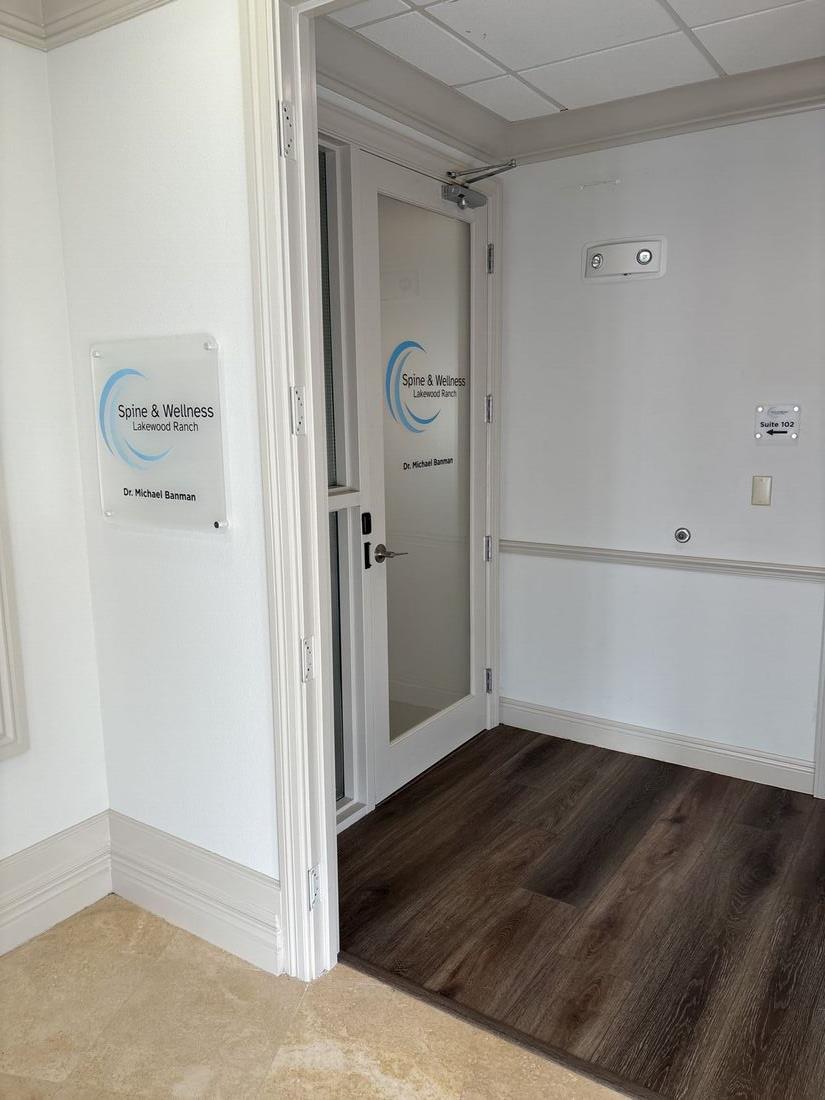
At our Lakewood Ranch office, we use a structured evaluation protocol for all auto-injury patients, LOP or otherwise. Initial exams include orthopedic and neurological testing, range-of-motion measurements, and a review of any imaging already obtained. We produce detailed progress notes and, when requested by attorneys, narrative summaries of the clinical findings.
The documentation we produce is for the patient's benefit first: it guides the treatment plan. That it also supports the legal case is a byproduct of doing good clinical work, not the primary goal.
Multi-Modality Care Under an LOP
One of the limitations patients often encounter with PIP-only care is that some clinics try to stretch the $10,000 cap across as many visits as possible rather than delivering the most effective care available. The result is often a high visit count with low-intensity treatment.
Under a well-structured LOP, the focus can shift to delivering the most clinically appropriate program for the injury. For many auto-injury patients, that means combining modalities rather than relying solely on manual adjustments.
At Spine and Wellness Center Lakewood Ranch, our auto-injury program under LOPs typically draws from:
- Chiropractic adjustments. Restoring cervical and lumbar alignment disrupted by the collision.
- Spinal decompression. For disc injuries where axial loading from the accident has increased disc pressure and nerve irritation. We use computerized traction equipment, not manual or inversion-table decompression.
- Class IV laser therapy. To address soft-tissue inflammation and accelerate healing in the early phases of care.
- Electrical muscle stimulation (EMS). For muscle guarding and spasm that develops in the weeks following the accident.
- Hyperbaric oxygen therapy (HBOT). In cases involving significant nerve involvement or where inflammatory load is high, HBOT is sometimes included in the care plan.
The plan is individualized. Not every patient needs every modality. The initial exam determines what combination makes sense for the documented injury pattern.
What to Look for in a Provider Who Accepts LOPs
Because LOP arrangements carry financial risk for the provider, and because the clinical documentation carries legal weight, choosing the right provider matters.
Questions worth asking before you begin care under an LOP:
- Will I see the same provider consistently, or will I be rotated through staff?
- How do you document injury causation and functional limitations?
- How do you communicate with my attorney's office?
- What is the treatment plan based on, and how will we know it is working?
- What happens if my PIP runs out before the LOP kicks in?
Be cautious of any provider who recommends the same treatment plan for every patient regardless of exam findings, who cannot explain the clinical reasoning behind each modality, or who seems focused primarily on maximizing the total bill rather than on your recovery.
An LOP-based medical lien that is disproportionate to the severity of the injury can actually damage the patient's net recovery. Attorneys negotiate liens at settlement, but inflated bills that don't reflect appropriate care create friction in that process.
What to Do After an Accident If an LOP May Be Relevant
If you have been in an auto accident in Florida and your injuries are significant enough that a personal injury claim is likely, here is the practical sequence:
- Get evaluated within 14 days. The Florida PIP 14-day rule is non-negotiable. Missing that window forfeits PIP coverage entirely, even if you were genuinely hurt.
- Document everything from the start. Photos of the vehicles, police report number, names of witnesses, a timeline of symptom onset and progression.
- Retain an attorney before agreeing to any LOP. An LOP is a legal agreement and you should not enter one without understanding your obligations if the case does not settle.
- Choose a provider who handles LOP cases routinely. Not all clinics do. Those that do have the documentation infrastructure and the legal billing knowledge the attorney needs.
- Continue care consistently. Gaps in treatment are used by opposing counsel and insurance adjusters to argue that the injuries were not as serious as claimed. Consistency of care protects both your recovery and your case.
We coordinate with personal injury attorneys throughout the Sarasota and Manatee County area. Our intake process for auto-injury patients is designed to capture the clinical data attorneys need from the first visit, not retrospectively.
For a broader look at how Florida's no-fault system works before a personal injury case is opened, see our guide to Florida PIP after a car accident. For information on how we treat whiplash and cervical injuries specifically, see our auto and whiplash care page.