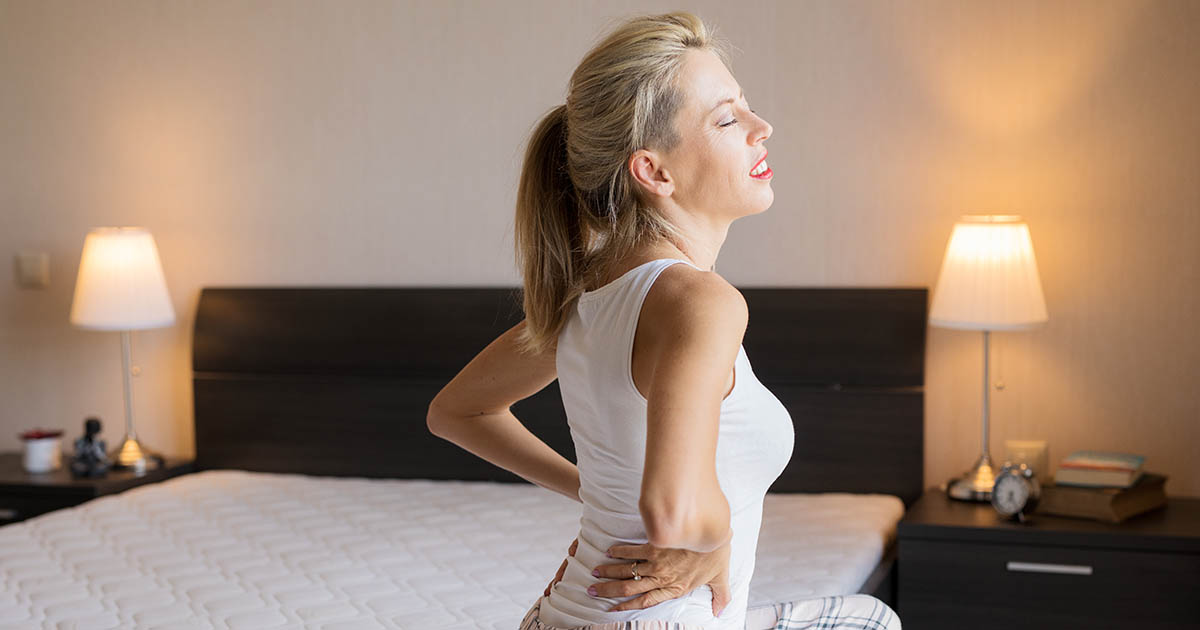


If you are a grandparent in the Lakewood Ranch area, you have probably noticed that picking up your grandchild is not as effortless as it was when you did it with your own kids decades ago. That observation reflects real biomechanics. A 30-pound toddler sounds light. But the way we lift from the floor, carry on one hip, and repeatedly set down and pick up is exactly the loading pattern that strains lumbar discs, facet joints, and deep stabilizing muscles.
Most lifting-related back injuries in active grandparents we see in our office do not come from one dramatic moment. They come from repeated, mechanically poor lifts over a long weekend. Understanding what is happening gives you the information to change the pattern before it becomes a recurring problem.
Why a 30-Pound Toddler Is Harder on Your Spine Than It Sounds
The lumbar spine does not just bear the weight of what you hold in your hands. It manages the torque created by that weight at a distance from your spine. When you reach forward and lift a child from the floor, the disc at L4-L5 or L5-S1 functions as a fulcrum under a lever. A 30-pound child held at arm's length in front of the body creates a bending moment on the lumbar vertebrae that biomechanical researchers estimate at five to ten times the actual held weight.
That means the effective disc load during a forward-reach floor pickup is not 30 pounds. It is closer to 150 to 300 pounds of compressive and shear force concentrated at the posterior rim of the lumbar disc. Healthy, well-hydrated discs handle this without issue. But discs that have already lost some height or hydration from years of daily loading, previous injuries, or extended sitting are far less tolerant of that force.
After age 40, most adults have at least one lumbar disc with some degree of degeneration on imaging. After 60, the majority do. That does not mean pain is inevitable. It means the margin for error is smaller, and the mechanics of how you lift matter more than they did at 30.
The Four Movements That Strain the Lumbar Spine Most
Not all grandchild-related lifting carries equal risk. These four movement patterns are the most mechanically damaging:
1. The floor pickup with a forward lean and twist
Bending forward at the waist, reaching down toward a child sitting on the floor, and simultaneously rotating to one side is the highest-risk combination in everyday lifting. It compresses the posterior disc while adding a rotational shear force. This combination is the most common mechanism behind acute lumbar disc herniations in active adults over 50.
2. Carrying a child on one hip
One of the most natural positions for holding a small child is on the hip, with the child's weight offset to one side. Over time this loads one set of facet joints and paraspinal muscles asymmetrically, creates a lateral pelvic shift, and concentrates compression on the disc at that side. A single afternoon is unlikely to cause injury. A full weekend of it, especially combined with repeated floor pickups, is another story.
3. Lifting out of a car seat, crib, or high chair
These lifts require reaching overhead or deep into a confined space while holding a squirming 25-to-40-pound child. The reach position eliminates the ability to use a proper squat pattern and forces the lift to come primarily from the lower back extensors rather than the legs.
4. Transferring from the floor to standing
Carrying a child from a low position up to standing requires driving the lumbar spine into extension under a compressive load. If the deep stabilizing muscles (multifidus, transversus abdominis) are not engaged before the lift, that load transfers directly to the disc and facet joints.
What Breaks Down: Disc, Facet, or Muscle?
The structure most commonly involved in lifting-related low back pain in adults over 50 is the lumbar disc, specifically the posterior and posterolateral annular fibers at L4-L5 and L5-S1. These fibers can develop small radial tears (annular fissures) that are painful without causing a frank herniation, or they can produce a herniation that places pressure on the nerve root exiting at that level.
The second most common structure is the facet joint. These small paired joints at the back of each vertebra resist rotation and extension. Hip-carrying and repeated twisting loads stress them selectively. Facet-mediated pain is typically worse with extension and rotation, feels like a deep, poorly localized ache in the low back, and may refer into the buttock but does not typically travel below the knee.
Third is the paraspinal musculature itself. Sudden or heavy lifts can produce acute muscle strain or spasm, especially when you were not actively bracing before the movement. Pure muscle strain typically resolves in 5 to 10 days with appropriate care. The concern is when a muscle strain masks an underlying disc or facet problem that will recur with the next family visit.
For a deeper look at disc mechanics and what they mean for recovery, our herniated disc resource page walks through the anatomy and what different types of disc injuries require in terms of care.
Pain that lingers longer than 5 to 7 days after a lifting incident, or that includes any radiation below the gluteal fold into the thigh or leg, warrants a clinical evaluation rather than continued home management.
Warning Signs to Take Seriously
Most lifting-related back pain is mechanical and resolves with appropriate care. Certain patterns, however, indicate nerve involvement that should not be managed with rest and stretching alone:
- Pain, numbness, or tingling that travels into the hip, buttock, or down one leg (nerve root compression pattern)
- Pain that is clearly worse bending forward but significantly better standing or walking
- Leg weakness that was not present before the lifting incident
- Symptoms that are worsening after 5 days rather than improving
Seek emergency care immediately if you experience:
- Loss of bowel or bladder control following a lifting incident
- Progressive weakness in both legs
- Saddle-area numbness (inner thighs and groin)
These are signs of cauda equina syndrome, a medical emergency requiring immediate evaluation. This does not mean every episode of post-lifting back pain is dangerous. The vast majority are not. But nerve-root patterns deserve professional evaluation, not self-treatment.
Safe Lifting Mechanics: What Actually Protects the Lumbar Discs
The standard advice ("lift with your legs, not your back") is correct but incomplete. Here is a more specific breakdown:
Squat pattern, not hip-hinge. A squat keeps the torso more upright, shortening the lever arm between the held weight and the lumbar spine. A hip-hinge with a forward-bending torso increases that lever arm significantly. Get close to the floor by bending the knees, not by rounding the back.
Keep the child close to your body. The further a held weight is from your spine, the greater the disc load. Bring the child against your chest before standing. After rising, hold the child against your torso rather than away from your body with extended arms.
Brace before you lift. A brief, moderate abdominal contraction before initiating the lift increases intra-abdominal pressure, which mechanically unloads the lumbar discs during the lift. You do not need a dramatic "bear hug" brace. A conscious, intentional core engagement before the movement begins makes a measurable difference.
Avoid twisting while carrying. If you need to change direction while holding a child, step and pivot with your feet rather than rotating your lumbar spine under load. This eliminates the rotational shear force that strains facets and disc annular fibers.
Use surfaces strategically. Instead of lifting a child from the floor to standing in one motion, use furniture. Let the child climb onto the couch, then pick up from couch height. Use a step stool for car pickups. Raise the crib mattress position when the child is younger. Every inch you can reduce the starting height of the lift reduces the lever arm and disc stress.
Alternate the carrying side. If you carry a child on your hip, switch sides every 10 to 15 minutes. This distributes the asymmetric loading across both sides rather than concentrating it on one set of facet joints and paraspinals over hours.
If Your Back Already Hurts
If you are reading this after the grandkids just left and your back is already talking to you, here is what to do and what not to do.
What helps in the first 48 hours:
- Keep moving. Complete bed rest is not recommended for most mechanical back pain and may slow recovery. Short, frequent walks are better than lying still.
- Ice for the first 24 to 48 hours if there is significant inflammation or swelling. After that, many patients do better with heat to relax paraspinal muscle tension.
- Avoid the specific movements that triggered the pain when possible.
What to avoid:
- Aggressive hamstring or piriformis stretching in the first 48 hours when there is nerve involvement. In disc-related pain, certain stretches can increase nerve root tension and worsen symptoms.
- Anti-inflammatory medication as a long-term management strategy. NSAIDs reduce acute inflammation but do not address the structural cause, and they carry known GI and cardiovascular risks with extended use.
How We Evaluate and Treat Lifting-Related Low Back Pain
At our Lakewood Ranch office, Dr. Banman conducts a detailed history and orthopedic examination to identify the specific structure driving the pain. The approach depends on the findings.
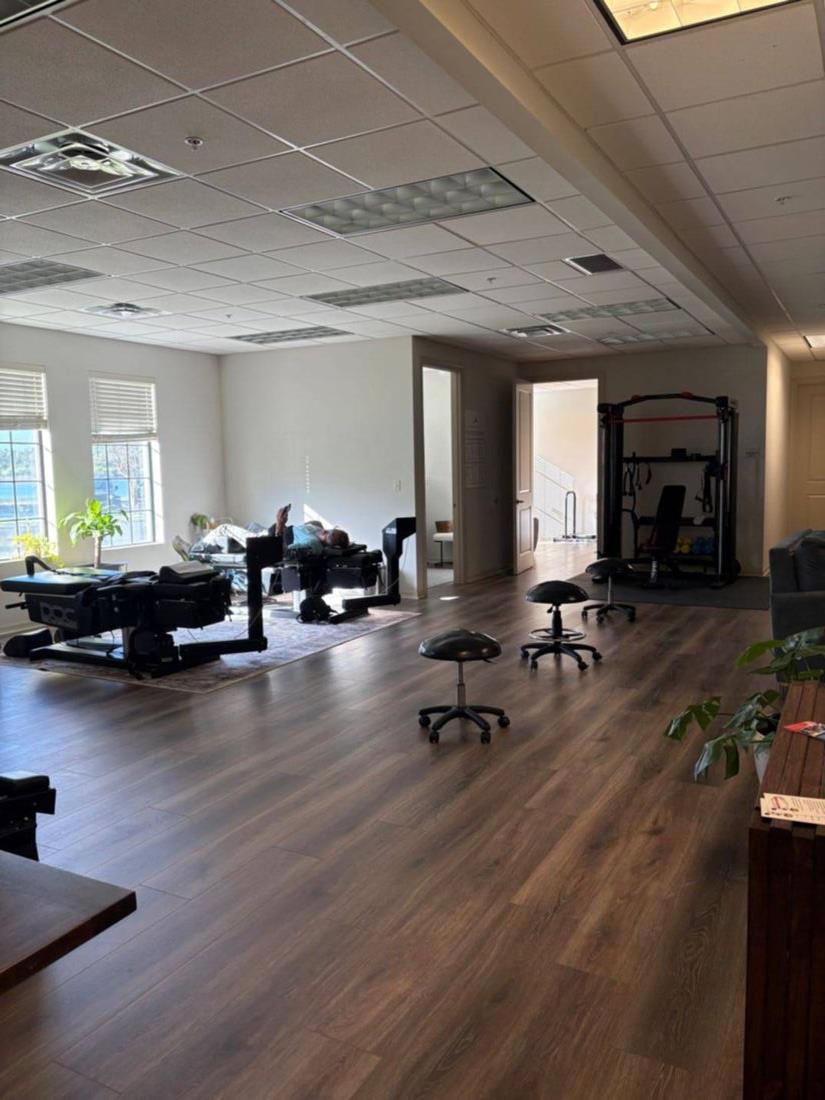
For disc-involved presentations, our spinal decompression program uses a computer-guided traction table to reduce disc pressure and encourage retraction of herniated material. Many patients with disc-related lifting injuries respond well to a structured decompression protocol. The system applies gentle, oscillating traction at specific angles to target the affected disc level rather than simply pulling on the spine globally.
For facet joint and joint-play restrictions, chiropractic adjustments restore proper motion at the restricted segment and reduce the pain-generating inflammation around the joint capsule. Dr. Banman has been doing this work for over 23 years and uses a variety of adjustment techniques depending on the patient's presentation and preferences.
For the muscle weakness component that almost always accompanies chronic low back problems, we incorporate rehabilitative exercise guidance and may use electrical muscle stimulation (EMS) to help reactivate deep stabilizing muscles that have become inhibited from repeated pain episodes.
For patients whose back pain has been present long enough to also involve nerve sensitization or peripheral neuropathy, Class IV laser therapy and our neuropathy-focused protocols may be added. The laser reaches 4 to 7 centimeters deep, putting lumbar nerve roots and adjacent soft tissue within its therapeutic range, reducing local inflammation and supporting nerve recovery.
The initial intake at our office includes a full orthopedic assessment. In many cases we can identify the primary driver of the pain on the first visit and outline a realistic care plan. If imaging is indicated, we refer appropriately and coordinate care with your primary physician or a radiologist familiar with musculoskeletal pathology.
Grandparenting Should Not Mean Gritting Your Teeth
The goal is not to stop lifting your grandchildren. That is not realistic, and the joy of those years is worth protecting. The goal is to understand what is happening mechanically, make the adjustments that reduce risk, and address any existing disc or facet dysfunction before it turns a normal grandkid weekend into a month of recovery.
If your back reliably flares after family visits, that pattern is telling you something specific about the underlying structure. Managing symptoms with over-the-counter medications between visits is not the same as evaluating and addressing the cause.
We see this presentation regularly at Spine and Wellness Center Lakewood Ranch. The intake, exam, and conversation are straightforward. You leave knowing what is driving the pain and what a realistic plan looks like for your situation.
Call us at (727) 213-2982 or book directly at celluron.janeapp.com. No referral required.