

Burning in the feet. Shooting pain down one leg. Tingling that starts at night and gets worse the longer you sit. Those three symptoms bring patients to our Lakewood Ranch office every week. Half the time it is sciatica: a disc pressing on a nerve root in the lower spine. A significant portion of the time it is peripheral neuropathy, nerve damage that has nothing to do with the disc at all. And when both are present at the same time, which happens more than most patients expect, the picture gets complicated fast.
The patients we see in our neuropathy recovery program often arrive having already tried months of care for "sciatica" that was not actually sciatica. Others come in convinced the disc is the problem and spend time on decompression for nerve damage that will not respond to it. In both cases, the lost time is real. Getting the diagnosis right in the first two to four weeks changes the care plan, the timeline, and what you can realistically expect.
This is how we tell them apart.
What Sciatica Actually Is
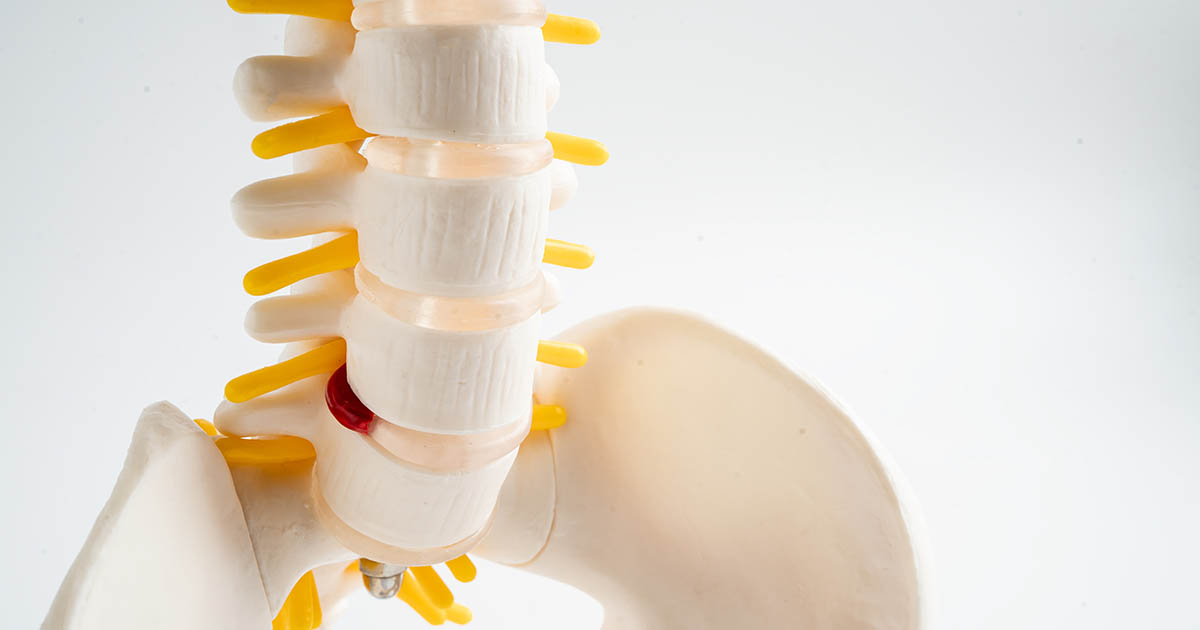
Sciatica is not a diagnosis by itself. It is a description of what a compressed nerve root is doing. The sciatic nerve is formed by roots L4 through S1 in the lower spine. When a disc herniates and pushes into the nerve canal, or when the foramen (the small opening each nerve exits through) narrows due to degenerative changes, the nerve gets compressed. That compression sends a chain of symptoms down the nerve's path: from the lower back through the buttock, down the back of the thigh, into the calf, and sometimes all the way into the foot and toes.
The characteristic features of true nerve-root sciatica:
- Usually one-sided (the disc is pressing on one nerve root)
- Follows a predictable path that maps to the compressed level
- Worsens with sitting, bending forward, or sustained disc pressure
- May briefly improve when walking or lying flat with knees bent
- Can include motor weakness in the affected leg when compression is significant
- Often triggered or worsened by coughing, sneezing, or straining
For a detailed look at the anatomy and what drives disc-related sciatica in Lakewood Ranch patients, see our sciatica treatment overview.
What Peripheral Neuropathy Actually Is
Peripheral neuropathy is a different problem in a different location. Instead of one compressed nerve root at the spine, neuropathy involves damage to the peripheral nerves themselves: the fine-gauge nerves that carry signals out to your skin, muscles, and organs after leaving the spinal cord. The damage can come from high blood sugar (the most common cause), nutritional deficiencies (B12 is a frequent culprit), certain medications (chemotherapy agents, some antibiotics, statins), autoimmune conditions, or from no identified cause at all. That last category, idiopathic neuropathy, accounts for roughly 30 to 40 percent of cases.
The presentation differs from sciatica in specific, testable ways:
- Usually both sides simultaneously, not just one leg
- Symptoms begin in the toes and feet first (the longest nerves fail earliest)
- Burning, tingling, and numbness rather than a sharp shooting quality
- Worse at rest and at night, not specifically tied to movement or disc loading
- Less positional: changing from sitting to walking does not produce the relief it often does with sciatica
- May also involve balance problems and reduced ankle reflexes over time
- Can eventually affect the hands as well (sock-and-glove pattern)
Where the Symptoms Overlap (And Why That Creates Confusion)
The descriptions above are clean on paper. The actual patient presentation is not always clean. A person with a right-sided L5-S1 disc herniation can have burning and tingling all the way into the right foot, the same presentation as early-stage neuropathy affecting the right side more than the left. A person with bilateral neuropathy may describe it as "shooting" because the nerve discomfort flares during walking, which sounds like positional sciatica. An older patient with both lumbar stenosis and diabetic neuropathy, more common than most patients expect especially in Florida's older population, presents with features of both at the same time.
Three specific symptoms generate the most confusion:
- Foot numbness: present in both conditions
- Leg burning at night: present in both conditions
- Calf or foot weakness: present in both conditions
When someone describes numbness running from the calf into the foot with burning at night, that description alone does not tell you which condition you are dealing with. The evaluation separates them, not the symptom list.
Signs That Point More Toward Sciatica
None of these signs confirm sciatica on their own. They shift the probability in that direction and guide what gets evaluated first:
- Pain is clearly worse when sitting and improves with walking or position change
- Symptoms are reliably one-sided (right leg or left leg, not both)
- Pain radiates from the buttock or lower back down into the leg, not just in the foot
- Coughing, sneezing, or bearing down makes the leg pain worse
- A history of a lifting incident, prolonged sitting, or prior disc problem
- Age in the 30s to 50s (disc herniation peak years, though it affects all ages)
- Straight-leg raise test on exam reproduces the leg symptoms
- Imaging shows a disc herniation or narrowing at a level that corresponds to the symptom pattern
The lumbar radiculopathy post on this site covers how specific disc levels map to specific parts of the leg, which is one of the clinical tools we use to narrow the likely source before imaging.
Signs That Point More Toward Peripheral Neuropathy
Again, these are probability shifters rather than definitive answers. Combined, they build a picture:
- Symptoms are bilateral (both feet), even if one side is worse
- Symptoms began in the toes and feet first, not in the back or buttock
- Known or suspected diabetes, pre-diabetes, or high blood sugar
- Recent chemotherapy, extended antibiotic course, or long-term statin use
- Heavy alcohol history
- B12 deficiency or a strict vegan diet without consistent supplementation
- Balance problems have appeared (peripheral nerves serve proprioception)
- Symptoms are worse at rest and at night, not specifically worse with sitting
- No prior back injury or imaging finding that accounts for leg involvement
Many patients with idiopathic neuropathy, meaning no identified cause, have spent two or three years managing the burning with over-the-counter anti-inflammatories and rest before anyone evaluated the nerves directly. By that point the nerve damage is more established and recovery takes longer. Earlier identification changes what is possible.
How We Evaluate Which One You Have
The evaluation starts before any imaging order is placed. Orthopedic tests like the straight-leg raise, slump test, and Kemp's test are designed to tension or compress nerve tissue at specific spinal levels. If they reproduce your symptoms, that is meaningful data. If they do not, that matters too. The distribution of numbness, meaning whether it follows a specific dermatome (nerve root territory) or covers the whole foot diffusely, and the reflexes (an absent Achilles reflex is common in both S1 nerve root compression and advanced neuropathy) both factor into the picture.
The intake history also carries weight:
- When did this start? Was there a precipitating incident?
- Does sitting longer make it reliably worse?
- Do symptoms wake you at night even when you have not been active?
- Is it one side or both sides?
- Does changing positions help at all?
If diabetes is in the picture, or if there is any question about systemic nerve involvement, we coordinate referral to the appropriate provider for nerve conduction studies or EMG when warranted. We do not diagnose or manage diabetes, and we do not replace a neurologist's evaluation when the picture suggests systemic nerve disease. What we can do is identify the structural spine component, evaluate it with orthopedic and neurological testing, and treat it if that is what the evidence supports.
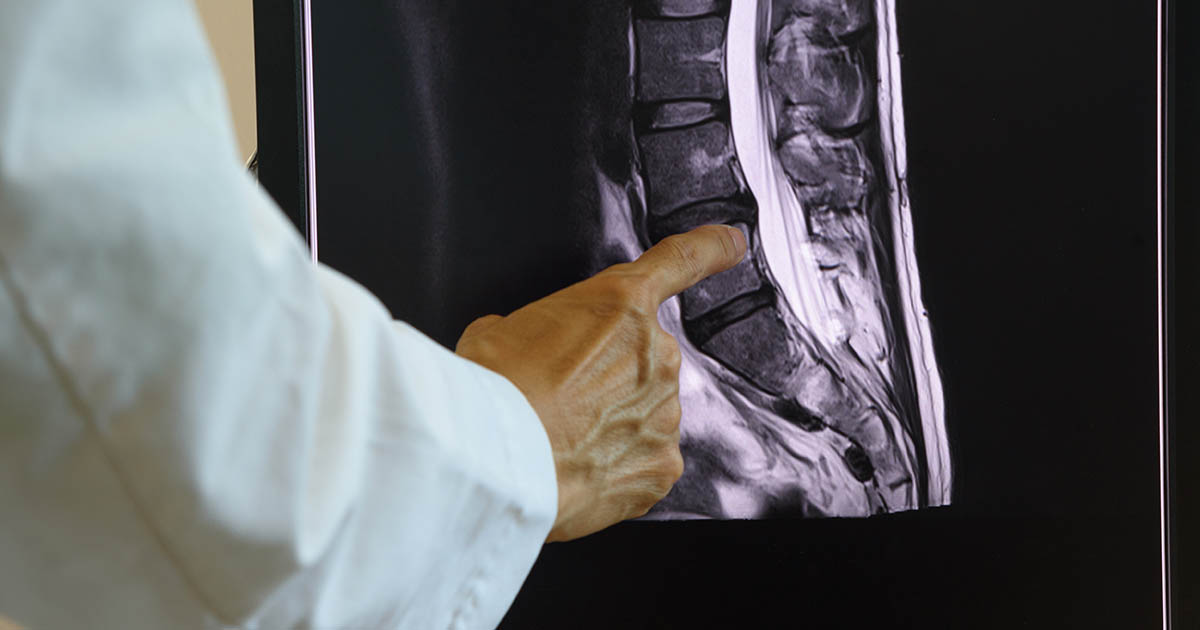
Imaging context: an MRI shows whether there is a disc herniation or foraminal narrowing. It does not show peripheral nerve health. A normal lumbar MRI in someone with neuropathy symptoms does not rule out neuropathy. It rules out a structural spine cause.
Why the Treatment Paths Split at the Start
This is the practical reason getting the diagnosis right matters in week one rather than week twelve.
For sciatica from disc compression: the primary goal is reducing pressure on the nerve root. Non-surgical spinal decompression is the most direct tool for this: traction-based, position-specific treatment designed to draw the disc away from the nerve. Chiropractic adjustments at the appropriate level, targeted exercises to reduce disc loading, and Class IV laser for tissue inflammation around the disc support that goal. Many patients with disc-driven sciatica move through an 8 to 12-week structured program with meaningful improvement in symptoms. Treatment that misses the disc mechanism, stretching alone, generic core strengthening, massage, may not produce the same result.
For peripheral neuropathy: the nerve damage is not from a disc, so decompression does not address it. The goals are to reduce ongoing damage (address the underlying cause where identifiable), support nerve tissue repair, and improve circulation to the affected nerves. In our neuropathy program in Lakewood Ranch, that means Class IV laser (which penetrates deeply enough to reach peripheral nerve tissue), electrical muscle stimulation to activate nerve pathways, hyperbaric oxygen for cases where vascular compromise is a factor, and whole-body vibration to stimulate nerve endings and proprioceptive signaling. Recovery from neuropathy is slower than from disc injury: nerve tissue heals at a different rate than soft tissue, and the outcome depends significantly on how long the damage has been progressing and whether the underlying driver (blood sugar levels, for example) is being addressed at the same time.
Treating sciatica as if it were neuropathy: laser and EMS are applied while a disc herniation continues to press on the nerve root. The nerve does not recover because the mechanical pressure has not been removed. Treating neuropathy as if it were sciatica: decompression is applied to a spine that is not the source of the problem. Neither path moves the needle when the diagnosis is wrong.
When You Have Both
It is more common than people expect. A patient in their early 60s with a decade of poorly controlled blood sugar may have early peripheral neuropathy AND a lumbar disc herniation from years of physical work. The neuropathy creates baseline burning in both feet. The herniation adds a sharper, one-sided radiating component down one leg. Both are real. Both need to be addressed.
In those cases the evaluation needs to identify both drivers. The care plan addresses them in parallel or sequentially depending on which component is more urgent and more limiting. Chiropractic management of the disc does not interfere with neuropathy care; in many patients it is part of the same overall program.
The signal to watch for: symptoms that are partly explained by what we find on the spine exam, but not entirely. Something is left over after the disc component is accounted for. That remainder is worth investigating for a neuropathy component, particularly in patients over 55, those with diabetes or pre-diabetes, or those who have not had the improvement expected from purely mechanical care.
If you are in Lakewood Ranch, Bradenton, or Sarasota and treatment for "sciatica" has not been producing the results your provider expected, that is worth a second look. The disc may not be the whole story.