
Our neuropathy program is for a specific kind of case.
Burning, tingling, numbness, or shooting pain in the hands and feet can come from several different sources, and our program is not a fit for all of them. So the first thing Dr. Banman does is examine you, including sensation and balance testing, then tells you straight whether he thinks the program is a reasonable fit, before you commit to anything.
Not everyone with nerve pain is a candidate for this program. Visit one is where we find out, and if the answer is no, we tell you and point you toward what might help.
- Multi-modalSeveral therapies, not one device
- Drug-freeNo new prescriptions
- EN · ESBilingual care
How the neuropathy program unfolds.
Here are the four steps, in order, from your first evaluation to re-checks and maintenance.
-
1
Full Nerve Evaluation
Dr. Banman goes over your history, medications, and symptoms, then tests sensation, vibration, balance, and reflexes. He looks for things that may be contributing, some of which get overlooked, and gives you an honest answer on whether this program is a reasonable fit.
-
2
Custom Treatment Plan
A written plan for your case: which therapies, in what order, how often, and when re-evaluations happen. You leave the second visit knowing the schedule and what each visit involves.
-
3
Multi-Modality Therapy
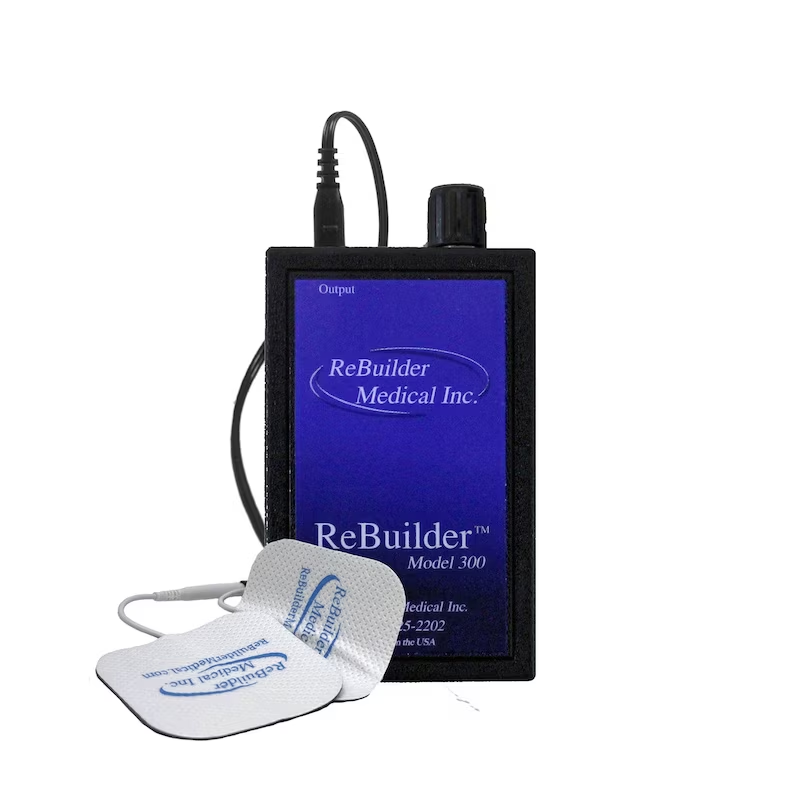
The active phase: ReBuilder electrical nerve stimulation, Class IV laser, electrical muscle stim, and decompression when Dr. Banman recommends it, often in the same visit. Two to three visits per week for several weeks.
-
4
Re-Eval & Maintenance
Formal re-measurement of pain, sensation, balance, and function at set intervals. We compare the numbers to your baseline and tell you plainly what has changed and what hasn't. If you keep going after the active phase, it is on a lighter maintenance schedule.
If your numbness or pain sounds like one of these, an evaluation is where to start.
Diabetic neuropathy
Burning, tingling, numbness in hands and feet from diabetic nerve damage.
Chemo-induced neuropathy
Nerve symptoms from oncology treatment that have lingered.
Idiopathic neuropathy
"Cause unknown" cases, where testing hasn't turned up a clear reason.
Post-surgical nerve pain
Persistent nerve symptoms after a back, neck, or extremity surgery.
Compressive nerve issues
Pinched-nerve causes from disc, stenosis, or scar tissue.
Restless legs & cramping
Leg symptoms that can overlap with nerve problems and are worth checking.
How the neuropathy program works.
Full evaluation
Dr. Banman looks at your symptoms, history, and possible contributors. Honest assessment first.
Written care plan
The plan usually combines several therapies, such as ReBuilder electrical stimulation, laser, EMS, and lifestyle support, on a set schedule.
Multi-week treatment series
Visits 2 to 3 times a week for several weeks. Each visit follows your written plan.
Re-measured along the way
Re-evaluations at set intervals. We measure pain, sensation, balance, and function, and we tell you plainly what has and hasn't changed.
Quick answers.
Will it actually work for me?
Nobody can honestly promise that, and results vary from person to person. It depends on the type of neuropathy, how severe it is, and how long you've had it. At the evaluation Dr. Banman tells you whether he thinks the program is a reasonable fit. If you start, we re-measure pain, sensation, balance, and function at set intervals so you can see what has and hasn't changed.
How long does the program take?
Usually several weeks of two to three visits per week, with re-evaluations at set intervals. Dr. Banman goes over the full written plan with you at your second visit.
Does it hurt?
The therapies are non-invasive. Electrical stimulation usually feels like tingling or pulsing, and the laser feels warm. If anything is uncomfortable, tell us and we adjust it.
Will insurance cover it?
Neuropathy programs are rarely covered by insurance. HSA and FSA accepted; CareCredit available for financing. Payment options →
Do I need to stop my medications?
No. Keep taking your medications as prescribed. Any change is between you and the doctor who prescribed them, and we don't direct prescription changes.
More questions about the neuropathy program.
Neuropathy often has more than one contributor, such as blood sugar, circulation, or pressure on a nerve, and some of those need your medical doctor. The program combines several in-office therapies with lifestyle support, and we measure how you respond as we go.
Why does the program use more than one therapy?
Peripheral neuropathy can have more than one contributor, and the mix differs from person to person. Using several therapies lets Dr. Banman build the plan around what he finds at your exam instead of relying on a single device. Combining them does not promise a better result, which is why we re-measure at set intervals and tell you what the numbers show.
What should I realistically expect?
Nobody can honestly promise a result, and results vary from person to person. Some nerve damage is long-term. What we can tell you, after the exam, is whether Dr. Banman thinks the program is a reasonable fit for your case, what the plan involves, and when we will re-measure. You decide from there.
How long does the neuropathy program take?
The active phase is usually several weeks of two to three visits per week, with formal re-evaluations at set intervals to track sensation, balance, and pain. After that, some patients continue on a lighter maintenance schedule. Your written plan shows the timeline before you decide to start, so there are no surprises.
Who is a candidate for our neuropathy program?
Dr. Banman evaluates people with diabetic, chemo-related, idiopathic, or compressive peripheral neuropathy. Whether you are a candidate depends on what he finds at the exam, including how your nerves respond to sensation testing. The program is not the right fit for every case, and he will tell you up front if another provider would serve you better.
How is this different from medication-based neuropathy treatment?
Medical doctors prescribe drugs such as gabapentin, pregabalin, and duloxetine to manage neuropathy symptoms. Our program uses no drugs, and it runs alongside the care you get from your medical doctors, not instead of it. Keep taking your medications as prescribed. Any change is between you and the doctor who prescribed them.
Living with neuropathy? Don't wait.
New or worsening numbness, burning, or balance trouble is worth getting checked. Call and we'll get you evaluated.