
Plantar fasciitis names the pain, not the cause.
You know the pain: sharp on the first steps out of bed, then easing as the foot warms up. Often it is the plantar fascia at the heel. Sometimes the heel is just where you feel it, and the real driver is a tight calf, the way you walk, or a nerve referring from higher up. An X-ray can find a heel spur and still not explain your pain, since plenty of people carry the same spur and never feel it. The first visit is where we pin down which of those it is, then decide together whether what we do here is even the right fit.
Softwave and shockwave are not right for every heel. If your case is early enough that rest and better shoes will handle it, or if the pain is coming from a nerve instead of the fascia, we will tell you that instead of selling you a plan.
- No shotstissue-healing, not numbing
- 6-12 weekstypical improvement
- 23+ yrsDr. Banman's experience
It is almost always right here.
The plantar fascia runs from your heel bone (calcaneus) along the arch and fans out to the toes. The classic painful spot is where the band attaches to the heel, the medial calcaneal tubercle you instinctively press when it flares.

Where it hurtsThe fascia anchors to the heel bone right here. Plantar fasciitis is microtearing and irritation at this attachment, classically worst with your first steps in the morning.
The plantar fasciaA thick band that supports your arch like a bowstring. Tight calves, sudden load, or poor support overwork it until the tissue starts to break down.
Tap a marker to explore
- Where it hurtsfront-bottom of the heel, sometimes radiating into the arch
- When it hurtsfirst steps in the morning, after sitting, after long days standing
- What it ismicrotears + degeneration at the heel-bone attachment, not just inflammation
- How we treat itsoftwave and shockwave, designed to prompt real tissue repair, plus gait work
Why the fascia gets overloaded.
Plantar fasciitis is usually a load-versus-capacity problem. The tissue is being asked to do more work than it can recover from.
Sudden increase in standing or walking
A new job on your feet, a vacation with long touristy days, switching to a standing desk. The fascia adapts slowly, sudden load changes are the most common trigger.
Tight calves & Achilles
The fascia is functionally an extension of the calf. Tight calves drag on the heel attachment with every step.
Flat or high-arched feet
Both extremes change how load distributes across the fascia. Flat feet stretch it, high arches stress it unevenly.
Worn-out or unsupportive footwear
Old running shoes, flat dress shoes, flip-flops on hard tile, all dump load straight into the heel attachment.
Weight changes
Weight gain, pregnancy, or a return to running after a layoff can each tip the fascia past what it can handle.
Running & jumping sports
Distance runners, basketball players, tennis players, hikers. Anyone whose foot strikes hard repeatedly.
Tissue-healing therapies, not just numb-and-hope.
The honest goal is regenerating the actual tissue, restoring its tensile strength, and offloading whatever caused the overload in the first place.
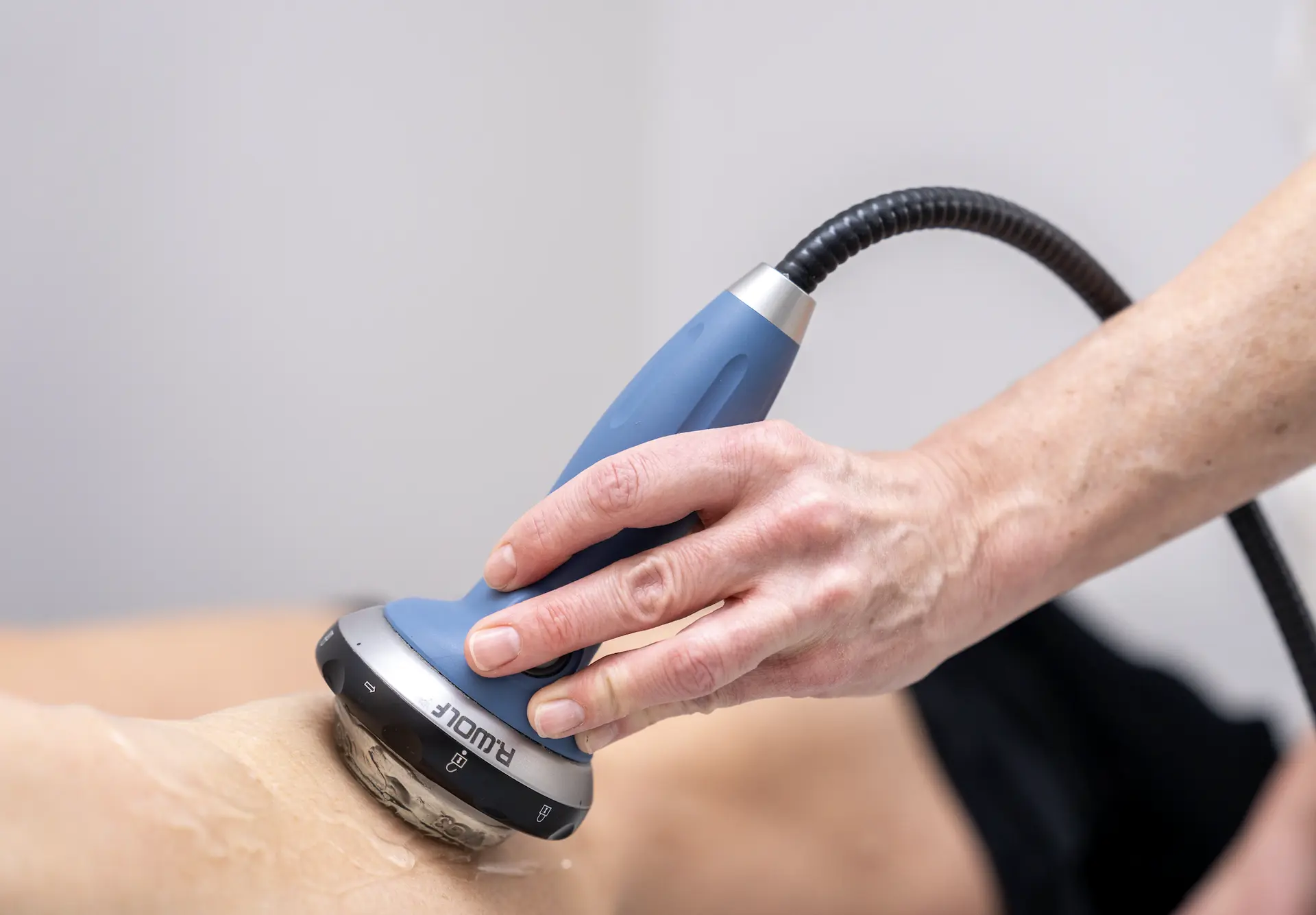
Softwave Therapy
Mechanotransduction at the cellular level. May stimulate the fascia's own repair cells to rebuild the damaged tissue.
Learn more →Shockwave Therapy
Focused acoustic waves to drive blood flow into the chronic painful spot and disrupt scar tissue.
Learn more →Class IV Laser
Calms the inflammation that flares the fascia, especially in the first 2 to 3 weeks.
Learn more →Gait & foot mobility
Mobilizing stiff foot and ankle joints, plus addressing how you actually walk so the fascia is not the next casualty.
Learn more →Why "fasciitis" is partly a misnomer.
The name suggests pure inflammation, but the modern understanding is more nuanced. Knowing what is actually happening to the tissue points to the treatment that works.
Early stage: real inflammation
In the first few weeks of plantar fasciitis, the tissue is genuinely inflamed. Ice, rest, taping, supportive shoes, and anti-inflammatory care help. Laser therapy is especially useful here because it specifically calms the inflammatory chemistry. If you catch it in this window, recovery is usually quickest.
Later stage: fasciosis, not fasciitis
Once heel pain has been around for 2 to 3 months, the picture changes. Biopsy studies show that chronic plantar fasciitis is actually a degenerative condition: thickened, disorganized collagen at the heel attachment, very little active inflammation. Anti-inflammatory treatment alone stops helping. The tissue itself needs to be rebuilt, and that is what softwave and shockwave therapy aim to support by prompting the body's own repair response.
The real role of heel spurs
X-rays often find a bony spur on the bottom of the heel in patients with plantar fasciitis. For decades the spur was blamed for the pain. We now know the spur is almost always a result, not a cause, of the underlying fascia problem, and a third of people with the same spur on imaging have zero pain. Treating the fascia, not the spur, is the right strategy. Spur-targeted surgery is rarely necessary.
Quick answers.
Why is plantar fasciitis worse in the morning?
Overnight the plantar fascia tightens up and any microtears begin to heal in a shortened position. The first few steps in the morning stretch that tissue and effectively re-tear it before the foot warms up. Pain usually eases after 5 to 15 minutes of moving. Stretching the calves before getting out of bed often softens that first-step pain quickly.
How long does plantar fasciitis take to heal?
With conservative care, most cases improve in 6 to 12 weeks. Cases that have been chronic for many months may need longer, especially when the fascia has become more degenerative than inflammatory. Softwave and shockwave therapy may shorten the recovery curve in stubborn cases by prompting the body's own repair response.
Do I need a cortisone shot for plantar fasciitis?
Most patients do not. Cortisone can provide short-term relief but does not address the underlying tissue degeneration, and repeated shots can weaken the fascia and the protective fat pad under the heel. Softwave and shockwave therapy stimulate genuine tissue healing without those risks, which is why we prefer them as first-line.
Is walking good for plantar fasciitis?
Gentle walking in supportive shoes is usually fine and often helpful. Barefoot walking on hard surfaces, long days on your feet without a break, and high-impact running on a flared foot tend to make it worse. We adjust the dose based on the stage of healing.
Should I stretch or strengthen?
Both. Stretching the calves loosens the upstream tension that pulls on the fascia. Loading work, specifically heavy slow calf raises with the toes elevated, actually builds tensile strength in the fascia itself. The combination outperforms stretching alone in research.
What shoes should I wear?
Supportive, structured shoes with a moderate heel drop are usually best during a flare. Flip-flops, flat dress shoes, and old worn-out sneakers tend to flare things. A custom or off-the-shelf insert can help offload the heel. We give specific recommendations after looking at your foot.
Will it come back?
Not if you maintain the strength and mobility gains. Most relapses come from drifting back into the original loading pattern, old worn shoes, no calf raises, sudden increase in standing or walking. The maintenance is genuinely cheap and effective once you have the rhythm.
Insurance?
Some plans cover specific services. Softwave and shockwave are typically not covered by insurance. HSA/FSA accepted. Payment options →
Signs your heel pain needs a real plan.
Plantar fasciitis is rarely an emergency, but it is one of those conditions where waiting too long shifts the case from "easy" to "stubborn."
Heel pain past 4 weeks
Once it has been around longer than a month, self-treatment becomes much less effective. Structured care shortens the timeline.
It changes how you walk
Limping or shifting weight off the heel for more than a few days starts loading the knee, hip, and low back. Now you have two problems.
Pain that wakes you up
Heel pain that persists at rest, not just on first steps, can mean a more serious heel condition (stress fracture, bone bruise, neuritis). Worth a proper exam.
You've had multiple cortisone shots already
If shots are providing shorter and shorter relief, the tissue is telling you it needs something different. Softwave and shockwave are typically what works at that stage.
Numbness or shooting pain into the foot
That points to a nerve, not the fascia, possibly tarsal tunnel, possibly referred from the lower spine. The treatment differs and we want to differentiate early.
Sudden onset after a snap or pop
An audible pop with sharp acute heel pain may indicate a partial plantar fascia rupture rather than fasciitis. Different acute care, evaluate quickly.
Let's find out what's actually causing it.
A real exam to pin down the cause, then an honest plan, or an honest referral if it isn't us. Quickest path is a phone call.