
Frozen shoulder in Lakewood Ranch. First we find what's driving it.
You can't lift your arm to a shelf. Rolling onto that side at night jolts you awake. A shoulder that stiffens like this gets labeled frozen shoulder, or adhesive capsulitis, but a stiff shoulder has more than one cause. A scan will often show a worn cuff tendon or a little arthritis, and neither one has to be why the arm won't move. In Lakewood Ranch, Dr. Banman sorts this out by hand, comparing how far the arm goes when he lifts it for you against how far you can lift it yourself. First visit, that is the question we answer, then we match the plan to the phase you are in.
Not every stiff shoulder is a fit for what we do here. Some turn out to be a torn cuff or arthritis that wants a different route, and a few are far enough along that a surgeon is the honest answer. We figure that out on the first visit, and if our care isn't right for you, we tell you plainly and point you where to go.
- Non-surgicalconservative-first plan
- Softwave + lasercapsule + tissue care
- 23+ yrsDr. Banman's experience
Frozen shoulder runs a known course. Step through it.
Adhesive capsulitis isn't random, it tends to move through three distinct phases: freezing (pain ramps up), frozen (motion locks down), thawing (motion slowly returns). Knowing where you are decides what care should look like.
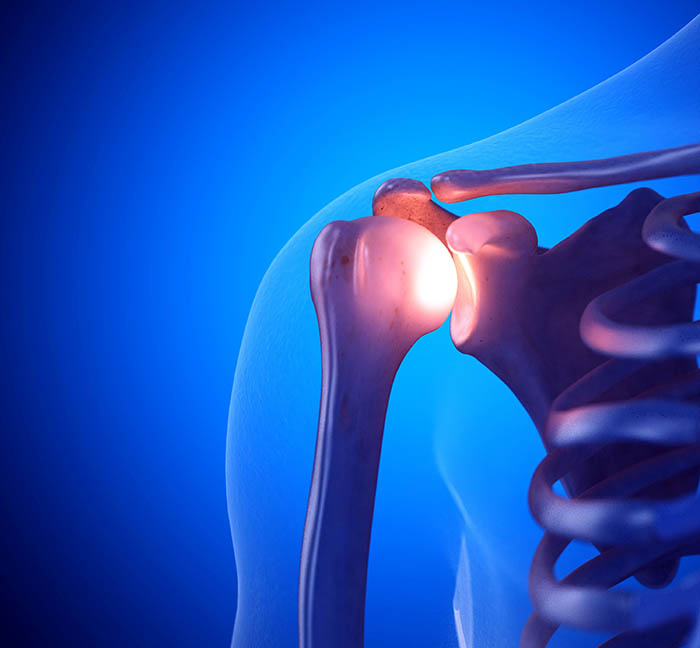
Freezing phaseThe capsule around the joint becomes inflamed and painful. Pain ramps up, often worst at night, and you start guarding the arm, which quietly begins to limit motion.
Frozen phaseThe pain may ease, but the capsule has thickened and tightened like shrink-wrap. Range of motion is now severely limited, reaching, dressing, and overhead movement get hard.
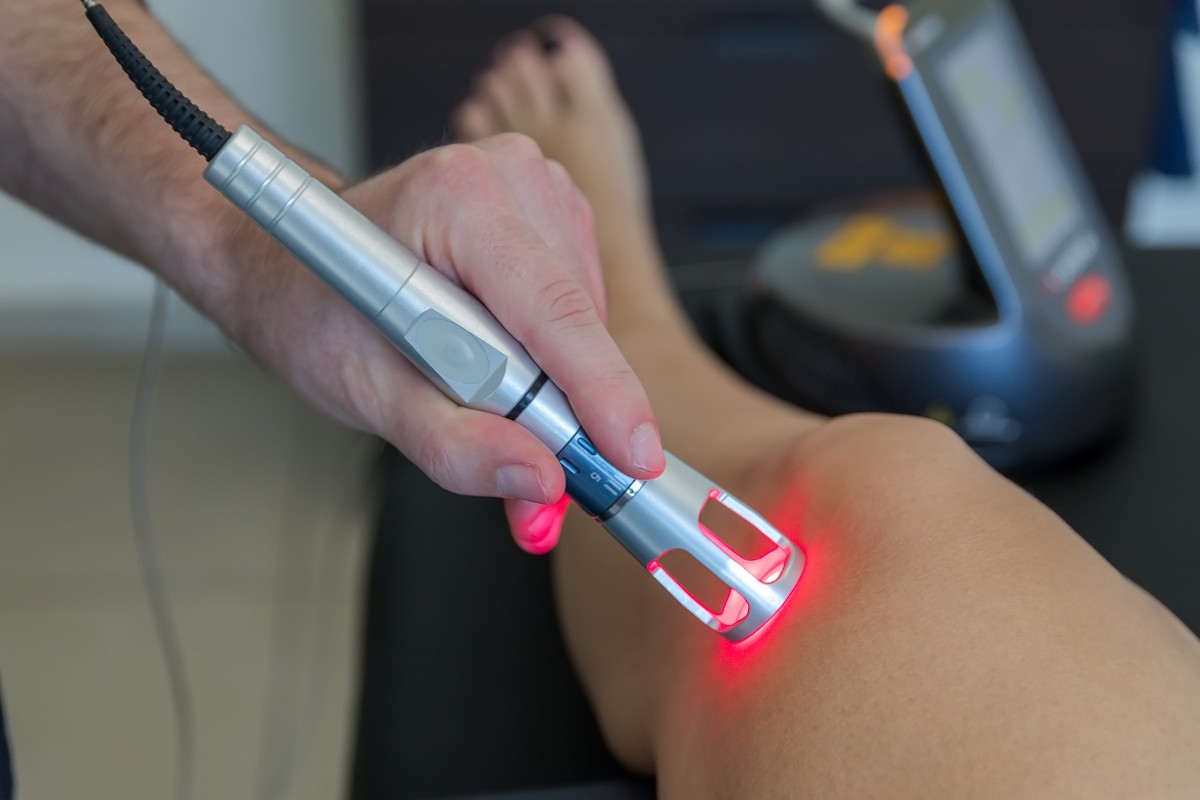
Thawing phaseThe capsule slowly loosens and motion returns. It can be slow on its own, our care (laser, joint mobilization, decompression) is aimed at speeding this phase and protecting the gains.
Step through the phases
Why some shoulders freeze.
Some frozen shoulders come out of nowhere. Others have clear triggers. Knowing the pattern shapes the plan.
Idiopathic (no clear trigger)
About half of cases. The capsule just decides to inflame and contract. Most common in 40 to 60 year olds, slightly more often in women.
After a period of immobility
Sling time after a fracture, recovery from rotator-cuff surgery, or just protecting a painful shoulder long enough that the capsule shrinks. Motion that does not happen, disappears.
Diabetes
A real risk factor, type 1 and 2. Diabetes changes connective-tissue chemistry and roughly triples the risk of frozen shoulder, often bilaterally and with stickier recovery.
Thyroid disorders
Hypothyroidism in particular is associated with higher frozen-shoulder risk, again through connective-tissue chemistry.
After a minor shoulder injury
A bump, a tweak, a strain that should have resolved in 2 weeks instead spirals into months of progressive stiffness. The injury was just the trigger.
After cardiac or chest surgery
Open-heart, mastectomy, lung surgery. Anything that immobilizes the chest wall and shoulder girdle for a stretch.
Phase-matched care, not one-size-fits-all.
The right care depends on the phase. Aggressive stretching in the inflammatory phase backfires. Gentle stretching in the frozen phase moves the needle.
Softwave Therapy
Mechanotransduction at the capsular level, encouraging the body's own tissue remodeling. Useful in frozen and thawing phases.
How softwave works →Class IV Laser
Specifically valuable in the painful freezing phase to calm capsular inflammation and let early motion happen.
Why laser helps →Mobilization & adjustments
The neck, mid-back, and scapular joints all influence shoulder mechanics. Restoring motion upstream reduces compensatory strain.
See the approach →Shockwave
Helpful for stubborn cases with calcific deposits or fibrotic capsule, typically in late frozen / early thawing phases.
When we use it →The three phases in plain English.
The biggest mistake patients make is treating all three phases the same way. They are not the same problem.
Phase 1, freezing (2 to 9 months)
The capsule is actively inflamed. Pain dominates: deep ache at rest, sharp catches with motion, brutal sleep on that side. Range of motion is starting to drop but the loss is more from pain-guarding than from true contracture. The right care here is calming, not forcing. Laser therapy targets the inflammation. Gentle pain-respecting motion keeps things from locking. Aggressive forced stretching during freezing actually worsens the capsule's reaction and prolongs the course.
Phase 2, frozen (4 to 12 months)
Pain settles down some, but the capsule is now physically contracted. Range of motion is genuinely lost, not just pain-limited. Reaching back to fasten a bra, putting on a jacket, washing your hair, all stop working. This is the phase where serious mobilization work pays off. The capsule is no longer raw, so it can take graded loading. Softwave therapy may help the body remodel the fibrotic tissue. Daily home stretches matter more than treatments at this point.
Phase 3, thawing (5 to 24 months)
Motion gradually returns. Pain continues to fade. The capsule remodels, becomes more elastic again. The key here is rebuilding strength and motion together so you do not just regain range with a weak shoulder. Most patients in this phase do well with a structured progressive strengthening plan and intermittent softwave sessions for stubborn end-range tightness.
Quick answers.
How long does a frozen shoulder last?
Untreated frozen shoulder can take 1 to 3 years to fully resolve on its own, moving through painful, frozen, and thawing phases. With active conservative care, the timeline is usually much shorter, and the loss of motion at the bottom of the curve is typically less severe. Catching it during the freezing phase is the highest-leverage window.
Will I get my full range of motion back?
Most patients do, though it can take time. The capsule does eventually remodel and motion returns. Active care can accelerate that timeline and prevent the worst of the stiffness from setting in. A small subset, particularly with diabetes, may have some residual end-range tightness even after the rest of the recovery is complete.
Should I push through the pain to stretch?
Not in the early painful phase. Aggressive forced stretching during the inflammatory freezing phase can actually worsen the capsule's reaction and lengthen the course. Gentle, pain-respecting motion combined with modalities that calm the inflammation is the right approach until the painful phase settles. In the frozen phase, more aggressive stretching becomes appropriate.
Do I need a cortisone shot or surgery?
Most patients do not need either. Cortisone can help in select cases of severe early pain by calming the inflammatory phase quickly, but it is not a fix and the relief is temporary. Surgery (manipulation under anesthesia or arthroscopic capsular release) is reserved for the small subset of cases that have failed a thorough conservative plan after 9 to 12 months.
Can frozen shoulder affect both shoulders?
Yes. Roughly 20 to 30 percent of people with frozen shoulder on one side eventually develop it on the other. Diabetics are more likely to develop bilateral involvement. The contralateral case usually shows up within a few years of the first.
Is frozen shoulder the same as a rotator cuff tear?
No, they are different problems that can sometimes coexist. A rotator cuff tear is a structural injury to one of the four shoulder muscles or their tendons, and it typically limits active motion but leaves passive motion (when someone else moves your arm) relatively preserved. Frozen shoulder limits both active and passive motion equally, because the capsule itself is the limiter. Sorting this out is part of the exam.
Why is night pain so bad?
Lying on the affected shoulder compresses the inflamed capsule and pinches the inflammatory chemistry against the bone. Lying on the unaffected side often lets the bad shoulder drop forward, which also stretches the inflamed capsule painfully. A small pillow under the affected arm to support it in neutral often helps.
Is any of this covered by insurance?
Chiropractic care may be covered. Softwave and shockwave are typically not covered by insurance. HSA/FSA accepted. Payment options →
Catch it early, save months.
Frozen shoulder is one of the conditions where the timing of the visit changes the whole curve. Earlier evaluation usually means a shorter, gentler course.
Shoulder pain past 2 to 3 weeks with stiffness
If pain is paired with progressive loss of motion, not just soreness, frozen shoulder is on the differential. Earlier exam, smarter plan.
Can't reach overhead or behind your back
If you can no longer reach the back pocket, the seatbelt, or the top shelf, the capsule is talking. Time to evaluate.
Night pain that wakes you
Persistent night pain on the affected side is one of the most consistent signals of inflammatory capsulitis. Worth getting in front of.
You have diabetes and your shoulder is stiffening
Diabetic frozen shoulder is more stubborn and more often bilateral. Earlier care helps avoid the worst of that pattern.
It's the second shoulder this is happening to
Once one shoulder has been through it, the other often follows. Active care on the second one can shorten the course significantly.
Numbness or arm weakness with the shoulder pain
That points to nerve involvement, not just the capsule. We screen for cervical contribution and adjust the plan accordingly.
Let's find out what's driving it.
We start by pinning down what is actually locking the shoulder up, then give you a straight read on whether softwave, laser, and mobilization can help. Quickest path is a phone call.