
A patient finishes a round of spinal decompression. The radiating leg pain is gone, the sleep is better, and bending forward no longer triggers that familiar sharp catch. Relief, finally. Six weeks later they are back in the office. Same leg. Same pain. They want to know what happened.
This pattern comes up often enough that it deserves a real explanation, not a vague answer about needing more sessions. The short version is this: decompression solved one part of the problem and left another part untouched. The disc pressure was addressed. The stability around the disc was not. Understanding the difference between those two things, and what to do about the second one, is the core of this post.
What Spinal Decompression Actually Does
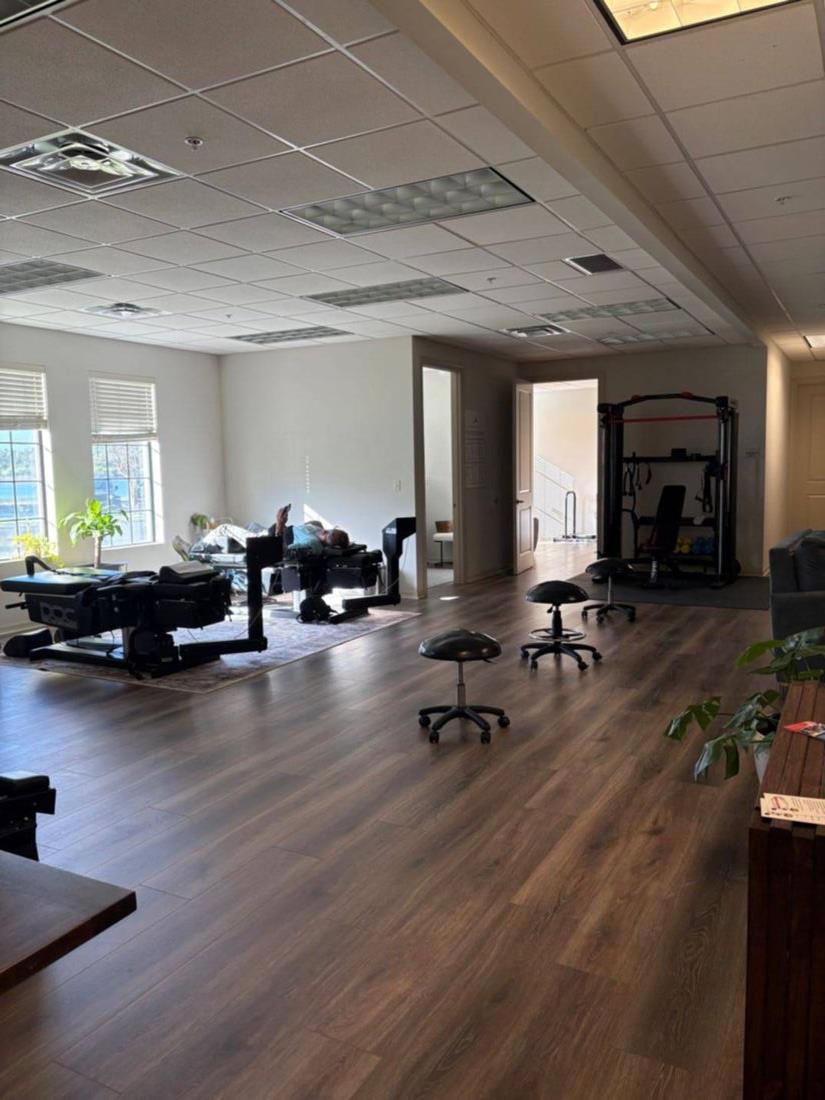
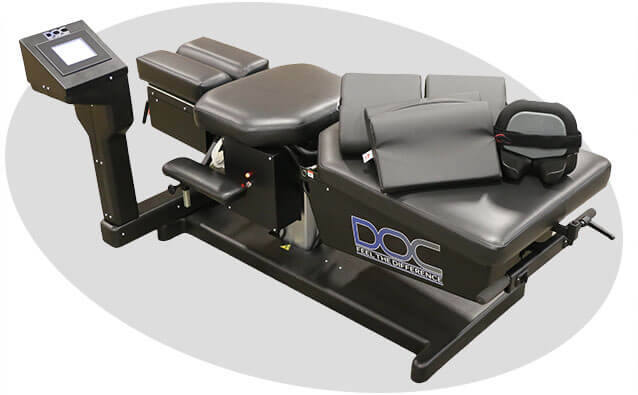
Spinal decompression is a computer-guided traction protocol delivered on a specialized table. At our Lakewood Ranch clinic, we use the DOC-20 system, one of the more precise decompression platforms available for clinical use. The table applies controlled tensile forces to the lumbar or cervical spine in a programmed cycle: gradual loading to a target distraction force, sustained hold, gradual release. Sessions run 20 to 30 minutes depending on the protocol and the patient.
The mechanical goal is to create a brief period of negative intradiscal pressure. This matters because most disc-related pain comes from compression: the disc is being squeezed (by posture, body weight, or accumulated load), herniated material is pressing on a nerve root, and the nerve root responds with radiating pain down the leg or arm.
Decompression works against that compression in two specific ways. First, the negative pressure can create a gentle centripetal force on herniated disc material, pulling it back toward the center and away from the nerve root it was pressing against. This is the most common explanation for why radiating symptoms like sciatica improve during or after decompression sessions. Second, the pressure reversal creates a pumping effect inside the disc. Spinal discs have no direct blood supply in adults; they rely on diffusion through intermittent loading and unloading for nutrition. Sustained compression, from sitting all day or years of poor posture, reduces that diffusion. Decompression restores it, which supports disc tissue health over time.
For a detailed breakdown of how this technology works and what conditions respond best, see our spinal decompression page.
What decompression does not do is address the muscles that need to stabilize the spine after the disc pressure is reduced. That gap is the most common reason for the pattern we described in the opening.
The Stability Gap: Why the Pain Comes Back
When a disc herniates or bulges and begins pressing on a nearby nerve root, something protective happens in the surrounding muscle tissue. The brain detects the injury and inhibits the local stabilizing muscles in that area. This is not a voluntary decision. It is a reflex, and it is designed to protect the injured segment from further damage in the short term.
The muscles most affected are the deep segmental stabilizers: primarily the multifidus, a series of small muscles running along each vertebral level, and the transversus abdominis, a deep abdominal muscle that functions like a corset around the lower spine. These are not the muscles you feel during a crunch or a deadlift. They are the muscles that fire milliseconds before any movement begins, pre-stiffening the spine to protect it from the forces that are about to arrive. Their job is not to generate motion. Their job is to prevent unwanted motion.
When disc pain shuts these muscles down, the global movers step in to try to compensate. The larger spinal erectors, the hip flexors, the quadratus lumborum. These muscles were not designed for that role. They are fast-twitch, force-production muscles, not precision stabilizers. They fatigue, they overshoot, and they cannot replicate the millisecond timing of the deep stabilizers they are covering for. The spine is still moving, but it is moving without its most precise support system.
When we reduce disc pressure through decompression but do not restore the deep stabilizers, we have solved half the structural problem. The disc has room. The spine does not yet have the neuromuscular control to protect that room under load.
Here is what is well established in the research literature on this topic: the multifidus does not automatically recover just because pain decreases. Studies examining multifidus cross-sectional area and electrical activation in patients after acute disc injury find persistent atrophy and altered firing patterns that continue long after pain has resolved. Pain relief does not equal stability restoration. The brain inhibited those muscles for protection, and without targeted intervention, many patients never fully regain normal stabilizer function.
The result is a spine that feels fine at rest, tolerates light activity, but has a fragility threshold that gets triggered unpredictably. A car ride. A sneeze. A single awkward reach. Any of these loads can send the disc back into compression against the nerve, and the patient is back where they started.
For more on how disc injury and nerve compression interact over time, see our disc issues page.
What Whole Body Vibration Does Differently
Whole body vibration (WBV) uses a vibrating platform to transmit mechanical oscillations through the body at specific frequencies. The platforms at our Lakewood Ranch clinic operate at adjustable frequencies in the 25 to 50 Hz range, with vertical vibration that can be calibrated based on the patient's condition, tolerance, and phase of recovery.
At those frequencies, something specific happens in the neuromuscular system. Embedded within each muscle are sensory receptors called muscle spindles. Their job is to detect changes in muscle length and trigger compensatory contractions to maintain posture and joint position. When the platform vibrates at 25 to 50 Hz, the spindles detect the rapid length changes and fire the tonic vibration reflex, a pattern of sustained involuntary contraction that recruits deep postural muscles in a way that traditional exercise does not reliably produce.
The multifidus and transversus abdominis respond particularly well to this stimulus. They are slow-twitch, tonic muscles designed for precisely this kind of sustained, low-level activation. Conventional exercise tends to recruit fast-twitch fibers and the global mover muscles that the nervous system prioritizes for large force production. WBV bypasses that hierarchy. The reflex pathway goes directly to the postural stabilizers.
This is not a strength training effect in the conventional sense. The clinical goal is not to build larger muscles. The goal is neuromuscular re-education: restoring the reflex arc that disc pain interrupted, getting the brain to fire those stabilizers at the right time, right level of activation, and in coordination with movement. For patients whose deep stabilizers have been inhibited for months or years, WBV provides a stimulus their nervous systems can act on when voluntary exercise cannot reliably get there.
For more on the protocol and equipment, see our whole body vibration page.
Why the Order Matters: Decompression First, Then Vibration
The combination only works in a specific sequence. Applying whole body vibration to a spine that still has active disc compression, significant nerve root irritation, or an acute herniation is not neutral. The oscillations add a compressive load to a structure that is already under too much compression. For some patients in very controlled, low-amplitude settings this can be tolerated, but the risk of aggravating an already inflamed disc is real and not worth taking in the early phase.
Decompression changes the environment. After a meaningful course of decompression sessions, the disc pressure is reduced, herniated material has retracted where that mechanism applies, and the nerve root has room. The structural contributor to the pain has been addressed. Now whole body vibration is working in a different context: not competing with acute disc injury, but activating stabilizers in a spine that has been partially unloaded and is ready for neuromuscular work.
The practical protocol we use at our clinic sequences both therapies in the same visit: decompression runs first, then WBV immediately follows. The reasoning is direct. Decompression creates a window of reduced intradiscal pressure. WBV conducted in that window asks the stabilizers to activate while the disc is in its most favorable mechanical state. The combination capitalizes on decompression's short-term effect rather than waiting for it to wear off before adding the second modality.
Over successive sessions, the goal is for the stabilizer activation from WBV to become more consistent and automatic, reducing the patient's dependence on treatment to maintain the correction that decompression achieved.
Who Benefits Most From This Combination
This integrated protocol is not appropriate for every back pain presentation. The patients who tend to benefit most share a specific clinical profile:
- Documented disc herniation or bulge with nerve root involvement who have shown a positive initial response to decompression but are experiencing recurring flares once formal treatment ends
- Chronic low back pain patients whose symptoms improve during treatment and reliably return within weeks of stopping, suggesting a stability deficit rather than an ongoing structural issue
- Post-decompression plateau patients who have had significant early improvement but stopped progressing partway through a protocol
- Degenerative disc disease patients whose goal is to increase load tolerance and reduce flare frequency over the long term, rather than expecting a single intervention to resolve everything
The combination is generally not the right starting point for someone in the acute phase of nerve root compression with significant radiating symptoms and a newly herniated disc. Those patients typically need decompression to show meaningful progress before WBV is appropriate to introduce.
The clinical decision is made after a thorough evaluation. We assess the extent and location of disc pathology, the degree of stability deficit, the patient's neurological status, and what phase of the injury-recovery timeline they are in. Starting a WBV protocol at the wrong time for the wrong disc presentation can set recovery back rather than accelerate it. We are careful about that distinction.
For a broader look at the back pain conditions we work with and the patient profiles that respond to our approach, see our back pain page.
What the Combined Protocol Looks Like in Practice
A typical integrated program at our Lakewood Ranch clinic starts with a comprehensive intake evaluation: orthopedic and neurological testing, a history of the injury and previous treatment, and a discussion of the patient's functional goals. From that we determine whether the combined protocol is appropriate and what the starting parameters should be.
When the combination is indicated, the early phase of the program focuses primarily on decompression. WBV is introduced after the patient has established a baseline response: nerve symptoms have reduced, disc pressure is measurably lower on functional testing, and the acute phase is behind them. The exact timing varies. Some patients are ready after a few weeks. Others need longer in the decompression phase before the disc environment is stable enough for WBV to be a net positive.
Once WBV is added, sessions run in order: decompression, then vibration, within the same appointment. The WBV protocol starts conservatively, with lower frequency and shorter duration, and is progressed based on patient response over subsequent visits. Throughout the program, patients are reassessed regularly so we can adjust the protocol rather than running a fixed-dose program regardless of how the patient is actually responding.
What to Expect and What Not to Expect
Patients going through the combined protocol in our experience tend to notice that functional improvements hold better than they did with decompression alone. Activities that previously triggered flares become more tolerable. The fragility threshold moves. Normal daily loads stop being the trigger they once were.
It is important to be clear about what we can and cannot promise. No protocol produces the same outcome for every patient. Results depend on how long the disc has been injured, the degree of structural degeneration, the patient's age and overall health, compliance with the program, and factors that fall outside clinical control. Some patients do very well. Some plateau. A small number do not respond to this approach and need to be evaluated for other options.
What we can say is that addressing both the mechanical unloading of the disc and the neuromuscular stability of the spine is more comprehensive than addressing either one in isolation. The clinical logic of the combination is sound, and in our practice we see it reflected in patient outcomes regularly enough that it is now a standard part of how we approach disc-driven back pain at the Lakewood Ranch clinic.