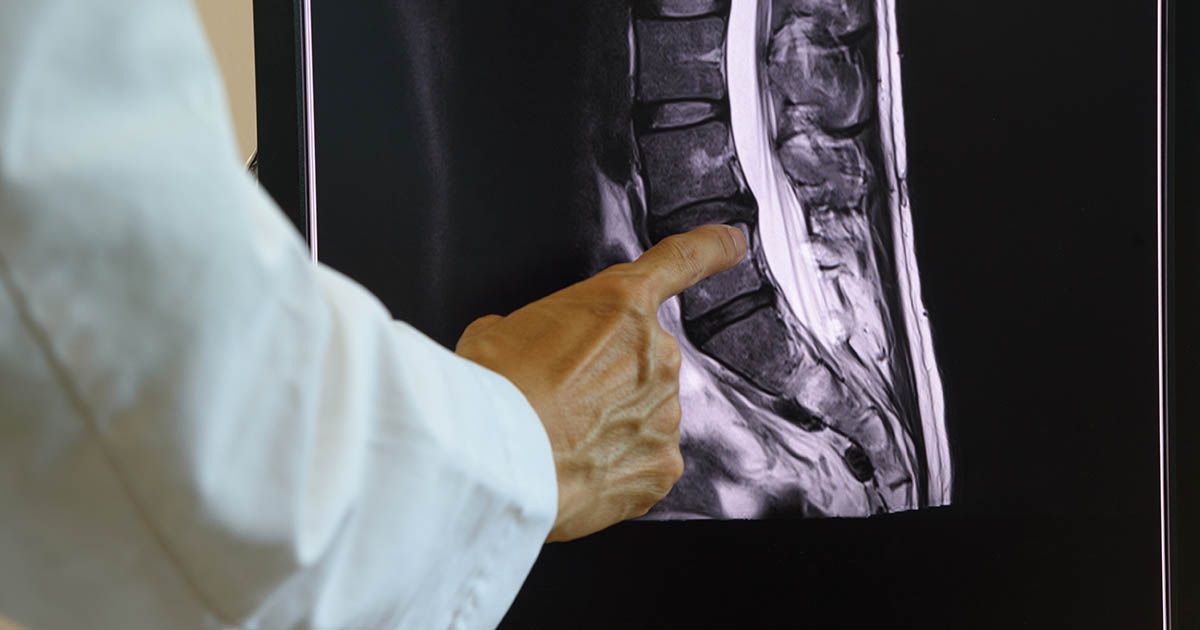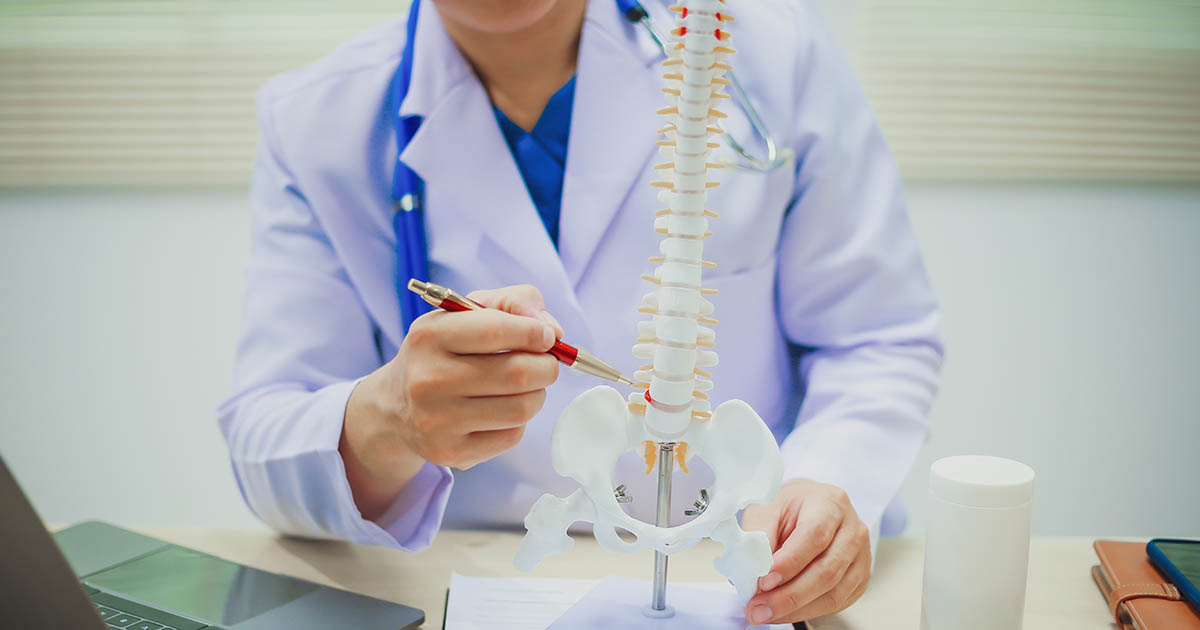


Spine health does not deteriorate all at once. The changes that show up on imaging as bone spurs and disc thinning happen over years, sometimes decades, and by the time they cause enough pain to send you to a doctor, the label "spinal spondylosis" can feel alarming. It shouldn't. Here is what the term actually means, what it doesn't predict, and why the right conservative care at the right time changes the trajectory significantly.
If you are dealing with persistent stiffness, aching that comes and goes, or leg or arm symptoms tied to spinal changes, the relevant starting point is understanding what is structurally driving those symptoms. For a direct look at what conservative back pain treatment in Lakewood Ranch looks like for degenerative spine conditions, that page is the right place to start. This post goes deeper into the spondylosis piece specifically.
What spondylosis actually is
Spondylosis is the medical term for age-related wear-and-tear changes in the spine: thinning of articular cartilage, desiccation (drying out) of intervertebral discs, and the formation of osteophytes, which are the bone spurs that grow along the vertebral edges as the body tries to stabilize a degenerating joint. Think of it as the spine's version of osteoarthritis.
Almost every imaging report on a patient over 50 includes some variation of "degenerative changes consistent with spondylosis." That phrase does not mean your spine is failing. It means it has been used. The more useful clinical question is not "do I have spondylosis?" but "are these changes producing the specific symptoms I came in with?"
The cervical spine (neck), thoracic spine (mid-back), and lumbar spine (lower back) can all be affected. Lumbar and cervical spondylosis are the most commonly symptomatic forms, because those two segments carry the most mechanical load and have the greatest range of motion. Thoracic spondylosis exists but produces fewer symptoms in most people because the rib cage limits thoracic motion significantly.
Spondylosis vs. DDD vs. stenosis: three terms, three meanings
These three terms appear on the same MRI reports constantly, and patients understandably mix them up. They overlap, but they are not the same thing.
Degenerative disc disease (DDD) focuses specifically on the intervertebral disc: loss of disc height, loss of water content, and reduced flexibility. A disc that once measured 12mm tall and measured 7mm at your last MRI has "degenerative disc disease," even if the surrounding bone is relatively intact. For more on what DDD means specifically, see our post on degenerative disc disease explained.
Spondylosis is the broader umbrella. Disc changes, yes, but also bone spur formation along the vertebral body edges and facet joint degeneration. When a report says "multilevel spondylosis," it usually means several things are happening at once, not just disc wear. DDD is frequently a component of spondylosis, but spondylosis can be present with relatively mild disc changes if the facet arthritis and bone spur formation are the dominant picture.
Spinal stenosis is what can happen when those spondylotic changes, especially bone spurs, ligament thickening, and disc bulging, narrow the spinal canal or the nerve root exit channels enough to compress neural structures. Stenosis is a potential consequence of advanced spondylosis, not an equivalent diagnosis. Many people with significant spondylosis on imaging never develop clinically meaningful stenosis. See our post on spinal stenosis and why walking makes it worse for a deeper look at that specific condition.
The presence of bone spurs on an MRI does not tell you how much pain someone is in. Two people with nearly identical imaging findings can have vastly different symptom levels. Structural findings tell you what is there; they don't always tell you what is causing the pain.
Symptoms: what spondylosis can produce, and what it often doesn't
Many people with spondylosis on imaging have no meaningful symptoms at all. For those who do, the pattern depends on which spinal region is most affected and whether nerve structures are involved.
Cervical spondylosis commonly produces:
- Neck stiffness, especially in the morning or after holding a fixed position for an extended time
- Headaches that start at the base of the skull and radiate up or behind the eyes
- A grinding or crackling sensation with neck rotation
- Arm pain, tingling, or weakness if a bone spur or disc bulge is compressing a nerve root (cervical radiculopathy)
Lumbar spondylosis commonly produces:
- Low back aching and stiffness, often worse after prolonged sitting or first thing in the morning
- Pain that travels into the buttocks or upper thighs (referred pain, not necessarily nerve compression)
- Leg pain, tingling, or weakness if a nerve root is compressed (lumbar radiculopathy)
- Reduced tolerance for prolonged standing or walking if bone spurs are contributing to canal narrowing
The distinction between pain from the facet joints themselves (local, achy, position-dependent) and pain from nerve root compression (radiating, electric, often accompanied by tingling or weakness) matters a lot for guiding treatment. Both can be present simultaneously.
Who gets it, and why age is only part of the story
After 40, some degree of spondylotic change is close to universal on imaging. By 60, most imaging studies show it. But the onset, severity, and rate of progression vary considerably, and age is not the only driver.
People who develop significant spondylotic changes earlier, in their 30s or 40s, tend to share some combination of:
- A prior disc injury, vertebral fracture, or significant joint injury (sports, a car accident, a fall)
- Years of sedentary desk work with poor monitor height, inadequate lumbar support, or sustained forward head posture
- Heavy manual labor over many years, particularly repetitive lifting or vibration exposure
- Smoking (nicotine constricts the small blood vessels that supply the outer disc, reducing disc nutrition and accelerating desiccation)
- Genetics: some people's connective tissue and cartilage degrade faster than others, independent of lifestyle
The clinical relevance of this is that spondylosis is not purely a "getting old" problem. A 40-year-old with a prior disc herniation, a desk job, and a decade of smoking can have imaging findings similar to an active 60-year-old with no prior injuries. The modifiable factors matter.
Why bone spurs form (and what accelerates them)
Osteophytes are not a random pathology. When a disc loses height, the vertebrae above and below settle closer together, and the joint mechanics change. The body responds to that mechanical instability by adding bone at the vertebral edges, attempting to stabilize the joint. This is the same process that happens in the knees and hips with osteoarthritis: the body is trying to solve a problem, just not in a way that is comfortable.
What accelerates the process: anything that increases load on the disc or reduces disc nutrition speeds the cycle. Chronic poor posture places asymmetric compressive load on discs, wearing them unevenly. Chronic dehydration reduces the water content of discs faster (this matters in Florida's heat, where many people underdrink). Obesity increases axial loading on every lumbar disc with every step. Prior injury creates focal instability that the bone-spur-building process tries to address.
Bone spurs that grow toward the nerve root openings (foramina) are the ones that tend to cause arm or leg symptoms. Spurs that grow anteriorly or into the disc space are usually less symptomatic unless they are very large.
Conservative care: what it can realistically do
Here is a fact about spondylosis that is worth saying clearly: the structural changes are not reversible. Disc height that is lost does not come back. Bone spurs, once formed, do not dissolve. Conservative care is not aimed at fixing the imaging findings.
What it is aimed at: addressing the mechanical contributors to pain, reducing inflammation in the affected joints, improving spinal movement, and preventing the conditions that accelerate further degeneration. Those goals are achievable, and many patients report meaningful pain reduction and functional improvement with a structured program, though individual results vary.
At Spine and Wellness Center in Lakewood Ranch, the tools we use for spondylosis-related pain include:
- Spinal decompression: creates gentle negative intradiscal pressure to take load off compressed discs and reduce nerve root impingement from disc bulges or bone spurs at the foramen
- Chiropractic adjustments: restore motion to hypomobile (restricted) spinal segments around the affected levels, reducing mechanical stress on the facet joints and surrounding soft tissue
- SoftWave therapy: stimulates tissue healing and reduces inflammation in the facet joints and paraspinal soft tissue
- Class IV laser: reduces local inflammation and promotes tissue recovery in affected joints and musculature
- Movement and posture guidance: addresses the mechanical drivers (forward head posture, sitting mechanics, core engagement patterns) that accelerate degenerative changes
The goal is to get the affected joints moving better, reduce the inflammatory component of pain, and take load off the structures that are producing symptoms, all without surgery.
When surgery comes up: the right questions
Surgery for spondylosis is not commonly needed, and most people who get an MRI saying "spondylosis" are not surgical candidates. The specific indications are:
- Progressive neurological deficit: muscle weakness that is getting objectively worse, not just painful
- Cord compression producing myelopathy (clumsy hands, gait problems, bowel or bladder dysfunction)
- Pain that has not responded to 6-12 months of structured conservative care and significantly limits function
If you are being recommended surgery for "bone spurs" or "spondylosis" without those specific criteria being clearly present, a second opinion is worth getting. Surgery changes the mechanical structure of the spine permanently, and the outcomes for degenerative conditions are not universally positive. Many patients who were told surgery was their only option have responded well to a structured conservative program and avoided it. In our experience across 23 years in practice, conservative care is the right first step in the vast majority of spondylosis cases.
What we look for at Spine and Wellness Center
When a patient in our Lakewood Ranch office brings in an MRI that says "multilevel spondylotic changes" or "moderately severe cervical spondylosis," the first thing we do is separate the structural findings from the actual clinical picture. Range of motion: what moves freely and what is restricted, and where does pain occur with motion? Neurological screening: are there any motor or sensory deficits consistent with root involvement? Functional history: what can you not do that you want to do?
That clinical picture, not just the imaging, is what guides the care plan. Structural findings and symptoms often do not match exactly. Some patients with severe imaging findings have mild symptoms; some with modest findings are significantly limited. Treatment follows the clinical reality, not just the MRI report.
We also keep an eye on progression. Spondylosis is not static. A patient who does well with periodic maintenance care and stays active typically progresses more slowly than one who does nothing and becomes sedentary. Earlier conservative care, when the changes are moderate rather than severe, consistently produces better outcomes in our experience, because there is more to work with mechanically before the degenerative cascade advances.
If you are in Lakewood Ranch, Bradenton, or Sarasota and you have been diagnosed with spondylosis, or you have chronic spinal stiffness and aching that you have been told is "just wear and tear," an evaluation is a reasonable next step. Call us at (727) 213-2982 or book online below.