

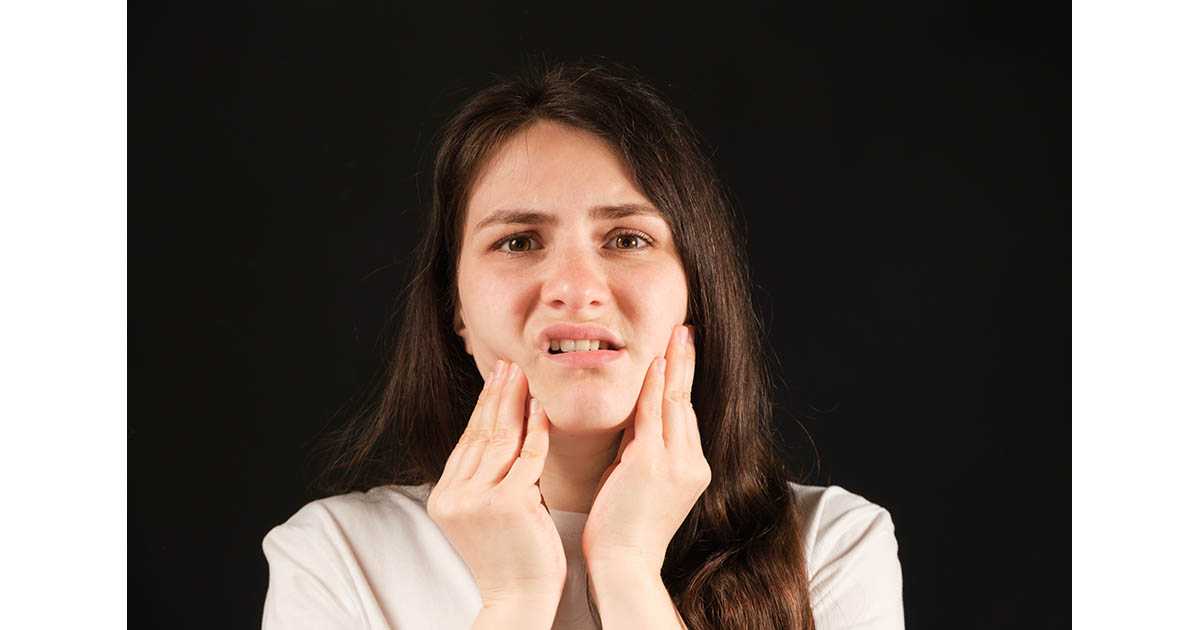
If you have jaw pain, clicking when you chew, headaches near your temples, or the feeling that your jaw does not open quite right, you have probably been told you have temporomandibular joint dysfunction, commonly called TMJ or TMD. You may have been fitted for a night guard. You may have been sent to an oral surgeon. And you may still have the same symptoms.
Here is something that does not get discussed nearly enough in dental offices: the temporomandibular joint does not work in isolation. It is biomechanically linked to the cervical spine, and specifically to the upper cervical vertebrae, C1 through C3. When those segments are misaligned or restricted, the muscles and nerves that control jaw movement are affected directly. The result can look exactly like a jaw problem, even when the jaw itself is structurally fine.
At our Lakewood Ranch clinic, we see this pattern regularly: patients who have been chasing a jaw diagnosis for months and who report significant improvement once the cervical component is addressed.
Anatomy: How the Jaw and Cervical Spine Are Connected
The temporomandibular joint is formed where the mandible (lower jaw) meets the temporal bone just in front of the ear. It is one of the most complex joints in the body because it performs two types of movement simultaneously: hinge rotation and forward gliding. Coordinating that movement requires the trigeminal nerve (cranial nerve V), which controls sensation and motor function for the jaw.
Here is where the cervical spine comes in. The trigeminal nucleus, the central relay station for trigeminal nerve signals, descends into the upper cervical spinal cord, where it overlaps with sensory input from C1, C2, and C3. This overlap is called the trigeminal cervical nucleus, and it is the anatomical reason why upper neck problems can produce pain felt in the jaw, temple, and behind the ear.
In practical terms, this means:
- A restriction at C1 (the atlas) can alter the firing patterns of the muscles that open and close the jaw.
- Chronic tension in the suboccipital muscles (at the base of the skull) can refer pain forward into the masseter and temporalis, the primary chewing muscles.
- Altered head position, particularly the forward head posture seen in tech neck and desk work, changes the resting position of the mandible and alters how load is distributed across the TMJ disk.
None of that shows up on a dental X-ray. It shows up in a functional cervical spine assessment.
Common Symptoms of Cervicogenic TMJ (and How They Differ From Pure TMJ)
There is no clean dividing line because both problems can and do coexist. But certain patterns suggest the cervical spine is a significant driver:
- Jaw symptoms that are worse in the morning and better by midday. This often reflects overnight cervical joint stiffness radiating forward into the jaw, not a problem with the joint disk itself.
- Headaches that start at the base of the skull and travel forward to the temple or behind the eye. This is the classic pattern of suboccipital and upper cervical referral, not classic dental-origin pain.
- Jaw tightness or clicking that gets worse after long car rides, flying, or extended screen time. These activities all load the cervical spine into sustained flexion or extension, not the jaw directly.
- One-sided jaw pain that lines up with neck pain on the same side. When a patient reports left-sided jaw tension and left-sided neck stiffness, cervical involvement is high on the differential.
- Ear fullness or ringing without an ear infection or hearing problem. The auriculotemporal nerve, which serves the TMJ and the outer ear canal, shares territory with C2 and C3 sensory distributions. Cervical dysfunction can produce ear symptoms that get misattributed to the TMJ itself.
When a patient says "I thought it was my jaw, but my dentist says everything looks fine," that is almost always the right moment to look at the upper cervical spine.
Whiplash and TMJ: A Common and Often Missed Connection
One of the most consistent patterns we see in our auto-injury patients is jaw symptoms developing weeks or months after a car accident. Whiplash forces the head through rapid acceleration and deceleration. The cervical spine absorbs most of that force, but the jaw is not protected. During a rear-end collision, the mandible can lag behind the skull as the head snaps back, loading the TMJ in a direction it was not designed to tolerate. At the same time, the upper cervical ligaments and facet joints that are strained in a whiplash injury are exactly the structures that influence TMJ muscle function.
The result: a patient who comes in with neck pain after an accident and develops jaw clicking, jaw fatigue when eating, or ear fullness over the following weeks. That is not a coincidence. It is a biomechanical consequence of the same injury.
For patients being treated under Florida PIP coverage, jaw symptoms stemming from a motor vehicle accident can be documented as part of the injury and coordinated with your attorney's records. We handle that documentation routinely. For more on the auto-injury evaluation process, see our auto and whiplash care page.
What a Cervical Assessment for TMJ Looks Like
A standard dental or oral surgery TMJ evaluation focuses on joint mechanics: disk position on MRI, bite alignment, condylar movement. Those findings are important. But a chiropractic assessment adds a layer that dentists are not trained to perform: functional evaluation of the cervical spine.
In our Lakewood Ranch office, an assessment for a patient presenting with jaw pain and suspected cervical involvement typically includes:
- Motion palpation of C1 through C4, assessing for restriction, asymmetry, and tenderness.
- Evaluation of head position and cervical lordosis: forward head posture is measured in degrees or centimeters of anterior translation.
- Assessment of the suboccipital and sternocleidomastoid (SCM) muscles for trigger points that refer into the jaw and temple region.
- Active range of motion of both the cervical spine and the jaw, looking for patterns that correlate (for example, jaw opening is most restricted when the neck is in maximum extension).
- Orthopedic tests to rule out cervical radiculopathy, which can sometimes mimic referred facial pain.
If findings suggest a significant cervical component, we proceed with a conservative care program. If findings suggest the jaw disk itself is the primary problem, we coordinate with the patient's dentist or oral surgeon and treat the cervical component as a contributing factor.
Conservative Care Options for Cervicogenic Jaw Pain
When the cervical spine is confirmed as a driver, the treatment approach is chiropractic-based rather than dental. The specific tools depend on what the assessment finds, but in our experience these are most consistently useful:
Cervical Chiropractic Adjustments
Restoring motion to restricted upper cervical segments, particularly C1 and C2, can have a rapid and sometimes dramatic effect on jaw muscle tension. Many patients notice that jaw opening improves within two to three visits once the cervical restriction is addressed. This is consistent with the trigeminal cervical overlap model: when the cervical input to that shared nucleus normalizes, the jaw musculature stops bracing against a phantom threat. For more detail on how cervical adjustments work, see our chiropractic adjustments page.
Class IV Laser Therapy
When the masseter, pterygoid, or temporalis muscles are acutely inflamed, Class IV laser therapy can reduce that inflammation significantly faster than ice or over-the-counter anti-inflammatories. The laser is applied externally over the joint and the adjacent muscle belly. Patients typically report reduced jaw fatigue and clicking within two to four sessions. For those with concurrent cervical inflammation, the same treatment session can cover both the jaw and the upper cervical region. Our Class IV laser page has the clinical overview.
Postural Correction
Forward head posture places the mandible in a slightly open, protracted position. Over time, the jaw muscles must work harder to maintain this resting position, leading to fatigue, tension, and eventually pain. Correcting the cervical curve changes the mandibular resting position and reduces that chronic muscle load. This is not a one-session fix: it involves a combination of adjustments, cervical strengthening exercises, and ergonomic changes at the workstation.
Soft Tissue Work
The suboccipital muscles are often heavily involved in cervicogenic jaw cases. They connect the skull to C1 and C2, and when they are in sustained tension they pull the atlas and axis out of neutral position. Direct manual therapy to this region, combined with adjustments to the segments below, tends to produce better outcomes than either alone.
When to See a Dentist, When to See a Chiropractor, and When to See Both
This is not an either-or situation. Some TMJ presentations are primarily structural within the joint: a displaced articular disk, degenerative arthritis of the condyle, or a severely misaligned bite. Those require dental management and possibly oral surgery. Chiropractic care alone will not correct a displaced disk.
The pattern that tends to respond well to chiropractic-first or chiropractic-concurrent care:
- Jaw pain or clicking with no disk displacement on imaging
- Jaw symptoms that began after a motor vehicle accident or fall
- Jaw tension combined with upper neck stiffness, base-of-skull headaches, or tech neck posture
- Night guard use that reduced nocturnal grinding but did not resolve daytime jaw fatigue
- Bite adjustments or orthodontic treatment that did not produce lasting jaw pain relief
The general principle: if the dental workup is complete and the jaw symptoms persist, the cervical spine has not been adequately evaluated yet. In our experience working with patients in Lakewood Ranch and the broader Sarasota-Bradenton area, adding a cervical assessment to an ongoing TMJ workup frequently identifies a component that the patient's dental team did not address, not because they missed it, but because it falls outside their scope of practice.
For conditions where neck pain and headaches are present alongside jaw symptoms, that overlap is particularly useful clinically because it suggests the upper cervical spine is involved in both symptom sets simultaneously.
Red Flags: When to See a Doctor First
Most TMJ presentations are mechanical and not urgent. But certain symptoms should prompt an evaluation with your primary care provider or a specialist before starting conservative chiropractic care:
- Jaw pain accompanied by chest pain, jaw pain radiating to the left arm, or sudden onset during exertion (these can mimic referred cardiac pain)
- Trismus (inability to open the mouth more than a few centimeters) with fever or swelling: this can indicate abscess or infection
- Jaw deviation or locking that appeared suddenly with a pop and did not resolve
- Numbness or weakness in the face, difficulty swallowing, or changes in vision alongside jaw pain
None of those presentations are typical TMJ. They need medical evaluation. What we see in our office is the more common, months-long pattern of jaw tightness and clicking that has not fully resolved and that has a cervical component driving it.
A Note on Expectations
Cervicogenic jaw pain responds to the same principle that governs most musculoskeletal problems: the sooner the underlying mechanical dysfunction is addressed, the faster and more complete the recovery tends to be. Patients who have been managing symptoms for two or three years with night guards and dental adjustments sometimes respond more slowly than someone who comes in within the first few months of symptom onset, simply because the compensatory muscle patterns are more entrenched.
That said, we regularly see meaningful improvement in long-standing cases. The goal is reduced frequency and intensity of symptoms, improved jaw mobility, and less reliance on appliances or medications. In our experience, many patients report those outcomes within six to eight weeks of starting a cervically focused care program, though individual results vary based on the specific mechanics involved.