

Most people who walk through our Lakewood Ranch office door for the first time have been in pain for months. Often longer. They tried rest, ibuprofen, a heating pad, stretches from a YouTube video. They told themselves it would probably clear up. For some it does. For many, every week of waiting pushed the underlying problem a little further from where we can reverse it conservatively.
The decision to wait is not careless. It comes from reasonable optimism: you woke up sore, you have been sore before, it went away. The spine operates on a different timeline than a sprained ankle or a pulled muscle, though. The structures that drive most chronic lower back pain in Lakewood Ranch do not simply rest and heal. They respond to ongoing load and time in ways that quietly change what care can realistically accomplish.
Here is what actually happens inside the disc and nerve root when back pain goes unaddressed, why certain conservative treatment options narrow as weeks become months, and what the early window looks like at our clinic.
Why Back Pain Seems Like Something You Can Outlast
Acute back pain, the kind that follows a bad lift or an awkward twist, often does improve within a few weeks on its own. The muscles around the injured segment brace hard, restrict motion, and give the area time to calm down. That process is real and useful in the short term. The problem is that most back pain patients experience is not a series of separate acute injuries. It is the same underlying structural issue getting irritated more easily over time.
The flare-ups feel new each time. The disc problem they share is usually not new at all.
Intervertebral discs get their nutrition through diffusion: normal motion compresses and releases the disc, fluid moves through the end plates, nutrients arrive, waste products exit. When you stop moving because it hurts, or when guarding muscles hold the segment unusually still, that diffusion slows. A disc already stressed from micro-tears around the annulus fibrosus does not recover by sitting still. It stiffens, dehydrates further, and becomes more vulnerable to whatever load comes next.
What Delay Does Inside the Disc
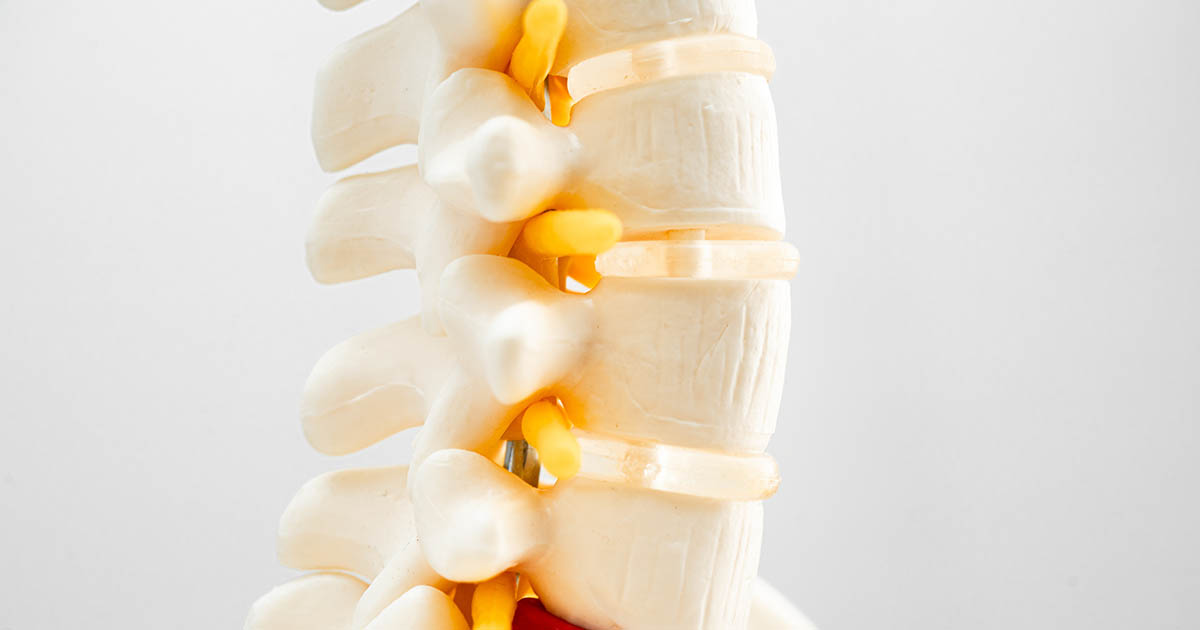
A disc does not herniate all at once in most cases. It fails in stages. The nucleus pulposus, the gel-like center of the disc, pushes outward through small radial tears in the annulus fibrosus. Early on, those tears are small. The disc still holds its height. The nerve root nearby may be irritated but is not yet compressed.
At this early stage, non-surgical spinal decompression in Lakewood Ranch works well for many patients. Computer-controlled traction creates a brief negative intradiscal pressure, drawing nuclear material back toward the center and allowing the annular tears a better environment for healing. The key condition: the disc still has enough height and intact enough annular walls to hold the repositioned nucleus.
Leave that disc under the same repetitive loads for another six months or a year. The annular tears widen. The disc loses height as nuclear material escapes or continues to dehydrate. The nucleus may migrate far enough to create a frank herniation pressing directly on a nerve root, or the disc may collapse enough that the facet joints on either side begin absorbing compressive force they were never designed to carry. At that point, the biomechanics of the segment have shifted in ways that take more time, more modalities, and sometimes more sessions to address than the earlier window would have required.
There is no clean line that tells you "this is the last week before things get harder." But there is a real biological progression, and its direction is not friendly with time.
The Nerve Root Has Its Own Clock
Disc involvement becomes a qualitatively different problem when a nerve root enters the picture. Sciatica, radiculopathy into the arm, or numbness in the hand or foot all signal that the irritation has reached the nerve itself.
Nerve tissue is among the most metabolically demanding in the body. It requires consistent blood flow and oxygen. Prolonged compression reduces both. In the early phase of nerve root involvement, symptoms are typically intermittent: pain or tingling that comes and goes with position changes. This is the nervous system signaling that the compression is not yet constant. The nerve is irritated, not starved.
With sustained or repeated compression over months, the nerve root can develop changes that do not reverse as cleanly. Chronic mechanical pressure produces demyelination, meaning the insulating sheath around the nerve fiber degrades. When that happens, symptoms shift from intermittent to persistent: numbness that does not clear when you change position, weakness in the foot or hand that lingers regardless of activity, burning that no position relieves.
In our experience across 23 years, patients who come in within the first few weeks of sciatica symptoms respond to conservative protocols far more often than those who arrive after months of unrelenting compression. The window does not close abruptly. It narrows steadily.
If you have leg pain or arm numbness that does not clear with rest, or any progressive weakness in a limb, that neurological signal is telling you the timeline matters. For patients dealing with a herniated disc pressing on a nerve root, earlier intervention consistently produces better outcomes in the research and in practice.
How the Muscles Make It Worse While You Wait
Pain triggers guarding. When the lower back hurts, the paraspinal muscles brace against motion to protect the injured segment. That is appropriate for the first week or two. But chronic guarding creates its own problems on top of the original injury.
Continuously contracted muscles develop trigger points, dense bands of hypersensitive tissue that refer pain into patterns that can mimic nerve pain, hip pain, or sacroiliac dysfunction. The guarding also changes how you move. You shorten your stride, avoid bending, stop lifting things you used to lift easily. Those compensation patterns shift load to the spinal segments above and below the original injury, and after enough time, those adjacent segments start showing the same wear.
The multifidus, the deep stabilizing muscle most critical for lumbar support, undergoes measurable atrophy on the side of the pain within weeks of an acute disc injury. MRI studies have shown this atrophy can persist even after pain resolves, which explains a pattern Dr. Banman sees regularly: a patient "fully recovers" from one episode, then re-injures the same segment under a load that should not have been a problem. The muscle never came back to its pre-injury baseline. The segment was never truly stable again.
Addressing that muscle deficit is a real part of the care plan. It does not happen on its own with rest.
What a Longer Gap Does to Your Treatment Options
Here is what actually changes when back pain goes unaddressed for months or years:
- Disc height loss: Decompression therapy works by creating distraction within the disc space. When a disc loses significant height, there is less space to decompress and the mechanical benefit shifts. Not every patient with disc height loss is excluded from decompression, but the response and the number of sessions needed both change.
- Secondary arthritic change: A segment under altered load for years triggers osteophyte formation as the body attempts to stabilize the instability. Bone spurs can narrow the foramen where the nerve exits, creating a structural compression that soft-tissue care alone cannot reverse.
- Nerve fiber changes: As described above, prolonged compression shifts nerve symptoms from functional and reversible to structural and persistent. Peripheral neuropathy that develops secondary to years of nerve root compression can outlast the original disc problem and require its own treatment protocol to address.
- Movement re-patterning: Long-standing guarding and compensation require deliberate retraining. The longer a compensation pattern has been ingrained, the more sessions it takes to change. This is not dramatic by itself, but it adds up across a full care plan.
None of this means you cannot improve if you have waited a long time. Many patients with years of chronic pain do very well here. But the program tends to be longer, the starting point lower, and the ceiling in some cases less forgiving than the early window would have offered.
The Pattern We See Most Often
There is a pattern Dr. Banman has seen more than any other across 23 years of practice in Lakewood Ranch and before. A patient has a significant back episode, the worst one yet. They rest, it calms down, they go back to normal life. They think: "That was a warning. I should do something about this." Six months pass. The next episode arrives. It is worse. It also calms down eventually. Another six months. Now they are in the office.
By the time that patient arrives for the first visit, the disc has usually crossed a threshold it would not have crossed if they had come in after the first major episode. The treatment still works. But the plan is longer and the patient is starting from a more compromised baseline than they needed to be.
The patient who shows up after the first serious flare, before the pattern has had a chance to repeat, tends to have a faster, more complete response. That is not a selling point. It is what 23 years of intake histories add up to.
What the First Visit Looks Like
A first visit at Spine and Wellness Center Lakewood Ranch is a real clinical exam, not a sales presentation. Dr. Banman takes a thorough history, performs orthopedic and neurological testing, reviews any existing imaging, and if the clinical picture warrants it, discusses whether X-ray or MRI would change the treatment direction. You leave with a clear explanation of what is driving your pain, not a vague recommendation to "come in three times a week."
If the disc is the primary driver, the plan typically combines spinal decompression with adjunct therapies matched to your specific findings: Class IV laser for soft-tissue inflammation, whole body vibration to begin reactivating the inhibited multifidus, EMS for chronically guarded paraspinal muscles. The combination matters because addressing only one component of a multi-factor problem usually produces partial results.
If the disc turns out not to be the driver (SI joint dysfunction, facet joint syndrome, piriformis syndrome, something else), you will know that after the first visit too. The exam discriminates. That clarity alone changes what you do next.
When to Stop Waiting
Use this as a rough threshold. Come in now if any of these apply to your situation:
- Back pain that has recurred more than twice in 12 months
- Pain lasting more than two to three weeks without clear improvement
- Any leg pain, numbness, or tingling that travels below the knee
- Progressive weakness in a leg or foot
- Back pain that wakes you from sleep or is consistently worse after rest
- A first severe episode that limited your normal daily activity
The last item is the one most people skip. A first major episode feels like an isolated event. In a substantial number of cases, it is the first visible sign of a disc that has been accumulating damage for years. Catching it at that point, before the cycle repeats, is the highest-value window in the entire progression.
If you are in the Lakewood Ranch, Bradenton, or Sarasota area, call us at (727) 213-2982. We typically see new patients within 24 to 48 hours. The first conversation is free. The wait, in our experience over many years of practice, costs more than most patients expect it to.