

The question comes up at least once a week in our Lakewood Ranch office: "I read that drinking more water helps back pain. Is that actually true?" The honest answer is yes, with a big asterisk. Hydration matters for disc health in a real, measurable way. It is not a cure. But if your discs are already under stress and you are chronically dehydrated, water genuinely helps. And in a Florida July, most people walking through our door are more dehydrated than they realize.
To understand why water matters for your spine, you need to understand what spinal discs actually are, what they do all day, and what happens to them when your body is running dry. The same discs that are absorbing the force of every step you take are also 70 percent water when healthy. That number drops as you age, as you stay sedentary, and as you spend long hours in Florida heat without drinking enough. When it drops too fast, you feel it in your lower back. If you are already dealing with chronic or recurring back pain in Lakewood Ranch, disc hydration is one of the first things we look at during an evaluation.
What spinal discs actually are (and why water is not optional)
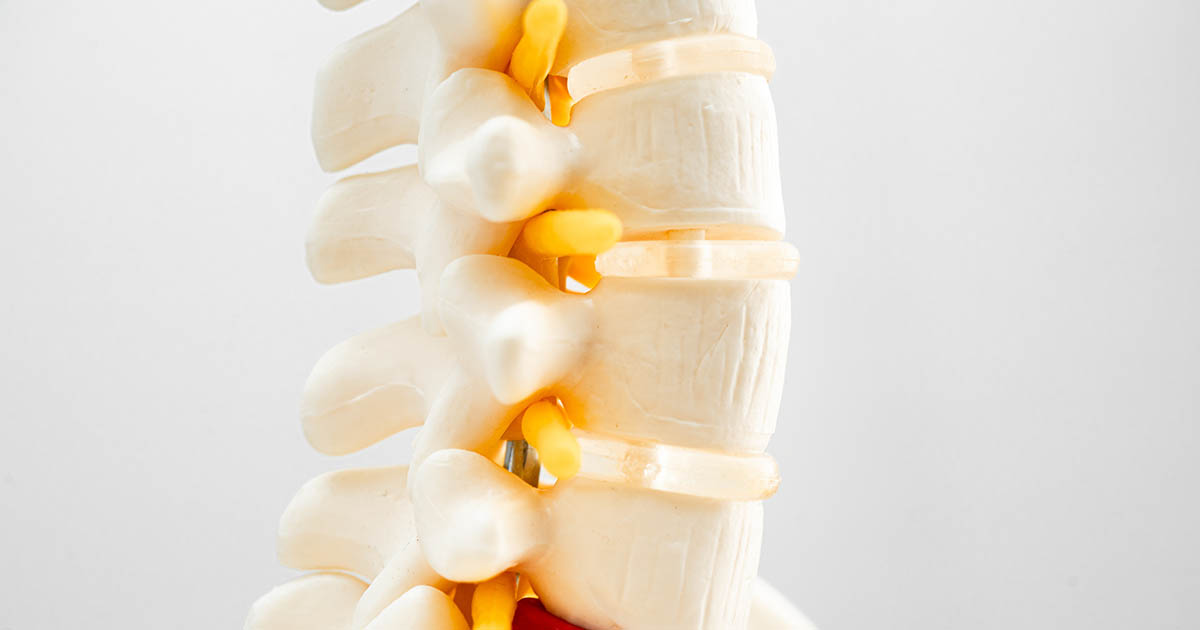
Between each vertebra in your spine sits an intervertebral disc. Think of it as a shock absorber with a very specific design. The outer shell, called the annulus fibrosus, is tough fibrous cartilage arranged in crisscrossing layers to resist twisting and compression forces. The inner core, called the nucleus pulposus, is a gel-like material that is mostly water bound to proteoglycan molecules. This inner gel does the real cushioning work: it distributes force evenly across the disc so that no single spot bears the full load.
Discs have no direct blood supply after early childhood. They get their nutrients, including the water they need to stay plump and functional, through a process called imbibition: essentially, they absorb fluid from the surrounding tissue when the load on them drops, typically during sleep or rest. When you wake up in the morning, your discs are measurably fuller than when you went to bed. That is why you are actually slightly taller when you wake up than when you go to sleep. By the end of the day, after hours of gravity and movement compressing your spine, that height difference can be 1 to 1.5 centimeters.
Discs doing this imbibition cycle well rely on the fluid being available in the surrounding tissue. Dehydration limits that supply. The disc still tries to rehydrate during rest periods, but it is working from a smaller reservoir.
What dehydration does to your discs
When disc hydration drops, a few things happen in sequence. First, the nucleus pulposus shrinks slightly. This reduces disc height, which means the space between vertebrae narrows. Second, the reduced cushioning means the annulus fibrosus (the tough outer shell) takes more of the compressive load it was never designed to handle alone. Over time, this leads to small fissures and tears in the annular fibers. Third, the narrowed disc space can bring vertebral endplates and sometimes nerve roots closer together, which is where the pain signals start.
None of this happens from one dry afternoon. But if you are consistently not drinking enough, running hot from outdoor activities, or sweating heavily in Florida humidity, you are pushing the disc dehydration process faster than it would otherwise go. Patients who work outdoors in Manatee County during summer, or who are active on the courts and trails in Lakewood Ranch, often show patterns we associate with accelerated disc stress when we compare their imaging over time.
A disc that has lost even 10 percent of its water content absorbs compressive force significantly less efficiently. That is not a clinical threshold where you suddenly feel it, but it sets up the conditions where one awkward lift or one long drive on I-75 tips you into an acute episode.
Chronic disc dehydration is also associated with faster progression of degenerative disc disease. The discs lose the hydration they need to resist the natural wear that comes with age. This is not unique to any age group: we see it in people in their late 30s who spend long hours sitting and do not drink enough.
Why Florida summer makes this worse
Here in Lakewood Ranch, July heat averages in the low 90s with humidity that can push the feels-like temperature above 105. You are losing fluid constantly, even when you do not feel like you are sweating. Air conditioning reduces sweat but does not stop respiratory water loss. Most adults need more than the standard eight-glasses recommendation during a Florida summer, especially anyone doing outdoor activities, exercising, or working physically demanding jobs.
The problem is that thirst is a lagging indicator. By the time you feel thirsty, you are already at a mild deficit. Urine color is a more reliable signal: pale yellow is well-hydrated, dark yellow or amber means you need to drink now. Many patients we see in summer have been operating in that amber zone for weeks without connecting it to their worsening back pain.
There is also the air conditioning trap. You go from the heat outside to a cold office or car, and the contrast suppresses thirst even further. You feel fine, you are not sweating visibly, and you drink less than you would have during a milder day. But the deficit is accumulating.
How much water actually helps (and what it cannot fix on its own)
Drinking more water will not reverse an already herniated disc. It will not undo years of degenerative disc disease. It will not relieve pain caused by spinal stenosis or a bone spur pressing on a nerve root. Water is one input among many, and its benefit is primarily preventive and supportive rather than curative.
That said, for patients who are in the early or middle stages of disc-related back pain, consistently good hydration is one of the few things they can control every day that genuinely supports what we are trying to do with treatment. Here is what the evidence and our clinical experience support:
- Adequate daily intake: for most adults in a Florida summer, that is 10 to 12 cups of water daily as a floor, more if you are active outdoors.
- Timing matters: spreading intake throughout the day gives discs more consistent access to fluid than drinking large amounts at once.
- Morning hydration: your discs are rehydrating during sleep; continuing that process with a glass of water first thing in the morning extends the window.
- Electrolytes: plain water alone in high volumes can dilute electrolytes, which matters for muscle cramping and overall fluid balance. If you are sweating heavily, add some electrolytes, not a sugar-heavy sports drink.
- Reduce diuretics: caffeine and alcohol increase fluid loss. They are not off-limits, but they work against disc hydration if they are your primary drinks.
What water cannot do: it cannot change the structural position of a disc that has already bulged into the spinal canal. It cannot reduce the inflammation around a nerve root that has been compressed for months. Those require clinical intervention, and often a combination of approaches.
What we look for when evaluating disc-related back pain
When a patient comes in with back pain and one of the first things they ask is whether their hydration might be a factor, that is actually a useful question. It tells us they have been paying attention to their body. Our evaluation goes further than the obvious.
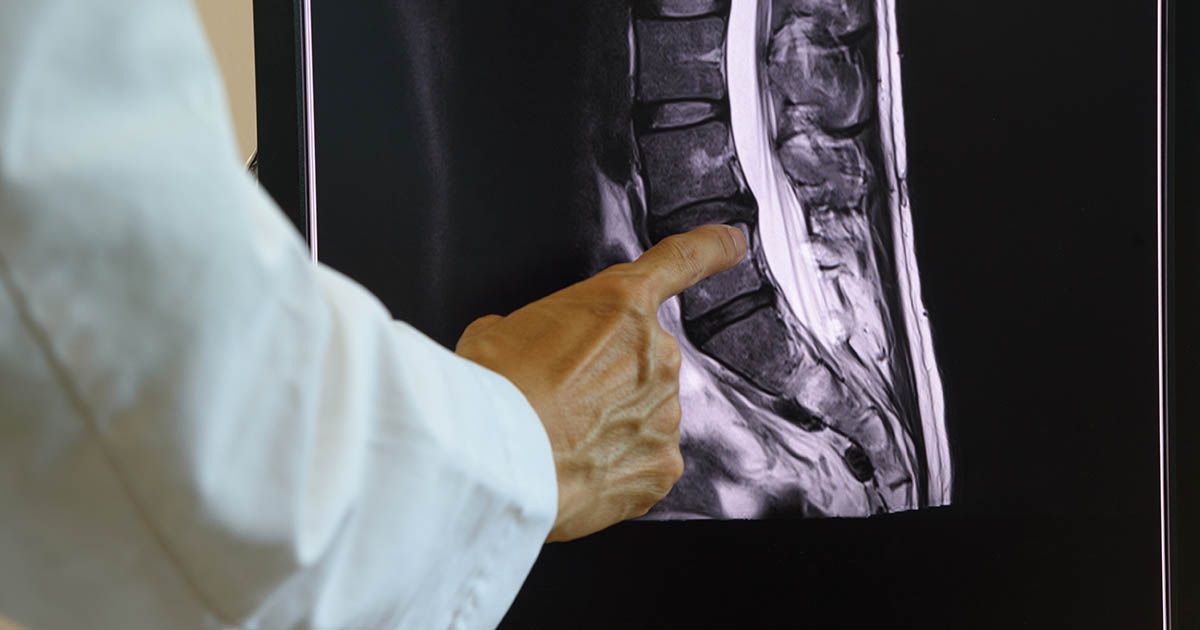
We look at disc height on imaging when available, but we also assess range of motion, where in the movement cycle the pain hits, what positions relieve it and which make it worse, and whether there are neurological signs suggesting nerve involvement. A disc that is dehydrated but not structurally compromised presents differently than one that is herniated or one that has developed end-stage degenerative changes.
We also ask about daily habits: how much you are drinking, what you are drinking, how long you sit each day, whether you have any movement breaks, what your sleep surface is like. These are not filler questions. They directly shape what the treatment plan needs to address.
If imaging or the clinical picture suggests disc herniation or a bulging disc in Lakewood Ranch, we discuss what conservative options look like before any decisions about surgical routes. Many patients come to us after being told surgery might be necessary, and they want to understand what non-surgical care can realistically accomplish for their specific case.
Beyond hydration: what else supports disc health
Discs respond to more than water intake. Several other factors directly influence how well they hold up:
Movement and load variation. Discs are designed to bear load, but not the same load held for hours. Sustained sitting compresses the same part of the disc continuously and slows imbibition. Short movement breaks, even just standing and walking for two minutes every 45 minutes, make a real difference in how much fluid the discs retain during the day.
Spinal decompression therapy. This is one area where clinical treatment can directly address disc hydration mechanics. Non-surgical spinal decompression in Lakewood Ranch uses a traction-based approach to gently separate the vertebrae, which creates negative intradiscal pressure. That negative pressure draws fluid back into the nucleus pulposus. It is not the same as drinking a glass of water; it is a targeted mechanical intervention that works on specific disc segments. We use this routinely for patients with disc-related back pain who have not responded to passive rest alone.
Core stability. The muscles around your spine share the compressive load with your discs. Weak or poorly coordinated core muscles shift more of that load onto the discs. Strengthening those muscles does not replace disc hydration, but it reduces the total demand on the discs during daily activity.
Sleep position and surface. How you sleep affects how well your discs rehydrate overnight. We have a full post on the best sleep position for a herniated disc if that is relevant to your situation.
Smoking. It reduces blood supply to the structures around the disc and is strongly associated with accelerated disc degeneration. If you smoke and have disc pain, that is a conversation worth having with your provider.
When hydration is not enough and you need a clinical evaluation
There are situations where back pain is not primarily a hydration problem and needs to be evaluated by someone who can actually see what is happening in the spine. Get an evaluation rather than trying to manage it yourself if:
- Pain radiates down one or both legs, especially past the knee
- You notice numbness, tingling, or weakness in a leg or foot
- Back pain woke you from sleep or is worse in the early morning and does not improve after moving around
- You have had a recent fall or impact
- Pain has not improved after two weeks of rest, hydration, and gentle movement
- You have any loss of bladder or bowel control (seek emergency care immediately)
These patterns can indicate nerve compression, structural disc injury, or something unrelated to the disc entirely. Hydrating well while you wait to be seen is not harmful, but it is not a substitute for a clinical picture that tells you what you are actually dealing with.
In our office, we typically have a same-week opening for patients presenting with new or worsening back pain. Dr. Banman has been evaluating spine pain in this area for over 23 years, and a first visit usually answers the basic questions: where is the pain coming from, what is the mechanism, and what does the path forward look like. That clarity alone changes how patients manage the days between visits.