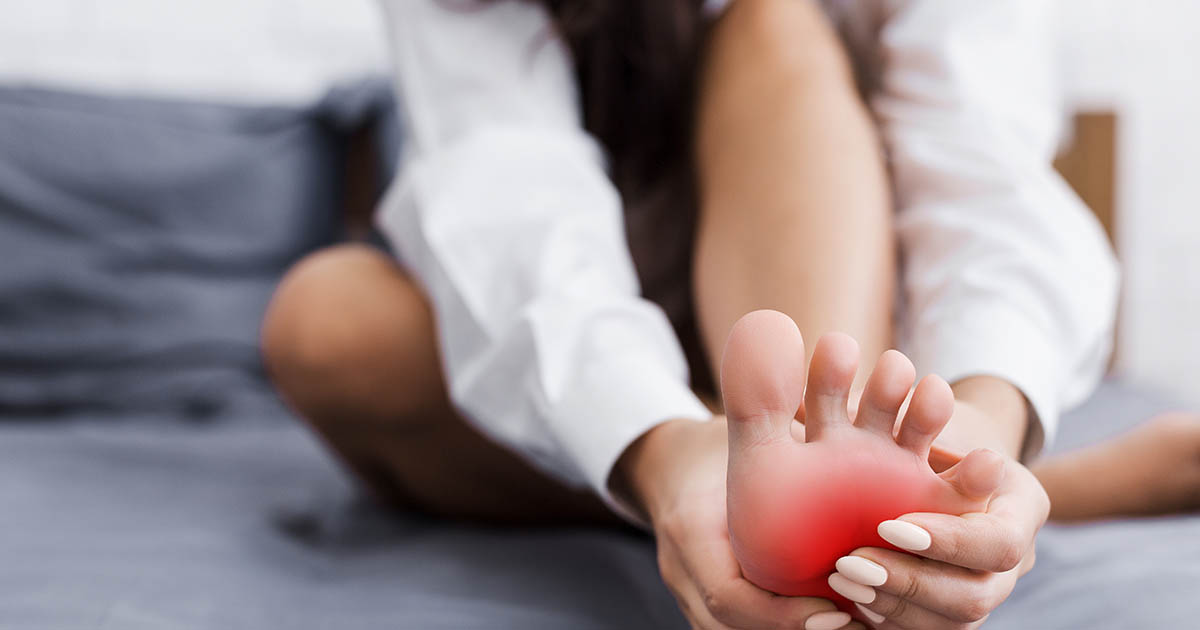


Walk through any Publix in Lakewood Ranch between May and September and you will see roughly a third of the shoppers in flip flops. They are cheap, easy, and practically a uniform here. We are not in the business of telling patients what to wear. But we are in the business of explaining patterns, and the pattern is consistent: patients who spend their Florida summers in flat, unsupported footwear show up with a specific cluster of complaints. Heel tenderness in the morning. Calf tightness that does not respond to stretching. lower back pain that arrives around two in the afternoon and does not leave. And when we ask about daily footwear, the answer is almost always flip flops, slide sandals, or bare feet on tile.
This is not about aesthetics. It is about mechanics. Your foot is the foundation of your kinetic chain, and what happens at the foundation eventually shows up higher up. Here is a clear explanation of why flat summer footwear causes problems, who is most at risk, and what to actually do about it.
What Flip Flops Do to Your Foot Mechanics
A standard flip flop has two structural characteristics that matter here. First: zero heel drop. Your heel and forefoot sit at exactly the same height. Second: zero arch support. The sole is a flat piece of foam or rubber, and your plantar fascia is entirely on its own to manage the load of each step.
Neither of those is a problem for a short errand. The issue is cumulative exposure. Walk two to four miles a day in zero-drop, zero-support footwear and two things happen consistently over weeks:
- Your plantar fascia and arch muscles fatigue. The foot's internal support system, primarily the plantar fascia running from heel to toe and the intrinsic foot muscles, is doing extra work without structural help from the shoe. For anyone with naturally lower arches or mild overpronation, the rate of fatigue accelerates significantly.
- You develop a gripping gait. Because a flip flop does not hold at the heel, your toes curl subtly with each step to keep the sandal from slipping off. That toe-gripping recruits the flexor tendons in a way that is not normal for walking. Over thousands of steps a day, it changes the muscle activation pattern in your foot and lower leg.
Add to those two problems the lack of shock absorption in a thin flat sole. A cushioned running shoe with a proper heel absorbs a significant portion of the impact force that travels up through each footstrike. A flip flop passes most of that force directly through the foot, ankle, knee, and into the hip and spine.
The Chain from Your Heel to Your Lumbar Spine
Your body is a kinetic chain. Mechanical dysfunction at one link does not stay at that link. Here is how flat-shoe mechanics transmit load upward into the spine:
The Achilles tendon and calf muscles, specifically the gastrocnemius and soleus, have a resting length that reflects what you wear on your feet. People who wear modest heels most of the time develop a slightly shortened posterior chain. When they switch to flat shoes for the summer, those muscles are asked to lengthen a bit further with each step. If they are tight and cannot accommodate that additional stretch, the body compensates at the next available joint above: the pelvis tilts, the lumbar curve changes, and the lower back starts absorbing forces it was not designed to handle repeatedly.
The lumbar spine does not care that your calf is the original problem. It only knows it is managing more load than usual. That is when patients describe "a dull ache that shows up every afternoon" or "lower back stiffness I can never quite shake." The foot started it; the back is where it ends up.
For people who already have some degree of lumbar disc compression, facet irritation, or SI joint sensitivity, this extra load matters a lot. The baseline tolerance for spinal mechanical stress is already reduced. Three months of increased impact from summer footwear removes the last buffer.
Radiating symptoms, specifically any leg pain, numbness, or tingling traveling below the knee, are a red flag that the footwear-spine chain may have aggravated something that was already present. Anyone with those symptoms deserves a full evaluation, not just a shoe change. If you know you have a herniated disc or lumbar nerve compression, be particularly thoughtful about high-mileage days in flat shoes this summer.
The Specific Symptoms That Point to Footwear
None of these symptoms are exclusively caused by poor footwear, but we flag footwear as a likely contributor when the pattern looks like this:
- Lower back pain that arrives predictably in the afternoon and was not present at breakfast
- Heel pain in the first few steps out of bed, especially during July and August when summer walking activity peaks
- Calf tightness that does not resolve with stretching or rest days
- Knee discomfort that correlates with days of heavy walking
- A sore arch that comes and goes without obvious cause
- Upper hamstring ache near the sit bone, called the ischial tuberosity, that does not have a clear injury behind it
The sequence typically runs like this: feet fatigue first, the calf and Achilles compensate, the hamstring and piriformis tighten in response, the pelvis shifts, and then the lower back begins to ache. By the time back pain appears as the main complaint, the starting point may have been footwear stress six weeks ago. That is part of why a proper intake at our office includes questions about what you wear daily, not just what sport you play or how you sit at a desk.
Who Is Most Affected by Summer Footwear
Flip flops and flat shoes affect some people far more than others. The populations most likely to develop back and foot symptoms from summer footwear habits include:
- People with flat feet or low arches. Without natural arch architecture, the foot's load-distribution system depends entirely on what the shoe provides. A flat shoe provides nothing. The result is a direct transfer of force to soft tissue that was not built to handle it indefinitely.
- Anyone with known lumbar disc pathology. If you have a disc that is already under pressure, increasing the impact load through a summer of walking in flip flops will likely move symptoms from manageable to noticeable. This is worth thinking through before July and August trail walks.
- Active adults walking significant distances. The Lakewood Ranch Trail System is 30 miles of paths. Walking five or six miles a day is not unusual here. In well-cushioned, supportive shoes, that is healthy activity. In flip flops, it is a large volume of unsupported steps.
- People returning from a sedentary period. If you spent the winter primarily sitting and you start walking the Legacy Trail in Sarasota in June in thin-soled sandals, you are asking a deactivated posterior chain to manage high mileage without structural support from the shoe. That combination reliably produces symptoms.
- Anyone standing for hours on hard floors. Tile, concrete, and asphalt amplify the impact of each step compared to carpet or grass. A thin flat sole makes every one of those impacts slightly worse. Over a six-hour shift or a day of errands, the cumulative effect adds up.
What to Actually Look for in Summer Footwear
You do not need to wear running shoes to the pool. But there is a meaningful spectrum between a flip flop and a motion-control trail runner, and most people's summer footwear choices can move up that spectrum without giving up comfort or style.
When evaluating a casual summer shoe from a spine health perspective, look for four things:
- A heel counter. The back panel of the shoe should hold your heel in place. If you can collapse it with one finger, it will not stabilize the subtalar joint through extended walking.
- A slight heel drop (roughly 6 to 12mm). Not a high heel. A modest drop places the Achilles and calf in a more neutral resting position and reduces the demand on a tight posterior chain during each step.
- Some midsole cushion. EVA foam or comparable materials absorb impact. Even 10mm of cushion underfoot makes a measurable difference in how much force reaches the lumbar spine per step.
- A secure fit at the heel and midfoot. A sandal with a back strap and a midfoot strap provides far more mechanical control than a toe-post flip flop. Many look nearly identical to a flip flop from across the room, with entirely different biomechanical consequences.
Brands like Birkenstock, Chaco, Teva, and Vionic produce sandals that meet most of these criteria. They are not the cheapest option. They are also significantly less expensive than the treatment for plantar fasciitis, Achilles tendinitis, or an SI joint flare that developed over one summer of poor footwear choices.
If the Pain Is Already Here
If your back, heel, or calf started hurting this summer and flip flops are your daily footwear, change the shoes first and observe what happens over ten to fourteen days. A meaningful number of patients find that the afternoon back ache resolves on its own once they are in a structured sandal or a lightweight trainer. That is a useful data point, and it tells you something about what your back was being asked to manage.
If symptoms persist after the footwear change, or if you have any leg symptoms at all, an evaluation is the appropriate next step. Leg pain that travels below the knee, numbness, or tingling suggests nerve involvement. That pattern is not something footwear alone resolves, and waiting on it rarely helps.
At Spine and Wellness Center Lakewood Ranch, we evaluate the full kinetic chain from foot to spine as part of a standard intake. If we identify that foot mechanics are contributing to a patient's back presentation, we may refer to a podiatrist for custom orthotics alongside spinal care. For patients whose lumbar discs have been aggravated by activity on inadequate footwear, non-surgical spinal decompression is one of the options we use to reduce disc pressure and give the spine a genuine opportunity to recover, rather than just managing symptoms while the load continues.
For patients with sciatica or lumbar radiculopathy, we pay close attention to footwear as one of the modifiable variables between visits. It is not the only factor, but it is one of the easier ones to change, and changing it often produces a noticeable shift in symptom levels within two weeks.
The Plantar Fasciitis and Summer Connection
Plantar fasciitis, inflammation of the fascial band connecting heel to forefoot, spikes every summer in active communities like Lakewood Ranch. The combination of increased walking activity, harder surfaces, and flat shoes is a consistent triad. See our related post on Achilles tendinitis and heel pain for a deeper look at posterior chain mechanics and conservative care options.
One underappreciated part of this connection: people with plantar fasciitis often develop an altered gait to protect the heel during the acute phase. They push off differently, they land differently, they shift weight to avoid the painful spot. That altered gait changes load distribution through the knee, hip, and lumbar spine. The back pain that develops alongside plantar fasciitis is not always a coincidence. Sometimes it is the same kinetic chain problem appearing in two places at once.
The Practical Summary
Flip flops are a reasonable choice for a ten-minute walk to the beach. They are a poor choice for a morning walk around Lake Uihlein, a day at the Sarasota farmers market, or a full day of standing at a summer event. The combination of zero heel drop, zero arch support, and zero shock absorption, repeated over thousands of steps per day, creates a pattern of cumulative mechanical stress that shows up somewhere in the kinetic chain. For many people in this area, that somewhere is the lower back, typically by mid-afternoon.
Switching to a sandal with a heel counter, a modest arch contour, and a back strap is not a dramatic lifestyle change. For a lot of people, it is the intervention that finally breaks a cycle of summer back pain that they assumed was just part of getting older or staying active in Florida's heat.