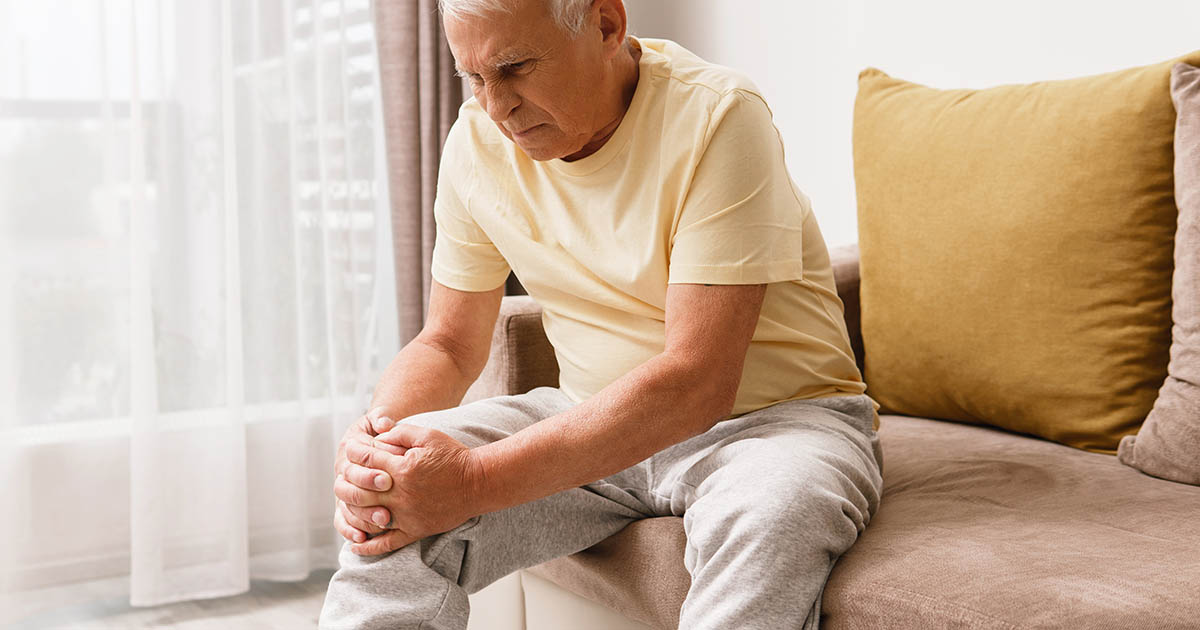


In our Lakewood Ranch clinic, knee pain from a meniscus problem shows up in a pattern you start to recognize: a twist on a pickleball court, or crouching down to pull something from a low cabinet, or sometimes no real incident at all. Just a knee that slowly filled up with fluid over a week. By the time a patient sits down across from Dr. Banman and describes catching, locking, or joint-line tenderness, the clinical picture is often fairly clear before imaging even enters the conversation.
Meniscus tears are one of the most common structural knee injuries in adults, and they are particularly common in the active populations around Lakewood Ranch and Bradenton. This post covers what the meniscus actually does, how tears happen, the symptoms to watch for, two self-tests you can try at home, and what conservative knee care can realistically accomplish before anyone starts talking about surgery.
What the Meniscus Actually Does
Each knee has two C-shaped wedges of fibrocartilage sitting between the thigh bone (femur) and the shin bone (tibia). The one on the inner side of the knee is called the medial meniscus; the one on the outer side is the lateral meniscus. Together they do three things: distribute load across the joint surface, absorb shock with every footfall, and help guide the knee through its full arc of motion.
Without healthy menisci, the femur presses directly against a much smaller surface area of the tibia. That concentrated pressure accelerates the cartilage wear that drives osteoarthritis. This is why decisions about surgical removal of torn meniscal tissue are taken seriously: every millimeter of meniscus that gets trimmed away permanently reduces the load-distributing surface of the joint.
Here is an anatomical point that matters for healing: the outer rim of the meniscus (the "red zone") has a reasonable blood supply and some ability to heal. The inner two-thirds (the "white zone") does not. A tear in the white zone cannot repair itself the way a muscle strain can. Conservative care in that region focuses on reducing inflammation, stabilizing the joint mechanically, and protecting the undamaged tissue while the body settles down.
The Two Types of Meniscus Tears
Doctors sort meniscus tears into two broad categories, and the category matters for how your care plan gets structured.
Traumatic tears happen during a single identifiable event: a sharp plant-and-twist on the court, a deep squat under heavy load, a direct blow to the side of the knee. These are more common in younger, more active patients. The tear pattern is often bucket-handle or radial and tends to show up cleanly on MRI. Traumatic tears in the outer vascular zone sometimes have a meaningful chance at healing with conservative care, though the geometry of the tear is a major variable.
Degenerative tears develop slowly over time, without any dramatic incident. They are more common in adults over 40 and are closely linked to the same joint-space changes that drive early osteoarthritis. You may notice a gradual increase in knee aching after activity, mild swelling that builds over weeks rather than hours, or a new catching sensation that was not there a year ago. On MRI these appear as complex or horizontal tears, often in the inner avascular zone where the healing potential is lower.
A third category worth knowing: flap tears. Here a portion of the torn meniscus folds over itself and catches inside the joint during movement. This is what produces the mechanical locking symptom, where the knee literally stops at a certain angle and will not move further without a specific shifting maneuver. Locking is one of the clearest structural signals in all of knee medicine.
Symptoms That Point to a Meniscus Tear
Not every knee symptom is a meniscus problem, and not every meniscus tear produces the same set of symptoms. But the following pattern appears consistently enough to know:
- Localized pain along the joint line. The inner or outer edge of the knee, not the kneecap. Press a finger into the medial or lateral joint line and you can reproduce the tenderness directly.
- Swelling that builds over hours, not seconds. A complete ACL rupture swells within 30 to 60 minutes due to bleeding inside the joint. A meniscus tear typically swells overnight or over the course of a day.
- Clicking, catching, or a grinding sensation during movement. The torn flap catches as the femur rolls over the tibial plateau.
- Difficulty with a full squat or deep knee bend. Full flexion compresses the posterior horn of the meniscus, which is where the majority of tears occur.
- Pain when pivoting or twisting on a planted foot. Rotation compresses and shears the meniscus in a way that straightforward walking does not.
- Occasional locking. The knee stops and will not extend fully without a deliberate shifting or rotation maneuver.
The absence of significant swelling does not rule out a meniscus tear. Low-grade partial tears in older patients sometimes produce very little fluid, making them easy to dismiss until the joint-line tenderness and mechanical pattern are examined hands-on.
One pattern worth flagging separately: knee pain that travels down the calf or radiates into the back of the thigh may involve the sciatic nerve or a lumbar disc referring into the leg rather than the knee itself. If your knee pain comes with lower back symptoms, pins and needles, or leg weakness, the lumbar spine should be evaluated alongside the knee. The two problems can coexist and treating only one often produces incomplete results.
Two Home Self-Tests Worth Trying
Neither of these is a diagnosis. They are orientation tools to help you gauge how urgent the evaluation should be. A positive result means: get evaluated soon. A negative result does not mean the knee is fine.
The McMurray Test. Lie on your back. Have someone hold your ankle and slowly flex your knee toward your chest, then rotate the foot inward (for the medial meniscus) or outward (for the lateral). While holding that rotation, slowly straighten the leg. A click or reproduced joint-line pain during this arc is associated with a meniscus tear on the corresponding side.
The Thessaly Test. Stand on one foot with the painful knee. Bend slightly to about 20 degrees and rotate your body and knee left and right several times, loading the joint. Pain along the joint line or a mechanical clicking sensation during that loading is a positive result. This test has reasonable sensitivity for degenerative tears and is easy to perform at home if you can bear weight on the leg.
A few cautions: both tests have meaningful false-positive and false-negative rates even in clinical settings. Significant swelling will prevent safe testing. Any presentation involving sudden full locking, inability to bear weight, fever with joint warmth, or skin discoloration around the knee warrants an ER or urgent orthopedic evaluation, not a home test.
What an MRI Actually Shows
If your clinical exam raises real concern, MRI is the standard imaging choice for the meniscus. X-ray shows bone clearly but cannot visualize cartilage or soft tissue directly. MRI shows the meniscal tissue itself.
Meniscus findings on MRI are graded 1 through 3:
- Grade 1 and Grade 2: Areas of increased signal within the body of the meniscus that do not reach the joint surface. These represent internal degeneration, not a true surface tear. Many adults over 45 have Grade 1 or 2 findings on MRI with zero symptoms.
- Grade 3 (true tear): The signal change reaches the articular surface. This is what clinicians call a true tear and the grade most likely to correlate with mechanical symptoms.
There is an important trap with MRI interpretation. Studies of pain-free adults over 50 consistently find Grade 3 meniscal signals in a meaningful proportion of completely asymptomatic knees. The imaging finding alone is not the whole story. What tells Dr. Banman whether the MRI finding is actually driving your symptoms is the clinical exam: where your tenderness is, what movements reproduce it, whether you have mechanical signs, and how the pattern fits your history.
For a detailed look at how joint decompression addresses load-related knee pain, see our post on non-surgical knee decompression options.
Conservative Care Options at Our Clinic
When the knee is not locked and there is no clinical suspicion of a concurrent ACL or PCL rupture, conservative care is a reasonable first approach for most meniscus tears. Here is what that looks like at our Lakewood Ranch office.
Manual therapy and joint mobilization. The knee does not move in isolation. Hip abductor weakness and restricted ankle mobility create compensatory loading patterns that concentrate stress on the medial meniscus disproportionately. Restoring mobility and correcting the movement faults around the knee reduces strain on the tear site itself. This is usually the first piece of the program.
Shockwave therapy for surrounding soft tissue. The ligamentous and capsular structures around the knee respond well to shockwave: it reduces localized inflammation and stimulates tissue remodeling in the structures that support the joint. This does not repair the meniscal tear directly, but it improves the mechanical environment of the joint during recovery. For more on how acoustic wave therapy works, see our shockwave vs. Softwave comparison.
Class IV laser therapy. Photobiomodulation promotes local circulation, reduces inflammatory cytokines, and dampens the pain signaling that feeds joint guarding. We apply it directly over the joint line during the acute management phase, typically 8 to 12 minutes per session.
Knee joint decompression. For patients with concurrent joint-space narrowing or early osteoarthritis, knee decompression relieves compressive load on the articular surfaces during the recovery window. This is a different application from spinal decompression and uses a device designed specifically for the knee joint.
Targeted rehabilitation. The final and most durable piece is rebuilding the strength in the quadriceps, hip abductors, and glute medius that stabilize the knee under real-world loads. This weakness is usually present before the injury and often plays a contributing role in it. Without addressing it, most other interventions produce only temporary relief.
A realistic timeline: partial tears and degenerative tears in patients who stay consistent with the program often show meaningful improvement over 6 to 12 weeks. Full clinical recovery varies considerably based on tear location, grade, whether significant osteoarthritis is present, and how long the problem went unaddressed before care started.
When the Conservative Track Is Not Enough
Not every meniscus tear resolves with conservative care, and it is worth knowing the signals that should prompt an orthopedic surgical evaluation.
- True locking that does not resolve. If the knee locks and cannot be extended, even with patient manipulation, that often indicates a displaced bucket-handle tear inside the joint space. This typically needs surgical attention.
- Progressive quadriceps atrophy. Visible wasting of the thigh muscle suggests the joint is mechanically inhibiting normal muscle recruitment. This pattern tends to worsen without structural intervention.
- Symptoms that worsen rather than plateau after 8 to 10 weeks of appropriate conservative care. A plateaued response is expected in many cases; a deteriorating response is not.
- Full-thickness traumatic tear in the vascular zone of a young, high-activity patient. These patients are more likely to benefit from surgical repair, which preserves the meniscal tissue, than older patients with degenerative tears where repair is less predictable.
- Concurrent ligament instability. If the knee gives way under load, something beyond the meniscus may be involved.
A referral out is not a failure of conservative care. It means the structural damage has exceeded what the body and conservative tools can address. Dr. Banman coordinates directly with orthopedic specialists when a referral makes sense. Continuing conservative care during and after a surgical recovery period is often how patients regain full function most quickly.
What to Expect at Our Lakewood Ranch Clinic
Your first visit starts with a detailed history: when the problem started, whether there was an identifiable incident, what makes it better or worse, and what the symptom pattern feels like day to day. Dr. Banman then performs a structural exam covering range of motion, joint-line palpation, orthopedic testing (McMurray, Thessaly, valgus/varus stress, and others), and a functional movement screen to identify contributing factors in the hip and ankle.
Most patients leave that first appointment with a clear picture of what structure is most likely involved and a specific plan for what to do next. Some need imaging first before committing to a care plan. Some go straight into a conservative program. Some get a referral out, with conservative co-management planned for the rehabilitation phase.
Dr. Banman has been practicing in the Lakewood Ranch and Bradenton area for 23 years. Knee problems, from meniscus injuries to patellofemoral pain to referred lumbar spine problems, make up a regular part of the workload here. If your knee is not right and you want to understand why before agreeing to anything, that is exactly what the first appointment is for.
For a broader look at the knee and joint conditions we evaluate and address, visit our conditions page.