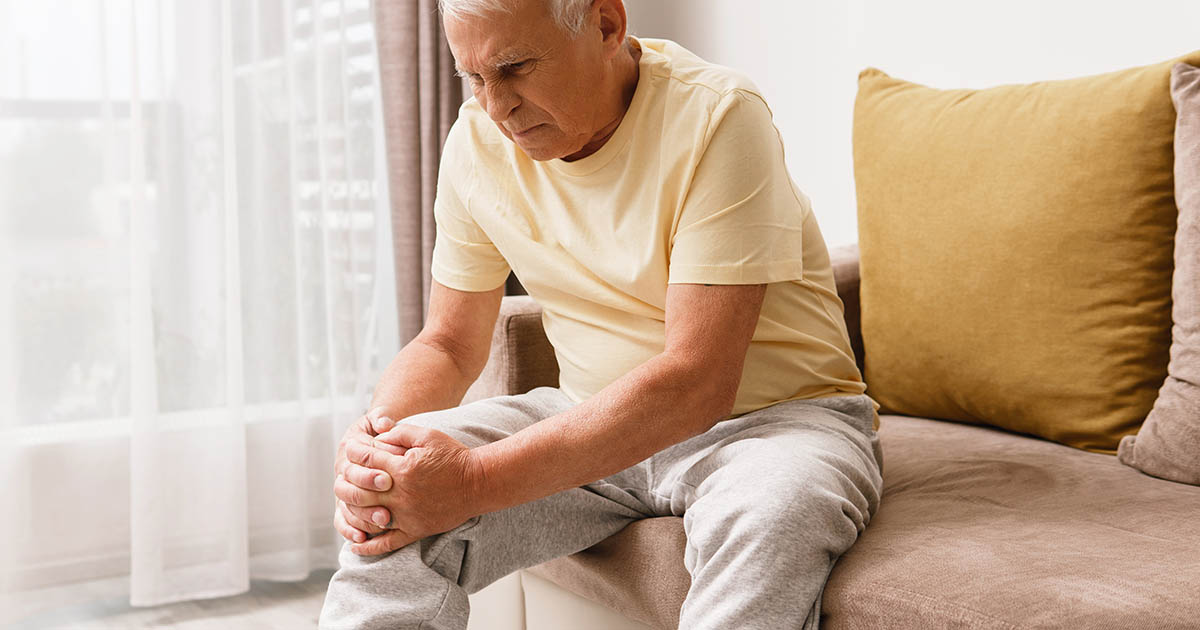


You finish a three-mile run feeling fine. Two hours later, the outside of your right knee aches. You rest for two days and it disappears. You head out for another run and, somewhere between miles one and two, it comes back, same spot, same dull burning sensation right at the lateral knee. This pattern has a name: iliotibial band syndrome, almost always shortened to IT band syndrome or ITBS.
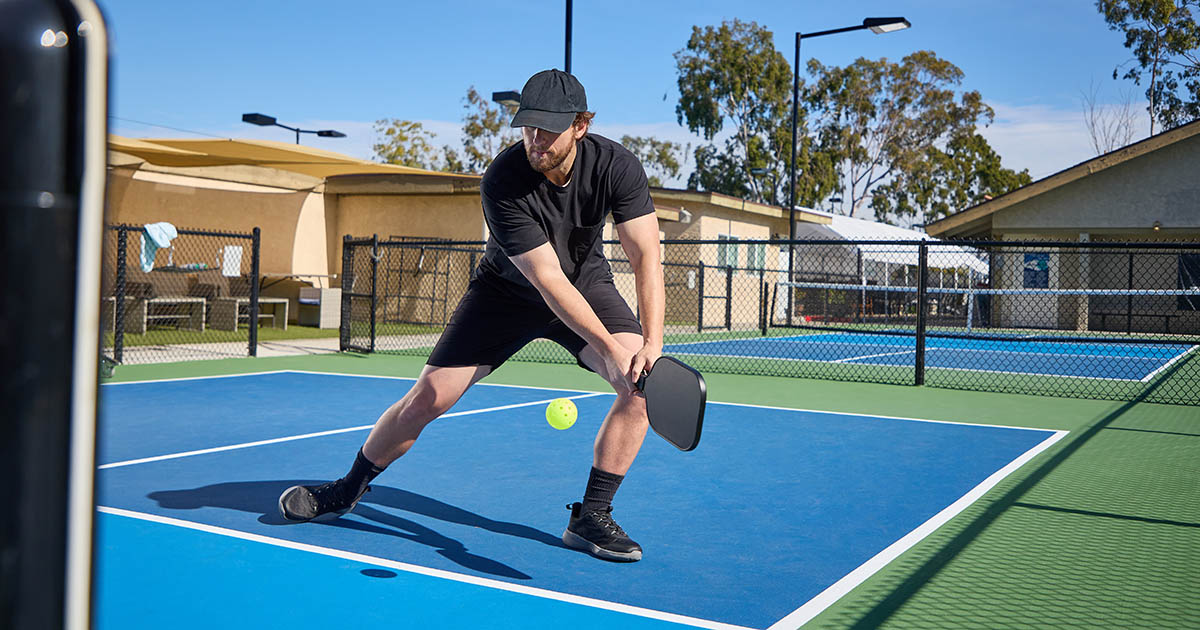
In the Lakewood Ranch area, where the Celery Fields trail and Legacy Trail attract a steady stream of runners, cyclists, and walkers, IT band syndrome is one of the most common overuse injuries we see. It also shows up in pickleball players, who spend extended time lunging and pivoting on hard courts. The frustrating part is that it responds slowly to rest alone, and patients who try to push through it often make it significantly worse.
If the outside of your knee is the problem, the first place to look is your knee pain evaluation at our Lakewood Ranch clinic, where Dr. Banman assesses not just the knee itself but the hip, pelvis, and lumbar mechanics that drive most IT band cases. Here is what the condition actually involves.
What Is the IT Band?
The iliotibial band is a thick band of connective tissue (fascia) that runs along the outside of the thigh from the hip to just below the knee. It originates at the tensor fasciae latae (TFL) muscle near the hip crest, runs down the outer thigh, and attaches to Gerdy's tubercle on the outer surface of the tibia.
Unlike a muscle, the IT band cannot contract or lengthen on its own. It transmits forces between the hip and the knee, and it plays an important stabilizing role during the stance phase of running and walking. Under normal conditions it moves freely over a pad of tissue (the lateral femoral epicondyle) near the knee. When it starts rubbing against that bony landmark with every stride, inflammation follows.
The classic explanation was that the IT band "tightens" and needs to be stretched. More recent biomechanics research points to a compression model: the IT band presses against fat tissue just beneath it at approximately 30 degrees of knee flexion, which is exactly the angle your knee passes through at initial contact when running. This is why symptoms almost always start a predictable distance into a run rather than immediately.
Why It Develops: The Biomechanical Story
IT band syndrome is almost never caused by the IT band itself. The band is the site of pain, not the source of the problem. Three mechanical patterns drive most cases:
1. Hip abductor weakness
The gluteus medius and TFL control how the pelvis and hip behave during single-leg stance. When those muscles are not keeping pace with training demands, the hip drops slightly on the non-stance side (Trendelenburg pattern) and the knee tracks inward. That inward rotation increases compression between the IT band and the lateral femoral epicondyle with every step. Over 1,500 to 2,000 foot strikes per mile, small loads become large ones.
2. Running or cycling form breakdown
Increasing mileage faster than tissues can adapt is the single most common trigger. Other form factors include overstriding (heel striking far in front of the body), running on cambered roads with one foot always lower than the other, and cycling with the seat too high, which forces the hip into excessive rotation at the bottom of the pedal stroke.
3. Foot mechanics and lower-limb alignment
Excessive pronation at the foot changes the angle at which forces travel up the leg. Leg length discrepancy, even a structural difference of a few millimeters, can shift loading patterns enough to favor one IT band over the other. This is why patients with bilateral IT band irritation almost always have a compensatory pattern driving one side harder.
The IT band itself rarely needs aggressive treatment. What it needs is for the tissue tension feeding into it from the hip, pelvis, and lumbar spine to be addressed. Stretching a non-contractile band is largely futile; fixing the mechanics upstream is not.
The Classic Symptom Pattern
IT band syndrome has a recognizable presentation that distinguishes it from other sources of lateral knee pain:
- Pain location: Sharp or burning sensation specifically at the outer knee, roughly at the level of the lateral femoral epicondyle (the bony knob on the outer side of the knee), about two finger-widths above the knee joint line.
- Activity relationship: Pain starts a predictable distance into a run (often 1 to 3 miles) and may force you to stop. It eases quickly once you stop moving.
- Rest clears it, activity brings it back: Two days off and the pain is gone. One run later, it returns at the same distance. This cycling pattern is the hallmark.
- Stairs and hills are worse: Going down stairs or downhill is often worse than flat running because the knee passes through the 30-degree compression zone repeatedly.
- No swelling: The knee does not swell. There is no locking, catching, or giving-way. Joint-line tenderness is minimal.
If you have lateral knee pain with joint-line tenderness, swelling, locking, or giving-way, those point toward intra-articular problems (meniscus, ligament, cartilage) rather than IT band syndrome. That distinction matters for treatment direction. Our overview of knee pain without a clear injury covers several of those patterns in more depth.
What You Should Not Do (The Traps)
Two approaches consistently make IT band syndrome worse or drag recovery out unnecessarily.
Running through the pain. IT band syndrome involves compression and friction at a specific anatomical site. Continuing to compress and rub that site with every stride does not build tolerance; it accumulates damage. Many runners who power through ITBS end up with a low-grade chronic irritation that takes months to settle rather than the 4 to 8 weeks a well-managed case typically needs.
Foam rolling the IT band aggressively. Because the IT band is non-contractile fascia, not a muscle, you cannot release tension in it by rolling over it. The pain you feel foam rolling the outer thigh comes from compressing irritated tissue against the bone underneath. A brief gentle roll over the TFL muscle at the hip (not the band itself) has some merit. Rolling directly over the lateral knee repeatedly does not.
For pickleball players specifically, it is worth noting that IT band irritation from court sports has a somewhat different recovery curve than from running. The lateral lunge and pivot demands of pickleball create repetitive hip adduction loading that can re-irritate the band even during a reduced-intensity session. Our broader look at pickleball injuries in Lakewood Ranch covers this pattern alongside shoulder and ankle problems we see in the same population.
The Hip and Lumbar Connection Most Runners Miss
After 23 years in practice, the finding I see most often in IT band cases is not tight fascia at the knee. It is restricted hip mechanics combined with subtle lumbar dysfunction that alters pelvic control on the affected side.
The sacroiliac joint and L4-L5 level influence how the pelvis stabilizes during single-leg stance. When those segments are restricted, the gluteus medius fires less efficiently, the TFL compensates by working harder, and IT band tension rises with every stride. Patients who have been doing the right hip exercises but are not getting better often have this upstream restriction that their physical therapist has not addressed because they are looking at the knee.
When we evaluate an IT band case, the assessment includes lumbar range of motion, sacroiliac joint mobility, hip abductor strength testing, and a gait observation when the patient is a runner. We are not just looking at the knee; we are looking at the chain. That is why a purely local approach, whether foam rolling or even targeted hip strengthening, sometimes fails: it is targeting the symptom location rather than the mechanical origin.
What Treatment Actually Looks Like
A realistic recovery plan for IT band syndrome addresses the tissue irritation at the lateral knee while simultaneously correcting the mechanics driving it. The two have to happen together.
Reducing local tissue irritation
Class IV laser therapy accelerates cellular repair in irritated connective tissue. It penetrates to the depth of the IT band where superficial modalities cannot reach and drives down the prostaglandin-driven inflammation cycle. Many patients notice meaningful reduction in post-activity soreness within the first three to five sessions. The full course depends on how chronic the irritation has become. You can read more about how the technology works at our Class IV laser therapy page.
For cases where the IT band and the fat pad beneath it have developed more significant reactive changes, Softwave therapy is another option. It uses broad-focused acoustic waves to stimulate tissue remodeling at depth, which is particularly useful when the irritation has persisted for several months and simple anti-inflammatory approaches have not been enough.
Correcting the mechanics
Chiropractic adjustment of restricted segments in the lumbar spine and sacroiliac joint restores normal pelvic mechanics, which almost immediately changes how efficiently the hip abductors can fire. For many patients, the hip strength deficits are not a training problem; they are a neurological inhibition problem driven by joint restriction. Fix the restriction first, then strengthen, and the response is faster.
Hip abductor and glute med strengthening exercises (single-leg deadlifts, lateral band walks, clamshells with progressive resistance) form the rehabilitation bridge between pain reduction and return to training. These are straightforward exercises, but timing matters: doing them on an acutely irritated knee before the local tissue is calmed down just adds load to a sensitized structure.
Return to activity
We use a symptom-based return-to-running protocol rather than a fixed timeline. When the patient can walk 30 minutes with zero lateral knee discomfort, they begin a run/walk progression at 50% of their pre-injury pace. Mileage increases by no more than 10% per week once they are back to continuous running. For cyclists, saddle height is reviewed as part of the return plan. For pickleball players, court time is reintroduced in shorter blocks (20 minutes) with attention to lateral lunge mechanics before returning to full match play.
When to Get Evaluated
Not every lateral knee pain episode needs an office visit on day one. An acute flare after a hard training week can often be managed with two to three days of rest, ice to the lateral knee for 15 minutes after activity, and temporary mileage reduction. If any of the following apply, come in rather than waiting:
- Pain is present with walking or at rest (not just during activity)
- Symptoms have persisted for more than three weeks despite rest
- You have tried a standard rest-and-cross-train approach twice and the pain returns immediately when you resume running
- There is joint-line tenderness, any swelling, or a sense of instability
- The pain is bilateral or has changed character (dull ache becoming sharp)
Bilateral IT band symptoms, or symptoms that develop without a clear training-load increase, warrant a more thorough evaluation to rule out underlying pelvic asymmetry, leg length discrepancy, or lumbar contributions that will not resolve with local treatment alone.
In Lakewood Ranch, Bradenton, and Sarasota, Dr. Banman evaluates knee and hip pain cases with the same multi-structure assessment used for spine patients. The knee does not exist in isolation.