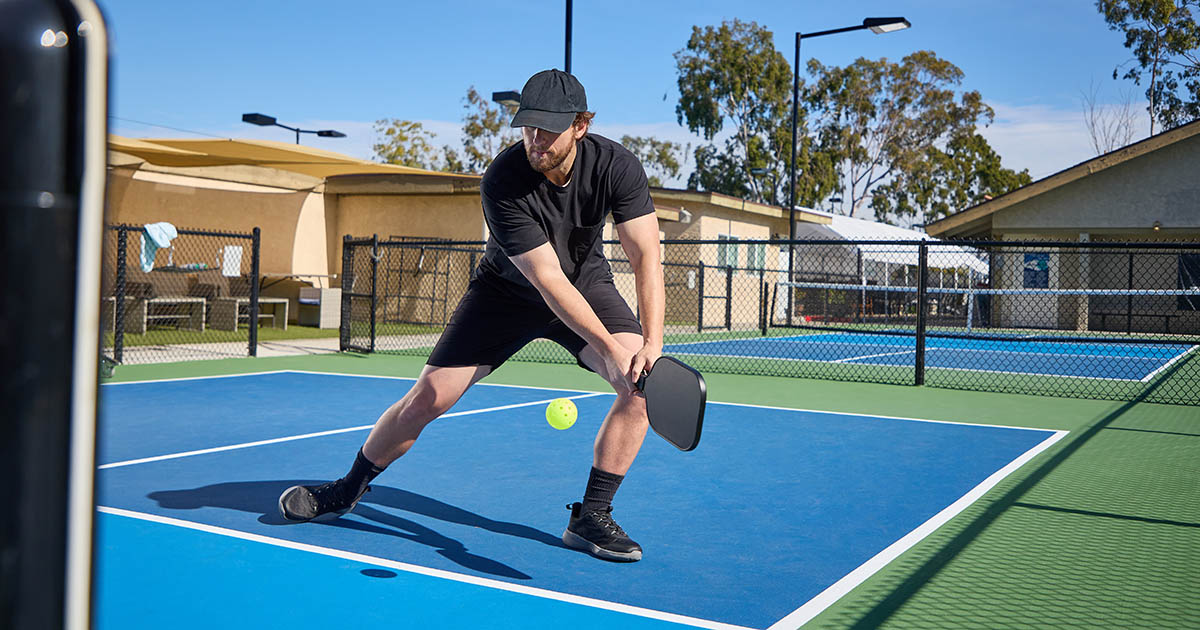

Both conditions share a frustrating pattern: you were not even playing tennis or golf when the pain started. Despite their names, tennis elbow and golfer's elbow affect far more plumbers, painters, keyboard workers, gardeners, and construction workers than athletes. The sport labels stuck because the loading patterns in each game happen to isolate the exact tendons involved. But the underlying injury is the same whether you are wielding a racket or a paintbrush.
The two conditions are often lumped together or misidentified, which is a problem because the painful spot, the muscle group driving the issue, and the most effective treatment targets are different for each. Getting the diagnosis right is the first step toward recovery that actually holds.
What Is Tennis Elbow (Lateral Epicondylitis)?
Tennis elbow involves the tendons of the wrist extensor muscles, primarily the extensor carpi radialis brevis (ECRB), which attach to the bony prominence on the outside of the elbow called the lateral epicondyle. When these tendons are repeatedly loaded under tension, microscopic tears accumulate faster than the tendon can repair itself, and the resulting tissue becomes thickened, disorganized, and painful.
Despite the name, population studies suggest only about 5 to 10 percent of tennis elbow cases actually develop from tennis. The far more common drivers are repetitive occupational movements: turning a screwdriver, clicking a mouse, painting overhead, gripping a steering wheel for long stretches, or doing any work that requires repeated wrist extension against resistance.
The characteristic symptom profile includes:
- Pain or aching on the outer side of the elbow, directly over or just below the lateral epicondyle
- Pain that worsens when gripping objects, shaking hands, lifting a coffee cup, or turning a doorknob
- Discomfort that often radiates down the forearm toward the wrist but rarely crosses the wrist
- Morning stiffness that loosens slightly with activity, then flares with prolonged use
- Reduced grip strength, especially when the wrist is extended
In most cases, the pain builds gradually over weeks to months. It rarely arrives after a single incident. By the time patients come in, they have usually had low-grade symptoms for months and a specific activity or increase in workload pushed them over the threshold where rest no longer quiets it.
What Is Golfer's Elbow (Medial Epicondylitis)?
Golfer's elbow targets the inside of the elbow. The medial epicondyle is the bony bump on the inner side of the joint, and it serves as the attachment point for the flexor-pronator muscle group: the muscles that curl the wrist toward the palm and rotate the forearm inward. Repetitive loading of this group, especially under forceful gripping or throwing-type motions, generates the same accumulation of micro-tears in the tendon that drives lateral epicondylitis, just on the opposite side of the joint.
Again, the golf label is misleading. Golfer's elbow is common in pitchers, bowlers, rock climbers, assembly-line workers, and anyone who performs repeated wrist flexion or forearm pronation against resistance. A carpenter swinging a hammer all day is a classic candidate.
The symptom profile is a mirror image of tennis elbow in location:
- Pain or tenderness directly over the medial epicondyle (the inner bony bump) and potentially extending into the inner forearm
- Pain with gripping, especially when the wrist is in a neutral or flexed position
- Forearm aching that radiates toward the wrist along the inner side
- Occasional tingling or numbness into the ring finger and pinky (a flag for ulnar nerve involvement at the cubital tunnel)
- Weakness with wrist flexion and forearm rotation
One clinical detail that matters: if the tingling into the ring and pinky fingers is prominent, the ulnar nerve running through the cubital tunnel at the inner elbow may be involved or irritated alongside the tendon. That changes the evaluation and sometimes the treatment approach.
How to Tell Them Apart: Simple Tests
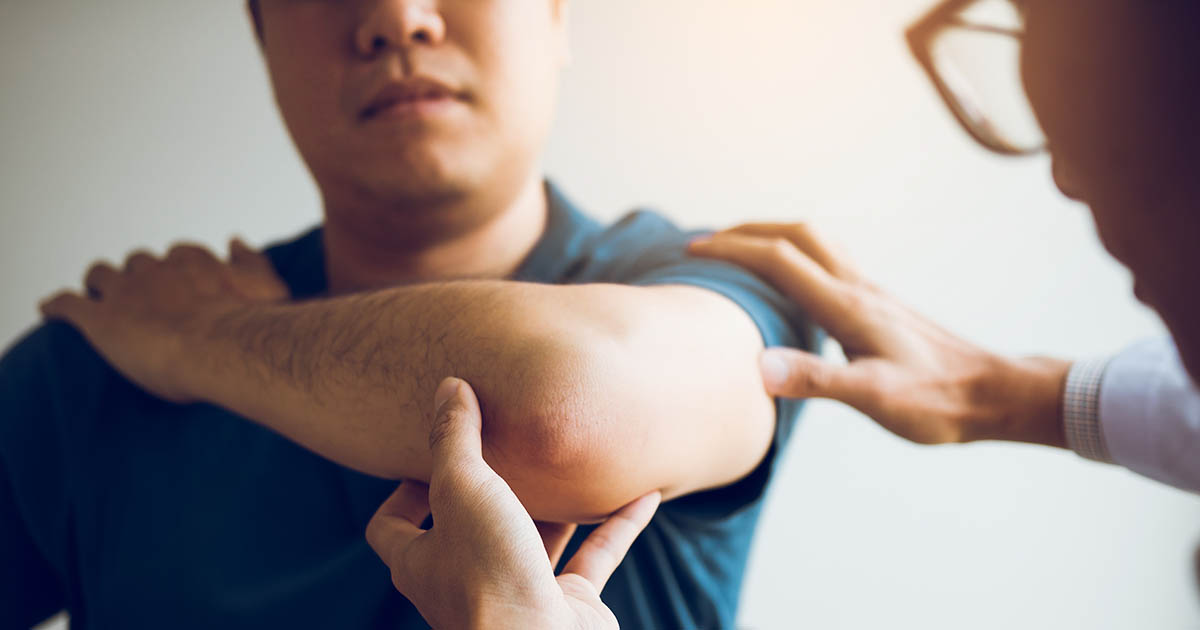
The most reliable self-assessment is location of the tender spot. Stand with your arm hanging at your side, palm facing forward. The bony bump on the outside of the elbow (thumb side of the joint) is the lateral epicondyle. The bony bump on the inside (pinky side) is the medial epicondyle. Press firmly on each.
If the outside bump is the painful one, you are most likely dealing with tennis elbow. If the inside bump is the painful one, golfer's elbow is the more probable diagnosis.
Two simple resistance tests reinforce the location finding:
For tennis elbow: Extend your elbow fully and ask someone to push down gently on the back of your wrist while you resist by extending the wrist upward. Pain at the outer elbow is a positive sign for lateral epicondylitis. This is sometimes called Cozen's test in clinic.
For golfer's elbow: With the elbow extended, have someone push upward under your palm while you resist by pressing down (flexing the wrist). Pain at the inner elbow points to medial epicondylitis. Resisted forearm pronation (turning the palm downward against resistance) is a second confirmatory test.
Some patients have tenderness on both sides of the same elbow. This is less common but does occur, particularly in people who perform high-repetition work that loads both the extensors and flexors simultaneously, such as certain assembly tasks or intense racquet sport play. Bilateral epicondylitis at one joint typically means the workload has overwhelmed the recovery capacity of both tendon groups.
One more distinction worth knowing: both conditions are sometimes confused with cervical radiculopathy, particularly C5 and C6 nerve root compression from the neck. A pinched nerve at C6 produces pain, tingling, and weakness that runs from the neck into the outer forearm and thumb area, overlapping with the tennis elbow distribution. If your elbow symptoms are accompanied by neck stiffness, or if the pain is present even when the arm is completely unloaded, a cervical evaluation is appropriate before isolating treatment to the elbow itself. We include this as part of a standard elbow assessment here because missing a cervical driver leads to treatment that does not hold.
Why Elbow Tendinopathy Does Not Heal With Rest Alone
The most common advice patients receive is to rest the arm, ice the elbow, and take anti-inflammatories. Many patients do this for four to six weeks and return to their activities, only to have symptoms return within days. There is a reason for this pattern.
Tennis elbow and golfer's elbow are tendinopathies, not acute inflammatory tears. Imaging studies consistently show that the tendon tissue in chronic cases has undergone structural change: the organized collagen fibers of a healthy tendon have been partially replaced by disorganized scar-like tissue with poor tensile strength. This process is called angiofibroblastic tendinosis. The tissue does not hurt because it is inflamed. It hurts because it is structurally compromised and mechanically sensitized.
Rest reduces the load on the tendon and quiets the pain signal, but it does not reverse the structural disorganization. Anti-inflammatories may blunt symptoms in the short term but have no known effect on the underlying tissue quality. The moment the person returns to the provocative activity, the load exceeds what the compromised tendon can handle, and symptoms return.
Cortisone injections follow the same pattern. Multiple studies have shown that corticosteroid injection produces strong short-term pain relief (weeks to a couple of months) but significantly worse outcomes at one year compared to a wait-and-see approach or physiotherapy. The reason is that cortisone suppresses the inflammatory signaling the tendon needs to initiate its own repair process, and repeated injections degrade tendon structure further.
Effective treatment needs to address the tissue itself, not just the symptom. That means promoting collagen remodeling, restoring tendon structure, and progressively reloading the tendon in a controlled way so it rebuilds capacity rather than re-accumulating damage.
What Actually Helps: Conservative Care Options
Several modalities have meaningful evidence or strong clinical rationale for lateral and medial epicondylitis. The goal across all of them is the same: stimulate the body's own repair process in tissue that has stopped remodeling on its own.
Shockwave and Softwave Therapy
Acoustic wave therapy has the strongest evidence base of any non-surgical intervention for epicondylitis. High-energy focused shockwave and lower-intensity broadwave (Softwave) both deliver acoustic pressure waves into the tendon that stimulate blood vessel in-growth, disrupt calcific deposits when present, and trigger the fibroblast activity needed to lay down new organized collagen. Multiple randomized controlled trials have shown significant improvements in pain and function compared to sham treatment, with effects that continue improving over three to six months after the treatment course ends.
The distinction between shockwave and Softwave matters for tendon work: focused radial shockwave penetrates more deeply and is better suited for thicker, entrenched tendinopathy, while Softwave's supersonic broadwave technology is typically more comfortable and well-tolerated for sensitive presentations. Dr. Banman selects the modality based on the chronicity of the case and the patient's presentation. For a full comparison of how the two technologies differ, see the guide on shockwave vs Softwave therapy.
Class IV Laser Therapy
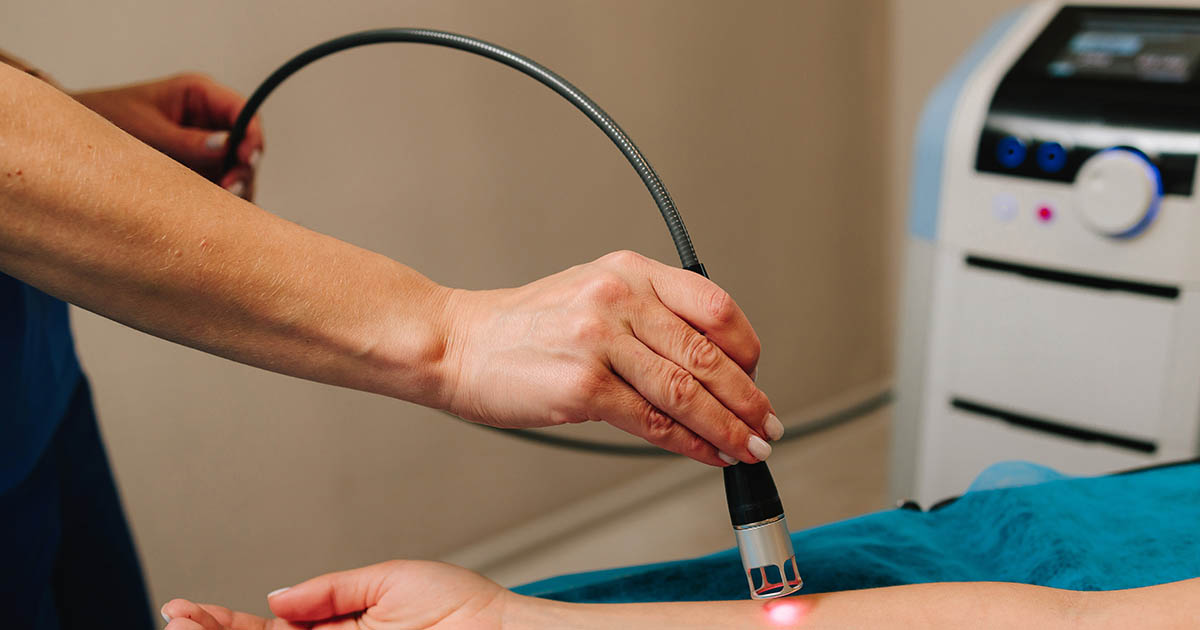
High-power photobiomodulation (Class IV laser) delivers photon energy into tendon tissue that increases mitochondrial activity in fibroblasts, reduces local inflammatory cytokine load, and accelerates cellular repair processes. For tendinopathy, the mechanism is genuinely complementary to shockwave: shockwave creates controlled micro-disruption to stimulate healing, while laser supports the cellular machinery doing the actual repair work. Many patients with epicondylitis benefit from a combined course of both.
For a breakdown of how Class IV laser compares to lower-power cold laser in terms of tissue depth and application, see the post on Class IV laser vs cold laser.
Electrical Muscle Stimulation
Chronic tendinopathy tends to produce muscle inhibition in the surrounding muscle group over time. The extensor or flexor muscles at the epicondyle do not fire as effectively, which means the tendon is carrying a disproportionate share of the load even during light activity. EMS can restore neuromuscular activation in inhibited muscle fibers, partially offloading the tendon during recovery. It also has a direct analgesic effect through gate-control pain modulation. See the detailed breakdown at the post on when EMS therapy actually works.
Cervical and Upper Extremity Evaluation
As noted above, C5-C6 radiculopathy and thoracic outlet syndrome can both produce symptoms that overlap with epicondylitis. A chiropractor can assess cervical range of motion, provocative nerve tension tests, and upper extremity strength to determine whether the elbow is the primary driver or whether the neck is contributing to or causing the presentation. Treating the elbow while ignoring an active cervical component produces incomplete results. For patients in Lakewood Ranch dealing with arm symptoms that do not respond cleanly to local elbow treatment, a full cervical evaluation is a reasonable next step.
Eccentric Loading Rehabilitation
Eccentric tendon loading, meaning contracting the muscle as it lengthens rather than as it shortens, is one of the most consistently effective interventions for tendinopathy across multiple body sites. For lateral epicondylitis, this typically involves a wrist extension eccentric program starting at very low loads and building progressively over eight to twelve weeks. For medial epicondylitis, a wrist flexion and forearm pronation eccentric program follows a similar structure. The key is progressive overload: the tendon must be loaded beyond its current capacity in a controlled way to drive structural adaptation. This is the opposite of rest.
When to See a Provider
Most cases of tennis elbow or golfer's elbow that have been present for fewer than four to six weeks will improve with relative rest, activity modification, and a structured eccentric loading program. The following presentations warrant a professional evaluation sooner:
- Symptoms have persisted for more than six weeks despite activity modification and conservative self-care
- Pain is present at rest or waking you at night (suggesting the tissue is more involved than a simple tendinopathy)
- Numbness or tingling in the hand or fingers (possible nerve involvement, particularly ulnar nerve for inner elbow or radial nerve for outer elbow)
- Visible swelling or significant warmth at the elbow (suggests an acute inflammatory process or bursitis that may need a different evaluation)
- Progressive weakness in grip, especially if worsening despite reduced activity
- History of prior cortisone injections with symptoms returning (the tissue may need a different stimulus to remodel)
Chronic epicondylitis, meaning cases that have been present for twelve months or more without successful treatment, tends to be significantly harder to resolve. The structural disorganization in the tendon is more advanced, and the pain sensitization is more entrenched. Earlier intervention consistently produces better outcomes. If you have been managing symptoms for several months with limited improvement, the window to resolve this efficiently is narrowing.
For Lakewood Ranch area patients dealing with either condition, Dr. Banman evaluates the full picture: the elbow, the cervical spine, and the activity demands driving the load. The goal is to identify what the tendon actually needs to remodel, apply the appropriate modality, and structure a return to full activity that does not repeat the cycle. The sports injury care page covers the full range of conditions we address here.
If you are not sure whether what you are experiencing is tennis elbow, golfer's elbow, or something else in the elbow or arm, call (727) 213-2982 or book at celluron.janeapp.com. We can usually get new patients seen within 24 hours.