

Most people who come into our Lakewood Ranch office with a long-standing disc problem say the same thing: "I thought it would go away on its own." Sometimes it does. But when it does not, waiting has a cost, and that cost compounds over time in ways that change both your symptoms and your treatment options.
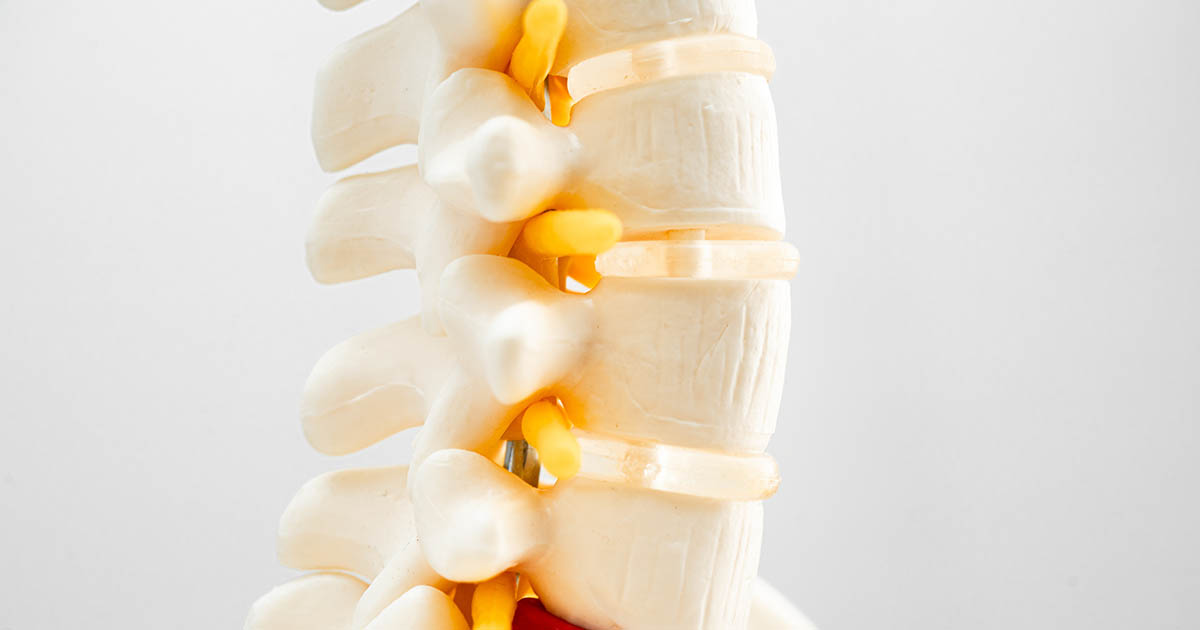
A herniated disc happens when the soft inner material of a spinal disc pushes through the tougher outer layer. That bulge can press on a nearby nerve root, which is why disc problems often produce symptoms far from the spine itself: pain, numbness, or tingling that travels down the leg (sciatica) or into the arm. If you are dealing with that pattern and you have not had it evaluated, our herniated disc care page explains what a full conservative workup looks like in Lakewood Ranch.
What this post is about is the other side of that conversation: what the research and clinical experience show happens to your disc, your nerve, and your non-surgical options when you keep pushing the evaluation out.
Why so many people wait
The answer is not stubbornness. A newly herniated disc often goes through a cycle where the pain is severe for a few days, then backs off. The body's inflammatory response calms down, the disc material can partially retract, and the person feels well enough to function. They conclude the problem resolved itself.
That partial recovery is real. But in many cases the underlying disc instability is still there, the nerve is still irritated at a lower level, and the compensations the body has built up (slight shifts in posture, muscle guarding, altered gait) are setting the stage for the next flare. Which is usually worse than the first.
The second reason people wait is simpler: they do not want to hear that they need surgery. So they do not go find out. In reality, the large majority of herniated disc patients can be managed without surgery, but that window stays widest in the earlier stages.
The first few weeks: what is actually happening
In the first two to six weeks after a disc herniation, the disc material is still chemically active. Nucleus pulposus (the inner gel) contains enzymes and proteins that are directly irritating to nerve tissue. Even without mechanical compression, that chemical contact drives inflammation around the nerve root. This is why a disc herniation can produce radiating pain even when imaging shows only modest protrusion.
If you are resting, icing, taking anti-inflammatories, and the symptoms are improving week over week, that is generally a reassuring sign. But if symptoms plateau or symptoms are coming and going without a clear trend downward, that is the moment to get an evaluation, not to keep waiting for another month.
Continuing to load a mechanically compromised disc (sitting for hours, repetitive bending, heavy lifting without any corrective support) during this window is where the most preventable damage happens.
The nerve involvement question
Here is the part that concerns us most clinically. Nerve tissue tolerates short-term compression and irritation reasonably well, but prolonged pressure on a nerve root changes it. Research on nerve compression injuries shows that sustained pressure impairs both the electrical signaling function of the nerve and, over longer periods, the axonal structure itself.
In practical terms, this is what that progression looks like:
- Early: Pain and tingling that travels down the leg or into the arm. The nerve is irritated but signaling is largely intact.
- Weeks to a few months in: Weakness begins to appear, not just pain. Patients notice the affected leg or foot feels less reliable on stairs or uneven ground. Reflexes may start to diminish.
- Longer compression: True sensory deficits develop. The area that was tingling may go partly numb. Muscle atrophy can begin in the muscles the compressed nerve supplies.
- Severe or very prolonged compression: Permanent changes to nerve function are possible, including chronic numbness, weakness that does not fully recover, or chronic pain that is now centrally mediated rather than disc-driven.
None of this is meant to alarm you. Many people with early nerve symptoms recover fully with conservative care. But the timeline matters. The nerve has more recovery capacity when the pressure is relieved earlier.
In our experience, patients who pursue care within the first 6 to 12 weeks tend to respond faster and more completely than those who arrive after 6 months of hoping things will settle on their own. The disc situation is usually similar at both time points. The nerve situation often is not.
Muscle compensation and the secondary injury pattern
When your back hurts, your brain does something smart but ultimately unhelpful: it reorganizes muscle activation to protect the painful area. You probably notice this as stiffness on one side, a different way of walking, or an inability to bend forward the same way you used to.
That compensation pattern develops quickly. And once the disc pain is present, the muscles around it change. Some become chronically overactivated and develop trigger points. Others shut down because the nerve supplying them is compromised. Both patterns alter spinal loading mechanics, which puts additional stress on the disc, facet joints, and adjacent spinal levels.
Many patients who have been managing a disc problem for months find they now have three or four issues stacked on top of the original one: the disc itself, a secondary facet irritation at the same or adjacent level, hip flexor tightness from limping, and sciatic nerve sensitization from chronic irritation. Each of these has to be addressed, in the right order, for the full program to work. That is a bigger treatment challenge than an early-presentation disc case.
For more on how sciatic nerve compression behaves as a disc problem progresses, that page explains the nerve pathway and how we approach it differently depending on how long it has been going on.
When conservative care still works (and when it does not)
Non-surgical care for a herniated disc has three main goals: reduce the load on the disc so it can begin to rehydrate, relieve the nerve compression to allow the inflammation to clear, and restore normal movement patterns so the forces that caused the problem in the first place are corrected.
At our clinic, the primary tool for the disc load and nerve compression part is spinal decompression therapy. The DOC-20 table applies a precise, computer-controlled distraction force to the lumbar spine, creating negative intradiscal pressure. That draws disc material away from the nerve root and encourages fluid exchange into the disc tissue. We combine that with Class IV laser for the inflammatory component and, depending on the case, EMS to restore muscle activation patterns.
This approach works well when:
- The disc herniation is confirmed on imaging (MRI is the most informative study)
- The nerve is still irritated but has not progressed to significant weakness or sensory loss
- The patient does not have other structural contraindications (spinal instability, fracture, tumor)
- The patient can commit to the full care plan, not just a session or two
It becomes harder when the nerve has had sustained compression for 12 months or more, when weakness is significant, or when the disc has progressed to a sequestered fragment (a piece of disc material that has broken off entirely and migrated). Those situations do not automatically require surgery, but they require a more detailed evaluation and sometimes a different combination of interventions.
Red flags that mean do not wait, at all
This is the part where we give you the same guidance we would give a family member. Most disc problems are not medical emergencies. But some presentations involving the spinal cord or the nerve bundle at the base of the spine (the cauda equina) are.
Go to an emergency room, not our office, if you develop:
- Loss of bladder or bowel control, or sudden difficulty urinating when you need to go
- Saddle anesthesia (numbness in the inner thighs, groin, or perineum)
- Rapidly progressive weakness in both legs
- Severe, sudden-onset back pain after a fall or trauma
Cauda equina syndrome is a surgical emergency. It is rare in disc herniation patients, but it does happen and the window for good outcomes closes fast. If you have any of those symptoms, this blog post is not what you need right now.
What we look for when patients have been waiting
When someone walks in after 6 or 12 months of managing disc pain on their own, the evaluation looks a little different from an acute presentation. We are still doing orthopedic and neurological testing to assess the current state of the nerve: reflexes, sensory testing, strength testing in the muscles supplied by the compressed root. But we are also trying to map what has changed over time.
Has weakness appeared recently, or has it been steady? Is the pain pattern consistent with disc-mediated nerve compression, or has it evolved into a more centralized pain pattern? Where are the muscular compensations now, and in what order should they be addressed?
That picture informs whether we move straight into a decompression-based protocol, whether we need to start with muscle reactivation and stabilization first, or whether the presentation is one that we would refer for a surgical consult before attempting conservative care. In 23 years, the last option is the minority. But knowing when to make that call is part of the job.
If you have been sitting on a disc problem in the Lakewood Ranch, Bradenton, or Sarasota area and wondering whether it is worth getting evaluated at this point, the short answer is yes. Earlier is better, but later is still better than never. Call us at (727) 213-2982 or book directly online.
For more context on what distinguishes general back pain from disc-specific pain, that page breaks down the diagnostic picture in plain language.