

Many patients at our Lakewood Ranch office describe this exact pattern: they spend most of the day functioning reasonably well, get through dinner and evening routine, lie down, and the back pain flares. Sometimes it is severe enough to wake them at 2am or 4am. By 10 or 11 the next morning, they are moving almost normally again.
That rhythm is not random. Back pain that peaks at night or in the early morning hours usually reflects something specific about the underlying structure. The four most common culprits, disc pressure, facet joint inflammation, spinal stenosis, and inflammatory arthritis, each follow their own pattern. Identifying which one applies to you changes which treatments actually make a difference. If disc pathology is involved, our approach to herniated disc treatment in Lakewood Ranch is often the most direct path forward.
Here is how to read the pattern your spine is giving you.
Why back pain behaves differently at night
During the day, gravity and movement keep your spine in a dynamic state. You stand, sit, walk, shift weight, and those transitions constantly cycle load across your discs and facet joints. When you lie down, several things change at once:
- Your intervertebral discs begin absorbing fluid. Discs are hydrophilic (water-loving), and overnight rehydration can increase intradiscal pressure by a measurable amount, enough to affect a disc that is already compromised.
- Spinal canal dimensions shift with position. Lying flat on your back gently extends the lumbar spine, which narrows the spinal canal slightly. For someone with stenosis, that matters.
- Facet joints settle into one position for hours instead of cycling through movement. Synovial fluid inside the joints becomes less mobile, and inflammation that was manageable during the day stiffens noticeably overnight.
- Without the distractions of the day, pain signals that were present but background become more prominent.
"My back hurts more when I lie down" is diagnostic information. The specific pattern, when it starts, what position triggers it, whether it is better or worse in the morning compared to mid-night, and how long it takes to ease after getting up, all point toward a particular structure.
Disc-related pain: the overnight pressure cycle
The intervertebral disc is not just a cushion. It is a hydraulic structure that responds to load throughout the day. During waking hours, compression slowly pushes fluid out of the disc nucleus. When you lie down for six to eight hours, the disc reabsorbs that fluid and regains height. Research in spinal biomechanics shows that humans are measurably taller (across the whole spine) in the morning than in the evening, on the order of 12 to 20 millimeters.
For a healthy disc, that is just normal physiology. For a disc that is already bulging or herniated, the overnight rehydration temporarily increases intradiscal pressure and can place more load on the already-compromised posterior annulus. The posterior annulus is the back wall of the disc, and it is where most herniations occur because forward flexion during the day drives the nucleus in that direction.
The practical result: many patients with significant disc pathology feel their worst not when they first lie down, but in the 3am to 5am window, after the disc has had maximum time to rehydrate. They wake in more pain than when they fell asleep.
A clue that disc pressure is the driver: lying in a fetal position (side-lying with hips and knees bent) often reduces the pain, because spinal flexion slightly opens the posterior disc space and takes pressure off the annulus. Lying flat on your back typically makes it worse.
If the disc pattern fits your symptoms, non-surgical spinal decompression addresses the underlying pressure directly by creating a controlled negative intradiscal pressure that draws the herniated material back toward center and promotes fluid exchange. It is one of the few treatments with a direct mechanical effect on the disc rather than just managing the downstream pain.
Inflammatory arthritis: the one-hour morning stiffness clue
Ordinary facet joint wear (osteoarthritis) causes stiffness that clears within 20 to 30 minutes of moving. You shuffle to the kitchen, move around a bit, and things loosen up noticeably. That is the classic "warm-up" pattern.
Inflammatory arthritis, a category that includes ankylosing spondylitis, psoriatic arthritis, and related conditions, follows a strikingly different pattern. The morning stiffness lasts more than 60 minutes. The back pain tends to improve with exercise rather than worsen with it. It often wakes patients specifically in the second half of the night, rather than right at bedtime. And it frequently presents with pain in both sides of the low back or in the SI joints, rather than on one side.
This matters clinically because the treatment is fundamentally different. Inflammatory spondyloarthropathy responds to NSAIDs and, in more severe cases, biologics. Chiropractic care and physical therapy can be part of the picture, but if the driving pathology is autoimmune, you also need a rheumatologist involved.
If your morning stiffness consistently runs longer than an hour, if your pain legitimately improves after a 20-minute walk, and if you are younger than 45, those three features together should prompt a conversation with your primary care doctor about inflammatory markers (ESR, CRP, HLA-B27). At our office, if we see that cluster in an initial exam, we say so directly.
Spinal stenosis and positional pain at night
Lumbar spinal stenosis means the central canal or the lateral recesses that carry nerve roots have narrowed, usually because of bone spurs, thickened ligamentum flavum, or a combination. The textbook presentation is leg pain, heaviness, or weakness when walking that improves when you sit or lean forward. That positional behavior exists because spinal extension narrows the canal, while flexion opens it slightly.
At night, the positional problem continues. Lying flat on your back puts the lumbar spine in gentle extension, which for someone with significant stenosis can be enough to provoke symptoms. Many of these patients sleep better in a fetal position on their side, or with a pillow under their knees when on their back, because either keeps the lumbar spine in slight flexion.
If you find that you wake with leg symptoms (numbness, tingling, heaviness down one or both legs) as well as back pain, and those symptoms reliably improve when you curl up versus lying flat, stenosis is high on the differential. Imaging is usually needed to confirm the degree of narrowing.
Facet joint syndrome: the stiffness that settles in overnight
The facet joints are paired, synovial joints at the back of each vertebral level. They guide movement, prevent excessive rotation, and carry a portion of the compressive load that the disc takes the rest of. When they are irritated, from osteoarthritis, a sudden twisting injury, or years of accumulated postural load, they can fill with synovial fluid and become inflamed.
Overnight, as you hold one position for hours, that synovial fluid becomes less mobile and the inflammation settles in. Movement gets it flowing again, which is why facet-dominant pain is typically at its worst in the first 20 to 30 minutes after waking and improves steadily through the morning.
This pattern overlaps significantly with degenerative disc disease. As disc height decreases over time, the facet joints are forced to carry more load than they were designed for, because the disc is no longer absorbing its share. What starts as disc degeneration often becomes facet joint arthritis secondarily, and both contribute to the morning-stiffness pattern.
The distinguishing feature from disc-driven nocturnal pain is timing. Facet pain typically does not wake patients in the middle of the night. It is worst in that first movement of the morning, then steadily loosens. Disc pain can wake patients in the 3am to 5am window. If you are waking from sleep specifically, disc involvement is more likely.
Red flags that warrant more urgent evaluation
Most nocturnal back pain has a mechanical explanation that responds to conservative care. A small percentage points toward something that needs imaging or a specialist referral without delay. Back pain at night warrants more urgent evaluation when any of these are present:
- The pain is constant and severe and does not change at all with any position change.
- You are over 50 and this is genuinely new back pain with no clear mechanical trigger.
- You have a history of cancer, recent infection, or unexplained weight loss.
- Back pain is accompanied by bowel or bladder changes.
- There is fever alongside the back pain.
- The pain is worse with lying flat in any position and does not ease with movement at all.
These are patterns where a spinal fracture, infection (discitis), epidural abscess, or malignancy needs to be ruled out before any chiropractic or manual treatment is appropriate. At our Lakewood Ranch office, if an initial exam raises any of these flags, we say so directly, coordinate with your primary care provider, and help you get the right imaging quickly rather than proceeding with treatment that is not indicated.
What actually helps nocturnal back pain (before your appointment)
While you are waiting for an evaluation, a few position adjustments can reduce how much sleep you lose:
- For disc-dominant pain (worse in 3am to 5am window, better fetal): sleep on your side with a firm pillow between your knees to keep your pelvis level. Avoid sleeping flat on your stomach, which places the lumbar spine in extension and increases intradiscal pressure at the posterior annulus.
- For facet or stenosis pain (worse on your back, better curled): try a pillow under your knees when lying on your back, or switch to side-lying entirely. The goal is keeping the lumbar spine in slight flexion.
- Heat before bed: 15 to 20 minutes of moist heat to the low back before lying down helps facet-dominant and muscle-dominant patterns. It does not help acute disc flares as much (ice or neutral temperature is better for those).
- A short walk first thing in the morning, before coffee, helps both disc and facet stiffness more than lying in bed waiting for it to pass.
What matters more than these stopgaps is identifying which structure is generating the pain. Treatment for disc-dominant nocturnal pain (spinal decompression, flexion-based exercise, nerve mobilization) is different from treatment for facet-dominant pain (spinal manipulation, extension exercises, dry needling to the multifidus) and different again from inflammatory arthritis management. Treating the wrong one, or treating them the same, is why many patients do not see lasting improvement.
How we evaluate nocturnal back pain in the office
The clinical intake starts with the exact pattern you have described: when the pain peaks, what position triggers or relieves it, whether it wakes you from sleep, how long it takes to ease after getting up, and how long you have had this pattern. Those details narrow the differential before we start the physical exam.
The physical exam for nocturnal back pain focuses on several areas: orthopedic provocation tests (which positions reproduce or relieve your specific pain), neurological screen for motor and sensory changes below the waist, palpation of the lumbar facets and SI joints, motion assessment, and leg-length evaluation. We also look at hip flexor tension and gluteal activation, because weakness in those areas often contributes to nocturnal lumbar loading regardless of which structure is primarily irritated.
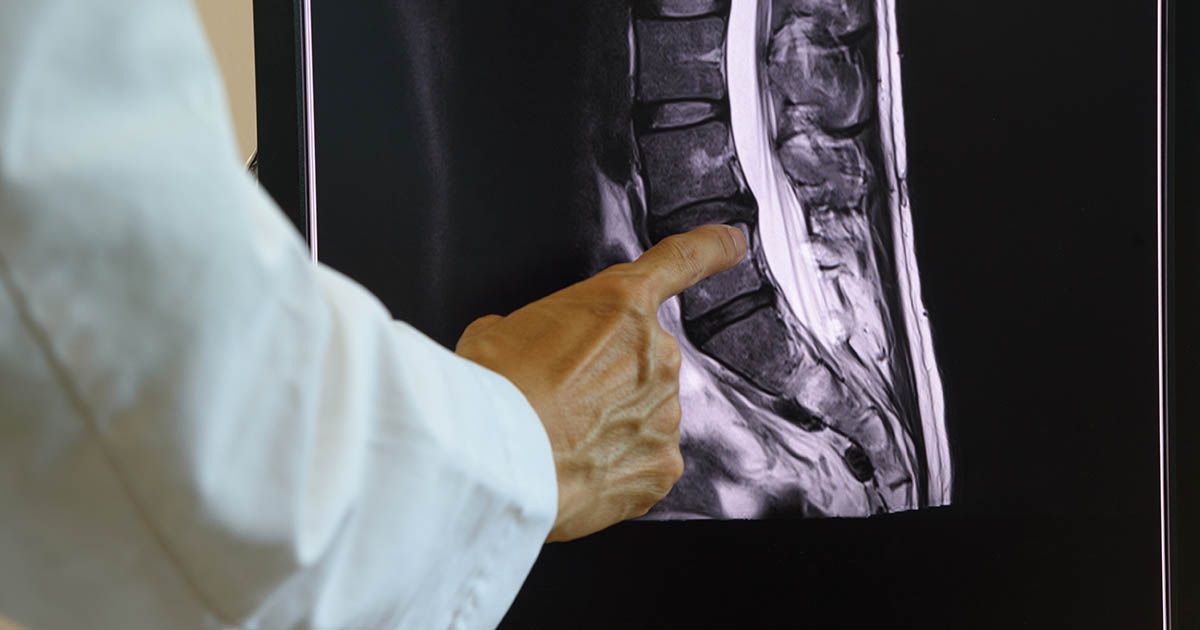
If imaging is appropriate based on the exam findings, we coordinate with your primary care provider for an MRI referral. A plain X-ray shows bone and alignment but does not show discs, nerves, or soft tissue. Many patients arrive having been told by an urgent care or family doctor that their X-ray looks "normal," and they are confused about why they are still in significant pain. A normal X-ray does not rule out a herniated disc, spinal stenosis, or nerve impingement. MRI is the right tool for soft tissue evaluation.
In more than 23 years of practice, including patients throughout Lakewood Ranch and the Sarasota-Bradenton area, Dr. Banman has found that most cases of chronic nocturnal back pain have a clear mechanical explanation on exam. The goal of the first visit is to give you that explanation, tell you which structure is the primary driver, and lay out a realistic plan so you are not guessing what to do next.