
Most people who have heard of hyperbaric oxygen therapy associate it with wound healing, dive injuries, or elite sports recovery. An increasing number of chiropractic and wellness patients are asking about it for a different set of problems: peripheral neuropathy, nerve pain following disc compression, and the slow recovery that often follows a significant auto accident. The question they ask most often is the same one: what is it actually doing in my body that anything else cannot do?
That is a fair question, and it deserves a straight answer. This post walks through the basic mechanism, the clinical situations we apply HBOT to at our Lakewood Ranch practice, what to expect from a session, and who is most likely to see meaningful progress. If you have had burning or numbness in your feet or hands that has not responded well to other approaches, or if you have a nerve-related injury that is healing more slowly than expected, this may be worth reading carefully.
The core mechanism: dissolved oxygen goes where bound oxygen cannot
At normal atmospheric pressure (one atmosphere, or 1 ATA), your lungs pull oxygen into the bloodstream. From there, almost all of it binds to hemoglobin in red blood cells, which carry it to tissues throughout the body. That system is remarkably efficient under normal conditions. It also has a ceiling: hemoglobin saturates quickly, and it can only deliver oxygen to tissues that have reasonably functional blood flow.
Hyperbaric oxygen therapy changes the equation by pressurizing the chamber to 1.4 to 2.0 times normal atmospheric pressure, depending on the type of chamber and the clinical indication. At that elevated pressure, oxygen behaves differently: it dissolves directly into plasma, the fluid component of your blood, rather than waiting to bind to hemoglobin. This is known as Henry's Law. The amount of a gas that dissolves into a liquid is proportional to the partial pressure of that gas above the surface of the liquid. Higher pressure means more dissolved oxygen.
The clinical significance of dissolved oxygen is that it does not require healthy blood vessels to reach target tissues. Dissolved oxygen diffuses through fluid, including the fluid surrounding damaged or chronically inflamed nerve tissue, without needing a red blood cell to carry it there. That is why HBOT reaches environments that standard circulation cannot.
Peripheral nerves do not heal quickly under any circumstances. They heal far more slowly when the surrounding tissue is oxygen-deprived, swollen, or chronically inflamed. Hyperbaric oxygen directly addresses that environment, not just the nerve itself.
What changes inside the body during a session
Several biological processes respond to elevated dissolved oxygen. Not all of them are equally well-established, and we are careful not to overstate what the research supports. That said, the following mechanisms have a reasonable body of peer-reviewed evidence behind them at the concentrations used in soft and hard chamber therapy:
- Reduced tissue edema. Elevated oxygen concentration causes vasoconstriction (narrowing of blood vessels) in intact tissue, which reduces fluid accumulation in damaged areas. This is counterintuitive, but the net effect is that swollen, oxygen-deprived tissue sees an increase in oxygen delivery even as vessel diameter narrows, because dissolved oxygen is no longer dependent on flow volume.
- Angiogenesis. Repeated HBOT sessions stimulate the formation of new small blood vessels (capillaries) in areas of chronic hypoxia. Over a course of treatment, this can gradually improve the baseline oxygen supply to areas that were poorly perfused before therapy started.
- Down-regulation of pro-inflammatory cytokines. Several inflammatory signaling molecules, including some implicated in nerve-related pain, are suppressed during and after HBOT sessions. This does not eliminate the root cause of inflammation, but it can reduce the inflammatory environment that prevents tissue repair.
- Mitochondrial support in nerve cells. Neurons are metabolically expensive cells. They have a high demand for oxygen and ATP. In a hypoxic environment, mitochondrial function deteriorates, slowing nerve conduction and repair. Elevated dissolved oxygen supports ATP production in nerve cells more effectively than standard circulation can in compromised tissue.
The overall picture is a treatment that creates a more favorable environment for tissue repair rather than one that directly repairs anything on its own. That distinction matters for setting realistic expectations, which we will come back to in the section on who benefits most.
What we use HBOT for at Spine and Wellness Center Lakewood Ranch
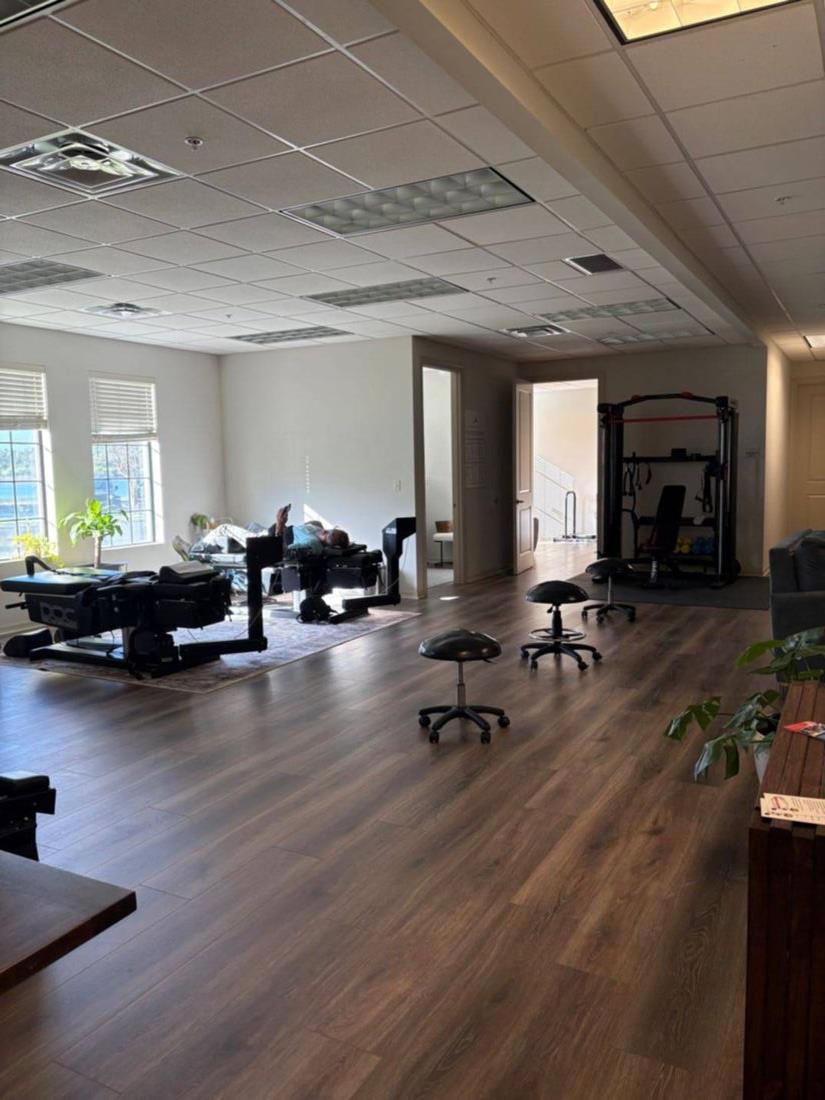
We do not apply HBOT to every patient or every condition. Dr. Banman evaluates the full clinical picture before recommending it as part of a care plan. That said, there are several presentations where we regularly incorporate it into a structured protocol.
Peripheral neuropathy
Peripheral neuropathy, the burning, tingling, numbness, or sharp pain that typically starts in the feet and sometimes the hands, is one of the more common reasons patients ask about HBOT. Most neuropathy patients have been through multiple treatment attempts before they reach us. Many have tried medications that address the symptom but not the nerve environment. Our neuropathy program uses a multi-modal approach that often includes HBOT alongside other therapies, specifically because restoring oxygen supply to the peripheral nerve environment is one of the few things that actually addresses the underlying tissue conditions driving the nerve deterioration.
The most common underlying drivers we see are diabetic peripheral neuropathy (where small vessel disease reduces oxygen delivery to the nerve), idiopathic neuropathy (no cause found), and chemotherapy-induced neuropathy. We document baseline nerve function, track response over a defined number of sessions, and adjust the plan accordingly. We can't promise that sensation will change, and results vary from person to person.
Post-accident nerve injury
A significant car accident does more than strain muscles. High-energy impacts compress and stretch nerve roots, trigger systemic inflammatory cascades, and can leave nerve tissue in a state of chronic low-level hypoxia for months. Patients with lingering numbness, tingling, or altered sensation after a whiplash or spinal injury often have nerve tissue that is technically intact but functioning poorly because the surrounding environment has not been adequately addressed.
For this group, HBOT may be considered in the middle or later stages of care (not immediately after injury, when acute inflammation management takes priority). It is not a standard treatment for nerve injury, and results vary. We coordinate this with the structural correction work already underway: adjustments, spinal decompression, laser therapy.
Disc-related nerve compression
When a herniated or bulging disc compresses a nerve root, two things happen: mechanical pressure reduces nerve conduction, and inflammation at the compression site creates a chemically hostile environment for the nerve. Disc-related nerve compression can cause radiating pain, numbness, and weakness that persists even after the disc pressure is reduced through decompression therapy, because the inflammatory environment lingers.
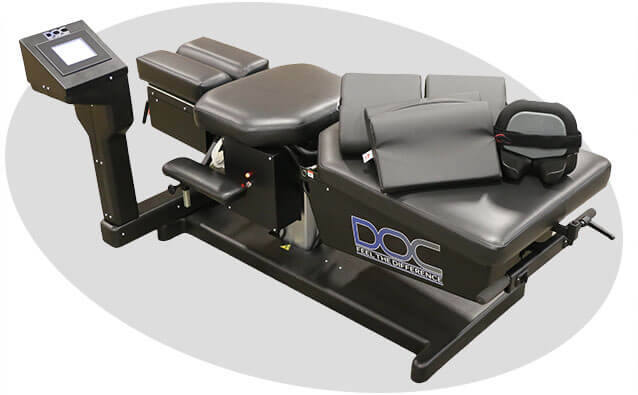
We have found that patients who add HBOT to a decompression protocol sometimes move through the inflammation-resolution phase faster than those doing decompression alone. We are careful about sequencing: decompression creates negative intradiscal pressure that draws fluid and nutrients into the disc; HBOT works on the surrounding tissue environment. Done in the right order and at the right stages of care, the two complement each other without competing.
Regenerative and cellular recovery protocols
For patients pursuing more advanced recovery strategies, including those interested in our regenerative medicine options, HBOT serves a supportive role. Creating an oxygen-rich tissue environment before or after regenerative interventions supports the cellular processes those treatments rely on. Stem cells and growth factors operate more effectively in well-oxygenated tissue than in hypoxic, inflamed environments. This is one reason HBOT is increasingly used alongside regenerative protocols rather than as a standalone modality.
What a session looks like in our clinic
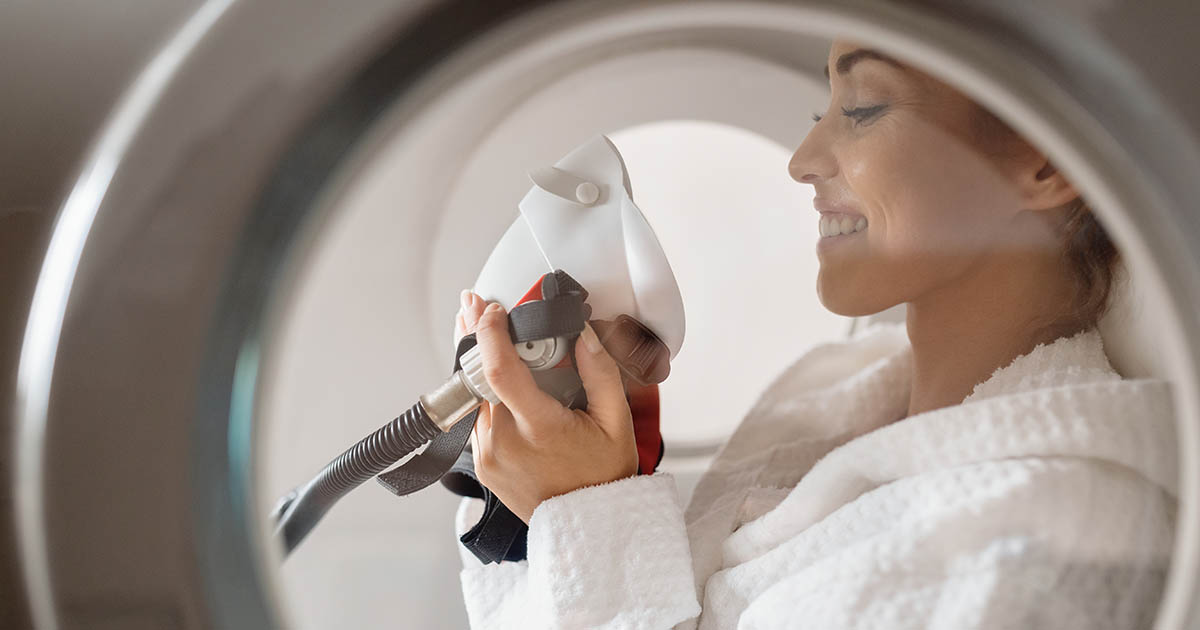
Our clinic uses a monoplace hyperbaric chamber, which is a clear acrylic chamber designed for one person. You lie inside on a padded surface. The chamber pressurizes gradually over the first several minutes, which most people compare to the sensation of descending in an airplane. Most patients find it comfortable, and many sleep through part of the session.
Session duration at our clinic runs 60 to 90 minutes at pressure, with a pressurization and depressurization phase on either end. You breathe normally inside the chamber. The chamber is sealed but ventilated, and communication with staff is maintained throughout.
Typical things patients notice during and after sessions:
- A feeling of ear fullness during pressurization (similar to altitude change), which clears with swallowing or yawning
- Mild warmth as oxygen delivery to tissue increases
- Some patients report feeling unusually alert or energized after the first several sessions
- Neuropathy patients sometimes notice temporary changes in their sensation pattern during or immediately after sessions, which can vary considerably from person to person
- Fatigue is uncommon but possible, particularly in the first few sessions
A course of HBOT for nerve-related conditions typically runs 20 to 40 sessions, depending on the condition and the rate of response. We evaluate at defined checkpoints, usually every 10 sessions, and adjust based on what we are observing clinically and what you are reporting symptomatically. There is no standard protocol that applies to every patient: the number of sessions, frequency, and sequencing with other therapies all depend on your specific presentation.
Who tends to benefit most
Based on our clinical experience, patients who tend to see the most meaningful progress with HBOT share several characteristics:
- Neuropathy that is diagnosed but relatively early in its progression. HBOT cannot restore nerve fibers that have already undergone significant structural degeneration, and it is not a standard neuropathy treatment.
- Post-injury nerve symptoms that have plateaued. Patients who have made some initial recovery after a disc injury or accident but have stalled at a level of residual numbness or pain often respond well when HBOT is added to their existing protocol.
- Patients with documented circulatory compromise in the affected area. Diabetic neuropathy and small-vessel disease patients are candidates precisely because the problem is tissue oxygen delivery, which is what HBOT is best positioned to address.
- Patients who are compliant with a full protocol, not using HBOT in isolation. The patients who report the most consistent progress are those engaged in a broader care plan. HBOT alone, without addressing the mechanical drivers of nerve compression or the structural factors contributing to poor circulation, typically produces less durable results.
Who should exercise caution or speak to Dr. Banman first
HBOT is well-tolerated by the vast majority of patients, but there are clinical situations that require careful evaluation before starting:
- Untreated pneumothorax (collapsed lung). This is a firm contraindication. Pressurization with an untreated pneumothorax is dangerous. If you have had any recent chest injury or lung surgery, tell us before we discuss HBOT.
- Active ear or sinus infection. Pressurization affects the ears and sinuses. Active infection creates a risk of barotrauma. These situations typically resolve quickly and HBOT can often proceed after the infection clears.
- Certain medications. Some medications interact with elevated oxygen concentrations. A full medication review is part of our intake before starting any HBOT course.
- Claustrophobia. The monoplace chamber is clear acrylic, and many patients who consider themselves claustrophobic manage it fine once they see the chamber in person. That said, it is a real consideration worth discussing honestly before the first session.
- Pregnancy. The research on HBOT during pregnancy is limited. We do not offer HBOT to patients who are pregnant.
If you have a condition not listed here and are wondering whether HBOT is appropriate, that question is best answered in a direct evaluation. Most concerns can be addressed once Dr. Banman reviews your history and current status.
How HBOT fits into a structured care plan
One of the more common mistakes we see with hyperbaric oxygen is patients pursuing it as a standalone intervention, often after reading about it online and expecting it to function as a complete treatment on its own. For the conditions we see in a chiropractic and regenerative medicine setting, that approach rarely produces the results patients are hoping for.
HBOT is most effective when it is part of a deliberate sequence. For a neuropathy patient, that might mean: initial evaluation to map the pattern and severity of nerve dysfunction, a course of spinal decompression if there is a compressive component, laser therapy to address the inflammatory nerve environment locally, HBOT to restore the tissue oxygen supply systemically, and ReBuilder electrical nerve stimulation to support nerve conductivity throughout. Each modality targets a different part of the problem. Removing any one of them weakens the overall protocol.
For patients with disc-related nerve pain, the sequencing is typically different: structural correction first (adjustments, decompression), then HBOT, if Dr. Banman recommends it, after the acute compression has been addressed.
If you have questions about whether HBOT belongs in your current care plan, or whether it makes sense as a starting point for a condition you have been managing without much progress, the most direct path is a new patient evaluation where we can look at the full picture. See our hyperbaric oxygen therapy service page for more on what we offer and how it integrates with our other programs.