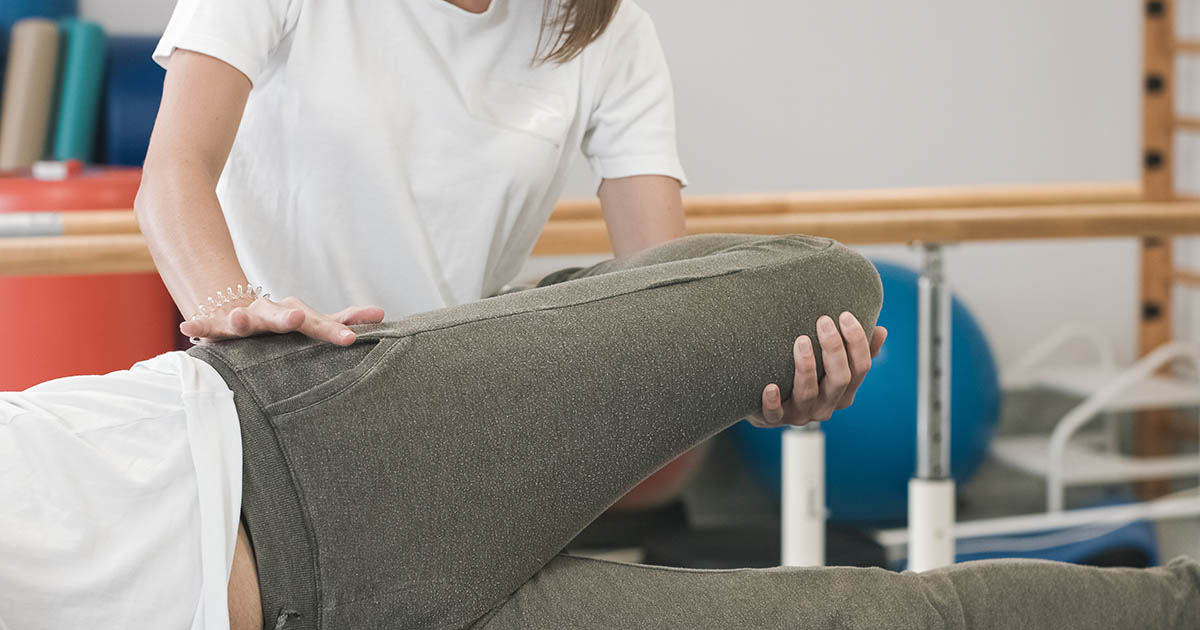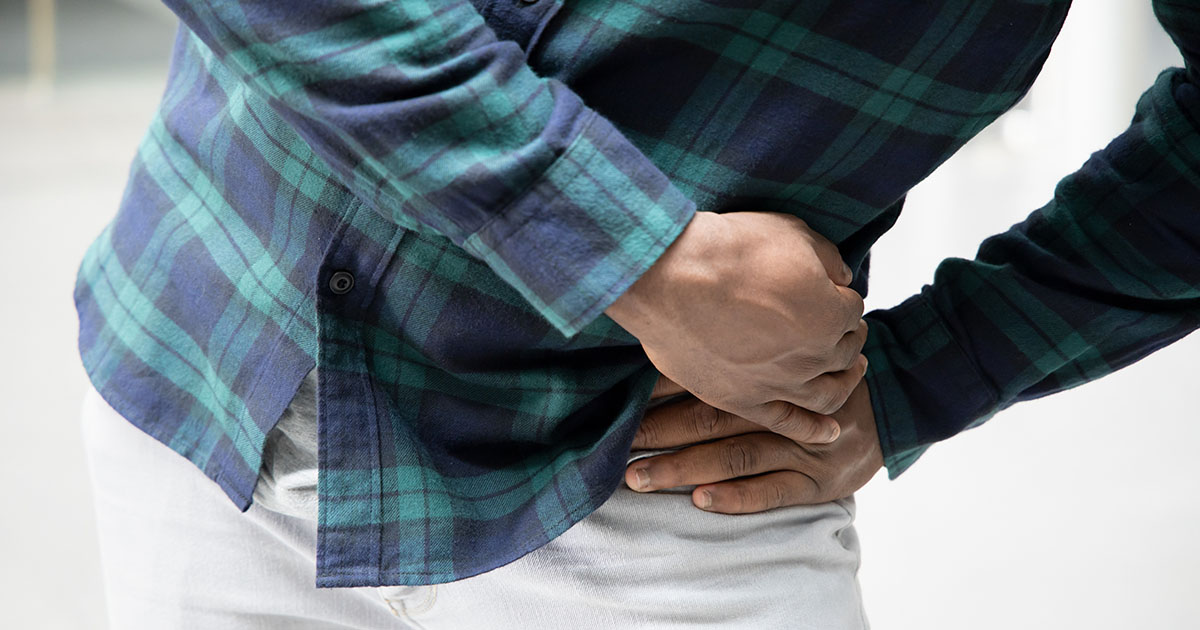


You might know it as a pinching sensation deep in the front of your hip or groin. It flares when you pull your knee toward your chest, when you sit in a low chair for more than 20 minutes, when you come up from a squat. If you play golf, pickleball, or tennis in Lakewood Ranch, you probably assumed it was a muscle pull that never quite healed. It keeps coming back, it limits your range, and nothing you stretch seems to fix it.
What you may actually be dealing with is femoroacetabular impingement, abbreviated FAI. It is a structural issue at the ball-and-socket joint of the hip: the ball (femoral head) and the socket (acetabulum) are not gliding the way they should, causing the joint to pinch soft tissue on certain movements. It is more common than most people realize, it gets worse when left alone, and it responds well to conservative care when you address the right things. Our hip pain program in Lakewood Ranch sees this presentation regularly.
What Actually Happens in FAI
The hip is a ball-and-socket joint. For normal, pain-free movement, the ball needs to glide and rotate inside the socket without catching on the rim. In FAI, that smooth motion gets blocked by one of two structural problems, or a combination of both.
The first type is called cam impingement. Here, the head of the femur is not perfectly round. There is extra bone on the edge of the ball, often shaped like a subtle bump or ridge. When you flex the hip (bring your knee toward your chest), that bump jams into the rim of the socket. Over time it can tear the labrum, which is the cartilage ring that seals the joint and keeps it stable.
The second type is pincer impingement. In this case, the socket itself is deeper than normal, or tilted so that it overcovering the ball. The rim of the socket catches the ball on certain movements, again creating that pinching sensation and eventually wearing down the labrum.
Most people with symptomatic FAI have a mixed type: some cam, some pincer. The exact ratio matters less than what is happening functionally: the hip lacks the range of motion it needs, surrounding muscles compensate, and those muscles become tight and painful, which makes the impingement worse. It is a compounding problem.
FAI does not always show up dramatically on imaging. Many people have the structural finding on MRI but no symptoms. What matters clinically is whether the impingement is producing functional limits and pain during movement. That is what drives treatment decisions.
The Symptoms That Point Toward FAI
FAI is frequently mistaken for a groin pull, hip flexor strain, bursitis, or general hip arthritis. The symptom pattern is specific enough that it can guide you to the right answer before imaging even confirms it.
The hallmark signs of FAI include:
- Deep groin pain (anterior hip, in the crease where your thigh meets your pelvis). This is where the pinching occurs. Lateral hip pain, posterior hip pain, and buttock pain can also occur, but anterior groin is the most common primary complaint.
- Pain with hip flexion. Sitting, squatting, getting in and out of cars, cycling, and climbing stairs all flex the hip past 90 degrees. FAI typically becomes symptomatic in that flexion range.
- Pain with internal rotation in flexion. Crossing your legs while seated, pivoting while playing golf, or rotating the leg inward while the hip is bent. This is the position that most reliably reproduces FAI symptoms.
- C-sign. When patients describe their hip pain, they often cup their hand around the lateral hip and groin, making a C shape. This is common enough in FAI that clinicians call it the C-sign.
- Stiffness first thing in the morning or after sitting for more than 20 to 30 minutes. The joint tightens up with inactivity and loosens with movement, then re-tightens with activity.
- Reduced hip rotation range of motion. If you compare how far you can rotate each leg inward (internal rotation), the FAI side usually lags behind.
What FAI does NOT typically look like: sharp pain going down the leg to the knee or foot, numbness or tingling (those patterns suggest nerve involvement, which is a different problem), or pain primarily in the buttock when sitting (which points more toward piriformis or sacroiliac issues).
Who Gets FAI and Why It Gets Missed
FAI is not purely a young athlete's problem, though it is common in younger active adults because the structural variant is often congenital and sport aggravates it. In a Lakewood Ranch context, the typical patients we see with FAI are in the 35 to 65 range, active, often playing pickleball or golf multiple times per week, and frustrated because they have had the "hip" conversation with multiple providers who focused on muscles and missed the joint mechanics.
It gets missed for a few reasons. First, the standard X-ray may look normal unless the technician specifically angles the view to reveal cam or pincer morphology. Second, the symptom pattern overlaps with hip flexor strain, iliopsoas tendinopathy, and labral tears (which can actually coexist with FAI since impingement damages the labrum). Third, many patients self-treat with stretching that actually aggravates the condition.
Stretching in end-range hip flexion, which is what most hip stretches target, can compress the same tissue that is already being pinched. Many patients arrive at our office having stretched diligently for six months and feeling worse for it. The stretches were not wrong for general hip tightness; they were wrong for FAI.
The Labrum: Why FAI Gets Urgent If Ignored
The labrum is a fibrocartilage ring around the rim of the hip socket. It deepens the socket, provides suction to keep the femoral head centered, and distributes load across the joint. When FAI is present and not addressed, the repeated impingement gradually tears the labrum.
Labral tears hurt. They produce clicking, catching, or locking sensations in addition to the baseline impingement pain. More importantly, the labrum does not heal well on its own because it has a very limited blood supply in most of its tissue. Once a significant labral tear develops, the conversation shifts from conservative care to whether surgical repair or debridement is needed.
This is why early identification matters. An intact labrum is much easier to work with than a torn one. Conservative care for FAI without a labral tear has a reasonable success rate; with a tear, the calculus changes. If you have had groin pinching for more than three to four months and it is not resolving, get it evaluated before the labrum pays the price.
Conservative Care: What Works and What Does Not
The goal of conservative care in FAI is to restore as much symptom-free range of motion as possible, offload the impingement zone during activity, and reduce the tissue irritation that secondary muscle tightness is creating. This is not the same as "strengthen your glutes and stretch your hip flexors," which is generic advice that frequently makes FAI worse.
What tends to work:
- Joint mobilization in non-provocative ranges. A skilled clinician works the hip through ranges that do not provoke impingement, restoring accessory motion (the small gliding and distraction movements that happen in a healthy joint but are restricted in FAI). This is hands-on work, not exercise.
- Activity modification during the acute phase. Temporarily avoiding deep squats, cycling, and anything that loads the hip past 90 degrees of flexion lets the irritated tissue settle. This is not permanent restriction; it is tactical.
- Targeted strengthening of the posterior chain. Glute medius and external rotator work, done in ranges that do not compress the anterior joint, takes load off the impingement zone by improving how the femoral head tracks in the socket.
- Soft tissue work on the hip flexors and internal rotators. Not aggressive stretching into end-range, but work on the myofascial restrictions in the iliopsoas, tensor fasciae latae, and adductors that are pulling the femoral head forward and compressing the anterior joint. Shockwave therapy and Class IV laser can both accelerate tissue recovery in these areas.
- Ergonomic changes. Seat height matters. A seat low enough that the hip flexes past 90 degrees repeatedly during the day is a daily aggravation. Raising the seat height, using a lumbar support to maintain a neutral pelvis, and breaking up sitting time are foundational.
What tends to make FAI worse: aggressive end-range hip flexor stretching, deep squats before the joint mechanics are improved, foam rolling directly over the anterior hip, and continuing high-volume activities like cycling or rowing without modifying them.
When Surgery Becomes the Conversation
Arthroscopic hip surgery for FAI (femoroacetabular impingement arthroscopy) involves shaving down the cam lesion, trimming the overcovering pincer rim, and repairing the labrum. It is technically demanding, outcomes vary significantly with surgeon skill and patient selection, and recovery is 4 to 6 months minimum. Many patients do very well with it. Others have persistent symptoms because the underlying muscle mechanics were not addressed.
Conservative care is the appropriate first step for most people who do not have a complete labral tear, severe structural impingement, or signs of significant cartilage damage on MRI. Six to twelve weeks of well-directed conservative care, with honest reassessment at each stage, is standard before surgery is even considered in most clinical guidelines. If conservative care is not moving the needle at all after 8 to 10 weeks, that is a useful data point and the right time to have a surgical consultation.
In our experience, many patients who arrive thinking they need surgery have not yet had conservative care targeted specifically at FAI mechanics. Generic physical therapy that treated it as a muscle problem did not address the joint. That does not mean surgery is wrong; it means the right conservative approach has not been tried.
What We Actually Do at Spine and Wellness Center Lakewood Ranch
When a patient comes in with a clinical picture consistent with FAI, Dr. Banman starts with a thorough functional movement assessment. We test hip range of motion in flexion, internal rotation, and the FADIR position (hip Flexion, ADduction, Internal Rotation), which is the most sensitive provocation test for FAI. We check for the C-sign, palpate the anterior joint, and assess the contributing muscle restrictions.
If imaging is available, we review it. If it is not and the clinical picture warrants it, we may recommend X-rays (including the Dunn view and false profile view, which are more diagnostic for FAI than a standard AP pelvis) or a hip MRI with arthrogram if labral involvement is suspected.
Treatment is hands-on from the first session. We use joint mobilization to restore non-impinging ranges, soft tissue work and Class IV laser on the surrounding musculature, and a carefully dosed strengthening protocol that avoids provocative positions. We modify activity recommendations to your specific sports and daily patterns. Most patients see meaningful improvement within 4 to 6 sessions when the diagnosis is correct and the approach is targeted.
For more on how we approach hip pain broadly, see our hip pain page. If you are also dealing with nerve symptoms down the leg, that may suggest a separate or additional issue worth evaluating on our pinched nerve page. And if your hip pain came on after a physical activity that also strained your lower back, our back pain overview is worth reading alongside this.