

You stepped out of the car and your knee ached. You woke up and it was stiff before you even put weight on it. You played pickleball twice last week and now the inside of your knee complains going down stairs. Nothing happened. No specific moment. No dramatic twist. Just pain that showed up and decided to stay.
This pattern accounts for a large portion of the knee cases that come through our clinic in Lakewood Ranch. People in their 40s, 50s, and 60s who are active, work on their feet, or sit too long, and whose knees simply started hurting one day without a clear event. The absence of a traumatic injury does not mean there is nothing wrong. It means the origin is usually gradual, structural, or referred from somewhere else. In many cases, all three.
If knee pain is affecting your pickleball game, your walks, or just your ability to get up from a chair without bracing yourself, our knee pain treatment program and non-surgical knee decompression in Lakewood Ranch offer a structured way to address what is actually happening in the joint and in the surrounding tissue.
The five most common causes we see
When a patient comes in with knee pain and no injury history, we are thinking through a fairly predictable list. The exact diagnosis matters because it changes what works.
1. Osteoarthritis (cartilage breakdown)
This is the most common reason adults develop knee pain without a traumatic event. Cartilage, the slippery tissue that lines the ends of the bones in your knee joint, does not have a good blood supply. It relies on synovial fluid and mechanical load to stay healthy. Years of use, combined with factors like alignment problems, prior inflammation, or simple aging, cause the cartilage surface to thin and roughen.
Early osteoarthritis often produces stiffness after sitting, aching with stairs, and occasional swelling. Many patients are told by imaging that they have "bone on bone" or "significant joint space narrowing," and they assume surgery is the only answer. In our experience, that is often not the case, particularly when the underlying mechanics are addressed alongside the joint itself.
2. Patellofemoral syndrome (kneecap tracking problems)
The kneecap rides in a groove on the front of the femur. When the muscles around the hip and thigh are out of balance, or when foot pronation alters lower-leg mechanics, the kneecap can track slightly off-center. The friction that results produces pain around or under the kneecap, particularly going up and down stairs, squatting, or sitting for long periods.
Patellofemoral syndrome is very common in people who walk frequently on hard surfaces, golfers, and pickleball players, all of whom are well represented in the Lakewood Ranch and Bradenton area. It responds well to addressing hip and glute weakness, foot mechanics, and soft-tissue treatment around the quad and IT band.
3. IT band syndrome and bursitis
The iliotibial band is a thick strap of connective tissue running down the outside of your thigh to just below the knee. When it is chronically tight, it creates friction over the lateral femoral condyle, producing a sharp or burning pain on the outside of the knee. A separate but related problem is pes anserine bursitis, where a small fluid-filled sac on the inside of the knee becomes inflamed, causing pain with activity and sometimes at night.
Both conditions are mechanical in origin. They develop from repetitive movement patterns rather than from a single injury. Treatment focuses on the tissue causing the friction, not just the knee itself.
4. Meniscus degeneration
The menisci are the two C-shaped cartilage pads that act as shock absorbers inside the knee joint. Unlike acute meniscus tears from twisting injuries, degenerative meniscal changes develop gradually. The tissue simply becomes less resilient over time. MRI scans in adults over 50 routinely show meniscal signal changes that are entirely asymptomatic, which complicates the picture considerably.
When degenerative meniscal changes are the source of symptoms, the pain is usually on the joint line (the gap between the upper and lower leg bones), may worsen with squatting or prolonged walking, and is often accompanied by a sense of joint fullness or mild swelling.
5. Referred pain from the lumbar spine
This one is underdiagnosed. The nerve roots at L3 and L4 in the lower back supply sensation to the front and inner aspects of the knee. When a disc at L3-L4 is irritated or bulging, the pain can present primarily or exclusively at the knee. Patients often spend months treating the knee with no improvement because the actual source of the signal is sitting in their lower back.
The giveaway is usually a pattern that does not quite fit a true knee problem: pain that wraps around or into the thigh, symptoms that change with sitting or standing posture in ways a local knee condition would not, or a history of low back problems in the same time period. We evaluate the lumbar spine in every new knee case for this reason. If lower back pain has been part of your picture alongside the knee symptoms, this connection is worth exploring carefully.
What makes it harder to diagnose than a traumatic injury
When a patient tears a ligament in a soccer game, the diagnostic path is fairly straightforward. The mechanism is known, the acute imaging tells a clear story, and there is a standard treatment protocol.
Non-traumatic knee pain is messier. The pain often develops gradually over weeks or months. Multiple contributing factors may be active simultaneously. An MRI may show findings that look severe but are not actually producing the pain, or may look unremarkable when the real problem is a referred nerve pattern from the spine.
In more than 23 years of practice, one of the most common things we see is a patient who had knee surgery for a meniscal tear, got a modest result, and later discovered the bulk of their pain was coming from an L4 disc that nobody evaluated before the operation. The joint and the spine are not separate systems.
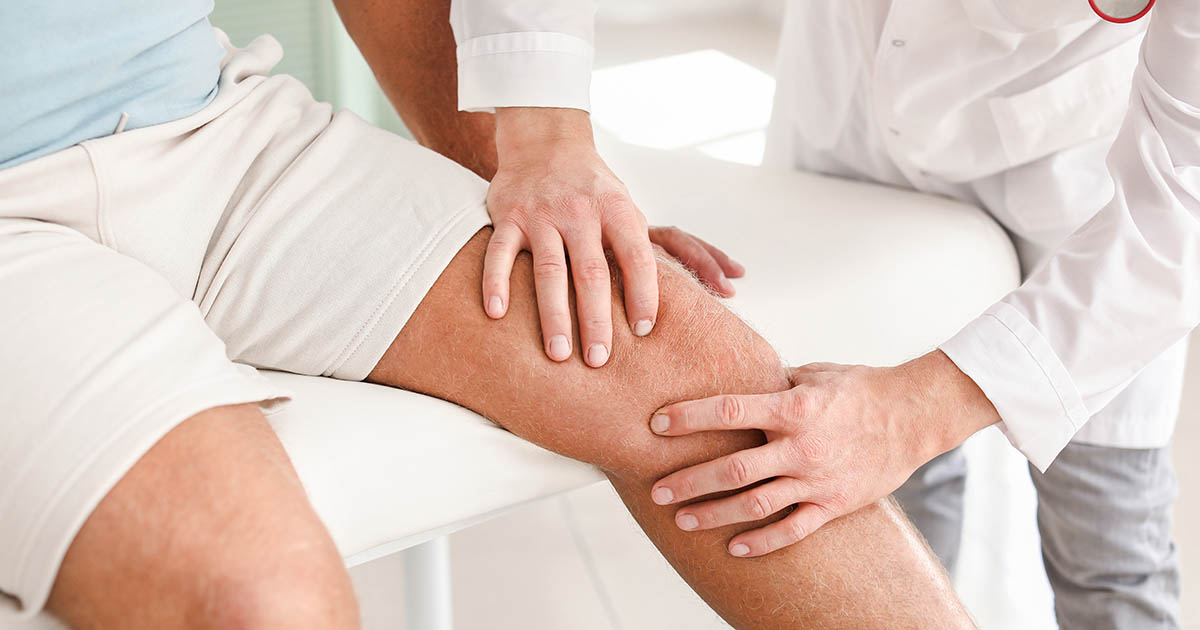
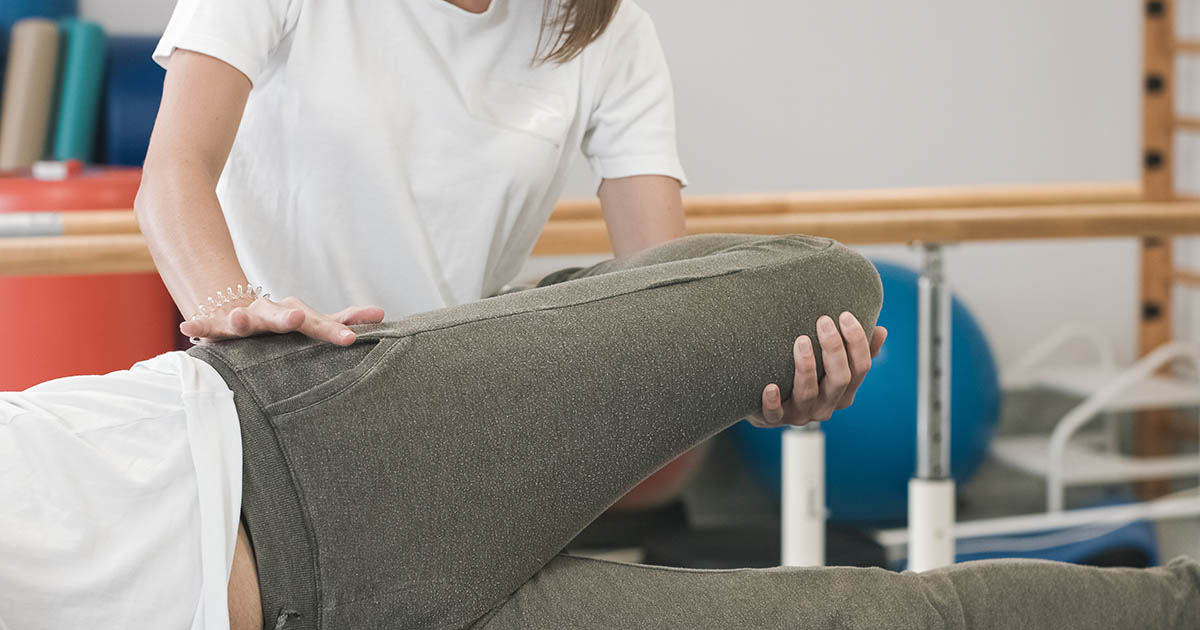
A thorough evaluation includes orthopedic testing of the knee itself, neurological screening to rule out referred patterns, functional assessment of how the hip and ankle are loading the joint, and a review of imaging if it exists. We do not skip steps because a patient seems to "obviously" have an arthritic knee or a "simple" IT band problem.
When imaging helps and when it misleads
X-rays are useful for assessing joint space, bone alignment, and the presence of significant arthritic changes. They are a reasonable starting point for unexplained knee pain in adults, particularly if it has persisted more than a few weeks without improvement.
MRI gives more detail on soft tissue but requires careful interpretation. A 2020 population study published in the journal Radiology found that over 60 percent of adults over 50 had meniscal abnormalities on MRI with no knee symptoms at all. A meniscal "tear" on imaging may simply be a degenerative signal change that predated the current complaint by years. This does not mean imaging is useless. It means imaging findings need to be correlated with the clinical exam, not treated in isolation.
If you have had an MRI and you are trying to understand what your report actually means for your daily life, our post on reading an MRI report in plain language covers the terminology you will most likely encounter.
Non-surgical treatment options that make a real difference
Most non-traumatic knee pain in adults responds to conservative care, particularly when addressed before joint damage becomes severe. The treatments that produce the clearest results in our clinic:
- Knee decompression: This is a specialized traction protocol that gently unloads the joint space. For patients with arthritic changes or meniscal degeneration, reducing compressive forces while the joint is in a neutral position creates an environment where synovial fluid can circulate, inflammation can calm, and the joint has a better chance to recover. Our knee decompression program is one of the more effective tools we have for moderate-to-severe osteoarthritis cases that have not responded to exercise alone.
- Class IV laser therapy: Deep-tissue laser penetrates into the joint and surrounding soft tissue, stimulating cellular repair and reducing inflammation. Many patients notice reduced swelling and improved range of motion within the first 4 to 6 sessions. Results are generally better when combined with decompression or mechanical correction rather than used as a standalone.
- Shockwave therapy: For chronic soft-tissue cases, particularly IT band syndrome and patellar tendinopathy, shockwave breaks up fibrotic tissue and stimulates new collagen production. It is direct, fast, and effective for the kind of stubborn lateral knee pain that resists stretching and rest.
- Chiropractic and mechanical correction: Adjusting how the hip, pelvis, and lumbar spine are loading the knee changes the forces the joint sees on every step. If the underlying mechanical pattern is not corrected, most local treatments will provide temporary relief followed by return of symptoms. This is the most frequently missed piece in knee care.
- Targeted exercise prescription: Not generic knee exercises from a printout. Specific hip and glute strengthening, quad-to-hamstring balance work, and single-leg stability training matched to what the evaluation actually found. The difference between a standard physical therapy handout and a targeted program built around your specific deficits is significant.
When you should consider an orthopedic evaluation alongside conservative care
Conservative care is the right starting point for the vast majority of non-traumatic knee pain cases. There are specific situations where a surgical or injection-based consultation runs parallel to that care rather than instead of it.
- Significant joint effusion (marked swelling) that does not resolve with initial treatment
- Locking or catching sensations that limit full range of motion
- Instability where the knee feels like it may give way under normal load
- Imaging showing advanced joint changes where the joint space is severely compromised
- Pain that is severe, constant, and worsening over a short period without any mechanical pattern
In those cases, we can still provide much of the care described above while an orthopedic consult is underway. The two approaches are not mutually exclusive, and for many patients, the conservative work reduces inflammation and improves mechanics enough that the orthopedic recommendation changes. We document and coordinate.
What to do if your knee has been hurting for weeks with no clear cause
Start with a proper evaluation rather than self-diagnosing from imaging or assuming the answer is rest. Resting a joint that hurts because of poor mechanics around the hip or a lumbar nerve issue will not fix anything. It will simply delay the point at which you get actual information about what is driving the pain.
An evaluation at our Lakewood Ranch clinic includes orthopedic knee testing, lumbar and nerve screening, functional movement assessment, and a direct conversation about what the findings mean and what a realistic plan looks like. We do not give the same answer to every knee patient, because knee pain without injury is not one diagnosis. It is a pattern that takes some work to untangle.
Many patients who have been managing symptoms for months with ice packs, anti-inflammatories, and modified activity find that a clear diagnosis and a targeted plan changes things considerably. That is not a guarantee of any particular outcome; it is an honest description of what tends to happen when the real source of the problem gets addressed instead of the symptom alone.
If sciatica or nerve symptoms are also part of your picture, our sciatica treatment page covers how those nerve patterns are evaluated and what distinguishes true sciatica from referred knee and leg pain.