
The patients who show up at our Lakewood Ranch office with neuropathy have almost always been through the same sequence: burning feet or numb hands, a trip to their primary care doctor, a prescription for gabapentin or Lyrica, and a recommendation to "see how it goes." Sometimes there is a B12 supplement added. Sometimes a referral to neurology that takes three months to get into.
What they rarely get is a plan that actually addresses what is happening to the nerve tissue. Medication manages symptoms. A supplement fills a deficiency. Neither one repairs the structural damage in a nerve that has been compressed, inflamed, or starved of oxygen for years.
Our neuropathy program in Lakewood Ranch is built around a different premise: nerve tissue that is damaged enough to produce symptoms needs multiple simultaneous inputs to recover, not one tool used in isolation. This post explains exactly what those tools are, why the combination matters, and who the program is designed to help.
Why Most Neuropathy Treatments Fall Short
Peripheral nerves are extraordinarily slow healers. A motor nerve regenerates at roughly one millimeter per day under ideal conditions. That means a nerve compressed at the lumbar spine that controls the foot can take months to show any improvement after the compression is relieved, assuming everything else is working in its favor.
Three things nerve tissue needs to regenerate: adequate oxygen delivery to the affected area, a functional electrical signal pathway to keep the downstream tissues alive and responsive, and reduced inflammation at the site of injury. Most single-tool approaches address only one of those three.
Gabapentin blocks pain signals but does nothing for the underlying nerve health. B12 supplementation corrects a deficiency if one exists but does not address structural compression or oxygen deficit. A single TENS unit may temporarily reduce pain but does not provide the specific waveform nerve tissue requires to retrain its signaling pathways.
The result is that patients manage symptoms, sometimes reasonably well, but the underlying nerve condition either stays the same or continues to deteriorate. Many of them reach our clinic after two or three years of this.
The Five Tools in Our Neuropathy Program
Every patient in the program goes through an intake evaluation first. The purpose is to identify which driver or combination of drivers is most likely responsible: diabetic vascular changes, lumbar or cervical compression, nutritional deficit, post-chemotherapy nerve damage, or idiopathic small-fiber involvement. That evaluation determines the starting sequence and intensity. Not every patient uses every tool at the same time or at the same intensity.
ReBuilder Therapy: Retraining the Nerve Signal
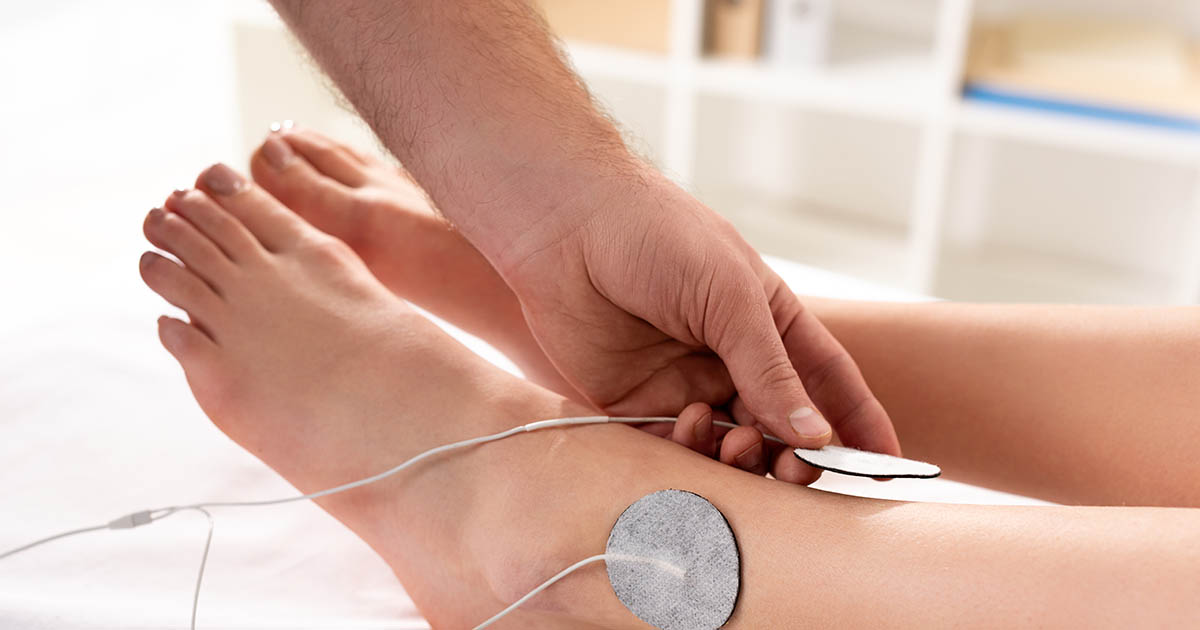
The ReBuilder is a specialized nerve stimulation device designed specifically for peripheral neuropathy. It is different from a standard TENS unit in one critical way: the waveform it delivers closely mimics the natural electrical signal a healthy peripheral nerve produces. A conventional TENS unit overwhelms pain signals with electrical noise. The ReBuilder sends a shaped, repeating signal that the nerve can actually learn from.
The mechanism is similar to physical therapy for a torn muscle: you are asking damaged tissue to re-engage with the correct pattern of activity. In clinical practice, many patients in neuropathy programs using ReBuilder report that tingling and burning sensations begin to change in character within the first few weeks of use. The goal is not to block the sensation but to normalize the underlying signal.
Sessions are typically 30 minutes, with electrodes placed at the feet and lower legs. For patients with upper-extremity symptoms, the same device can be configured for hand and forearm placement.
Class IV Laser Therapy: Reducing Inflammation at the Nerve Root
Where the ReBuilder works on the peripheral nerve directly, Class IV laser therapy targets the tissue environment around the nerve. A Class IV laser delivers photons at a power level that penetrates deep enough to reach nerve roots, intervertebral discs, and surrounding fascia. Cold laser (LLLT) operates at a fraction of that power and stays in superficial tissue.
Photobiomodulation, the process by which light energy is absorbed by mitochondria and converted to ATP, reduces local inflammation and improves cellular metabolism in damaged tissue. For neuropathy patients who have a lumbar or cervical compression component, laser applied to the spine can reduce the inflammatory environment that is continuing to irritate the nerve root.
For patients with primarily distal neuropathy (burning in the feet, tingling in the toes), laser is applied along the nerve pathway itself. The photobiomodulation effect on nerve conduction velocity has been studied in diabetic neuropathy specifically, with results that support its use as part of a multi-modal program.
Hyperbaric Oxygen Therapy: Getting Oxygen Where It Is Blocked
Damaged nerve tissue, particularly in diabetic peripheral neuropathy, is often hypoxic. The small capillaries that feed nerve fibers become compromised over time, and the nerve tissue downstream does not receive the oxygen it needs to maintain itself or repair. No amount of electrical stimulation or laser therapy overcomes a fundamental oxygen deficit at the tissue level.
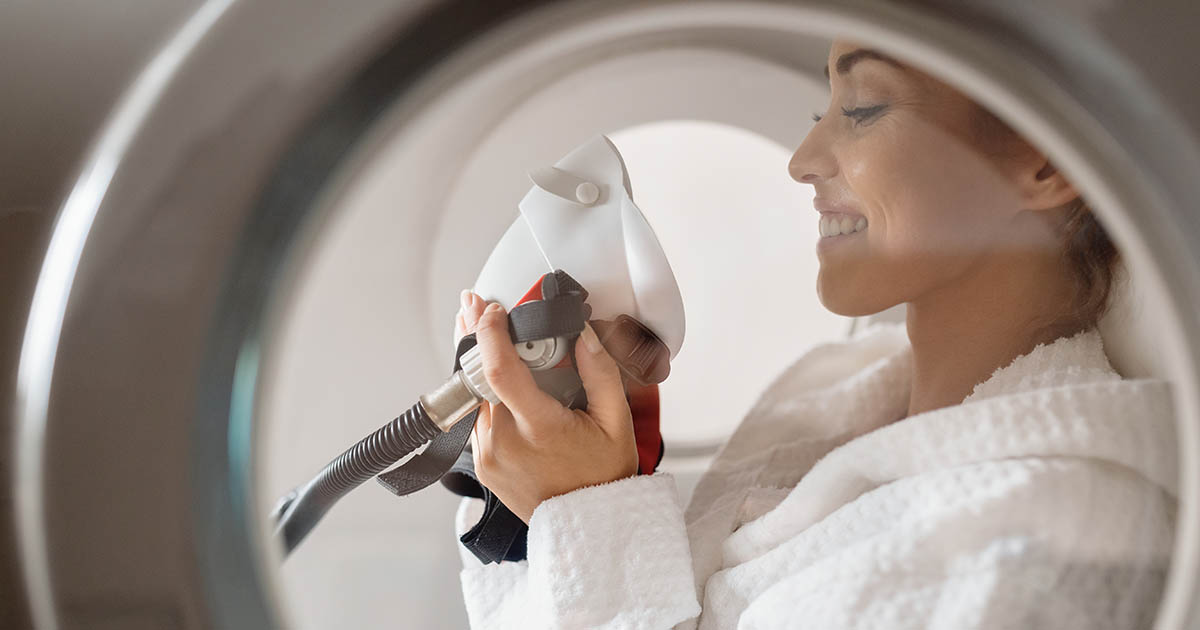
Hyperbaric oxygen therapy (HBOT) addresses that directly. At 1.5 to 2.0 atmospheres of pressure, oxygen dissolves directly into plasma rather than relying solely on hemoglobin transport. This allows oxygenated blood to reach tissues that normal circulation is failing to supply adequately.
HBOT sessions run 60 to 90 minutes. Patients sit or recline inside a pressurized chamber. The subjective experience is mild ear pressure during pressurization, similar to descending in an aircraft, and then a period of rest while the elevated oxygen concentration does its work. For patients with vascular-driven neuropathy, this is often the piece that makes the other interventions more effective: when the tissue finally has the oxygen it needs, it can respond to the stimulation.
Electrical Muscle Stimulation: Maintaining Muscle Health During Nerve Recovery
Peripheral nerves do not just carry pain signals. They carry motor commands to muscles. When a nerve is damaged enough that its motor function is compromised, the muscles it controls begin to weaken and, over time, atrophy. This is separate from the pain and sensory symptoms most patients focus on.
Electrical muscle stimulation (EMS) uses a different waveform than the ReBuilder. While the ReBuilder targets the nerve itself, EMS targets the muscle directly, producing a contraction that maintains muscle fiber health and prevents the functional decline that occurs when a nerve goes quiet. For patients with significant motor weakness in the feet or hands, EMS is often added to the program specifically to preserve the muscle while the nerve heals.
The distinction matters clinically. A patient who regains nerve function after six months of treatment but whose foot muscles have atrophied in the interim faces a longer and more difficult recovery than one whose muscles were maintained throughout. EMS is part of how the program protects functional capacity during the waiting period.
Whole Body Vibration: Restoring Proprioception and Reducing Fall Risk
Proprioception, the sense of where your body is in space, depends on specialized nerve endings in the feet and legs called mechanoreceptors. Peripheral neuropathy destroys these receptors gradually. The result is a patient who cannot feel the ground reliably, who has lost the unconscious balance corrections that healthy mechanoreceptors provide constantly, and who is at significantly elevated risk for falls.
Falls in neuropathy patients are not just a nuisance; in older adults they are the leading cause of serious injury and the event that most commonly ends independent living. Addressing proprioception is not optional in a program that takes function seriously.
Whole body vibration works by delivering a mechanical stimulus to the body at a frequency (typically 25 to 50 Hz) that activates the very receptors neuropathy has damaged. The vibration platform essentially forces mechanoreceptors to fire repeatedly. Over weeks of use, many patients in our program report improved stability and reduced instances of stumbling or losing their footing.
Nerve recovery is slow by biology and fast by nothing. The goal of combining five tools simultaneously is not to shortcut that timeline. It is to make sure that every biological requirement for nerve healing, oxygen, correct electrical signaling, reduced inflammation, muscle preservation, and restored proprioception, is being met at the same time instead of hoping one intervention does everything.
Why the Sequence and Combination Matter
The specific order in which these tools are applied in a session is not arbitrary. We typically run Class IV laser before ReBuilder because warming and reducing inflammation in the nerve tissue makes it more receptive to the electrical stimulation that follows. HBOT sessions are often scheduled on the same days as laser and ReBuilder rather than on separate days, to take advantage of the elevated tissue oxygen while the stimulation is occurring.
Not every patient starts with all five tools. Patients with mild to moderate neuropathy and no significant vascular component often begin with ReBuilder, laser, and whole body vibration and add HBOT and EMS as the evaluation develops. Patients with severe diabetic neuropathy and documented motor weakness typically need all five components from the beginning.
The assessment at intake determines the starting point. Dr. Banman has been treating nerve-related conditions for over 23 years and sees neuropathy cases daily in the Lakewood Ranch, Bradenton, and Sarasota area. The evaluation includes a review of any existing imaging, a detailed symptom history, and an assessment of the functional deficits present, not just the subjective pain level.
Who the Program Is For
The most common presentations we work with in the neuropathy program are:
- Diabetic peripheral neuropathy (most common referral, both type 1 and type 2)
- Chemotherapy-induced peripheral neuropathy (CIPN), particularly post-taxane and post-platinum protocols
- Idiopathic small-fiber neuropathy, where no systemic cause has been identified
- Compression-driven neuropathy secondary to lumbar or cervical disc involvement
- Post-surgical neuropathy, particularly following back surgery where nerve root irritation persists
The program is not appropriate for everyone. If your neuropathy presentation includes saddle anesthesia (numbness in the groin and inner thighs), sudden onset of weakness in both legs, or loss of bowel or bladder control, those are red flags for a spinal cord emergency that requires immediate emergency evaluation. We will refer you directly and not delay that with a conservative care intake.
Patients with active infections, uncontrolled hypertension above certain thresholds, or certain cardiac conditions may not be candidates for HBOT specifically, and that determination is made during the intake evaluation.
What a Realistic Timeline Looks Like
Patients who come to our program looking for results in two weeks are going to be disappointed, and we tell them that directly in the first visit. Nerve tissue heals at the pace biology allows. What the program does is optimize the conditions so that healing happens instead of stagnation.
In our experience, the first changes most patients notice are qualitative rather than quantitative: the burning feels different, the numbness has a different texture, balance feels slightly more reliable on uneven surfaces. These early changes typically appear in weeks four through eight for patients who are doing sessions consistently.
More concrete functional improvements, being able to feel the floor underfoot more reliably, reduced frequency of nighttime burning, improved grip strength in the hands, tend to appear in months two through four. Patients with more severe or long-standing neuropathy take longer, and some have permanent nerve damage that limits how much functional recovery is possible.
We track baseline scores using standardized neuropathy assessments and repeat them at regular intervals so changes are documented rather than just reported subjectively. That documentation matters for patients coordinating care with their endocrinologist, oncologist, or other specialists.
Getting Evaluated
If you have peripheral neuropathy and have been managing symptoms without addressing the underlying nerve condition, the intake evaluation is the right starting point. It takes about an hour and gives you a specific picture of what is driving your symptoms, what the program would look like for your case, and what realistic expectations are based on the presentation you bring in.
We do not do high-pressure sales at that appointment. If the neuropathy program is not the right fit for your situation, Dr. Banman will tell you that directly and point you toward whoever is. If it is a fit, you will leave with a clear care plan and a start date.
For patients in Lakewood Ranch, Bradenton, Sarasota, and the surrounding communities, we offer same-week new-patient evaluations for neuropathy cases. Call (727) 213-2982 or book online through our patient portal at the link below.