

Red light therapy (RLT) is one of the most-searched wellness topics in 2026, and for good reason: the underlying science is legitimate, the safety profile is strong, and a growing body of research supports several specific clinical applications. But the gap between what the science actually shows and what many marketing claims imply is wide. Patients come in expecting instant results they read about on social media. Others come in skeptical because a previous experience with a cheap consumer panel did nothing for them.
Both reactions make sense. Red light therapy is a tool with real capabilities and real limits. This post is the honest version of what you can expect when you go through a proper course of treatment using a professional-grade device at a clinical setting.
What Red Light Therapy Actually Is
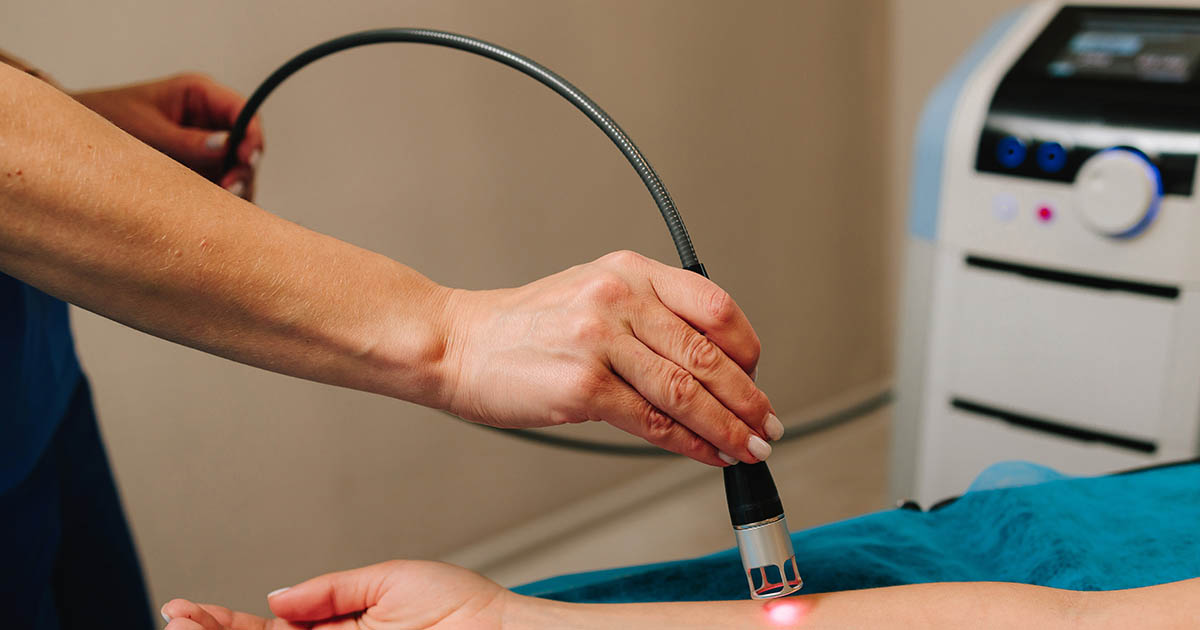
Red light therapy works by delivering specific wavelengths of light, primarily in the red (630 to 700 nm) and near-infrared (800 to 1100 nm) ranges, into tissue. The clinical term is photobiomodulation (PBM). Unlike UV light, which damages DNA at the surface, red and near-infrared wavelengths penetrate the skin without burning it. Near-infrared reaches deeper tissues: muscles, tendons, nerves, and even bone at the right output levels.
The mechanism that has received the most research attention involves mitochondria, the energy-producing organelles inside cells. Specific light wavelengths appear to interact with cytochrome c oxidase, a key enzyme in the mitochondrial energy chain. When this interaction occurs, cells produce more adenosine triphosphate (ATP), which is essentially cellular fuel. More ATP means cells can carry out their normal functions more efficiently, including tissue repair, inflammation regulation, and nerve signal transmission.
This is not speculative. There are thousands of peer-reviewed studies on photobiomodulation across multiple tissue types. The effect is real. What varies is the size of the effect, which conditions benefit most, and how much treatment is required to see it.
What Red Light Therapy Has Good Evidence For
The research base is not uniform across applications. Some conditions have much stronger evidence than others. Here is a fair summary of where the evidence is strongest:
Inflammation and pain reduction
Multiple randomized controlled trials show reductions in inflammatory markers and subjective pain scores with PBM in musculoskeletal conditions. Neck pain, shoulder pain, and knee pain have relatively strong evidence bases. The reductions are real but typically moderate: meaningful enough to be clinically useful, not large enough to replace structural care when structure is the issue.
Peripheral neuropathy
Peripheral neuropathy, whether from diabetes, chemotherapy, or idiopathic causes, involves damaged or dysfunctional nerve tissue. Some small trials have looked at light therapy for neuropathy symptoms, but the research is still limited, so we use it only as one part of a plan, and results vary. For more on how neuropathy is treated here, see our neuropathy program page.
Wound healing and tissue repair
PBM has a reasonably robust evidence base for accelerating wound healing. This is partly why it is used in post-surgical recovery contexts. Cellular energy production supports tissue synthesis and repair. This application is well-established enough that some hospitals and wound care centers use it routinely.
Circulation and lymphatic function
Increased nitric oxide production is one of the documented effects of PBM. Nitric oxide is a vasodilator, meaning it relaxes blood vessel walls and improves circulation. Improved microcirculation matters for tissue recovery: more blood flow means more oxygen and nutrient delivery to areas that need repair.
Sleep and circadian rhythm support
This application has a smaller evidence base than the musculoskeletal applications, but several studies suggest that near-infrared exposure supports melatonin regulation and improved sleep quality. Patients in our full-body sessions frequently mention better sleep as an early and consistent response, often before they notice changes in their primary complaint.
The research base for photobiomodulation is real and growing. The key is matching the right treatment parameters (wavelength, power, dose, duration) to the right condition. A consumer LED panel and a professional-grade full-body pod are not the same tool.
What Red Light Therapy Does Not Do
This is the section that separates honest clinical use from marketing hype. Red light therapy does not:
- Correct structural problems in the spine. If a disc is herniated and compressing a nerve root, red light therapy can support inflammation reduction around the nerve, but it does not rehydrate the disc or move it off the nerve. Structural disc pathology requires a structural intervention, typically spinal decompression combined with other modalities.
- Eliminate chronic pain from a single session. Multiple sessions are required for most applications. Expecting significant, lasting change from one 20-minute session is unrealistic.
- Substitute for a diagnosis. Pain has causes. Red light therapy helps the body respond to tissue stress. It does not identify why the tissue is stressed in the first place. Treating neuropathy with PBM while leaving the underlying driver (disc compression, diabetes management, toxin exposure) unaddressed limits how much the therapy can achieve.
- Reverse severe nerve damage. There is a meaningful difference between dysfunctional nerve tissue and dead nerve tissue. PBM appears to support function in tissue that still has capacity to respond. When nerves are severely and permanently damaged, the response is limited. This is why catching neuropathy early matters.
- Produce the same results from every device. Output parameters matter enormously. Wavelength, power density, total dose, and tissue depth penetration all affect whether the therapy reaches the target tissue at a therapeutically relevant level. Consumer devices sold for home use vary widely in quality and output. Most do not deliver the same dose as a clinical-grade device.
The Prism Light Pod: Why Full-Body Delivery Matters
At Spine and Wellness Center Lakewood Ranch, we use the Prism Light Pod, a full-body photobiomodulation device. This is the only unit of its type in Sarasota and Manatee County. What makes it different from a panel or a handheld device is the simultaneous full-body delivery.
When you step into the pod, red and near-infrared light reaches your entire body surface at once: front, back, and sides. For systemic applications like inflammation regulation, circulation improvement, and sleep quality, whole-body exposure produces a different physiological response than targeting a single area. There is a dose effect: more tissue receiving therapeutically relevant light simultaneously may produce more systemic response than spot treatment.
For patients managing conditions that affect multiple body regions simultaneously, such as peripheral neuropathy in both feet and hands, widespread inflammation from autoimmune conditions, or post-surgical recovery across an incision, full-body delivery removes the practical limitation of choosing which area to target during a session.
Sessions run approximately 20 minutes. Most patients find them comfortable and relaxing. No preparation is required other than removing any light-blocking clothing from the areas being treated.
Who Tends to Benefit Most
In our clinical experience, the patients who see the most consistent benefit from a course of Prism Light Pod sessions share a few characteristics:
- Active peripheral neuropathy. Patients with tingling, burning, or numbness in the feet and hands, especially from diabetes or chemotherapy, tend to report meaningful improvements in symptoms over a series of sessions. For context on what drives neuropathy, see our neuropathy page.
- Ongoing inflammatory conditions. Patients managing widespread inflammation, whether from autoimmune conditions, fibromyalgia, or chronic musculoskeletal overuse, often report improvements in pain levels and energy as the series progresses.
- Patients recovering from injury or surgery. When the goal is supporting tissue repair after a procedure or acute injury, PBM provides cellular-level support for the healing process. Combining it with other recovery modalities like hyperbaric oxygen therapy is something we evaluate on a case-by-case basis.
- Patients with chronic fatigue alongside pain. Mitochondrial support from PBM appears to benefit some patients who experience fatigue as a component of their pain picture. Improved cellular energy production may translate to improved overall function over time.
- Patients already in a structured care plan. Red light therapy works best as part of a coordinated approach. Patients who are simultaneously addressing the structural drivers of their pain through chiropractic care, decompression, or other interventions tend to respond better than patients using PBM as a standalone passive treatment.
What a Realistic Timeline Looks Like
This is where expectations often diverge from reality, so it deserves a direct answer.
Most patients do not notice dramatic changes after one or two sessions. The mechanism of action is cumulative: cellular energy production improves over repeated exposures, inflammatory pathways gradually shift, and tissue with improved energy availability repairs itself over time. PBM is not an injection or a medication with an acute pharmacological effect. It is a training stimulus for cellular function.
In our experience:
- Sessions 1 to 3: Some patients notice improved sleep quality or a general sense of relaxation. Most primary complaints are unchanged.
- Sessions 4 to 8: Patients with neuropathy symptoms often begin noticing changes in nighttime symptoms, specifically reduced burning or tingling. Patients with diffuse inflammation often report reduced stiffness in the mornings.
- Sessions 9 to 16: The clearest functional improvements tend to appear in this range for patients who are responding. Pain scores often drop. Mobility improvements become noticeable.
- Beyond session 16: For conditions like peripheral neuropathy, a longer course is often warranted. Some patients continue with monthly maintenance sessions after the initial series to sustain the gains.
These are general patterns, not guarantees. Individual responses vary based on the severity of the underlying condition, how long it has been present, what other care is being provided simultaneously, and factors like nutrition and sleep quality that affect baseline cellular function.
How We Use Red Light Therapy at Spine and Wellness Center Lakewood Ranch
We do not offer Prism Light Pod sessions in isolation. Every patient who starts a series of sessions has a clinical conversation first about their primary complaint, their history, and what other care they are receiving or need. The goal is to place red light therapy where it fits in a coordinated care plan, not to sell sessions as a standalone fix.
For neuropathy patients, PBM typically runs alongside our comprehensive neuropathy program, which uses multiple modalities including ReBuilder therapy, Class IV laser, and nutritional support to address the nerve from multiple angles. You can read more about that approach on our neuropathy program page.
For patients managing chronic inflammation alongside spinal conditions, PBM may run alongside chiropractic care, spinal decompression, or hyperbaric oxygen sessions, depending on what the clinical picture calls for. For patients newer to the clinic who are dealing with pain and are not sure where to start, the Prism Light Pod is often an accessible entry point that provides benefit while the full care evaluation takes place.
Dr. Michael Banman, DC, has been practicing in Lakewood Ranch for over 23 years. In that time, the clinic has moved consistently toward integrating multiple modalities rather than relying on any single tool. Red light therapy is a genuinely useful addition to that toolkit, particularly for nerve and inflammation-driven conditions. It is also the kind of therapy that requires honest expectation-setting upfront. We prefer a patient who understands the realistic arc of improvement and commits to a full course over a patient who comes in twice, sees no dramatic change, and gives up before the therapy had a chance to accumulate.
If you have been dealing with peripheral neuropathy, chronic inflammation, or want to understand how red light therapy might fit into your current care plan, call us at (727) 213-2982 or book a consultation at celluron.janeapp.com.