

Someone we see fairly often in our Lakewood Ranch clinic got the diagnosis six weeks before they walked in. Herniated disc at L4-L5. Their primary care doctor told them to take it easy. So they came home, looked up "exercises for herniated disc," found a popular YouTube video, and started doing the routine faithfully. Three weeks later they could barely sit. The exercises were real, the intent was good, and the result was a flare-up that could have been avoided. The problem: movement for a herniated disc is direction-specific. Some movements decompress and allow the disc to recover. Others load the disc in exactly the way that pushed the disc material out in the first place.
This post explains which exercises tend to aggravate a herniated disc, why, and what to do instead. If you already have an imaging-confirmed disc herniation and you are trying to manage it on your own, read this first. If you have not been evaluated yet, take a look at what our team assesses in a herniated disc evaluation at Spine and Wellness Center Lakewood Ranch before assuming exercise alone will resolve it.
What actually happens when a disc herniates
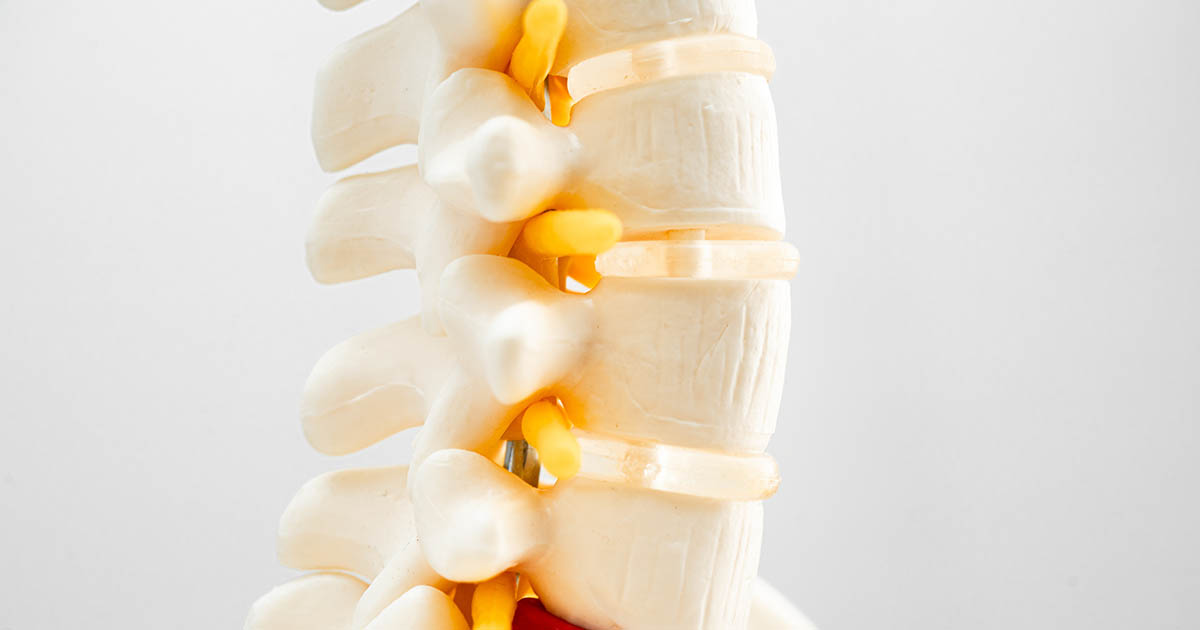
The discs in your spine are like thick pads of cartilage between each vertebra. Each disc has a tough outer ring (the annulus fibrosus) and a gel-like center (the nucleus pulposus). A herniation happens when pressure causes the nucleus to push through a tear in the annulus, producing a protrusion that can press on nearby nerve roots.
Most lumbar herniations occur at L4-L5 or L5-S1, and most of them push posterolaterally, toward the back and to one side. That geometry matters for exercise: any position that increases pressure on the posterior disc wall can push the herniation further into the nerve space. Spinal flexion (bending forward at the waist) with or without load dramatically increases that posterior disc pressure. Extension (gently arching backward) often reduces it.
That one fact explains most of the exercise guidance below. It is not about which movements are "dangerous" in general. It is about which directions increase pressure on the already-compromised part of your disc.
Exercises that tend to make a herniated disc worse
None of these are inherently bad exercises for a healthy spine. The problem is context. With an active disc herniation that is pressing on a nerve, these patterns load the disc in ways that tend to delay recovery or actively worsen the situation.
Sit-ups and crunches
Spinal flexion under load is one of the most consistent triggers for disc aggravation. A traditional crunch or sit-up repeatedly drives the anterior (front) vertebral bodies together, which increases pressure on the posterior disc wall. With a posterolateral herniation, that repeated posterior compression is exactly what you want to avoid. Many patients report that their sciatica or leg pain spikes immediately after a crunch-based ab routine. That spike is not soreness. It is the nerve root being compressed further.
Toe touches and standing forward bends
Bending forward to touch your toes, particularly with the knees straight, loads the lumbar spine in full flexion. This stretches the already-compromised posterior annulus and, depending on the anatomy of your herniation, can drive the nucleus material further toward the nerve. This one surprises patients because toe touches feel like they "stretch" the back. They do. But with a disc herniation, that particular stretch is applied in the wrong direction.
Heavy deadlifts and loaded squats
Compound lifts are excellent for a healthy spine. With a disc herniation, the math changes. A loaded deadlift or barbell squat dramatically increases compressive load on the lumbar discs, which is a problem in two directions: the load itself increases pressure on the herniation, and any forward lean (which tends to creep in when the weight gets heavy) puts you back into spinal flexion under load. In our experience, trying to return to heavy lifting before the disc is stable is a reliable way to convert a moderate herniation into a severe one.
High-impact cardio: running, jumping, plyometrics
Running and jumping create repetitive vertical compression and impact forces through the spine. With an acutely herniated disc, those forces repeatedly load the injured structure before it has stabilized. Patients often report that running felt fine during the run and terrible the next day. The delayed onset of worsening symptoms after impact activity is a common pattern with disc injuries.
Heavy rowing and pull exercises that round the lower back
Bent-over rows, seated cable rows, and similar pulling patterns can load the lumbar spine in flexion if the low back rounds during the movement. If you stay perfectly upright, a row is not necessarily problematic. But "rowing with a round back" during a disc herniation is a consistent re-injury mechanism, particularly for people who are used to lifting heavy and compensate for fatigue with form breakdown.
Twisting exercises with load: Russian twists, cable rotations, golf swings
Rotation under load, especially combined with flexion, is one of the more stressful movement patterns for an already-compromised disc. The annulus fibrosus is built from criss-crossing layers of fibers that can handle axial rotation to a point, but a torn annulus handles it poorly. Russian twists with a medicine ball, seated cable rotations, and aggressive golf swings during an active disc flare are exercises to table until the disc has stabilized.
The directional principle: why extension often helps
If spinal flexion tends to push the nucleus toward the nerve, spinal extension (arching backward) tends to do the opposite. This is the core of the McKenzie Method, a well-documented approach to disc-related back pain that has been studied since the 1980s. The clinical shorthand is "centralization." When you move into extension and the pain moves from your leg back toward your spine, that is generally a good sign. When a movement drives pain further down the leg, it is usually making the nerve compression worse.
Centralization means the pain is pulling back toward the source rather than spreading outward. Most patients who centralize early do significantly better than those who don't. That shift is worth tracking from the very first day of treatment.
Not every herniation centralizes with extension, and not everyone with a herniated disc should be doing aggressive extension exercises without supervision. But the concept explains why a gentle prone press-up (lying on your stomach and pushing your upper body up with your arms while your pelvis stays on the ground) is often the first therapeutic movement a physical therapist or chiropractor tries, while a sit-up is the last.
Movement patterns that tend to help
Specific movements that tend to be disc-friendly, assuming you have been evaluated and the herniation is posterolateral (the most common pattern):
- Walking, flat terrain: Low-impact, rhythmic movement that gently loads the spine without flexion stress. Many patients with disc herniations tolerate walking better than any other activity. Start with 10 to 15 minutes and build from there.
- Prone press-ups (McKenzie extension): Lie face-down, place hands under your shoulders, and gently press your upper body up while keeping your pelvis on the floor. Start with 5 to 10 repetitions. Stop if leg pain increases. If leg pain centralizes (moves toward the spine), that is a positive sign.
- Bird-dog: On hands and knees, extend the opposite arm and leg simultaneously while keeping the spine neutral. This activates the deep stabilizers without loading the disc in flexion. Slow, controlled, no spine rotation.
- Dead bug: Lying on your back, spine neutral (not pressing into the mat, not arching away), slowly extend opposite arm and leg while maintaining a stable core. Less familiar than a crunch but far safer for an irritated disc.
- Aquatic exercise / pool walking: The buoyancy of water offloads the spine while allowing meaningful movement. Florida patients have good access to pools; pool walking and gentle aquatic movement is an underused option for the early recovery phase.
- Gentle lumbar extension stretches (supervised): Cobra pose, cat-cow in the extension direction, and standing lumbar extension all fall into this category. Use with direction: if symptoms increase, back off.
When movement alone is not enough
Exercise and movement work best as part of a managed recovery, not as the whole plan. There are situations where a disc herniation is compressing a nerve root significantly enough that movement-based care alone is not going to move the needle in a reasonable timeframe. That is where non-surgical spinal decompression in Lakewood Ranch becomes relevant. Decompression therapy applies a specific distractive force to the disc, creating negative intradiscal pressure that can draw nucleus material back toward the center and take pressure off the affected nerve root.
The difference between decompression and just lying down (which also reduces disc load) is the specificity of the force and the cycle of tension and relaxation that decompression uses. It is not the same as traction, and it is not appropriate for every type of disc problem. But for an MRI-confirmed posterolateral herniation at L4-L5 or L5-S1 that is producing consistent leg pain or sciatica, it is one of the most effective non-surgical options available.
We also use Class IV laser therapy as part of disc herniation management. The laser reduces local inflammation in the surrounding tissue, which matters because much of the pain in disc herniation is driven by the inflammatory response around the nerve root, not just the mechanical compression. Reducing that inflammatory load gives the nerve more room to recover as the disc stabilizes.
What we typically see in Lakewood Ranch
In 23-plus years of practice, a consistent pattern shows up with disc herniations: the patients who recover fastest are the ones who stop doing the things that load the disc in the wrong direction, start doing the things that load it in the right direction, and get proper evaluation early rather than managing blind from a YouTube video.
The patients who take the longest are the ones who either avoid all movement (the disc needs some dynamic load to stay nourished) or push through the wrong movements because they feel like staying active is always the right call. Both extremes delay recovery.
If you have been diagnosed with a disc herniation or disc bulge and you are not sure whether what you are doing is helping or hurting, that uncertainty is worth resolving. A brief intake exam at our Lakewood Ranch clinic includes a movement screen and a conversation about what your imaging actually shows. Most patients leave with a clear picture of what to do and what to stop doing, the same day.
When to see a provider instead of self-managing
Some presentations should be evaluated before you try any exercise program, no matter how conservative:
- Bilateral leg symptoms (both legs going numb, tingling, or weak at the same time) after onset of back pain. This can indicate central canal compression, which is a more serious finding.
- Bladder or bowel changes after back pain onset. Difficulty urinating or incontinence in the context of a disc injury is a red flag that warrants same-day evaluation, potentially at an emergency department.
- Weakness in the foot or ankle (foot drop), difficulty walking on your heels or tiptoes. Motor deficits from nerve compression generally require prompt attention to prevent permanent nerve damage.
- Symptoms that have been worsening for more than 4 to 6 weeks without any improvement. Disc herniations often improve with time and appropriate care. Six weeks of steady worsening is not a normal trajectory and should be evaluated.
- Severe pain that does not respond to any position. Most disc herniations have at least one position (usually some degree of extension) that reduces symptoms. If there is no relief in any position, that warrants evaluation to rule out other causes.
For sciatica that tracks from the low back down one leg, see our full guide on sciatica evaluation and treatment in Lakewood Ranch. For patients dealing with persistent nerve-root symptoms, our neuropathy recovery program addresses the nerve tissue itself, not just the structural compression.