

You reach for your phone at 3am and your hand is completely dead. You shake it, wait for the pins-and-needles to clear, and then fall back asleep. It happens again two nights later. By week three, you're Googling "carpal tunnel surgery" at midnight.
Here's what most people get wrong: nighttime hand numbness and tingling is rarely a single-structure problem. The hand is downstream from several different nerve pathways, and the one waking you up might have nothing to do with your wrist. Treating the wrong source is how patients spend months in wrist braces or get unnecessary procedures without results. If you're dealing with this, our peripheral neuropathy evaluation program in Lakewood Ranch is designed to sort out exactly which nerve pathway is involved before we recommend anything.
Why nighttime specifically?
Sleep changes how your body loads its nerves in three important ways. First, many people sleep with their wrists curled under them or bent toward their chest, which compresses the carpal tunnel. Second, lying flat reduces the cerebrospinal fluid cushion around cervical nerve roots, so a disc that is borderline by day can become symptomatic at night. Third, you're still for hours. When you're moving, you shift weight and unconsciously decompress pressure points. Stillness lets compression accumulate.
This is why the timing matters clinically. "Only at night" and "worse in the morning" are different from "constant throughout the day," and the difference helps narrow the cause.
Cause 1: Carpal tunnel syndrome
Carpal tunnel is the most searched explanation, and it does account for a real portion of nighttime hand numbness, but it is frequently over-diagnosed by self-diagnosis. The carpal tunnel is a narrow channel in the wrist through which the median nerve travels from the forearm into the palm. When the tunnel narrows or the median nerve gets compressed, you get numbness and tingling in the thumb, index finger, middle finger, and the half of the ring finger closest to the thumb. That specific distribution is the median nerve's territory.
What carpal tunnel does NOT cause: numbness in the pinky finger or the outer edge of the hand. If that's where you feel it, your wrist is probably not the problem.
Night-specific carpal tunnel is common because wrist flexion during sleep compresses the tunnel. A wrist splint that holds the wrist in neutral often provides significant relief within a few nights, which is also a useful diagnostic test. If the splint helps completely, the problem is at the wrist. If you still wake up numb, something else is contributing.
Cause 2: Cervical disc compression at C6 or C7
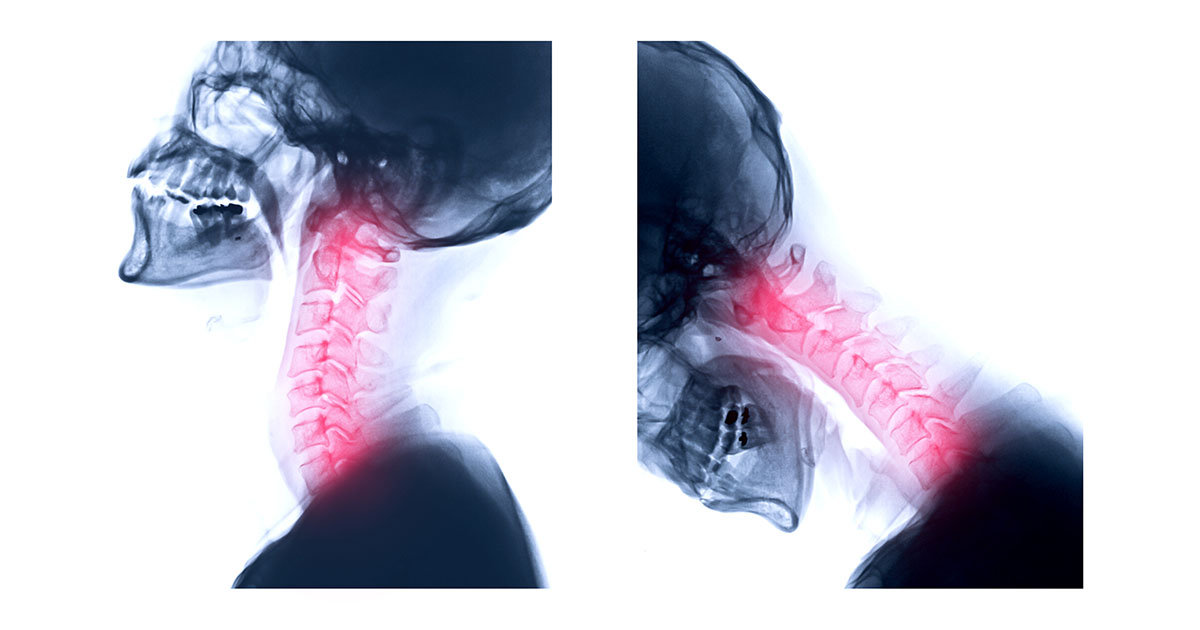
This is the one that most patients don't consider, and it's the one we find most frequently in patients who have already tried wrist splints without success. The nerves that run into your hand originate from the C5, C6, and C7 levels of your cervical spine, in your neck. A herniated or bulging disc at C6 or C7 can compress one of those nerve roots and send numbness down the arm into specific fingers.
- C6 nerve root compression: Numbness typically runs along the thumb side of the forearm and into the thumb and index finger. Often mimics carpal tunnel almost exactly.
- C7 nerve root compression: Numbness tends to run down the back of the forearm into the middle finger. Sometimes includes triceps weakness.
The key distinction from carpal tunnel: cervical disc pain often includes neck discomfort, shoulder ache, or symptoms that change when you turn your head. Sleeping on a pillow that hyperextends the neck, or on your stomach, can compress the C6-C7 level and trigger nighttime symptoms that look identical to carpal tunnel on a symptom checklist but need entirely different treatment. See our neck pain evaluation page for more on how cervical disc problems present.
Cause 3: Thoracic outlet syndrome
Thoracic outlet syndrome (TOS) is less common but regularly missed. The brachial plexus, the bundle of nerves that supplies the arm and hand, passes through a narrow corridor between the collarbone, the first rib, and certain scalene muscles in the neck. When this outlet is compressed, whether by tight muscles, poor posture, a cervical rib variant, or forward head position, the whole hand can go numb, particularly the ring and pinky fingers and the inner forearm.
TOS is often worse when the arm is raised, like sleeping with an arm overhead. If raising your arm above your head reliably reproduces or worsens the tingling, TOS is a real possibility. It's also frequently associated with a specific posture pattern: rounded shoulders, forward head, tight scalenes. We see a lot of this in Lakewood Ranch patients who work desk jobs or spend long hours driving I-75.
In 23+ years of practice, thoracic outlet is the cause we catch that most surprises patients. They come in certain it's carpal tunnel, and the postural exam points somewhere else entirely. The treatment for TOS looks nothing like carpal tunnel management.
Cause 4: Ulnar nerve entrapment (cubital tunnel)
The ulnar nerve controls sensation in the pinky finger and the outer half of the ring finger, plus the small muscles that let your hand grip and spread your fingers. When it gets compressed at the elbow (inside the bony groove on the back of the elbow, called the cubital tunnel), nighttime symptoms are common because most people sleep with the elbow bent.
This is a completely different nerve from what carpal tunnel affects. If your numbness is specifically in the pinky and ring finger, and it gets better when you straighten your elbow, cubital tunnel is the likely culprit. A simple clinical provocation test at the elbow typically confirms or rules it out in under two minutes.
Cause 5: Peripheral neuropathy
When numbness and tingling affect both hands symmetrically, often described as a "glove pattern" (the whole hand rather than specific fingers), peripheral neuropathy moves up the differential. Peripheral neuropathy means the small nerve fibers themselves are damaged, not just compressed at a single point.
Common drivers include:
- B12 deficiency: One of the most overlooked and most reversible causes. Nighttime tingling in both hands, sometimes with fatigue and brain fog. A simple blood panel picks this up. We covered this in more detail in our post on B12 deficiency and peripheral neuropathy.
- Blood sugar dysregulation: Pre-diabetic neuropathy can begin with subtle bilateral hand symptoms before any formal diagnosis. Worth checking fasting glucose if you haven't.
- Chemotherapy-induced neuropathy: A specific pattern that oncology teams often manage alongside us.
- Idiopathic small fiber neuropathy: Sometimes the nerve damage has no identifiable cause. Still manageable, particularly with the right combination of nutritional and neurological support.
Our neuropathy treatment program includes a structured evaluation to determine whether you're dealing with a compression neuropathy (something pressing on a nerve) or a metabolic one (the nerve fibers themselves are affected). The distinction determines whether you need mechanical intervention, nutritional work, or both.
How the evaluation actually works
If you come into our Lakewood Ranch office with nighttime hand numbness, here is what happens in the first visit. We start with a detailed symptom map: which fingers, which hand or both, what positions make it worse, what makes it better, whether there's neck or shoulder involvement, and how long it's been going on. That history alone often narrows the candidates to one or two.
The physical exam includes cervical range of motion and provocative tests (Spurling's for C6-C7 root compression, Adson's for TOS, Tinel's and Phalen's for carpal tunnel, elbow flexion test for cubital tunnel). Each test stresses a specific structure. When the provocative test reproduces your exact symptom, that's meaningful data. When it doesn't, we move to the next structure.
If the clinical picture is ambiguous, we may refer for nerve conduction studies or cervical imaging. But in many cases, a careful exam identifies the source without additional testing, and treatment can start that day.
What treatment looks like depending on the source
This is why getting the diagnosis right first matters so much. Each source has a different treatment path:
- Carpal tunnel: Wrist splinting at night, activity modification, ultrasound or laser for local inflammation, and in some cases, chiropractic manipulation of the wrist and carpal bones. Surgery is usually a last resort and many cases resolve without it.
- Cervical disc at C6-C7: Spinal decompression therapy is the cornerstone here. A pinched nerve in the cervical spine typically responds well to traction-based decompression that reduces disc pressure on the nerve root. Adjustments to improve cervical mobility help as well.
- Thoracic outlet: Postural correction, soft-tissue work on the scalenes and pec minor, cervical manipulation, and shoulder rehabilitation. This takes a few months of consistent work but many patients see meaningful progress within 6-8 sessions.
- Cubital tunnel: Elbow padding to prevent compression at night (a simple padded sleeve is often the first intervention), activity modification, and in some cases, manipulation or soft-tissue work around the medial elbow.
- Peripheral neuropathy: Nutritional intervention (B12, B6 at the right dose, alpha-lipoic acid in some cases), blood sugar management support, low-level laser therapy, and in our clinic, a structured neuropathy protocol that addresses the neurological environment rather than just the symptoms.
When to stop waiting and get an evaluation
Most people with nighttime hand tingling wait longer than they should. A few nights of "my hand fell asleep" is one thing. These are signs the problem is worth evaluating sooner:
- Symptoms have been present for more than 3-4 weeks
- Tingling is waking you up most nights, not occasionally
- You're noticing weakness in grip or fine motor tasks
- Both hands are involved symmetrically
- Symptoms are present during the day too, not only at night
- You have a history of diabetes, pre-diabetes, or have never had your B12 checked
Nerve compression and nerve fiber damage tend to worsen slowly with time. The earlier you identify the source, the more options are available and the faster the response. Many patients we see in Lakewood Ranch and surrounding Bradenton and Sarasota communities describe symptoms that had been present for 6-12 months before anyone mapped them to a specific nerve pathway. That delay matters.