

If you have been dealing with sciatic nerve pain for more than a week, someone has probably mentioned nerve flossing. Your physical therapist demonstrated it, or you found a YouTube video at 11pm while the pain was keeping you awake. The movement itself looks almost too simple to matter: you lie on your back, pull your knee toward your chest, then slowly extend the leg while flexing your foot.
And yet patients in Lakewood Ranch come into our office describing both outcomes. Some say it cut their shooting leg pain in half within a few days. Others say it made an already-miserable week considerably worse. The difference almost always comes down to one question: is the nerve irritated, or is it compressed?
That distinction drives everything about whether nerve flossing helps, hurts, or is simply the wrong tool for what is happening in your spine.
What nerve flossing actually is
The clinical name is neural mobilization, or nerve gliding. The idea is that healthy nerves slide freely through the surrounding tissue as you move. They have a small amount of slack, similar to a garden hose that has enough length to bend around a corner without kinking.
When a nerve becomes irritated, it can lose some of that mobility. Inflammation around the nerve, scar tissue from a prior injury, or prolonged compression can all cause the nerve to adhere slightly to the surrounding structures. Each time the nerve is asked to stretch beyond the range the adhesion allows, it pulls. That pulling registers as pain, electrical shooting, or the burning that patients often describe as "someone touching a hot wire to my leg."
Nerve flossing addresses this by moving the nerve through its range rhythmically. At one end of the movement the nerve is tensioned (extended leg, foot flexed); at the other end it is slackened (knee bent, foot pointed). Done slowly and repeatedly, the goal is to restore the normal glide without provoking a defensive response from the surrounding tissue.
The anatomy: why sciatic nerves get stuck
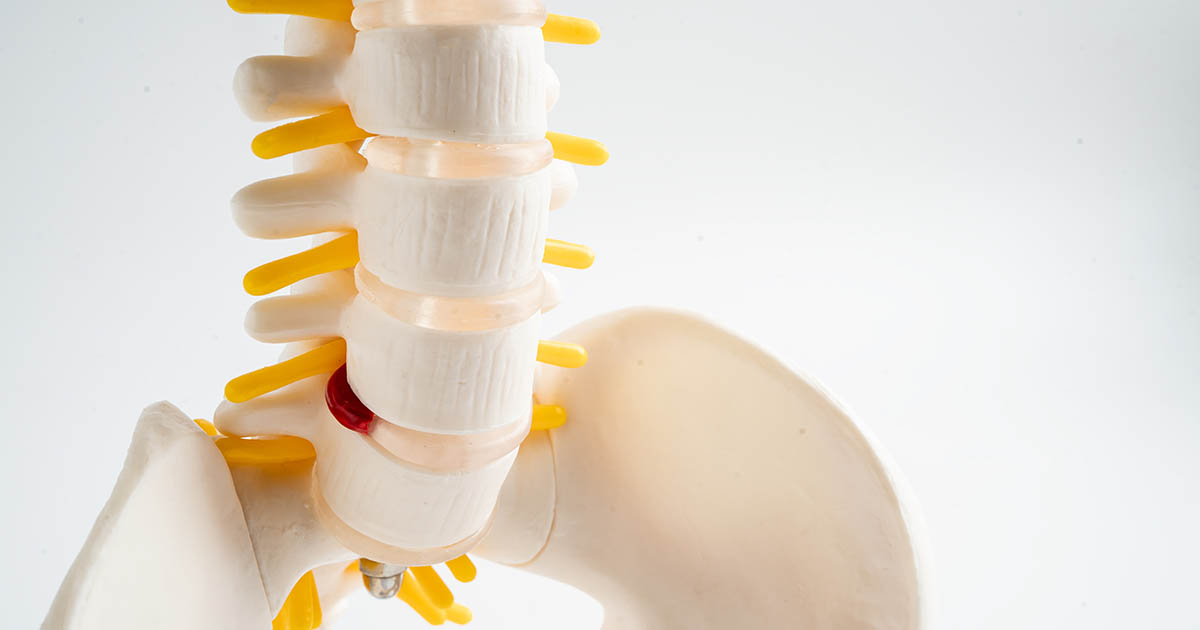
The sciatic nerve is the largest nerve in the body. It runs from the lower lumbar spine, through the pelvis, past the piriformis muscle, and down through the back of each leg. That route takes it past a lot of potential pinch points.
At the spine, a herniated or bulging disc can press against the nerve root where it exits the vertebra. In the pelvis, a tight or spasmed piriformis muscle can compress the nerve from the outside (this is piriformis syndrome, which mimics disc-driven sciatica almost perfectly). Further down the leg, soft tissue tension can restrict how freely the nerve moves.
Nerve flossing is most useful in the middle scenario: the nerve has full room to move structurally, but it has become sensitized or restricted by inflammation and tissue tension. It is far less useful when there is something physically pressing on the nerve, such as a herniated disc fragment or a bone spur narrowing the foramen.
How the basic sciatic nerve floss is done
The most common version for sciatic nerve pain works like this:
- Lie on your back on a firm, flat surface.
- Bend both knees, feet flat on the floor.
- Lift the affected leg and cradle the back of the thigh with both hands, knee still bent.
- Slowly straighten the knee while simultaneously pulling your foot toward your shin (dorsiflexion). Stop when you feel tension, not pain.
- Hold for one to two seconds, then reverse: bend the knee and point the foot.
- Repeat 10 to 15 times, once or twice per day.
The key word is tension, not pain. If the movement produces sharp shooting pain, increases your symptoms, or sends electricity down the leg, stop. You are either past the useful range or this technique is not the right approach for your presentation.
There is also a seated version: sit upright in a chair, extend the knee of the affected leg, flex the foot, and add a gentle neck extension (looking up slightly) to add tension through the full neural chain. Reverse by bending the knee and tucking the chin. This version is often easier to do at a desk and targets the entire sciatic pathway from lumbar root to foot.
When nerve flossing genuinely helps
In 23 years of chiropractic practice, the presentations where I have seen nerve flossing make a consistent positive difference share a few characteristics:
- Nerve tension without significant compression. The nerve is reactive and restricted in its movement, but imaging (or clinical testing) does not show a large disc protrusion pressing directly on the root. Straight leg raise testing produces tension but not the sharp, electric reproduction of symptoms.
- Post-treatment maintenance. After a course of spinal decompression, chiropractic care, or manual therapy has addressed the underlying cause, nerve flossing can help maintain the mobility gains and prevent re-adhesion. Think of it as the homework that keeps the work from reverting.
- Piriformis-related sciatica. When the sciatic nerve is being compressed or irritated by the piriformis rather than a disc, nerve flossing combined with piriformis stretching is often very effective. The nerve has structural room to move; it just needs encouragement to do so.
- Subacute presentations (weeks rather than days). Very acute, inflamed nerve pain often responds poorly to any movement-based technique in the first 48 to 72 hours. Once the acute inflammatory spike settles, introducing gentle mobilization is far better tolerated.
When to stop and get evaluated
Nerve flossing is not appropriate in every situation. These are the presentations where it should not be self-administered without a clinical assessment first:
- Active disc herniation with significant compression. If a disc fragment is pressing directly on the nerve root, adding tensile force through nerve flossing can irritate the already-compressed tissue. Decompression of the structural problem comes first.
- Symptoms that worsen with each session. Some worsening the first day or two is normal (you are asking irritated tissue to move). Consistent worsening after three or four attempts is a signal to stop and get the nerve assessed properly.
- Bilateral symptoms. Pain, numbness, or weakness in both legs at the same time, especially combined with any change in bladder or bowel control, is a neurological emergency. This is not a situation for self-treatment of any kind.
- Progressive weakness. If the leg or foot is getting measurably weaker over days or weeks, the nerve needs decompression, not mobilization. Weakness points to a motor component and deserves imaging.
- Numbness that is spreading. A numb patch that started in the calf and is now reaching the foot is expanding nerve involvement. The cause needs to be identified before any technique is layered on top.
If any of these apply to you, our office can usually see new patients with nerve-related leg pain within 24 hours. An orthopedic examination, and in many cases a clinical nerve assessment, can clarify what is actually happening before you invest weeks in a technique that may be working against you.
What to expect in the first week
If nerve flossing is appropriate for your situation, this is a realistic timeline:
Days 1-2: Mild soreness in the hamstring or calf area after sessions is common. The nerve is not used to moving through this range and the surrounding tissue is sensitized. This soreness should feel muscular, not electrical, and should resolve within a few hours.
Days 3-5: The range of the movement should be incrementally increasing without proportional increase in symptoms. You should be able to straighten the knee a few degrees further than day one before hitting the tension point.
Days 5-10: Many patients with appropriate presentations report a noticeable reduction in the shooting quality of their pain. The ache may still be present, but the lightning-bolt character that makes sciatica so disruptive starts to quiet.
If you are not seeing any movement in this direction by day 10, the underlying cause needs re-evaluation. Nerve flossing is a mobilization technique, not a structural treatment. If the problem is structural, such as a herniated disc pressing on the L5 or S1 nerve root, the nerve cannot glide freely no matter how consistently you floss because something is blocking the path.
How nerve flossing fits into a broader treatment plan
At Spine and Wellness Center in Lakewood Ranch, we rarely use nerve flossing in isolation. For most patients presenting with sciatic nerve pain, the evaluation identifies a root cause, and the treatment plan addresses that cause directly.
For disc-driven sciatica, that often means a course of non-surgical spinal decompression, which creates negative intradiscal pressure to pull the herniated material back toward center and reduce direct nerve root compression. Once the structural pressure is reduced, nerve flossing becomes a useful adjunct to help the nerve restore its normal mobility and reduce the residual sensitization that can linger even after the disc has improved.
For piriformis-driven symptoms, we combine manual release of the piriformis with nerve mobilization and, in some cases, Class IV laser therapy to reduce inflammation around the nerve. This is typically faster-resolving than disc-driven sciatica, often showing significant improvement in three to five visits.
For patients dealing with peripheral neuropathy alongside sciatic symptoms, the picture is more complex. Nerve tissue that has been damaged by metabolic factors responds differently to mobilization than mechanically compressed nerve tissue. We assess this distinction carefully before designing a program, because the approach that helps one will not necessarily help the other.
Many patients also find relief by addressing what is happening in the pinched nerve at the level of the spine, rather than focusing only on the leg symptoms. The shooting pain you feel at the calf is the result of something happening at the L4, L5, or S1 nerve root level. Treating the signal at its source, rather than along the path, is generally more efficient.
A practical self-assessment before you start
Before adding nerve flossing to your routine, a quick self-assessment can help you judge whether it is likely to be useful:
- Sit on the edge of a firm chair. Slowly straighten the affected leg and flex the foot. Note where you feel tension and whether it is muscular or electrical.
- If the movement produces electrical pain before 45 degrees of knee extension, the nerve is quite reactive. Start with a very limited range (just 15-20 degrees) and do not push through symptoms.
- If the movement produces muscular tension but not electrical sensation, the nerve is likely to tolerate mobilization well. You can work through the full seated nerve floss pattern.
- If you cannot find a position that does not produce electrical pain, self-mobilization is not the right starting point. A clinical assessment and probably imaging should come first.
This is not a diagnostic tool, and it does not replace an examination. But it gives you useful information about your nerve's current tolerance for tension before you start a technique that, applied incorrectly, adds tension to an already overloaded system.