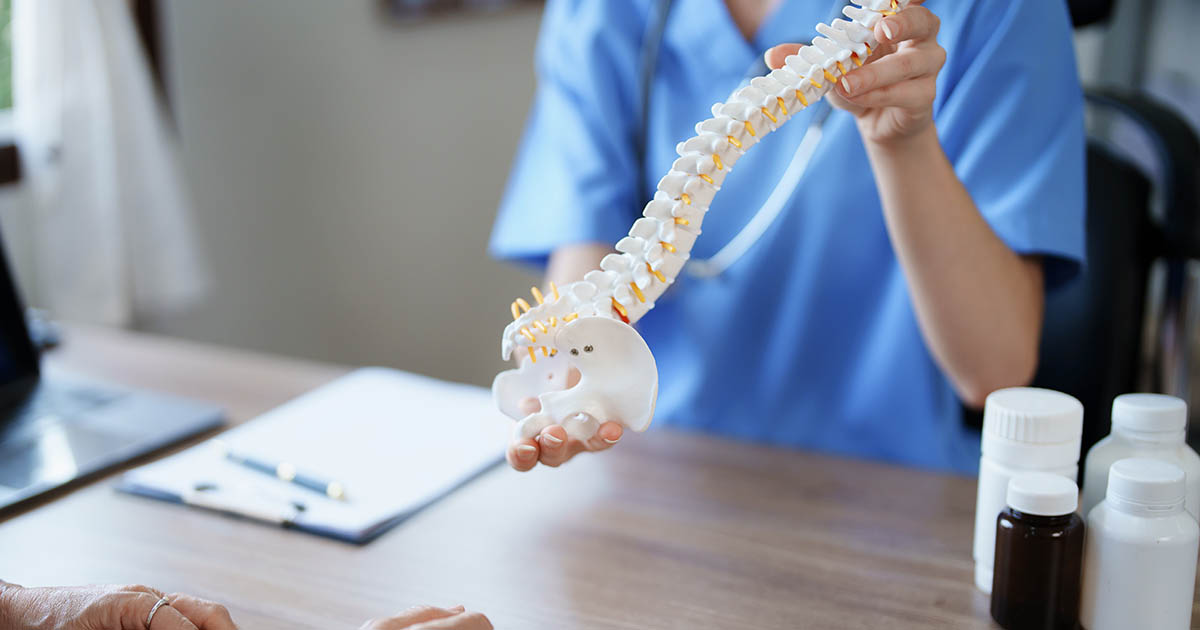


If you asked ten patients in our Lakewood Ranch waiting room why they are wearing a back brace, you would get ten different answers. Some have been wearing one since a doctor handed it to them six months ago and nobody told them to stop. Some grabbed one at the pharmacy because their back was killing them and it provided short-term relief. A few have become so reliant on the brace that they put it on before getting out of bed.
The brace itself is not the problem. Worn for the right reason during the right window, a lumbar support genuinely reduces mechanical demand on an injured structure and allows healing. But that window is finite. Worn past it, the same brace that provided relief starts to cause a different set of problems, problems that are harder to address than the original pain.
If you are managing lower back pain in Lakewood Ranch and wondering whether your support belt is still helping or has become a crutch, this is the honest breakdown.
What a Back Brace Actually Does to Your Spine
A rigid or semi-rigid lumbar brace does two things mechanically: it limits your range of motion and increases intra-abdominal pressure. That pressure acts like a hydraulic cylinder inside your torso, offloading compressive force from the lumbar vertebrae and discs.
That is genuinely useful when a structure in your spine is acutely injured or surgically healing. Reducing load on a fractured vertebra or a post-surgical site creates a window for tissue repair that might not exist otherwise.
The problem is that your muscles do the same job. The erector spinae, the multifidus, the quadratus lumborum, and several deeper stabilizers work together to stabilize the lumbar spine during every movement, every step, every shift in posture. When a brace handles that job for them, they do not have to work. And muscles that do not work begin to weaken, fast.
When a Back Brace Is Actually Worth Wearing
There are real clinical situations where a lumbar support earns its place. In our experience with patients over 23 years, these are the situations where it tends to help:
- Acute vertebral compression fracture. Osteoporosis-related fractures often require a rigid brace as part of the treatment protocol. The goal is to limit forward flexion while the fracture stabilizes, typically for 8 to 12 weeks. This is a prescribed, time-limited use with a specific structural rationale.
- First few days of a severe disc herniation. During the acute phase of a disc herniation, when pain severely limits basic movement, a semi-rigid brace can allow you to function while inflammation settles. Two to three weeks is usually the outer limit before the risks start to outweigh the benefits.
- Return to heavy lifting during active healing. If you are returning to work that involves repetitive heavy loads and you are still in the healing phase of a specific disc or muscle injury, wearing a brace during the actual lift can reduce the mechanical demand on a vulnerable structure. The key is wearing it during the task, not all day.
- Prescribed scoliosis management. For adolescents with certain curve patterns, or adults with structurally progressive scoliosis, a prescribed brace serves a specific structural purpose. If you have questions about scoliosis bracing in Lakewood Ranch, that conversation is distinct from the general back pain brace question.
When a Back Brace Makes Things Worse
This is the conversation that does not happen often enough. Most patients leave the pharmacy or the urgent care with a brace and no instruction sheet explaining when to stop using it.
When the underlying problem needs movement, not restriction. Most chronic back pain involves disc dehydration, deconditioning, and poor load distribution across the lumbar segments. A brace does not address any of that. It substitutes for the muscular work that would actually drive recovery. Wearing it long-term delays that work indefinitely.
When you are masking a signal that matters. Pain is feedback. A disc or joint that is being loaded incorrectly will tell you. When a brace compresses and immobilizes enough to quiet that signal, you lose the feedback that guides how you move. You do more than you should, in positions you should not be in, because the warning system has been turned down. The result is often a flare when the brace finally comes off.
When the real driver is nerve compression. If your pain radiates down the leg, you are dealing with a nerve root problem, not just a muscular one. A lumbar brace compresses the spine. It does not decompress the disc material that is pressing against the nerve. Many patients managing a disc herniation try a brace hoping it will provide the same relief as actual decompression. Compression and decompression produce opposite effects on intradiscal pressure. They are not interchangeable.
"A brace is a tool for a specific window in recovery. When patients come in wearing one they have had on for six months and nobody told them to stop, the brace has usually become part of the problem, not part of the solution."
The Muscle Atrophy Problem Nobody Mentions
Your lumbar stabilizers need to be loaded to stay functional. The multifidus, the deepest layer of the lumbar stabilizing system, is particularly sensitive to disuse. Research on prolonged lumbar brace use consistently shows reduced activation in these deep stabilizers, which takes time and targeted effort to reverse.
The result is a slow-building catch-22. The brace feels necessary because removing it causes pain. But removing it causes pain partly because the muscles that should be stabilizing the spine have gotten weaker while the brace was doing their job. The dependency deepens over weeks, then months.
This is why a brace worn past the acute phase needs to be paired with active rehabilitation. Wearing the support without working on the underlying muscle function is a short-term loan that compounds interest. You borrow stability from the brace today, and you pay for it with reduced capacity later.
The Right Timeline for Lumbar Support
The general clinical guideline: a lumbar brace for acute back pain should not extend beyond 4 to 6 weeks without a specific clinical rationale for continuing it. For most soft-tissue and disc injuries in the acute phase, 2 to 3 weeks is the target window. Post-surgical or fracture cases follow their own timelines determined by the treating surgeon.
If you are still relying on a brace after 6 weeks and no one has discussed a plan to reduce your use of it, that is a conversation worth having with your provider. "It feels better with the brace on" is accurate but it is not a clinical rationale. It signals that the underlying problem has not been addressed.
How to wean off a brace: reduce use incrementally during lower-demand activities first. Keep it during higher-risk windows, such as a long drive or specific work tasks, while progressively increasing periods without it. The goal is to progressively re-load the lumbar stabilizers, not to remove the brace and hope for the best.
What to Do When the Brace Has Not Fixed the Problem
If you have been relying on a back brace and want to know what might actually get you out of it, the answer depends on what is driving the pain.
For disc-driven pain, the most common scenario we see in Lakewood Ranch, non-surgical spinal decompression creates negative intradiscal pressure that draws disc material back toward center and allows the disc to rehydrate. That is the opposite mechanical effect of compression. Many patients who have been using a brace as a crutch for disc pain find more lasting relief through a structured decompression program.
For pain with a muscular and movement component, corrective chiropractic care addresses the specific segments that are restricted or dysfunctional and rebuilds the stabilizer activation that brace-dependence has reduced. In our experience with patients over more than 23 years of practice, the combination of spinal correction and active stabilization work produces the most durable outcomes for this category.
For degenerative disc disease, the structural changes in the disc itself need to be accounted for. A brace does not reverse those changes. A care plan that combines spinal decompression, movement re-education, and appropriate adjunct therapies works toward better load distribution across a disc that has lost some of its shock-absorbing capacity.
If you are in Lakewood Ranch, Bradenton, or Sarasota and you are not sure whether your brace is still helping or has become a dependency, Dr. Banman can evaluate the underlying driver in a standard new-patient exam. Most patients leave with a clear answer about what is actually going on. Call (727) 213-2982 or book online at celluron.janeapp.com.