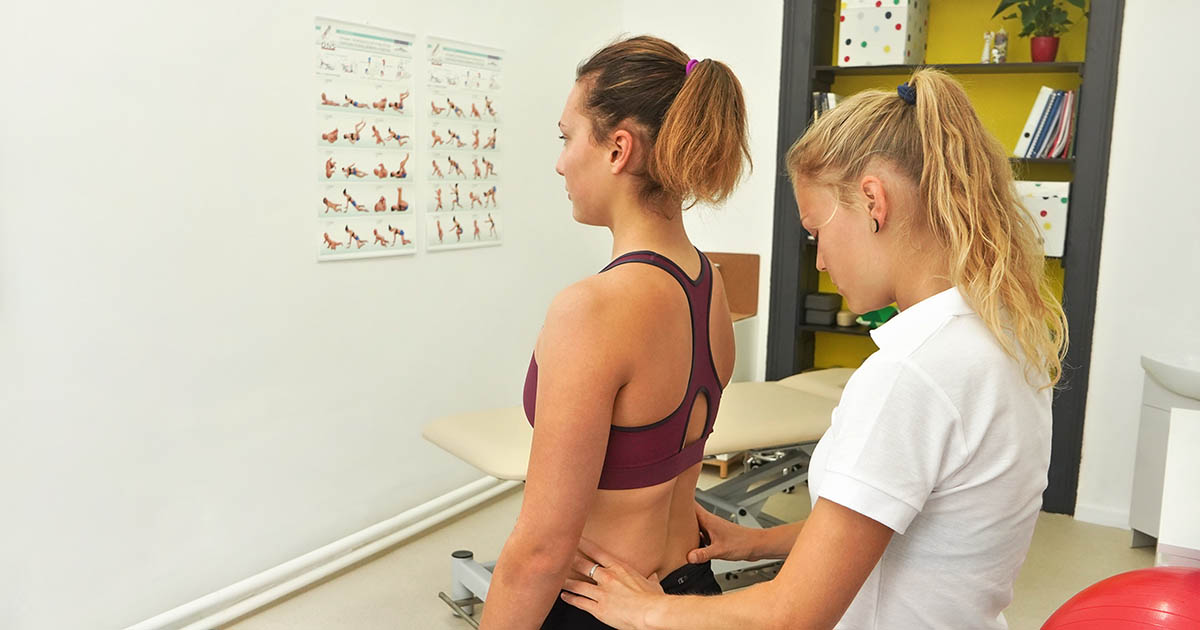


Twenty-three years into practice, I still see the same pattern every week: someone comes in with aching low back pain that started months ago, got worse after long car trips or desk days, and has not responded to stretching the back. When I do a simple hip extension assessment, the hip flexors are locked short on one or both sides. Address those muscles and the lumbar spine, and the back pain frequently resolves or drops significantly. Treat the back alone and results are slow.
The hip flexors and the lumbar spine are a two-part system. You cannot fix the back half without understanding what the front half is doing. This post explains why that connection exists and what it means for the kind of lower back pain care we provide at our Lakewood Ranch clinic.
What your hip flexors actually are (and why they matter to your spine)
Most people, when they hear "hip flexors," think of one muscle. There are actually three primary ones that matter for spinal health:
- Psoas major: Originates along the lumbar vertebrae (L1-L5) and the discs between them, travels through the pelvis, and attaches to the top of the femur. This is the only muscle in the body that connects the lumbar spine directly to the leg.
- Iliacus: Lines the inside of the pelvic bowl and joins the psoas at the hip. Together they are called the iliopsoas. Think of it as the psoas's silent partner.
- Rectus femoris: The only quad muscle that crosses the hip. When the knee is straight and this muscle is short, it limits hip extension and pulls the pelvis forward.
Because the psoas originates at the lumbar vertebrae themselves, tightness in this muscle does not just limit hip movement. It changes the position of the lumbar spine in real time. That distinction matters. You are not dealing with a sore leg muscle. You are dealing with a muscle that attaches directly to the vertebrae generating your back pain.
Why sitting all day shortens them
Your hip flexors have one job when you are seated: they hold your thigh at roughly 90 degrees to your torso. For that, they do not need to be long. So the body does what it always does with muscles that are not being used at their full length: it adapts. Over several weeks of 8-plus-hour desk days, the muscle fibers develop fewer sarcomeres (the contractile units that give muscle its length). The resting length gets shorter. Permanently, unless you actively work against it.
Here is what makes this worse in Florida specifically: many Lakewood Ranch residents spend an hour or more commuting on I-75 or US-41, which stacks hip flexion on top of the desk day. Add two to three hours of evening sitting and you are at 11 or 12 hours of sustained hip flexion daily. That is a lot of adaptive shortening happening over months and years.
Hip flexor tightness is not an injury you can point to. It is a slow accommodation that the body makes without pain signals until enough mechanical stress has accumulated to hurt.
The insidious part is that shortened hip flexors feel fine in a chair. They only become a problem when you stand, walk, or sleep, because those positions require hip extension that the shortened muscles cannot provide without compensating somewhere else.
How tight hip flexors cause lower back pain
When you stand up from your desk with short hip flexors, one of two things happens: either your hip does not fully extend (you walk with a slightly crouched posture), or the pelvis and lumbar spine compensate for the restricted range by tipping forward. Most people do the second one without knowing it.
That forward pelvic tilt increases what we call lumbar lordosis: the natural inward curve of the lower back gets exaggerated. When that curve becomes excessive, several things happen simultaneously:
- Posterior disc compression: The back portion of each lumbar disc gets compressed when the spine extends forward. In a disc that is already slightly dehydrated or degenerated, that compression can push material toward the nerve roots.
- Facet joint loading: The small joints at the back of each vertebra get jammed together. Chronically overloaded facet joints produce deep aching, stiffness after sitting, and pain that spreads into the buttocks.
- Lumbar erector overwork: The muscles running along the back of the spine must work constantly to hold you upright against the forward pull of the tight hip flexors. Muscles under sustained load without recovery fatigue, ache, and eventually develop trigger points.
- Reduced shock absorption: Normal lumbar curve acts like a spring. When that curve becomes rigid and fixed, the spine loses its ability to absorb the vertical load from walking. Each step sends more compression into the discs and joints.
The result is a cycle: tight hip flexors pull the pelvis forward, the lumbar spine compensates, the posterior structures get loaded, pain develops, you rest (which means more sitting), and the hip flexors shorten further.
The anterior pelvic tilt connection
Anterior pelvic tilt is the clinical term for what tight hip flexors do to the pelvis. The front of the pelvis tips down, the back tips up, and the low back arches forward. You may have heard it called "duck butt" posture. The appearance is almost a cosmetic footnote. The structural consequence is the real issue.
When the pelvis tilts anteriorly, the hamstrings (which attach to the back of the pelvis) get stretched beyond their resting length. They respond by tightening up. Now you have tight hip flexors at the front and tight hamstrings at the back, each one pulling the pelvis in opposite directions. Both feel stiff. Both cause discomfort. Most patients stretch both and get temporary relief before everything locks back down. That is because they are stretching the response, not the driver.
The driver is the psoas. You can stretch your hamstrings daily for a year without fixing anterior pelvic tilt if the psoas is still pulling the pelvis forward. In our assessments here in Lakewood Ranch, when we find this pattern, we work on the anterior chain first, then address the secondary tightness at the hamstrings and lumbar erectors. The order matters. If you want more on how tight hamstrings fit into this pattern, our post on tight hamstrings and lower back pain covers that piece of the picture in detail.
How to know if your hip flexors are the problem
There is a simple clinical test called the Thomas test that practitioners use to screen for hip flexor tightness. A modified version you can try at home works like this:
- Lie on your back at the edge of a firm surface (a table or bed edge, not a soft mattress).
- Pull one knee to your chest and hold it.
- Let the other leg hang off the edge.
- If the hanging leg rises (the thigh does not fall below horizontal), the hip flexors on that side are shortened. If the lower leg kicks out from the knee, the rectus femoris is the primary contributor.
Other signs that point toward hip flexors as a contributor to back pain:
- Pain that is worse after sitting for more than 30 to 45 minutes, then eases when you walk briefly, then returns when you sit again.
- Low back ache that starts mid-afternoon during desk days but was not there in the morning.
- Difficulty lying flat on your back (some people need a pillow under their knees because the flat position pulls uncomfortably on the hip flexors).
- Relief from walking at a brisk pace but not from slow walking or standing still.
- A sense that your low back is stuck or stiff first thing after rising from a chair, then loosens after a few steps.
None of these patterns are diagnostic on their own. They are signals worth investigating. What we do at our Lakewood Ranch office is a full orthopedic and neurological screen that distinguishes hip flexor-driven tightness from disc, facet, SI joint, or other structural causes of the same symptoms. The treatment plan differs substantially depending on which of those is primary. See our desk job lower back pain guide for how the disc side of this equation works.
What actually helps (and what does not)
The most common self-treatment patients try is lumbar stretching (child's pose, seated forward folds). These do give temporary relief because they take the posterior structures off compression briefly. They do not address the tight psoas at all. You will feel better for 20 minutes and then the cycle resets.
What tends to move the pattern forward:
Hip flexor stretching done correctly. The standard kneeling lunge targets the psoas reasonably well, but most people do it wrong. They hike the front hip up and flare the low back to look like they are stretching deeply. That just puts the lumbar spine into the same excessive extension that is already causing the problem. The correct version: posterior pelvic tuck first (tuck the tailbone under slightly), then lean gently forward. Less dramatic, more effective.
Posterior chain activation. Glutes that are inhibited cannot counteract the forward pull of the psoas. Single-leg glute bridges, hip thrusts, and cable pull-throughs wake up the posterior chain and give the pelvis something to stabilize against. Most patients with chronic hip flexor tightness have glutes that are measurably weaker on the affected side.
Movement breaks, not stretch breaks. Sitting for 90-minute blocks and then stretching for 5 minutes is far less effective than standing or walking for 3 minutes every 30 to 40 minutes. The muscle does not adapt to the shortened position if it is regularly cycled through its full range. Set a timer. It is simple but it actually works.
Chiropractic assessment of the lumbar segments. When the psoas has been chronically tight and has been pulling on the lumbar vertebrae, the vertebrae themselves often lose normal motion at specific levels. L2-L3 and L3-L4 are common. Restricted segmental motion creates its own pain signal (separate from the hip flexor tightness) and prevents the surrounding muscles from releasing fully. Restoring normal lumbar motion with a specific adjustment removes that driver and often accelerates the response to stretching considerably. In our 23-plus years of practice, many patients report that the stretches they had already been doing for months finally seemed to work after the lumbar restrictions were cleared.
Spinal decompression when disc involvement is confirmed. If the anterior pelvic tilt from hip flexor tightness has been loading the posterior disc long enough, disc pathology may have developed alongside the hip flexor issue. In those cases, stretching and activation alone rarely resolve the full picture. Our non-surgical spinal decompression in Lakewood Ranch creates negative intradiscal pressure that draws disc material back and hydrates the disc. We use it as a separate track from the hip flexor work, typically 2-3 times per week, until the disc-related symptoms stabilize.
Whole body vibration as a neurological reset. One underappreciated consequence of chronic psoas tightness is that the deep spinal stabilizers (multifidus, transverse abdominis) tend to go quiet. They are inhibited by pain and by the altered afferent signals from restricted joints. Whole body vibration at a specific frequency (25-50 Hz) drives proprioceptive input into these stabilizers and can re-engage them faster than standard activation exercises alone. We use it as an adjunct here, typically after decompression or adjustment, not as a standalone.
When to get evaluated rather than self-treat
Most hip flexor-driven back pain is manageable conservatively. But a few patterns warrant prompt evaluation rather than home stretching:
- Pain that travels down one leg below the knee, especially with numbness or tingling. Hip flexor tightness does not produce those symptoms. Disc compression or nerve root irritation does, and the treatment is meaningfully different.
- Back pain that is worse lying flat or at night but better sitting up. That pattern can indicate something other than musculoskeletal tightness.
- Weakness in the foot or ankle (foot drop, inability to lift the toes). That is a nerve finding that needs imaging.
- Back pain following a fall, a car accident, or a period of heavy lifting with immediate onset. Those events can produce structural injury that needs proper assessment before any manual treatment.
For most people reading this, the pattern is the familiar one: sits too much, aches by afternoon, feels stiff when they stand up, improves with movement. That pattern responds well to the work described above. If you are in Lakewood Ranch, Bradenton, or Sarasota and the self-treatment has not shifted things, that is a reasonable point to get an evaluation. We can often tell within the first visit whether the hip flexors are the primary driver and map out a realistic plan from there. Our page on spine conditions we treat covers the full range of related patterns if you want to understand the broader picture first.