

A sneeze fires. Your lower back explodes. For a second you cannot stand up straight, and then it fades back to the dull ache that has been there for weeks. If that pattern sounds familiar, you are not imagining it. In 23 years of evaluating back pain in Lakewood Ranch, I have heard this description from hundreds of patients. It is almost always the disc.
That does not mean the disc is beyond help. Understanding why the sneeze hurts is actually the first step toward fixing it, because that pain spike carries diagnostic information your doctor can use.
If this has been going on long enough that you are ready to stop guessing, our herniated disc treatment page explains what care looks like and what to expect from a structured evaluation. For now, here is the mechanics behind what you are feeling.
What Actually Happens in Your Spine When You Sneeze
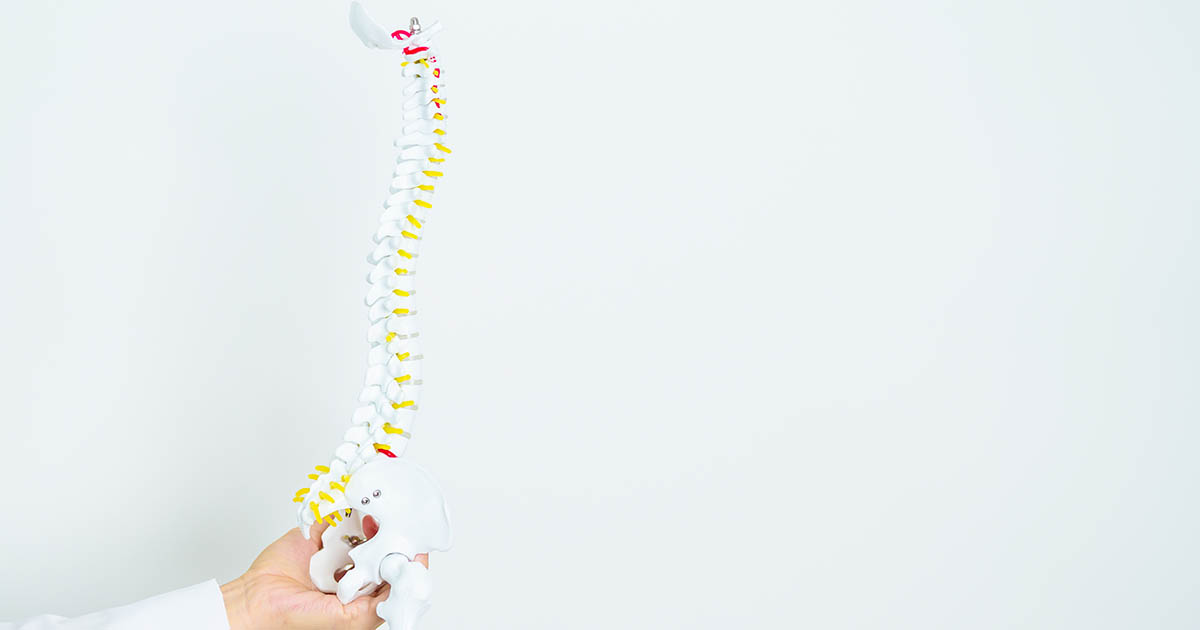
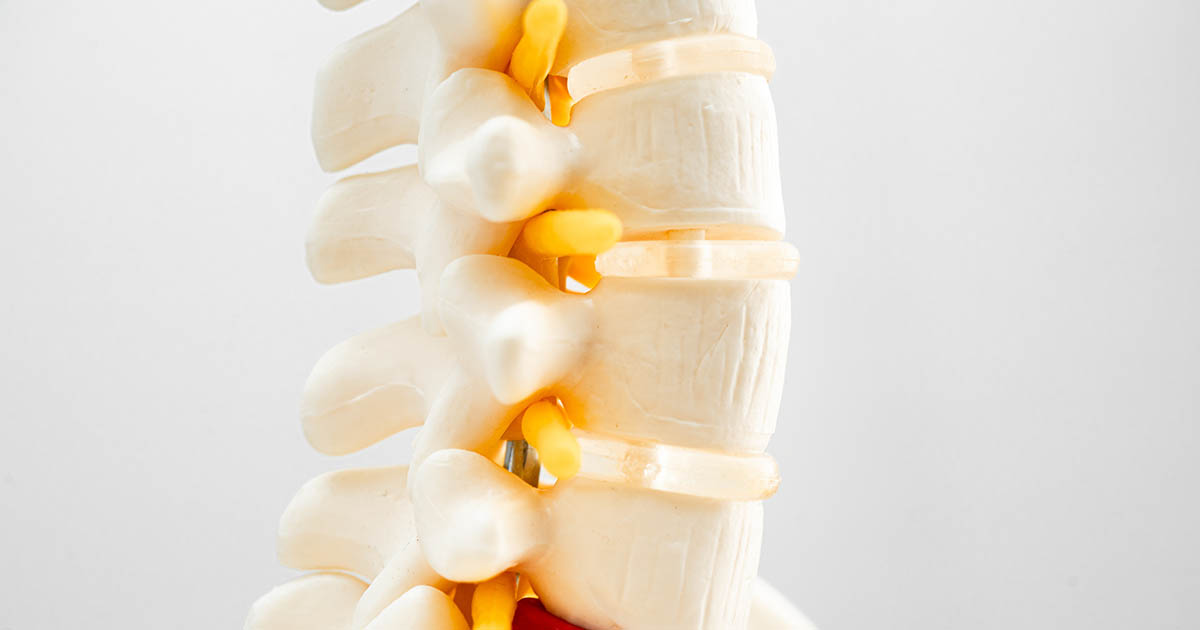
Your spine is surrounded by a canal of tissue and fluid that runs from your skull to your tailbone. Inside that canal, your spinal cord and the individual nerve roots that supply your legs are housed under fairly precise pressure conditions. Surrounding each vertebra is a disc: a tough outer ring filled with a pressurized gel core that acts as a shock absorber and spacer between bones.
When you sneeze, your body generates a rapid burst of pressure inside your chest and abdomen. That pressure does not stay isolated there. It transmits through a network of veins alongside your spinal canal and briefly raises the pressure inside it. A healthy spine handles this in a fraction of a second. The discs flex slightly, the pressure normalizes, and you sneeze without incident.
The trouble starts when a disc has lost its structural integrity. A herniated or bulging disc already has gel material pressing outward against a nearby nerve root. When internal pressure spikes from the sneeze, it briefly amplifies the compression on that nerve. The nerve fires. You feel it immediately: a sharp, sometimes electric jolt. Some people feel it straight through the low back. Some feel it fire down into the buttock or into the leg as far as the foot.
Chiropractors and neurologists sometimes use this principle deliberately during examination. A controlled increase in intra-abdominal pressure that reproduces your symptoms is one indicator that nerve root compression from a disc is involved. The clinical term is the Valsalva maneuver test.
Why This Pain Pattern Points to a Disc Problem
Not every back pain source responds to a sneeze the same way. Muscle-based pain, which comes from spasm or strain in the paraspinal muscles, can worsen briefly during a sneeze because of the sudden muscle contraction, but the character of that pain is different: dull, cramping, spread across the back. It does not typically send a sharp jolt down the leg, and it does not have the instant-on quality of nerve compression.
A disc herniation creates a different situation. The nucleus pulposus (the gel core of the disc) has pushed through a tear in the outer ring. It sits where it should not, directly adjacent to or pressing against a nerve root. That nerve root is already irritated. A brief pressure spike from a sneeze or cough does not take much to make it fire loudly.
This distinction matters for treatment. Approaches designed to calm muscle spasm will not move gel off a nerve root. Treatments that create sustained decompressive force on the disc, reducing intradiscal pressure and allowing the herniated material to retract, address the actual source. As we explain in more detail in our post on why most back pain is disc-related, muscle tension is often secondary to what the disc is doing, not the primary driver.
When a patient comes in describing pain that consistently spikes with sneezing or coughing, two of the first things I check in the examination are whether a controlled Valsalva reproduces the symptoms and whether a straight leg raise test is positive. A positive finding on both is a consistent presentation for disc herniation at L4-L5 or L5-S1, the two most common locations for lower lumbar disc injury.
Other Structures That Can Hurt When Pressure Rises
Disc herniation is the most common explanation for back pain that consistently spikes with sneezing, but a few other sources behave similarly and are worth knowing about.
Facet joint inflammation. The small joints at the back of each vertebral segment can become inflamed from arthritis or injury. Facet-mediated pain can spike with sudden pressure changes, though the pain character is usually different: more one-sided, centered near the spine rather than radiating into the leg, and worst with extension (arching backward) rather than with Valsalva-type pressure.
Annular tears without full herniation. The outer ring of the disc is innervated in its outer layers. A crack or tear in that ring, even without the gel core actually herniating, can produce sharp back pain with pressure spikes. The pain tends to stay local rather than traveling into the leg, which helps distinguish it clinically.
Epidural cysts. Less common, but space-occupying structures near the nerve roots can behave similarly to herniated discs in how they respond to pressure changes. These require imaging to identify.
Knowing which structure is involved changes the treatment entirely. Trying to treat a facet problem with disc-directed approaches, or vice versa, is one of the more common reasons patients spend months chasing relief without finding it. A proper structural diagnosis comes before a treatment plan.
Red Flags: When to Act Urgently
Most patients with disc-related sneeze pain are dealing with something that responds well to conservative care. But certain presentations call for urgent attention, not a scheduled appointment.
Go to the emergency room or call for help immediately if you experience any of the following alongside back and leg pain:
- Loss of control of your bladder or bowel. This can indicate cauda equina syndrome, a condition where the nerve roots at the base of the spine are severely compressed. It requires emergency surgical decompression and is one of the true spinal emergencies.
- Bilateral leg weakness, meaning both legs feeling weak or giving out at the same time.
- Saddle anesthesia: numbness or a strange sensation in the inner thighs, groin, or around the rectum.
- Rapidly progressive leg weakness that is worsening over hours rather than days.
These presentations are rare, but they are the reason any sudden change in your neurological picture deserves same-day attention. If you have leg pain that tracks into the sciatic nerve territory and is getting worse rather than better over two weeks, that is also a conversation worth having sooner rather than later. Disc herniations with nerve involvement do not self-resolve as reliably as people hope once the leg symptoms appear.
What the Evaluation Looks Like
When a patient comes in describing back pain that spikes with sneezing or coughing, the clinical picture often becomes clear within the first visit. Here is what the evaluation typically covers.
History. How long has this been happening? Is the pain strictly in the back, or does it travel into the leg, and if so, where exactly? Is there any numbness, tingling, or weakness? What makes it worse besides sneezing? What, if anything, makes it better? Has there been any prior injury, surgery, or imaging?
Physical and neurological exam. Range of motion, posture, and antalgic lean (whether you are instinctively shifting your weight to take pressure off the nerve). Deep tendon reflexes at the knee and ankle. Sensation testing across the dermatomes of L4, L5, and S1. Manual muscle testing of foot dorsiflexion and plantarflexion to check for subtle strength differences side-to-side.
Orthopedic tests. The straight leg raise, the Kemp's test, the Slump test, the Valsalva maneuver, and others depending on what the history suggests. These tests take about ten minutes and give a fairly precise picture of which level is involved and how much neurological irritation is present.
Imaging decisions. Not every patient needs imaging right away. If the clinical picture is clear and there are no red flags, a trial of conservative care often makes sense before ordering MRI. When leg pain is prominent, neurological findings are present, or a patient is not responding to initial care in the expected time frame, MRI is the most useful study. It shows the disc, the nerve roots, and any compression directly. X-ray shows alignment and bone but does not visualize the disc or nerves.
In most cases, we have a working diagnosis and a specific treatment direction within the first visit. If imaging is needed, we can guide you toward the right study rather than having you guess.
Non-Surgical Treatment for Disc-Driven Back Pain
If the evaluation confirms disc herniation with nerve involvement, the goal of treatment is to reduce the compression on the nerve root and allow the disc to begin healing. At our Lakewood Ranch clinic, we address this primarily through the following.
Spinal decompression. This is the core approach for disc herniation with nerve compression. Using a computer-controlled traction table, we apply precise distraction forces to specific lumbar segments. The goal is to create brief negative pressure inside the disc, which draws the herniated nucleus pulposus back toward center and reduces the mechanical force on the nerve root. Many patients in our practice report a meaningful reduction in leg symptoms within the first four to eight sessions. Our non-surgical spinal decompression page walks through exactly what each session involves and what the program typically looks like over time.
Chiropractic adjustment. For presentations where protective muscle spasm and joint restriction are contributing to the pain, targeted mobilization of the segments adjacent to the herniated level can reduce the secondary muscle guarding and improve joint mechanics. This is done with care near an active herniation, and not applied to every patient in the same way.
Class IV laser therapy. For nerve root inflammation, our therapeutic laser reduces the inflammatory response around the irritated tissue without medications or injections. It is typically combined with decompression during the acute phase.
Activity and posture guidance. Certain movements and positions consistently increase intradiscal pressure and push the herniation harder against the nerve. Knowing what they are, and adjusting your daily routine to minimize them during the recovery phase, is a practical part of the plan that gets overlooked in many clinics. We go over this specifically with each patient based on what their job, sleep position, and daily activities look like.
We do not use the same protocol for every patient. The level of the herniation, which nerve root is involved, how long the problem has been going on, and how much neurological compromise is present all shape what the program looks like.
How Long Until This Gets Better?
This is the honest answer: it varies, and anyone who gives you a guaranteed timeline is guessing. In our experience, patients dealing with acute disc herniation with nerve involvement who start a structured decompression program generally see meaningful improvement in leg symptoms within two to four weeks of consistent treatment. The back pain, which is often the secondary complaint once leg symptoms are driving the picture, tends to follow.
Chronic cases where the disc has been herniated and the nerve root has been irritated for months or years take longer. The nerve itself needs time to recover once mechanical pressure is reduced, and that recovery is measured in weeks to months. Patients who come in after a year of untreated symptoms should not expect the same timeline as someone who sought care within the first month.
What we work to give every patient is a clear picture of the trajectory at each stage. If you are not responding to decompression in the expected time frame, we adjust. We do not simply continue the same protocol indefinitely and tell you to be patient. The evaluation continues throughout the program, not just at intake.
If the sneeze pain has been consistent for more than a few weeks, or if it has been getting worse, the window for the most straightforward recovery is still open. Disc herniations that go untreated for a year or more are harder to reverse than ones caught in the first few months. For context on what conservative care looks like once you are further into the process, our back pain treatment overview covers the full range of options.
If you are in Lakewood Ranch, Bradenton, or Sarasota and this pattern sounds like what you have been dealing with, come in and let us get a clear picture of what is actually happening. The first step is always the same: know what you are working with before deciding what to do about it.