

You wake up with a dull ache in your groin. Or you notice that the front of your thigh feels heavy and tight, like the muscle is being squeezed from the inside. Your hip feels stiff. Sitting for more than 20 minutes in a car makes it worse. You try stretching your hip flexors, which seems logical, but nothing changes.
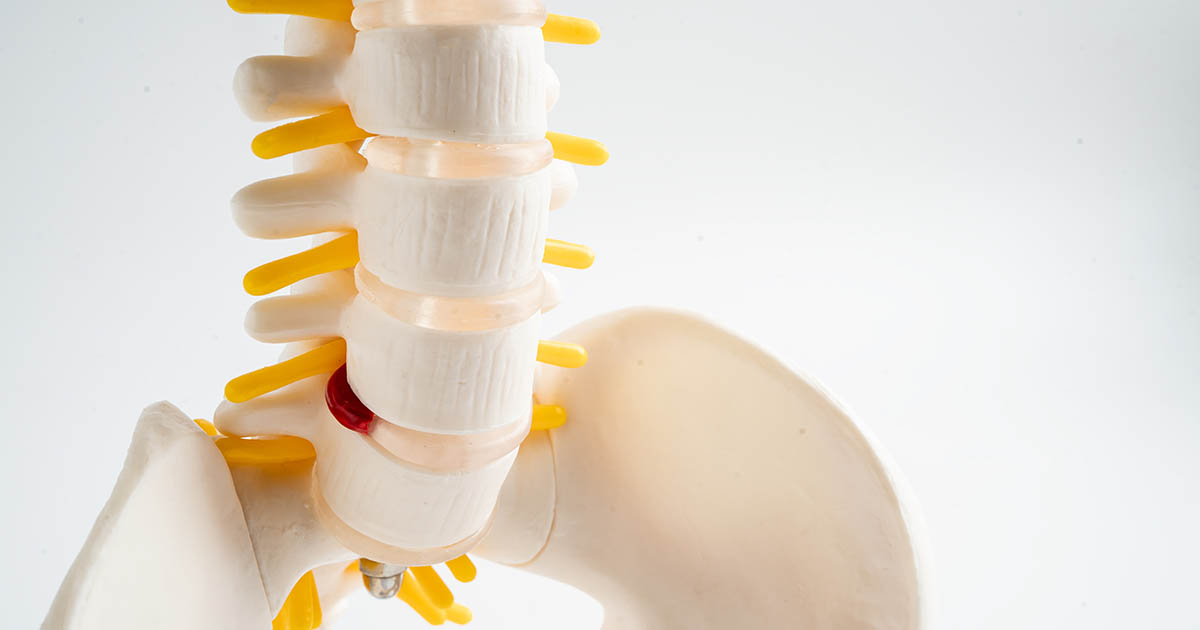
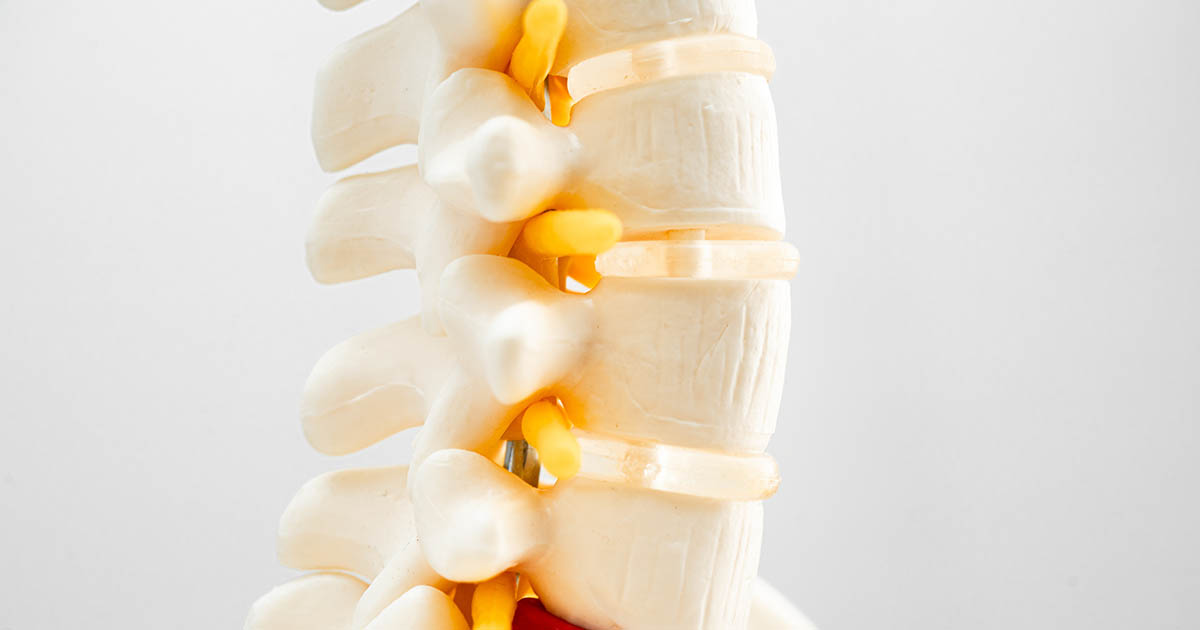
Most people in this situation do two things: they either ignore it and wait, or they assume it is a hip or groin injury and rest. Neither typically fixes the problem. That is because the most overlooked cause of anterior thigh and groin pain is not in the hip, groin, or thigh at all. It originates in the discs and nerve roots of the lower lumbar spine, specifically the L2, L3, and L4 levels.
In over 23 years of practice here in Lakewood Ranch, Dr. Michael Banman sees this pattern regularly: a patient comes in for what they believe is a hip problem and walks out with a clear picture of a lumbar disc compressing the femoral nerve. The treatment direction is completely different, and so are the results when you get it right.
What is the femoral nerve and where does it come from?
The femoral nerve is the largest nerve in the front of the leg. It runs from the lumbar spine (at the L2, L3, and L4 nerve roots), threads through the pelvis, passes under the inguinal ligament in the groin area, and branches into the front of the thigh and the inner lower leg.
Its job is both sensory and motor: it carries sensation from the front and inner thigh, the inner knee, and part of the lower leg, and it powers the quadriceps muscles, the primary muscle group that lets you straighten your knee and walk up stairs. When that nerve gets compressed or irritated at its root in the spine, the entire territory it serves can become painful, weak, or numb.
Compare this with sciatica, which is much better known. Sciatica travels down the back of the leg from the L4-S1 nerve roots. Femoral nerve pain travels down the front. Many patients have heard of sciatica and recognize leg pain as a spine issue when it runs down the back of their leg. But front-of-thigh pain? That rarely registers as a spine problem, which is exactly why it gets missed for months.
The symptoms that point to femoral nerve compression
Femoral nerve irritation from a lumbar disc is not subtle once you know what to look for. The clinical picture tends to be consistent across patients:
- Anterior thigh pain or burning: a deep ache or burning sensation running along the front and inner thigh, sometimes extending to the inner knee
- Groin ache: a diffuse, hard-to-localize pain in the groin or the crease where the thigh meets the pelvis, often mistaken for a hip flexor problem or even a hernia
- Quad weakness: difficulty climbing stairs, standing from a low chair, or getting up from the floor; the leg may feel unreliable or fatigued quickly
- Knee instability: a sense that the knee wants to buckle, especially on uneven ground, because the quadriceps is not firing properly
- Numbness along the inner thigh: a patch of reduced sensation running down the front or inner thigh toward the knee
- Low back pain that comes and goes: the back pain may be mild or even absent during a flare, while the thigh and groin are the dominant complaint
One pattern worth knowing: the pain often gets worse when you extend the hip backward (like stretching a hip flexor or walking upstairs) and improves when you flex the hip forward (pulling the knee toward the chest). This is the opposite of what you see with hip joint pathology. If stretching your hip makes the front-of-thigh pain worse rather than better, your spine is worth a hard look.
Which disc levels are usually responsible
The femoral nerve draws its fibers from three nerve roots: L2, L3, and L4. A herniated or bulging disc at any of these levels can compress the exiting root and produce the femoral nerve symptom pattern. Here is how the levels tend to break down in practice:
- L2-L3 disc herniation: pain and numbness into the upper and outer thigh, sometimes referred into the groin; quad weakness is modest at this level
- L3-L4 disc herniation: the most common level for femoral nerve-type symptoms; anterior thigh and knee pain, diminished knee-jerk reflex, quad weakness notable on stairs
- L4-L5 disc herniation: L4 root involvement here can overlap with both femoral and sciatic symptom patterns, producing anterior thigh numbness alongside some posterior leg pain; this is why some patients have mixed presentations that confuse even experienced clinicians
Degenerative disc disease at these levels can produce a similar picture, especially in patients over 50 in whom the disc height loss gradually narrows the foramen (the opening through which the nerve exits). Unlike a sudden disc herniation, this tends to build slowly over months, which is another reason patients assume it is a hip or aging issue rather than a spine issue.
Why this gets misdiagnosed so often
Three factors work together to keep femoral nerve compression off the diagnostic radar for longer than it should be:
1. The pain is not in the back. Up to 40 percent of patients with lumbar radiculopathy (nerve compression from a disc) have little or no low back pain. The nerve root is irritated, but the back itself does not complain loudly. When a patient comes in reporting only thigh and groin pain with no significant back history, spine is rarely the first thought.
2. Hip pathology is the default assumption. Hip osteoarthritis, hip impingement, iliopsoas bursitis, and hip labrum tears can all produce groin and anterior thigh pain. These conditions are far more commonly evaluated than femoral nerve compression, so patients often cycle through hip-focused treatment first. Some get hip injections. Some are referred to orthopedics. The spine is not examined until months of other treatment have failed.
3. The femoral nerve stretch test is underused. In clinical practice, the straight-leg raise test is used routinely to check for sciatica. Its equivalent for the femoral nerve, called the femoral nerve stretch test (lying prone with the knee bent and the hip extended), is performed less consistently. A positive test reproduces front-of-thigh or groin pain and is highly specific for L2-L4 root involvement. When it is not part of the initial exam, the diagnosis is delayed.
What makes it better and what makes it worse
Understanding the aggravating and relieving positions helps confirm the spinal origin and guides early management while a full evaluation is arranged.
What tends to aggravate femoral nerve pain from the spine:
- Prolonged hip extension (lying prone, walking briskly, sleeping on your stomach)
- Standing for long periods, especially with the lumbar spine extended (an arched low back)
- Going down stairs, which loads the quad while the hip is extended
- Back-bending or extension exercises
- Sitting for long periods in a car seat that tilts the pelvis back
What tends to reduce symptoms:
- Lying on your side with the knees pulled toward the chest (fetal position)
- Sitting in a chair with a slight forward trunk lean
- Walking on a flat surface at a moderate pace (often less painful than standing still)
- A pillow between the knees when sleeping on your side to keep the hips neutral
These positional patterns are the opposite of what you see in most hip joint conditions, where flexion (bending the hip) tends to aggravate rather than relieve. That reversal is a clinical clue worth paying attention to before assuming hip pathology is the source.
How we evaluate this at Spine and Wellness Center Lakewood Ranch
When a patient presents with anterior thigh or groin pain, a thorough evaluation at our clinic includes a detailed history of onset, a postural and movement screen, and manual orthopedic testing including the femoral nerve stretch test, hip range-of-motion tests to rule out primary hip joint pathology, deep tendon reflex assessment (the knee-jerk reflex can be diminished with L4 root involvement), and manual muscle testing of the quadriceps.
X-ray is often taken at the first visit to assess disc space height, alignment, and any bony changes at the L2-L5 levels. If the clinical picture is consistent with nerve root compression and conservative care is planned, we begin treatment and reassess. If the presentation suggests a more severe compression, instability, or does not respond as expected, an MRI referral is arranged to characterize the disc pathology clearly.
For patients whose imaging confirms an L2-L4 disc herniation or significant foraminal narrowing, the non-surgical spinal decompression program in Lakewood Ranch is often the center of their care plan. Decompression creates negative intradiscal pressure that can draw a herniation back toward center and reduce the mechanical load on the compressed nerve root. Many patients with femoral nerve presentations respond well to a structured decompression protocol combined with Class IV laser therapy to reduce local nerve inflammation and adjunct rehabilitation to address the quad weakness that builds up during the painful period.
The pinched nerve evaluation process we use looks at the whole chain: from the disc level in the spine to the nerve's pathway through the pelvis to the muscles it serves. That full-picture approach is what distinguishes a spine-driven treatment plan from a general "hip and thigh" exercise program that addresses the symptom area without touching the actual source.
When to get imaging right away
Most cases of femoral nerve compression from a disc do not require urgent imaging. But certain findings should prompt an expedited MRI or referral:
- Rapid or severe quad weakness developing over days (raising concern for cauda equina involvement at the L3-L4 level)
- Bilateral symptoms (front-of-thigh pain on both sides simultaneously)
- Bowel or bladder changes alongside the leg symptoms
- History of cancer, significant trauma, or unexplained weight loss
- Symptoms that do not begin to improve after 3 to 4 weeks of appropriate conservative care
These are not reasons to panic, but they are reasons to move faster. If any of these apply, contact a provider or the emergency department rather than waiting for a scheduled appointment.
The takeaway
Anterior thigh pain and groin aching are not exotic. They are more common than most patients realize, and the spinal origin is more common than most practitioners check for. The difference between treating a hip flexor strain for six months and identifying an L3-L4 disc compression in the first two weeks is almost entirely a matter of asking the right questions and doing the right physical exam.
If you have front-of-thigh or groin pain in the Lakewood Ranch or Bradenton area that has not responded to rest, stretching, or general treatment, the lower back evaluation is where the answers are more likely to be hiding. That is the conversation worth starting.