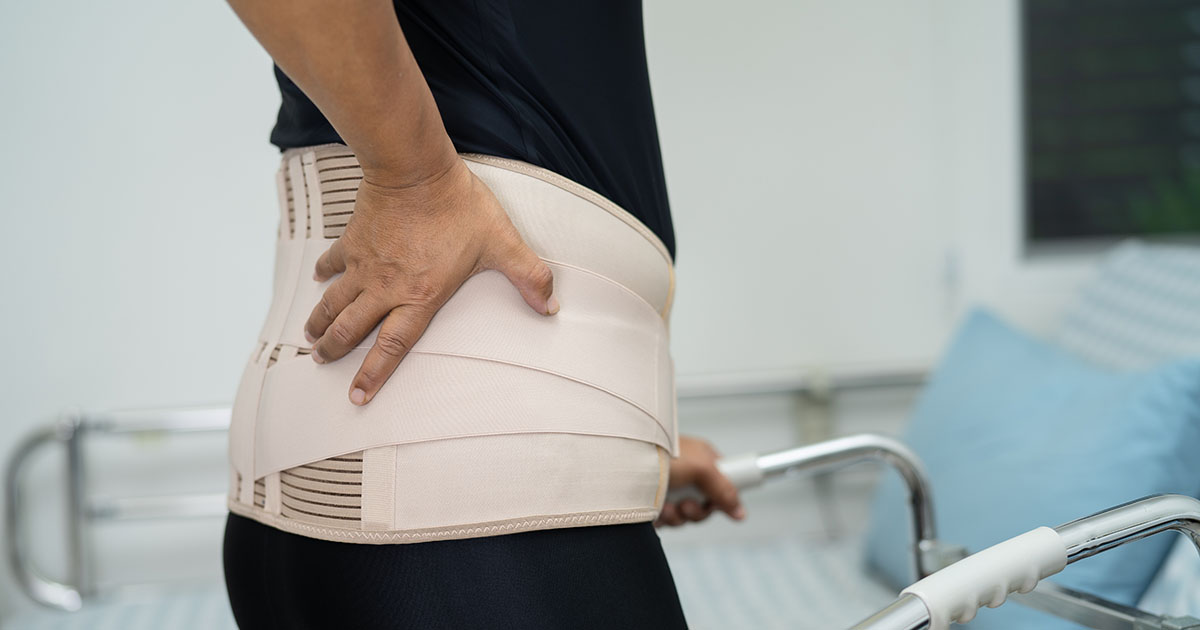


You bent over to pick something up, or you got out of bed, or you simply turned the wrong way, and suddenly the muscles along your spine locked down so hard you could not straighten up. If that sounds familiar, you know exactly how disabling a back spasm can be. What most people do not know is why it keeps happening. Understanding that one thing changes everything about how you respond to it.
At our Lakewood Ranch office, back pain is the most common reason patients walk through the door. Among those patients, muscle spasms are one of the most frequent presenting complaints, and also one of the most misread. People assume they strained a muscle and wait for it to pass. Sometimes it does. Often it comes back, a little worse each time, until one day it does not pass at all. That pattern is what we are trying to help you avoid.
What a Muscle Spasm Actually Is
A spasm is an involuntary, sustained contraction of muscle tissue. Your nervous system sends a continuous signal telling the muscle to stay contracted, and the muscle obeys until either the signal stops or the muscle runs out of fuel and cramps in the contracted state.
In the lower back, this usually involves the erector spinae (the long muscles running alongside the spine), the multifidus (a deeper stabilizer that attaches segment to segment), or both. These are postural muscles that work constantly just to keep you upright. They are already under load every hour you are awake, so when they spasm on top of that baseline demand, the sensation is severe.
The key thing to understand: the spasm is not the injury. It is a response to something the nervous system perceives as a threat to the spine. The muscle is doing exactly what it is designed to do. The question is what it is protecting against.
Think of a muscle spasm the way you would a car alarm. The alarm is not the problem. The problem is whatever triggered it. Turning the alarm off without finding the trigger means it will go off again at the next bump.
Why the Lower Back Spasms More Than Anywhere Else
The lumbar spine carries a disproportionate share of your body's load. Five vertebrae at the base of your spine support the weight of your entire upper body, plus any load you are carrying or lifting. The muscles around those vertebrae are on duty every waking hour.
More importantly, the lower back is where most of the common structural vulnerabilities cluster: the L4-L5 and L5-S1 disc levels account for the vast majority of herniated discs, the lumbar facet joints bear significant compressive load with every step, and the sacroiliac joints at the base of the pelvis are one of the most commonly irritated structures in the body. Any of these can trigger protective muscle guarding when they are stressed beyond their tolerance.
Florida adds a layer of difficulty: heat and humidity accelerate dehydration, and your discs are about 80 percent water. A dehydrated disc loses height and shock-absorbing capacity, which shifts more load to the muscles and facet joints around it. We see this pattern in our Lakewood Ranch patients every summer. Staying well hydrated is one of the simplest things you can do for your spine, and in Florida it matters year-round.
The Most Common Triggers (and What They Share)
Every patient who comes in with a back spasm has a story: "I was just reaching for my coffee mug," or "I sneezed," or "I bent over to tie my shoe." These small moments feel like the cause. They are almost never the cause. They are the last straw.
The most common underlying drivers we find are:
- Disc compression or herniation: A disc under stress or slightly herniated puts pressure on adjacent nerve roots or on the annulus itself. The nervous system responds with muscle guarding to limit movement near the injured level. The "small trigger" moment just pushed an already-loaded disc past its threshold.
- Facet joint irritation: The small joints that link each vertebra can become inflamed from repetitive loading, poor posture, or a direct compressive force. When a facet joint is irritated, the surrounding muscles lock down reflexively.
- Sacroiliac joint dysfunction: The SI joint can develop abnormal movement patterns that stress the ligaments and muscles crossing it. SI-driven spasms are often one-sided and get worse with prolonged sitting or walking.
- Muscle fatigue without adequate recovery: Core and spinal stabilizers that are chronically overworked, whether from a desk job, manual labor, or long periods of inactivity, lose endurance faster. A fatigued muscle reaches its spasm threshold at a much lower workload than a conditioned one.
- Poor movement mechanics over time: Years of bending from the back rather than the hips, carrying weight unevenly, or sitting in a flexed lumbar posture all create repetitive strain on the same structures. The spasm is the cumulative bill coming due.
Notice what most of these have in common: they are not about a single bad movement. They are about a structure that has been under repeated stress, finally reaching a point where the nervous system decides to lock things down.
What Makes a Spasm Stop (and What Keeps It Going)
The short answer: the spasm will calm down when the nervous system decides the threat is managed. That can happen quickly if you address the right thing, or it can cycle on for days or weeks if you only treat the muscle itself.
Things that help in the acute phase:
- Gentle movement. Staying completely still is one of the worst things you can do. The muscle needs circulation. Short, slow walks are better than bed rest in virtually every study done on acute low back pain.
- Heat (for most spasms). Heat increases blood flow and reduces the protective guarding response. Ice can help if there is significant swelling from a fresh injury, but for a pure spasm without trauma, warmth tends to work better.
- Position of relief. For disc-related spasms, lying on your back with knees bent (a supported 90-90 position) often provides significant relief. For facet-related spasms, slight forward flexion can reduce joint compression. The position that gives you relief is a diagnostic clue about the source.
- Hydration. Your discs need water to maintain height and cushion. Even mild dehydration can worsen lumbar compression and extend the spasm cycle.
Things that prolong spasms:
- Repeated muscle relaxants without structural work. Muscle relaxants blunt the signal, but the underlying driver remains. Many patients cycle through muscle relaxants for months without the spasms ever fully resolving because the structure driving the guarding response never gets addressed.
- Complete rest for more than 24 to 48 hours. After the acute phase, rest allows muscles to stiffen further and often makes the next movement worse.
- Ignoring the aggravating mechanics. If a certain movement or posture triggers the spasm and you keep doing it, the nervous system's threat level stays elevated.
- Anxiety about the spasm itself. The nervous system responds to perceived threat, and fear about what is happening to your spine can elevate the guarding response. This is not psychological weakness. It is a documented mechanism. Understanding what is actually going on is itself part of the treatment.
When the Spasm Is Protecting Something Deeper
Most muscle spasms are self-limiting when the underlying driver is mild. But some spasms are guarding something that genuinely needs attention, and missing those is where patients get into trouble.
Red flags worth taking seriously:
- Leg pain, numbness, or tingling along with the spasm. This suggests nerve root involvement, and the spasm is protecting a disc or narrowed canal that is compressing a nerve. This is not a "wait and see" situation.
- Spasms that wake you from sleep or are significantly worse at night. Nighttime pain that is not position-related can indicate inflammatory or systemic causes that need a medical workup.
- Loss of bladder or bowel control with the spasm. This is a medical emergency (potential cauda equina involvement). Go to an emergency room immediately.
- Spasms following significant trauma (a fall, a car accident, a hard landing). The spasm may be guarding a fracture or ligament injury that needs imaging before any manipulation.
- Spasms that return on exactly the same schedule for months despite treatment. Cyclical, predictable recurrence with no resolution suggests a structural problem that has not been identified or corrected.
If you are dealing with recurring spasms and none of these red flags apply, the most useful next step is a structured exam that maps the pattern. Where does it hurt, what position helps, what makes it worse, and how does it behave with different loads? Those answers point to the structure. Once you know the structure, you can treat the cause rather than the symptom.
How We Evaluate Recurring Spasms at Our Office
When a patient comes in with recurring lower back spasms, the first thing Dr. Banman does is take a thorough history. Not just "where does it hurt" but: when did it start, what makes it better, what makes it worse, does it radiate, does it change with position, is there a pattern to the timing? That history usually narrows the field significantly before a single physical test is done.
The physical exam then looks at range of motion under load (which directions reproduce or relieve the pain), palpation of specific joint levels and muscle attachments, neurological screening if there is any leg involvement, and orthopedic testing to stress specific structures and see which ones provoke the response. In roughly 23 years of practice, Dr. Banman has found that a careful physical exam identifies the primary driver in the large majority of straightforward spasm cases, often in one visit.
When imaging is needed, we use what is already there (many patients come in with recent X-rays or MRI reports) or we refer for imaging that will actually change the treatment plan. We do not order imaging reflexively. An X-ray or MRI that shows "degenerative changes" without a corresponding clinical picture does not tell you what is driving the spasm today.
Treatment Approaches That Address the Cause
Once the primary driver is identified, treatment targets that structure directly rather than just managing the muscle spasm.
For disc-related spasms, spinal decompression is one of the most effective tools available. It creates negative intradiscal pressure, which takes load off the compressed disc, allows hydration to reenter the disc material, and reduces the nerve root irritation that is driving the guarding response. Many patients who have been cycling through muscle relaxants and rest notice a meaningful change within the first few sessions of decompression because it addresses the actual structure the muscle was protecting.
For facet and SI joint irritation, chiropractic adjustments restore normal joint motion, which reduces the irritation signal driving the spasm. The relief is often rapid, but more importantly it is durable if the underlying movement patterns that caused the overload are also corrected.
Class IV laser therapy reduces inflammation in the irritated tissues around a joint or disc. It does not replace the structural correction, but it can significantly reduce the recovery window by lowering the inflammatory load the muscle is responding to. We use laser as part of a multi-modal approach for patients in significant pain who need relief faster.
For patients with chronic, recurring spasms tied to muscle fatigue and poor endurance, electrical muscle stimulation (EMS) helps retrain the stabilizing muscles to fire correctly and hold up under longer durations of load, so the threshold for triggering a spasm rises over time. This is particularly relevant for patients with sedentary desk jobs who are in Lakewood Ranch for the long term and want to stay active.
If a herniated disc is the primary driver, the goal is to give that disc the best possible environment to heal: reduce compression, reduce inflammation, restore the mechanical support around it, and modify the activities that are repeatedly re-aggravating it. Most patients with a confirmed disc herniation and associated spasms who commit to a structured care plan do not end up needing surgery. That is not a guarantee, and it is not always the case, but it is what the evidence broadly supports for lumbar disc herniations that do not involve serious neurological compromise.
Patients dealing with peripheral nerve involvement alongside the spasms, where there is burning, tingling, or numbness running down the leg, may benefit from our neuropathy evaluation as well, since the peripheral nerve components sometimes outlast the mechanical driver once the disc or joint has been addressed.
What You Can Do Right Now
If you are in an active spasm, here is a practical starting point:
- Do not panic. A spasm, even a severe one, is rarely a structural emergency. Your body is trying to protect itself. That is the right response, even if it is uncomfortable.
- Find your position of relief and spend 15 to 20 minutes there. This gives the nervous system a clear signal that the threat is reduced.
- Apply gentle heat after the first 24 hours (cold for the first 24 hours if there was a specific traumatic incident).
- Move slowly and as tolerated. Walk around the block if you can. Short, gentle movement is better than lying still.
- Drink water. This sounds simple but lumbar disc hydration is real and it matters in the Florida heat.
- Get evaluated if it does not improve within 3 to 5 days, or sooner if any of the red flags above are present. The longer a structural driver goes unaddressed, the more secondary muscle tension builds around it.