

Your alarm goes off and you swing your legs over the side of the bed already bracing for it: that dull, deep ache in your lower back that takes 20 to 30 minutes to fully settle down. You assume it is from how you slept. Maybe you rolled onto your stomach. Maybe the kids came in at 3 a.m. and you spent the rest of the night crammed to the edge.
But if that same stiffness shows up every morning regardless of how you positioned yourself, the mattress itself may be contributing. Not in a vague "your body needs support" way. In a specific, mechanical way that connects directly to how your lumbar spine and discs load and unload overnight.
At Spine and Wellness Center Lakewood Ranch, Dr. Banman fields this question at least once a week: "Could my mattress be causing my back pain?" After 23 years in practice, the honest answer is: sometimes yes, often partially, and frequently the mattress is amplifying an existing problem rather than being the root cause. This guide breaks down what actually happens, what the research says, and what to do about it whether or not you can afford a new bed this month.
What Happens to Your Spine While You Sleep
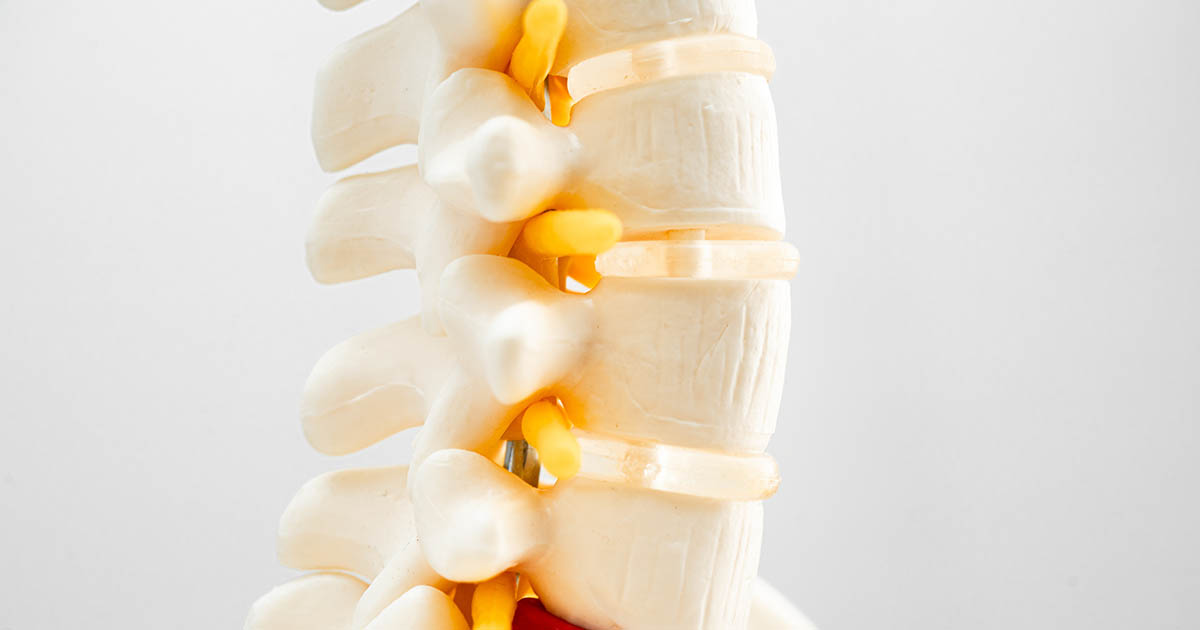
Roughly a third of your life is spent lying down. During those hours, your spine is supposed to recover. The intervertebral discs, the gel-like cushions between each vertebra, rely on nighttime unloading to rehydrate. During the day, body weight compresses the discs and gradually pushes fluid out. At night, when you lie down and reduce axial pressure on the spine, those discs draw fluid back in through a process called imbibition.
For that rehydration to happen properly, the spine needs to maintain something close to its natural alignment throughout the night. A mattress that is too soft lets the lumbar spine sag into flexion, meaning the low back rounds. A mattress that is too firm creates pressure points at the hips and shoulders that push the spine out of lateral alignment. Either scenario means the discs are sitting in a loaded or misaligned position for six to eight hours. That is the window when they are supposed to be recovering.
The result is what clinicians call positional morning stiffness: pain and immobility that peaks on waking and gradually improves over the first 30 to 45 minutes of movement. If that pattern describes your mornings, the sleeping surface is worth a close look.
The Medium-Firm Research: What It Actually Shows
You have probably heard the advice: get a medium-firm mattress. There is legitimate research behind it. A 2003 randomized controlled trial published in The Lancet followed patients with chronic nonspecific low-back pain assigned to either a firm mattress or a medium-firm one. The medium-firm group showed significantly better pain and disability outcomes at 90 days. Similar findings came from a Spanish study in 2015 looking at 313 adults with low-back pain.
The important nuance: "medium-firm" is a marketing category, not an engineering specification. Two mattresses marketed as medium-firm can feel completely different depending on coil tension, foam density, and latex composition. What the research is really pointing at is this: find the firmness level that keeps your lumbar spine in neutral alignment, not the one that feels most comfortable in the showroom for 10 minutes.
Showroom comfort and overnight spinal alignment are not the same thing. A mattress that feels luxuriously soft when you sit on the edge of it may not support your lumbar curve at all once you are lying down for six hours.
In practice, most adults with low-back pain benefit from a surface that is firm enough to prevent excessive lumbar sag but soft enough to allow the bony prominences (hips, shoulders) to sink in slightly and reduce pressure. That range varies by body weight: heavier individuals need more firmness to prevent sag; lighter individuals can tolerate softer surfaces without losing support.
Three Sleeping Positions and What Each Needs
The "right" firmness is also determined by how you sleep.
Side sleeping (the most common position): Side sleeping loads the hips and shoulders more than any other position. If the mattress is too firm, those bony contact points do not sink in enough, and the entire spine gets pushed into lateral curvature. Side sleepers generally benefit from a slightly softer surface than they think they need. A pillow between the knees helps reduce rotational stress on the lower lumbar segments and the sacroiliac joint.
Back sleeping: Sleeping on your back distributes body weight more evenly and is generally well-tolerated by most spinal conditions. The challenge is the lumbar curve: a mattress that is too soft lets the low back drop into flexion; one that is too firm leaves the lumbar curve suspended slightly off the surface. A small pillow placed under the knees gently flattens the lumbar curve and reduces pressure on the posterior disc and facet joints. This position is often what we recommend for patients managing an active herniated or bulging disc.
Stomach sleeping: This is the one position that consistently places the lumbar spine into extension and forces the cervical spine into rotation for hours at a time. For patients with disc pathology, facet joint irritation, or spinal curvature conditions, stomach sleeping often makes morning stiffness worse. If you cannot break the habit, a thin pillow placed under the pelvis reduces the degree of lumbar extension.
When Your Mattress Is the Cause, and When Your Spine Is the Real Problem
This is the distinction that matters most for people who are trying to decide between buying a new mattress and scheduling an evaluation.
A bad mattress can aggravate an existing spinal problem and slow recovery from one. It rarely creates back pain from scratch in someone with otherwise healthy discs, facet joints, and spinal mechanics. What it does more often is lower the threshold: a spine that has mild disc degeneration or early facet joint wear can absorb a mediocre sleep surface for years until the cumulative load tips into daily morning symptoms.
Two signs point toward the mattress being a significant factor:
- Morning stiffness that clears within 30 to 45 minutes of moving around and does not return as severely during the day.
- The stiffness improved when you traveled and slept in a different bed, or worsened after a mattress change.
Two signs point toward the spine being the primary driver:
- You wake up with the same level of pain you had when you went to bed, and it does not improve meaningfully with movement during the day.
- The pain is accompanied by radiating symptoms: leg pain, foot numbness, or weakness that persists through the morning.
Radiating symptoms that do not clear with position changes or morning movement warrant a proper spinal evaluation, not a mattress upgrade. They may indicate disc material contacting a nerve root, stenosis, or another structural issue that no sleep surface can address. For patients with a confirmed degenerative disc disease diagnosis, the mattress is one piece of a larger picture.
What to Do If You Cannot Replace the Mattress Right Now
Not every household can absorb a $1,500 mattress purchase this month. Some practical options that cost less:
- A 2-to-3-inch memory foam or latex topper: If your current mattress is too firm, a softer topper can redistribute pressure at the hips and shoulders for side sleepers without full replacement cost. If the mattress is too soft, a firm topper helps less because the underlying mattress typically wins.
- Pillow adjustments for your sleeping position: A pillow between the knees for side sleepers, or under the knees for back sleepers, costs almost nothing and immediately reduces mechanical load on the lower lumbar segments.
- A brief morning movement routine before getting up: Five to ten slow knee-to-chest repetitions while still lying down gently pumps the facet joints and helps rehydrate the disc surfaces. It does not fix a bad mattress, but it narrows the symptomatic window in the morning.
- Check the mattress age: Innerspring mattresses typically lose meaningful support after seven to eight years as the coils relax and the comfort layers compress. If your mattress sags visibly in the center or holds your body shape after you get up, those coils have been done for a while.
Nighttime Recovery and Your Discs: Why the Hours Matter
For patients with a diagnosed disc issue, the overnight window is not just about symptom management. It is when the disc has its best opportunity to pull fluid back in and partially restore its height. A well-supported neutral spine at night creates the conditions for that recovery. A poorly supported one keeps the disc under low-grade compression or tension all night.
This is part of why we ask about sleep position and mattress type during the intake process for our spinal decompression program at our Lakewood Ranch clinic. Decompression therapy creates a precisely controlled negative intradiscal pressure during the session, drawing fluid and nutrients back into the disc. If a patient then sleeps for six hours with the disc loaded in a poor position, the mattress is partially working against the treatment. Sleep surface is not just a lifestyle question. It is a clinical one.
For a detailed breakdown of which sleep positions work best with a disc condition specifically, see our guide on best sleep positions for a herniated disc.
What We See at Our Clinic
A few patterns repeat regularly over 23 years of treating low-back patients in Lakewood Ranch and the broader Bradenton and Sarasota area.
Patients who move from an old, sagging innerspring mattress to a new medium-firm one report meaningful morning improvement even when nothing else in their care plan changed. The spine literally gets a chance to sit in neutral all night instead of in a hammock shape.
Patients on deep memory foam mattresses sometimes develop hip flexor tightness because the foam conforms around them and holds them in slight hip flexion all night. They wake up stiff in the front of the hip, not the back, and mistake it for a low-back problem. The fix is often a firmer surface, not more stretching.
Patients with scoliosis present the most complex picture. Generic firmness advice does not apply well to a curved spine because the pressure distribution across the mattress surface is asymmetrical. For those patients, a surface that allows the body to shift position during the night, without holding them locked into one posture, often works better than a firm orthopedic-style mattress.
If you are dealing with persistent morning stiffness, back pain that does not fully resolve during the day, or you have a diagnosed disc condition and want to understand how your sleep setup is affecting your recovery, schedule an evaluation. Sometimes the answer is a $30 topper and a different pillow arrangement. Sometimes it is a decompression program or targeted chiropractic care. The examination tells us which direction makes sense for your specific spine.