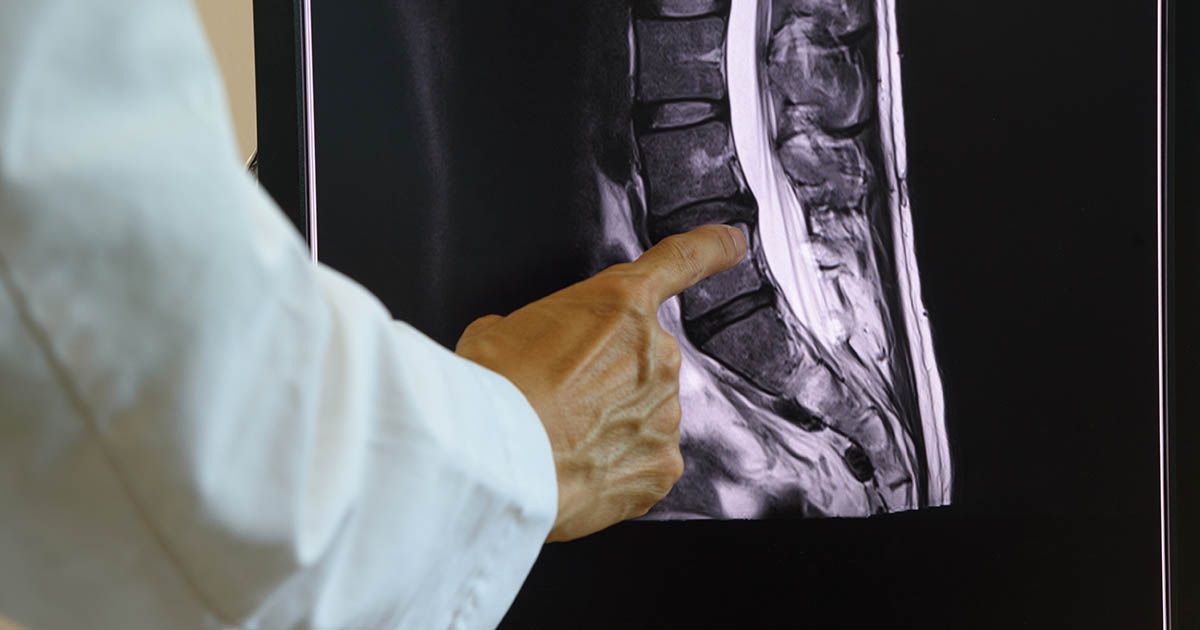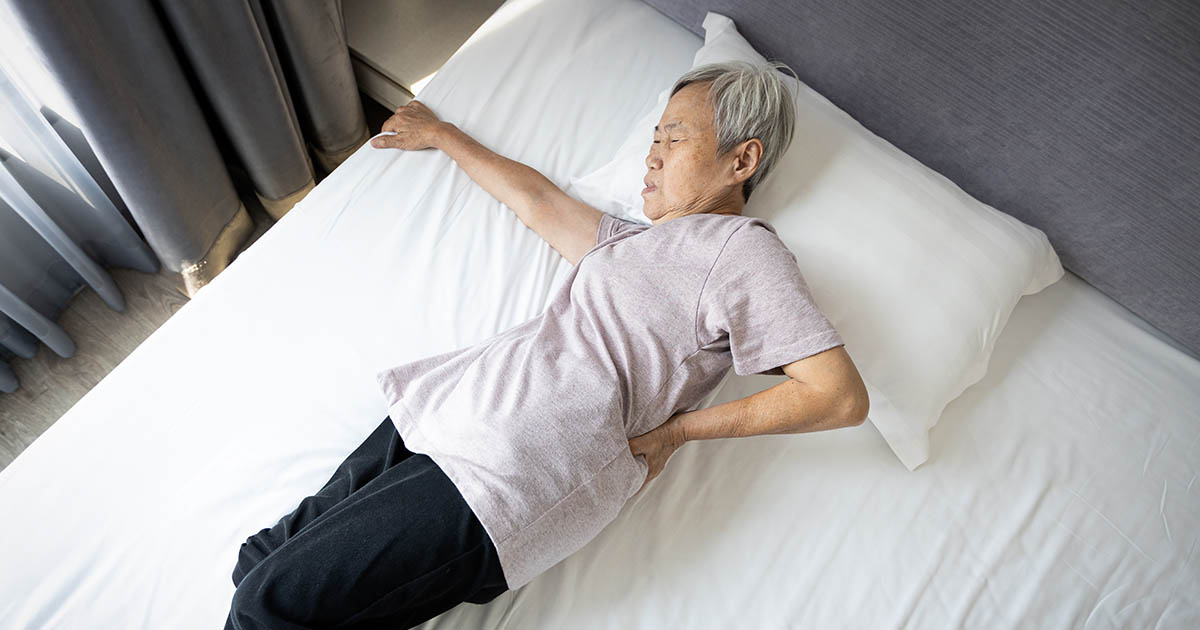


You have been active your whole life. You walk, you stretch, maybe you swim or pick up pickleball on the weekends. But somewhere in your mid-to-late 40s, something changed. The back pain that used to come and go now comes and stays. Morning stiffness lasts longer. A single long car ride or afternoon of gardening wipes you out for two days. And no one has given you a straight answer about why.
Here is a direct one: estrogen plays a significant structural role in your spine, your discs, and your connective tissue. When estrogen levels fluctuate and eventually decline during perimenopause and menopause, those tissues feel it. This is not a minor hormonal footnote. Many patients we see for back pain in Lakewood Ranch are women in this exact window, and understanding what is actually happening in their bodies changes how we approach care.
What Estrogen Actually Does for Your Spine
Most people think of estrogen as a reproductive hormone. That is accurate but incomplete. Estrogen receptors exist throughout your musculoskeletal system: in the discs between your vertebrae, in the ligaments that hold your joints together, and in bone tissue itself. Estrogen acts as a kind of structural maintenance signal. It supports collagen production in ligaments. It helps regulate the cells that maintain bone density. It has anti-inflammatory properties that keep baseline joint inflammation in check.
During perimenopause, which can start anywhere from the early 40s to the mid-50s, estrogen does not just gradually decline. It swings. Levels spike and fall unpredictably for years before they settle at a consistently lower postmenopausal baseline. That swing is part of why so many patients describe this period as their worst: the body is not in a stable low-estrogen state yet, it is in a volatile transition.
By the time full menopause is established (defined as 12 consecutive months without a period), the structural effects on the spine have often been building for five to seven years already.
The Four Spine Changes That Happen in This Window
These four changes happen simultaneously, and their overlap is what makes back pain in this life stage feel so different from the back pain you may have had in your 30s.
1. Disc Dehydration Accelerates
Intervertebral discs are roughly 70 to 90 percent water when you are young. That water content is what gives them their shock-absorbing properties. Disc hydration declines naturally with age, but research suggests estrogen plays a role in maintaining disc nutrition through the cartilaginous end plates. When estrogen falls, disc dehydration tends to accelerate. The result is discs that compress more under load, sit closer to nerves, and take longer to rehydrate overnight. That is the mechanical reason morning stiffness gets worse in this decade.
This process connects directly to degenerative disc disease, which is far more common in women over 50 than most patients realize when they first hear the diagnosis.
2. Bone Density Begins to Drop
Estrogen suppresses osteoclast activity, the process by which bone is broken down and resorbed. When estrogen declines, bone resorption outpaces bone formation. The spine is one of the first places this shows up on imaging because vertebral bodies are mostly trabecular (spongy) bone, which remodels faster than cortical (dense, outer) bone.
Mild bone density loss does not cause pain directly. But it does make vertebrae more vulnerable to microfractures under normal daily loads, and it means the architecture of the spine is literally changing. A spine with lower bone density distributes compressive force differently. Some patients notice this as a new kind of deep ache in the thoracic or lumbar spine that does not behave like a muscle problem.
3. Core Muscle Mass Decreases
Estrogen and testosterone both contribute to muscle maintenance. As both hormones decline in the perimenopause years, women can lose lean muscle mass faster than at any prior point in their adult lives. The muscles most relevant to your back are the deep stabilizers: the multifidus along the spine, the pelvic floor, and the transverse abdominis. These are not the muscles you see in a mirror. They are the muscles that hold your vertebrae in place under load.
When these stabilizers lose mass and firing efficiency, the spine is less protected. Joint surfaces contact with less cushion. Small movements that the stabilizers used to absorb silently now translate into pain. This is the piece that responds well to targeted rehabilitation and the right kind of spinal care.
4. Systemic Inflammation Increases
Estrogen has well-documented anti-inflammatory properties. Lower estrogen means higher baseline inflammatory signaling. For many women, this shows up not just in the spine but in the knees, hands, and hips as well. The back pain feels more diffuse, more achy, harder to localize to a single spot. It also tends to be more sensitive to sleep disruption, stress, and dietary factors than mechanical back pain in younger patients.
The Pain and Sleep Cycle (and How It Feeds Itself)
Back pain and sleep are tied together in a feedback loop that gets tighter during perimenopause. Night sweats and hormonal sleep disruption reduce deep-sleep time. Deep sleep is when the body repairs connective tissue and discs. Less repair means more pain the next day. More pain means more difficulty falling asleep. It is genuinely circular, and it is why some patients describe their back as getting progressively worse over a period of six to eighteen months without a single acute injury triggering it.
Several patients in our Lakewood Ranch practice have described this as the mystery that no one could explain: their back was getting worse year over year, they had not had an accident, their imaging from a few years prior looked "fine," and they had started to wonder if they were just falling apart. They were not. There was a structural explanation, and a plan.
Sleep quality is not something we can directly treat at a chiropractic clinic. But reducing the pain load that is disrupting sleep, improving spinal mechanics through non-surgical spinal decompression, and addressing the inflammatory component with Class IV laser therapy can reduce the degree to which back pain is stealing sleep. When we get the mechanical side under better control, many patients report that their overall sleep quality improves as a secondary benefit.
Conditions That Become More Common in This Window
Perimenopause does not cause these conditions, but the structural changes above create conditions under which existing vulnerabilities become symptomatic. The most common ones we see:
- Degenerative disc disease: Often silent for years, it tends to become symptomatic as disc height decreases and nerve root clearance narrows. Read more on our degenerative disc disease page.
- Lumbar spinal stenosis: Bone remodeling can cause facet joint overgrowth that narrows the spinal canal. Walking becomes difficult after a few blocks, and sitting relieves it.
- Adult scoliosis progression: Women who had mild childhood curves often see curve progression after menopause as bone density decreases. Dr. Banman sees adults in this situation regularly. More on adult scoliosis bracing and management.
- Sacroiliac joint dysfunction: Ligament laxity from hormonal changes can destabilize the SI joint, causing pain at the base of the spine and into the buttocks that is often mistaken for sciatica.
- Piriformis syndrome: The same ligament changes affect the piriformis muscle's relationship to the sciatic nerve. Pain runs down the leg but originates in the hip, not the disc.
What We Check When You Come In
When a patient in this demographic presents at our Lakewood Ranch office, we do not assume the pain is a simple mechanical strain. The evaluation is more thorough because the picture is more complex.
Dr. Banman will assess posture, spinal segmental motion, neurological screening, and hip and pelvic mechanics. If imaging exists from the past two to three years, we review it. If not, we will discuss whether X-ray or MRI adds meaningful information to the treatment plan (for suspected significant bone density changes, we typically recommend coordinating with your primary care physician for a DEXA scan).
The goal of the first visit is a clear, honest answer to the question: what is actually driving your pain, and what can we do about it without surgery? That second part matters. Surgery is almost never the right first step for the conditions described above, but that does not mean you have to accept chronic pain as your new normal.
What Treatment Looks Like for This Patient Profile
There is no single protocol, because the combination of disc changes, bone density reduction, muscle weakening, and inflammation varies from patient to patient. That said, the treatments that tend to work well in this group include:
- Spinal decompression: Gently creates negative intradiscal pressure to rehydrate discs and reduce nerve compression. Particularly effective for the disc desiccation pattern described above. Non-invasive, no surgery, no injections.
- Class IV laser therapy: Delivers photobiomodulation energy to inflamed tissue at a therapeutic dose. In our experience, patients with the elevated baseline inflammation common in this decade respond well to a course of laser combined with spinal work.
- Chiropractic adjustments: With reduced bone density, we adjust technique accordingly. Dr. Banman's 23+ years of experience means he can deliver effective joint mobilization without the high-velocity forces that would be inappropriate for a patient with osteopenia.
- Electrical muscle stimulation (EMS): Targets the deep stabilizers that have lost tone, helping rebuild the neuromuscular firing patterns that protect the spine under load.
- Hyperbaric oxygen therapy (HBOT): For patients with significant inflammatory load or post-injury tissue repair needs, HBOT is available at our clinic. The increased oxygen saturation supports cellular repair in connective tissue.
For patients with more complex needs, including those exploring regenerative options, we also work with a Colombia-based regenerative medicine partner. Dr. Banman offers consultations about regenerative medicine, and these procedures are not performed at our Lakewood Ranch office. We can discuss whether that pathway makes sense for your specific situation.
Red Flags That Need More Than Chiropractic Care
Most back pain in this demographic is manageable with the approach above. But some presentations need more urgent attention. Go to the emergency department or contact your physician directly if you experience:
- Sudden onset of severe back pain after a minor fall or movement (possible compression fracture)
- New bladder or bowel changes alongside back pain (cauda equina syndrome, a surgical emergency)
- Back pain accompanied by unexplained weight loss, night sweats that feel different from hot flashes, or fever
- Leg weakness that comes on suddenly rather than gradually
- Pain that is severe and constant and worsens lying flat
These presentations are uncommon, but we want every patient to know the line. If you are unsure, call us. We would rather help you triage than have you wait on something that needs faster attention.
A Practical Starting Point
If your back has shifted over the past one to three years and you are in your 40s or 50s, the most useful thing you can do is get a real evaluation. Not a screening, not a quick adjustment from someone who has not looked at your spine mechanics properly. A real assessment that maps what is actually happening structurally.
At Spine and Wellness Center Lakewood Ranch, that is where we start: understanding the specific pattern driving your pain, so the treatment has a reason behind it. Dr. Banman has been doing this work for 23 years in this community, and this patient profile is one he knows well.
Call us at (727) 213-2982 or book online at celluron.janeapp.com to schedule your evaluation.