

Two treatment tables at Spine and Wellness Center in Lakewood Ranch see more combined use than anything else in the office: the decompression table and the Class IV laser. They get used in sequence, not in rotation. That is not because one was working better some weeks and one was working better others. It is because disc injuries produce two overlapping problems that respond to entirely different mechanisms, and addressing only one of them is why so many patients plateau after a few good weeks and then backslide.
If you have been dealing with disc-related pain long enough to research your options, you have probably read about non-surgical spinal decompression in Lakewood Ranch and about laser therapy separately. What is less discussed is why running them in a specific sequence produces a fundamentally different result than each treatment alone. That is what this piece is actually about.
Two Problems That Live Inside One Disc
A compressed or herniated disc creates two distinct problems that tend to get lumped together under the phrase "disc pain." They are not the same thing, and they do not respond to the same treatments.
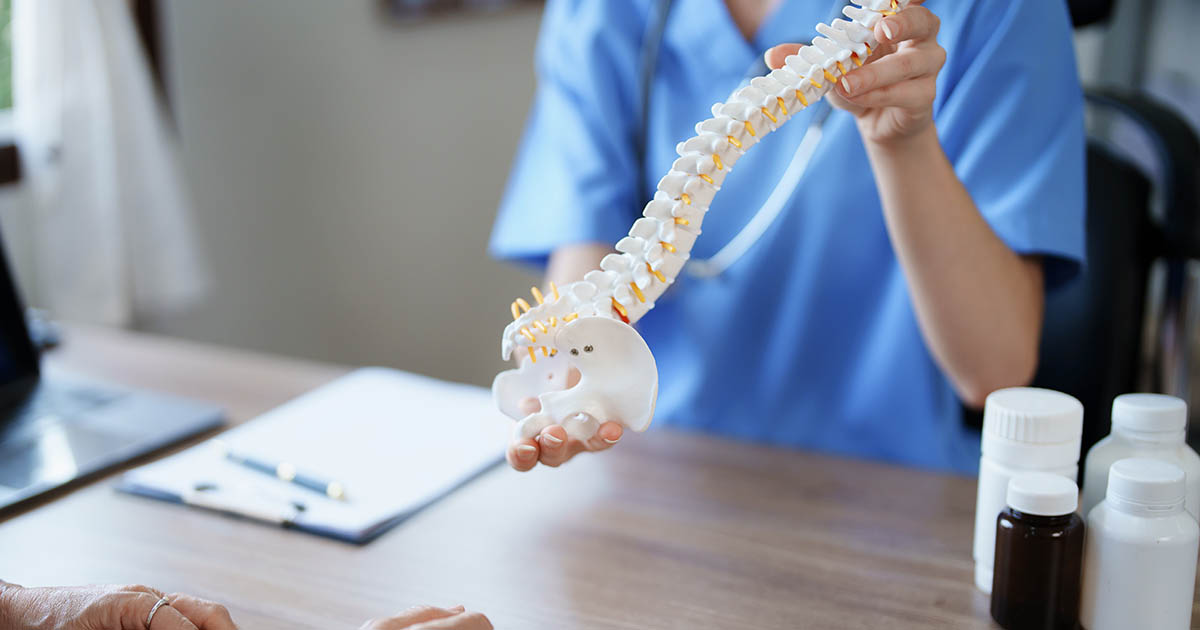
The first is mechanical: intradiscal pressure. When a disc is compressed beyond its normal load-bearing range, the inner nucleus pulposus can migrate outward. In a bulge, it presses on the outer annulus. In a herniation, it makes contact with the spinal canal and potentially with the nerve root running through it. That pressure is what creates the sharp, searing, or shooting pain many patients describe. It is a mechanical event with a mechanical cause.
The second is biochemical: an inflammatory cascade. When disc material contacts the nerve root, or when the annulus tears and releases disc chemicals into the surrounding space, the body responds with local inflammation. Macrophages arrive. Prostaglandins and substance P are released. Nerve root inflammation produces its own symptoms: burning, tingling, hypersensitivity to touch, and a diffuse aching that is different from the sharp pain of direct nerve compression. These two problems overlap in time, but they are driven by different mechanisms.
Here is the implication that matters clinically: a treatment that is good at reducing mechanical pressure does almost nothing about the biochemical inflammation. A treatment that reduces local inflammation does not change intradiscal pressure. Most single-modality programs address one and call it done. The other problem continues, which is why patients often feel 60 or 70 percent better and then stop improving. For more on how herniated disc care addresses the full picture, the condition page walks through both dimensions.
What Spinal Decompression Actually Does to a Compressed Disc
Spinal decompression uses a motorized traction table to create controlled negative pressure inside the disc space. The table cycles through phases of tension and partial release. That cycling does two things.
First, it reduces intradiscal pressure enough that the nucleus can shift away from the nerve root. The research on this is consistent: properly dosed decompression creates measurable negative intradiscal pressure in the range of negative 150 to negative 160 mmHg, which is enough to draw migrated disc material back toward the center of the disc. That is the mechanical relief patients feel in the first few sessions when it is working.
Second, the cycling creates a diffusion gradient. Adult discs have no direct blood supply after roughly age eight. They depend entirely on diffusion from the cartilaginous endplates to receive oxygen, water, and nutrients. Chronic compression that reduces the disc's ability to pull in nutrients also slows its ability to heal. Decompression that is well-dosed and well-timed restores that diffusion gradient. The disc gets back some of what it needs to repair damaged tissue over the course of a full program.
What decompression does not do: it does not clear the inflammatory mediators that accumulated during the compression event. The nerve root that was compressed may no longer be under mechanical pressure, but it is still sitting in a chemical environment that is keeping it sensitized. This is where decompression reaches its limit, and where Class IV laser picks up.
Decompression creates the mechanical conditions where healing becomes possible. That is a different claim than "decompression heals the disc," and it is the honest one. The disc does the healing. The treatment creates the environment.
What Class IV Laser Does to Inflamed Nerve Tissue
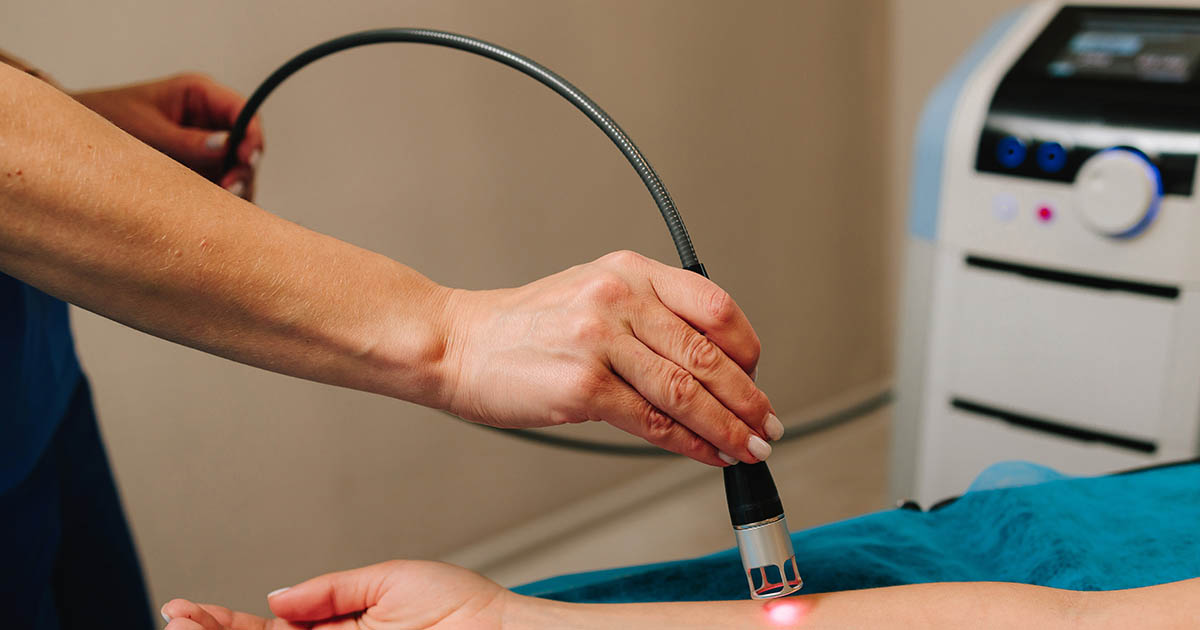
Class IV laser delivers photons of light in the 810 to 980 nanometer wavelength range. At that frequency, photons penetrate through skin, subcutaneous fat, and paraspinal muscle to reach the deeper structures: the disc, the periradicular tissue around the nerve root, and the dorsal root ganglion. This is the tissue that matters in disc-related pain, and it is exactly what makes Class IV laser different from the lower-wattage "cold laser" devices you may have encountered elsewhere. For a full breakdown of how the two compare, see our post on the difference between Class IV and cold laser.
Inside that target tissue, the photons interact with cytochrome C oxidase, a protein in the mitochondria. The interaction increases ATP production in the cell, which accelerates cellular repair. More relevant to disc patients: it reduces local prostaglandin synthesis and speeds clearance of substance P from the periradicular space. These are the specific inflammatory mediators responsible for the burning, tingling, and hypersensitivity symptoms that persist even after decompression has addressed the mechanical compression.
The treatment itself is short. A laser pass over the affected lumbar or cervical level takes 6 to 10 minutes per site. Patients feel a warm, sometimes pulsing sensation. There is no recovery time. The anti-inflammatory effect is measurable in the tissue, but the symptom change is typically gradual, building session by session rather than producing an immediate dramatic shift.
Why the Order Matters: Decompression Before Laser
This is the part that distinguishes a coordinated care program from two separate treatments happening to occur in the same clinic. The sequence is decompression first, laser second, same visit.
The reason comes down to tissue state at the moment of treatment. Decompression reduces intradiscal pressure and opens the posterior disc space mechanically. The nerve root, which was under compressive force, has a bit more room. Blood flow and lymphatic drainage in the periradicular tissue improve modestly after the mechanical load is reduced. The disc is in its best mechanical state of the session at the moment decompression ends.
Running laser on that tissue takes advantage of everything decompression just accomplished. You are delivering photobiomodulation to tissue that is decompressed, not tissue still under maximal load. The anti-inflammatory effect is working on a nerve root that is no longer being mechanically irritated in the same moment. The two mechanisms are not just additive; they are complementary in a time-dependent way.
Running laser before decompression is not harmful, but it does not produce the same result. You are treating inflamed tissue while the disc is still compressed. Decompression then follows and can still do its mechanical work, but the laser effect you just applied was delivered to tissue under load. The analogy is imperfect but useful: it is like running the anti-inflammatory treatment while the source of inflammation is still active, then addressing the source. Getting the source first and then clearing the inflammation is the more logical order, and the clinical outcomes in our Lakewood Ranch office reflect that.
What a Session Actually Looks Like
A combined decompression and laser session at Spine and Wellness Center runs 40 to 50 minutes. Here is what happens inside that time:
- Decompression phase (15 to 25 minutes): The patient lies on the motorized traction table. The tension protocol is set based on the specific disc level involved, the patient's body weight, the presenting complaint, and how previous sessions have gone. It is not a one-size number. The table cycles through pull-and-release phases. Most patients describe a gentle stretching sensation with no pain during treatment.
- Transition assessment (2 to 3 minutes): Dr. Banman checks in before starting laser. Pain level post-decompression, any change in referral pattern, whether the leg or arm symptoms shifted during the session. This informs the laser protocol for that visit, including which dermatomes to treat and at what dose.
- Class IV laser (6 to 12 minutes): The laser handpiece moves across the affected spinal level and, when leg or arm referral is present, over the dermatome in the referral zone. For a patient with L4-L5 disc herniation producing sciatica into the calf, that means treating both the posterior lumbar spine and the calf region. The nerve pathway gets treated, not just the spine.
- Post-session check: Brief range-of-motion assessment, comparison to pre-session baseline. Changes in referral pattern from session to session are one of the reliable indicators of whether the program is working.
The number of sessions in a program depends on how severe the injury is, how long it has been present, and how quickly the patient responds. Acute herniations under six weeks often respond faster than chronic degenerative disc disease that has been building for years. In our experience, patients typically begin noticing a meaningful shift in symptoms within 4 to 6 sessions. A full program commonly runs 12 to 20 visits, though that varies considerably based on the individual presentation. The back pain evaluation at the first visit is what determines whether that timeline applies to a given patient.
Who Responds Best to This Combination
Not every patient is the right candidate. The presentation that tends to respond well to combined decompression and laser has a few consistent features:
- Disc herniation, bulge, or degenerative disc disease confirmed on MRI or imaging, not just suspected from symptoms
- Referred pain as a dominant complaint: sciatica into the leg, or cervical radiculopathy producing arm pain or hand numbness
- Pain that has not resolved with stretching, rest, NSAIDs, or massage alone
- No prior surgical hardware at the affected spinal level (implants are a contraindication for decompression)
- No active fracture, tumor, or severe segmental instability at the involved level
Patients whose pain is primarily from facet joint irritation, SI joint dysfunction, or purely muscular strain respond better to different approaches. Part of what the intake evaluation identifies is which category you are in. Running 20 sessions of decompression and laser on a patient who has facet syndrome and not a disc problem is not going to produce the response the program predicts. The intake exam is specifically designed to filter for this, because starting the right program matters as much as the program itself.
Cervical disc herniations producing arm pain are also candidates for this approach, with a different mechanical setup for the decompression phase. Many patients in Bradenton and Sarasota who have been dealing with arm numbness or cervical radiculopathy for months have gone through this program before reaching a surgical consultation, with favorable outcomes in a meaningful proportion of cases. What "favorable" means in a specific case is something Dr. Banman can assess only after reviewing the relevant imaging and symptoms.
What to Expect Honestly
These are things this practice will not claim: that every herniated disc resolves, that laser "heals" tissue, that decompression works for every patient with disc pain.
These are the things that are accurate based on 23 years of treating disc injuries in Lakewood Ranch: a meaningful number of patients who were heading toward surgical consultations have returned to function without surgery after completing a full decompression and laser program; sciatica and referral symptoms often improve before local back pain does, which sometimes surprises patients; disc rehydration on follow-up imaging is documented in some cases, though not consistently or universally.
The goal is to give the disc and the nerve root the mechanical and biochemical conditions in which the body's own repair processes can operate. That is a conservative, non-invasive position that belongs early in the decision tree for most disc-related presentations. For patients who have already had an injection or two and are wondering what comes next before agreeing to surgery, this is a conversation worth having.
If you are in Lakewood Ranch, Bradenton, or Sarasota and are dealing with disc-related sciatica, leg numbness, or radiating arm pain from a cervical disc injury, a combined decompression and laser evaluation with Dr. Banman will tell you whether your specific presentation is a good match for this approach. That assessment is not an upsell to the program. It is a filter. Some presentations are not good candidates, and we will tell you that clearly so you can pursue the approach that actually fits your situation.