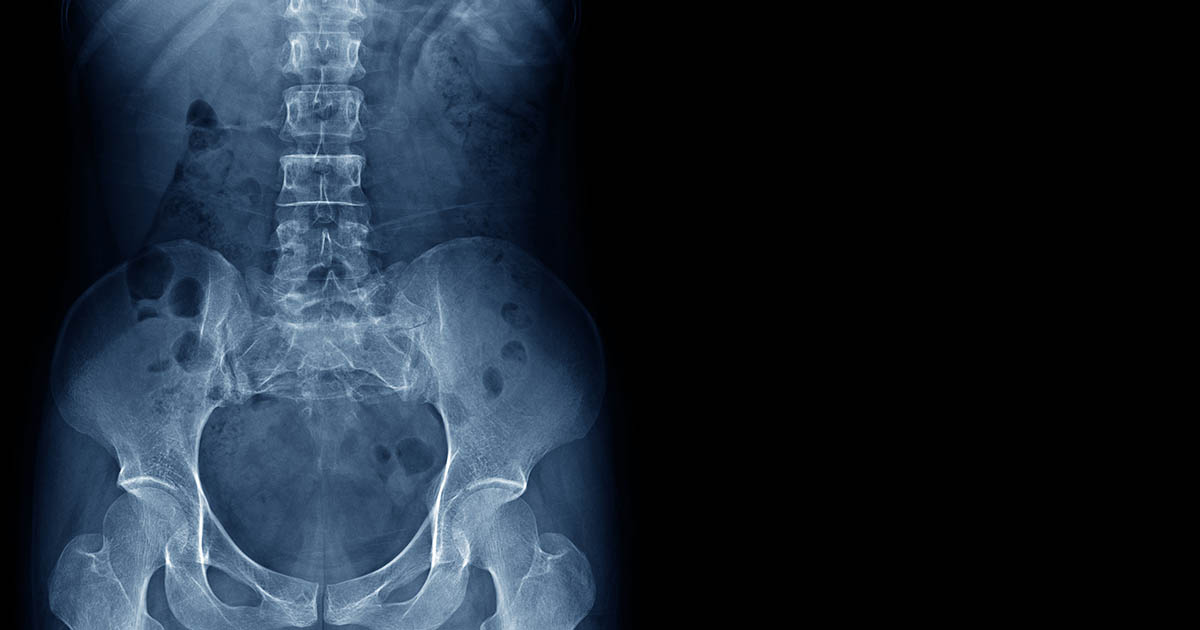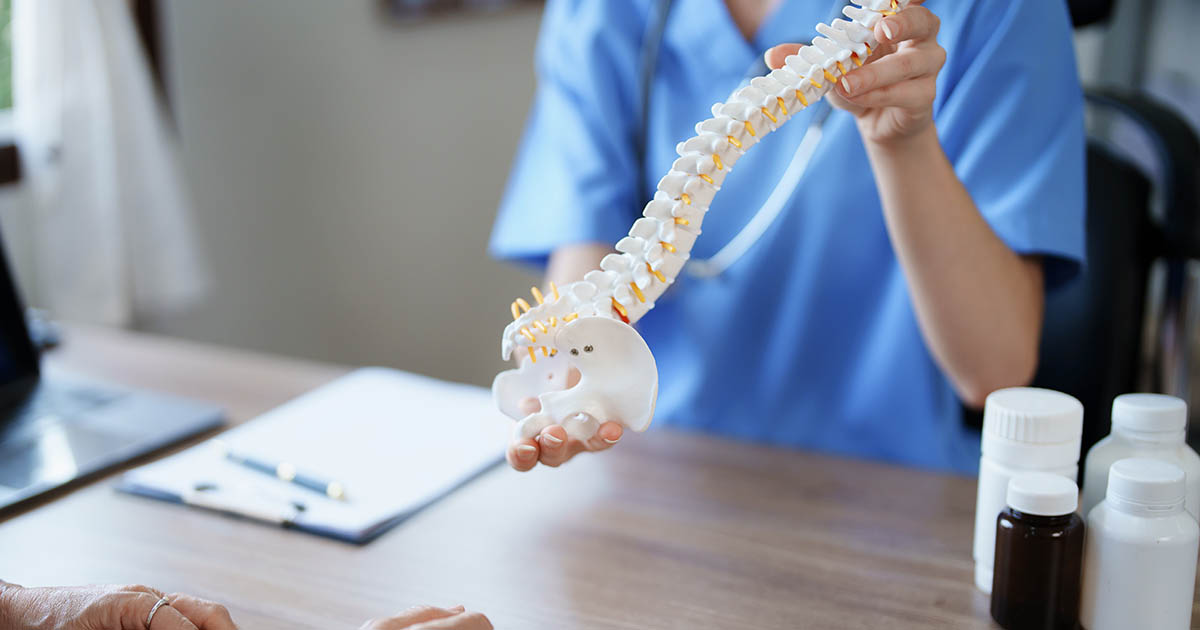


In 23 years of evaluating back pain patients at our Lakewood Ranch clinic, one complaint comes up more often than almost any other: "It's always the left side" (or the right). Not spread evenly across the lower back. One side, consistently. Sometimes just a dull ache; sometimes a sharp catch when bending; sometimes a deep throb that radiates into the hip or leg.
People assume it's "the way they sleep" or "from an old injury." Those explanations are not always wrong, but they rarely get to the actual driver. One-sided back pain almost always reflects a specific structural pattern, and identifying which one determines whether treatment works or just cycles through temporary relief.
This post walks through the most common causes of asymmetric back pain we see, what each one feels like, and how we sort them out. If you have been living with pain that is consistently worse on one side, understanding these patterns is the first step toward actually fixing it. For a broader look at how we approach back pain in Lakewood Ranch, start there.
Why One Side? The Short Answer
Your spine is designed to function symmetrically, but very few of us actually move, sit, sleep, or load it symmetrically. Years of dominant-side habits, old injuries that healed asymmetrically, subtle differences in leg length, or structural changes in the disc or facet joints can all create conditions where one side bears more load or more irritation than the other.
That asymmetry shows up as pain on the more-loaded or more-irritated side. The location of the pain (left vs. right, upper vs. lower, deep vs. surface) narrows down which structure is involved.
Disc Herniation: the Most Common Culprit
A disc herniation does not happen in the middle of the disc. It happens at a weak point, usually toward the posterior-lateral corner, and it almost always presses on the nerve root on that one side. That is why classic disc pain is one-sided: left L4-L5 herniation, left leg pain; right L5-S1 herniation, right leg pain.
The pattern is consistent enough that an experienced clinician can often predict which disc and which side before seeing the MRI. Left-sided lower back pain that radiates down the left buttock into the outer calf and top of the foot points toward the L4-L5 or L5-S1 level on the left. Right-sided pain that shoots into the right groin or inner thigh suggests L3-L4 on the right.
One-sided disc pain often intensifies with sitting (especially in a car), worsens when bending forward or coughing, and gets at least temporarily better when walking or lying flat. If that matches your pattern, the herniated disc page explains the non-surgical approaches we use most often, including spinal decompression targeting the specific affected level.
Sacroiliac (SI) Joint Dysfunction
The sacroiliac joint connects your sacrum (the bottom of your spine) to the ilium (the back of your pelvis) on each side. Pain here is almost exclusively one-sided, and it is one of the most commonly missed sources of low back pain. Studies suggest that roughly 15 to 25 percent of chronic low back pain cases involve the SI joint as a primary driver.
SI joint pain sits in a very specific location: just below and slightly lateral to the small dimples in your lower back. It often feels like a deep, achy throb that spreads into the buttock and occasionally down the back of the thigh. It flares when getting in or out of a car, rolling over in bed, climbing stairs, or standing on one leg.
The textbook SI joint pain patient: a woman who recently had a baby or a man who had a fall directly onto one side of the pelvis. But we see it just as often in long-distance runners, golfers with a dominant swing side, and anyone who sits with their weight shifted to one hip habitually.
What makes SI joint dysfunction tricky is that the pain can radiate enough to mimic sciatica, and the two are frequently confused. The key distinction: true SI joint pain stops at the knee; sciatic nerve pain from a disc goes below the knee, often into the foot. If you have been told you have sciatica but the pain never really goes past the knee or into the calf, SI joint involvement is worth evaluating.
Facet Joint Irritation on One Side
Every vertebra has two facet joints connecting it to the one above and two connecting it to the one below. Wear, arthritis, or mechanical overload can inflame any individual facet, and because each joint is located on either the left or right side of the spine, irritation is by definition one-sided.
Facet pain tends to be a local, achy discomfort that worsens when you lean back or twist toward the painful side. Standing up from a chair or getting out of bed in the morning is often the worst moment. Unlike disc pain, facet pain usually does not radiate below the knee and does not get significantly worse with sitting.
Facet problems at the lumbar level concentrate pain in the lower back and buttock. Cervical (neck) facet irritation often produces one-sided neck pain and headache at the base of the skull. If you have asked yourself "why does my headache always start on the same side," a cervical facet or the suboccipital muscles referencing from that side is a common answer.
Spinal Curvature and Structural Asymmetry
A lateral curve in the spine (scoliosis) shifts the center of gravity and creates uneven loading. The concave side of the curve bears more compressive load; the convex side experiences more tension. Depending on where you are in the curve and what your daily activities look like, this can produce pain that is consistently worse on one side.
Adults who did not have scoliosis diagnosed as kids can still develop what is called degenerative scoliosis, where years of asymmetric disc wear or muscle imbalance gradually tilt the spine. Unlike adolescent scoliosis, which is usually painless, adult-onset or degenerative curvature is often accompanied by chronic one-sided aching that slowly worsens.
Dr. Banman holds a master-level scoliosis certification, which means structural screening for curvature is part of every intake at our clinic. Mild curves that are caught and addressed early respond well to conservative care. Unchecked, they can progress to the point where they are causing significant nerve compression or balance issues. The scoliosis care page outlines how we approach this in adult patients.
Leg Length Discrepancy
A difference in leg length (even as small as 6 to 8 millimeters) causes the pelvis to tilt. The tilt shifts the spine off-center, and the body compensates by developing a compensatory curve. Over time, the muscles and joints on the high side of the pelvis bear more load, which almost always produces one-sided pain on the same side as the short leg.
Structural leg length differences (where the bones themselves are different lengths) are relatively uncommon. Functional leg length differences (where the pelvis is tilted due to hip or muscle asymmetry, making one leg appear shorter) are extremely common and frequently go undetected for years.
Diagnosing this takes a specific assessment: most standard back pain evaluations do not include a leg-length check. We do it as part of every intake. When a functional leg length difference is involved, correcting the pelvic tilt often produces dramatic improvement in pain that has been mislabeled as "just" chronic low back pain.
Piriformis and Hip Rotator Involvement
The piriformis is a small muscle deep in the buttock that runs from the sacrum to the top of the femur. It sits directly adjacent to the sciatic nerve, and in a subset of the population, the nerve actually passes through the muscle. When the piriformis is tight, irritated, or in spasm, it can compress the sciatic nerve and produce one-sided buttock and leg pain that is virtually indistinguishable from disc-driven sciatica on a symptom report alone.
Piriformis issues tend to flare up with prolonged sitting, climbing stairs, and any exercise involving hip external rotation (running, cycling, pickleball). They are often worse after a long drive, which is one reason piriformis tightness gets confused with disc problems in our Lakewood Ranch patient population (I-75 driving patterns do not help).
The clinical tell: piriformis pain reproduces or worsens when the hip is passively rotated internally with the knee extended. Disc pain does not behave that way. A thorough physical examination separates the two.
When One-Sided Back Pain Needs Immediate Attention
Most one-sided back pain is musculoskeletal and not medically urgent. But some patterns warrant a prompt call to your doctor or an ER visit rather than waiting to schedule a routine appointment:
- Pain accompanied by fever, chills, or unexplained weight loss. These can signal infection or, rarely, a tumor affecting the spine.
- One-sided flank pain that is not positional. This can point to kidney involvement rather than the spine.
- Sudden severe one-sided pain radiating to the groin in men over 50. Aortic aneurysm must be ruled out before assuming a musculoskeletal cause.
- Progressive weakness in the leg on the same side as the pain. Foot drop or significant loss of strength requires urgent imaging.
- Loss of bowel or bladder control alongside back pain. This is a cauda equina red flag; go to the ER.
If none of those apply and your one-sided pain is chronic or recurring, the more likely story is one of the structural patterns above, and that is something we can evaluate and address conservatively.
What the First Visit Looks Like at Our Lakewood Ranch Clinic
When a patient comes in with consistently one-sided back pain, the evaluation starts with a detailed history: which side, how long, what makes it better or worse, what activities provoke it, whether it radiates, and where. That history alone narrows the field significantly.
The physical exam includes orthopedic and neurological testing specific to the suspected structure: a straight-leg raise and slump test for disc; Patrick's FABER test for SI joint; Kemp's test for facet; leg-length assessment for pelvic tilt; piriformis stretch and FAIR test for piriformis syndrome. When appropriate, we review imaging that you bring in, or we refer for X-ray or MRI if the clinical picture calls for it.
By the end of that first visit, you will know which structure we believe is driving the pain and why. You will also have a clear sense of whether your situation is likely to respond to conservative care (the large majority of one-sided pain cases do) and what that care looks like, including spinal decompression for disc cases, joint mobilization and specific exercise progressions for facet and SI joint issues, or a combination depending on how complex the picture is.
Many patients have been through multiple rounds of treatment without getting a clear structural answer. That is the starting point we address. Understanding what is actually driving the asymmetry is what makes the treatment stick.
The Bottom Line on Asymmetric Back Pain
Pain that is worse on one side than the other is not random. It reflects a pattern, and that pattern points to a structure. The most common drivers are disc herniation on that side, SI joint dysfunction, one-sided facet irritation, spinal curvature creating uneven loading, leg length discrepancy tilting the pelvis, or piriformis tightness compressing the sciatic nerve.
Each of those has a different treatment approach, which is why a correct structural diagnosis matters before committing to any particular program. Walking in with "I have back pain" and walking out with a generic exercise sheet does not address the asymmetry. Walking in, identifying the specific structure, and addressing it directly is what actually changes the pattern.
If your back pain is consistently worse on one side in the Bradenton, Sarasota, or Lakewood Ranch area and you have not gotten a clear structural explanation, that is exactly what we do on a first visit. For context on how we approach other conditions that can look like one-sided back pain, the conditions page is a useful starting point.