

In 23 years of practice in Lakewood Ranch and the greater Bradenton-Sarasota area, one of the more difficult conversations I have is with patients who come in after spinal surgery. They did everything right. They saw a specialist. They went through the procedure. They followed the recovery protocol. And the pain did not go away. In some cases it is worse.
This is not a rare outcome. The medical literature on chronic back pain consistently shows that a significant percentage of lumbar spine surgeries, particularly fusions and discectomies, do not fully resolve symptoms. When a patient continues to experience pain after a procedure that was supposed to correct the source, the clinical term is Failed Back Surgery Syndrome, or FBSS.
The name can feel defeating. It is not meant to be. It is a diagnostic category that opens a door, not closes one. Here is what it actually means, why it happens, and what the non-surgical options look like from this point forward.
What Failed Back Surgery Syndrome Actually Means
FBSS is not a single diagnosis. It is a description: persistent or new-onset pain in the lower back, legs, or both, following one or more spine surgeries that were intended to relieve it. The pain can take many forms. Axial low back pain, which is aching or pressure across the lumbar region. Radicular pain, which shoots or burns down the leg, often following the path of the sciatic nerve. Neurogenic claudication, a heaviness or weakness in the legs that worsens with walking. Or some combination of all three.
Studies estimate that somewhere between 10 and 40 percent of patients undergoing lumbar spine procedures experience FBSS-level outcomes. The range is wide because the definition is broad and the underlying causes vary significantly, but even the lower end of that estimate represents a very large number of people.
Pain after surgery is not a sign that your case is hopeless or that nothing can be done. It is a sign that the source driving your symptoms was not fully resolved by the procedure, or that a new structural problem has emerged, or that the nervous system is responding in a way surgery cannot directly address.
The Most Common Reasons Pain Persists
Understanding why surgery did not resolve the pain matters because treatment options differ depending on the mechanism. The most frequently identified causes include:
- Adjacent segment disease: After a lumbar fusion, the levels above and below the fused segment carry more mechanical load than they did before. Over time, this accelerates degeneration at those levels. A patient may be pain-free for a year or two before new symptoms emerge from the segment next door.
- Epidural fibrosis (scar tissue): During healing after a discectomy or laminectomy, scar tissue forms around the nerve roots in the epidural space. When that scar tissue tethers or compresses a nerve root, it produces pain and radicular symptoms that can be indistinguishable from the original disc problem.
- Residual or recurrent disc herniation: The fragment removed during surgery was only part of the problem, or the disc re-herniated at the same level. This is more common than most patients realize, and it is identifiable on follow-up imaging.
- Incorrect level treated: The level identified preoperatively may not have been the actual pain generator, particularly if the patient had multilevel disease. The surgery addressed one level while the symptomatic level was left alone.
- Central sensitization: After prolonged exposure to pain signals, the central nervous system can become hypersensitive in ways that persist even after the structural source is corrected. The nerve pathways involved in pain perception become, in a sense, trained to fire. This is not "all in your head"; it is a measurable neurological change.
- Instability post-laminectomy: Removing too much of the posterior elements can leave the segment mechanically unstable, generating pain with movement that was not present before the procedure.
In many cases, more than one of these mechanisms is operating simultaneously. A thorough clinical evaluation, including updated imaging compared against the pre-surgical baseline, is necessary to identify which ones are relevant for a particular patient.
Why More Surgery Is Not Always the Answer
The instinct after a failed surgery is sometimes to consider another one. For specific, well-defined structural problems, revision surgery has a role. Adjacent segment disease with new compression on a nerve root at a clean level, for example, may be surgically addressable. But the research on repeat lumbar surgery is sobering: outcomes tend to deteriorate with each subsequent procedure. The second surgery has a lower success rate than the first. The third is lower still.
This is one reason why, for many FBSS patients, the most productive path forward runs through non-surgical care rather than back to the operating room. The goal shifts from "fix the structure" to "reduce the load on structures that are now different than they were before the surgery" and "help the nervous system recalibrate its pain response."
That is a genuinely achievable goal. It requires a different type of evaluation than a pre-surgical workup, and it requires treatments that are appropriate for a post-surgical spine. Not every modality that helps an un-operated disc condition is the right choice after fusion or laminectomy. The evaluation matters as much as the treatment.
Non-Surgical Decompression After Spine Surgery
One of the questions I hear most often from post-surgical patients in Lakewood Ranch is whether non-surgical spinal decompression is an option after they have already had a procedure. The answer depends on the type and level of surgery.
Patients who have had a single-level discectomy without fusion are often good candidates for decompression therapy, particularly if a recurrent herniation or residual disc material is contributing to ongoing nerve root compression. The decompression protocol is adjusted based on post-surgical anatomy, but the mechanism, creating negative intradiscal pressure to facilitate disc retraction and fluid exchange, still applies.
Patients with single-level or two-level fusion present more complexity. The fused levels are not targets for decompression in the usual sense, but the adjacent levels that are now under increased mechanical stress may be. A full evaluation that includes updated imaging and functional assessment determines whether there is a non-fused level that would respond to decompression.
What I always make clear to post-surgical patients is that decompression is not a second attempt at what the surgery tried to do. It addresses the disc and joint mechanics of the levels that are still mobile and still affected. It is not appropriate for every FBSS patient, but for those where adjacent segment loading or a non-fused level is the primary pain driver, many patients in this situation report meaningful improvement.
Nerve Recovery and the Neuropathy Angle
Nerve damage that persists after surgery is a separate problem from structural compression, and it requires a different category of intervention. Epidural fibrosis and prolonged pre-surgical nerve compression can both leave the nerve in a state of incomplete recovery. The nerve is no longer being crushed, but it has not fully regained its normal function. The result is burning, numbness, tingling, or weakness that continues long after the structural problem is addressed.
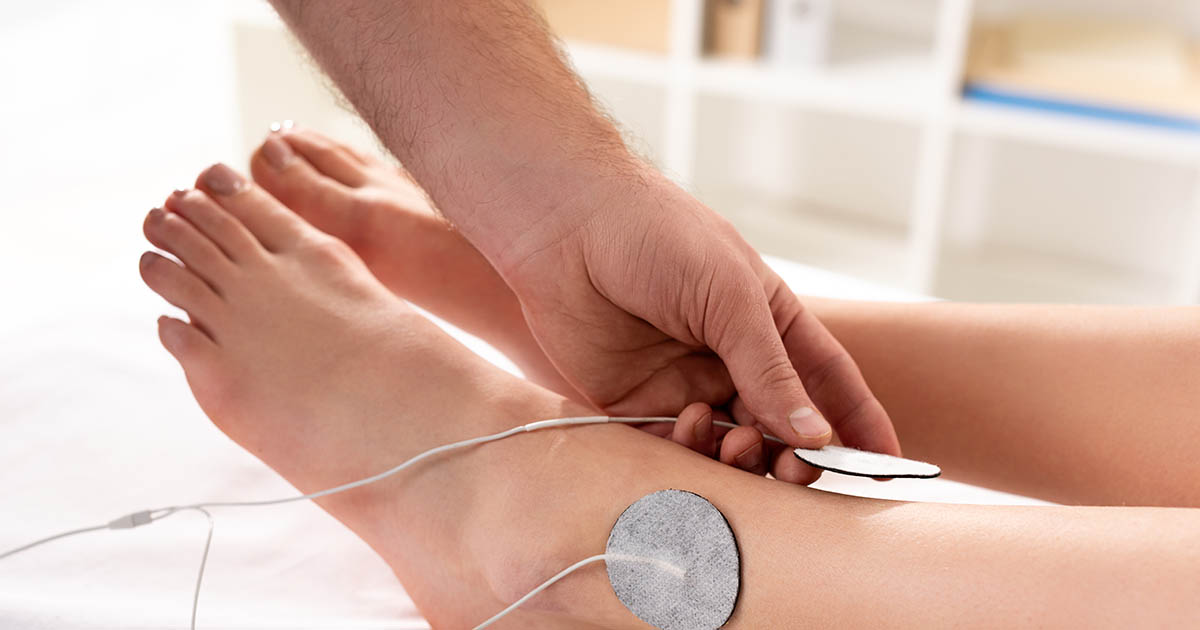
This is where our neuropathy program at Lakewood Ranch becomes relevant for some FBSS patients. The program combines Class IV laser, electrical muscle stimulation, and nutritional support. For patients dealing with the aftermath of nerve injury rather than ongoing compression, Dr. Banman can tell you whether it is a reasonable fit. Results vary from person to person.
The distinction matters because patients often assume that if the nerve is not compressed anymore, nothing can be done for their numbness or burning. That is not accurate. Nerve tissue has the capacity to repair and regenerate, particularly in the peripheral nervous system, and supporting that process actively produces better outcomes than waiting for it to happen on its own.
Regenerative Medicine as a Post-Surgical Option
For FBSS patients where disc degeneration at non-fused levels is a significant contributor, and where conventional conservative care has reached its ceiling, regenerative medicine is worth a serious conversation. The clinic works with a Colombia-based regenerative medicine partner, and Dr. Banman offers consultations about regenerative medicine. These procedures are not performed at our Lakewood Ranch office.
I am careful about how I frame this. Regenerative medicine for spinal conditions is not a guaranteed fix. The evidence base is still developing, the right patient selection matters enormously, and outcomes vary. What the approach offers for selected FBSS patients is a biological intervention targeting the disc tissue and the local inflammatory environment, rather than another mechanical or electrical treatment aimed at the nervous system. For patients who have already tried multiple conservative modalities without full resolution, it is a legitimate next step to consider.
The Colombia program is not the right fit for everyone. The evaluation process is thorough, and many patients do not end up proceeding. For those who want to explore it, a consultation is the place to start.
Building a Plan That Fits Your Specific Surgery
The most important thing I can tell a post-surgical back pain patient is this: the evaluation for FBSS needs to be specific to what was done and what the current anatomy looks like. A generic "conservative care" approach applied without reference to surgical history is often ineffective, not because the modalities are wrong, but because they are not targeted to the actual current source of pain.
When we see a post-surgical patient at our Lakewood Ranch office, the intake process includes a detailed review of the surgical record, pre-surgical and post-surgical imaging, and a physical exam designed to differentiate between structural, neurological, and mechanical contributors. The result is a care plan that reflects what the spine actually looks like right now, not what it looked like before the surgery.
If you have had a lumbar procedure and the pain has not resolved the way you expected, the path forward is not resignation and it is not necessarily another surgery. For more on what the first visit looks like for a patient coming to us with prior surgical history, see our post on chiropractic care after back surgery.
A Word on Realistic Expectations
FBSS is a genuinely difficult clinical situation. I would be doing patients a disservice if I suggested that post-surgical spines always respond as well as un-operated spines. They often do not. Scar tissue has changed the anatomy. Fusion has altered the mechanics. Nerve injury may be partially irreversible. The honest conversation is not "we will get you back to before surgery." It is "we will identify what is still modifiable and work systematically to reduce your pain and improve your function."
For many FBSS patients, that means getting from a 7 out of 10 pain level to a 3 or 4, improving sleep, being able to walk further before leg symptoms appear, and reducing dependence on pain medication. Those outcomes are achievable for a meaningful percentage of patients who have been told they have exhausted their options. The key is a clear-eyed evaluation of what specifically is driving the pain, followed by a care plan built around that finding rather than around a generic protocol.