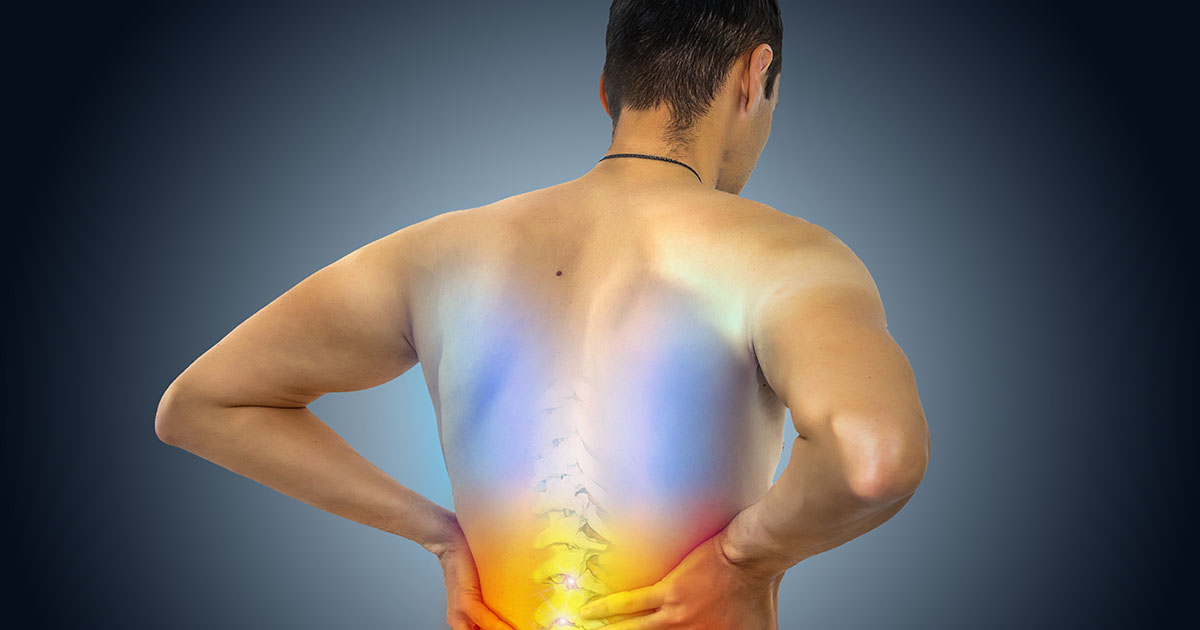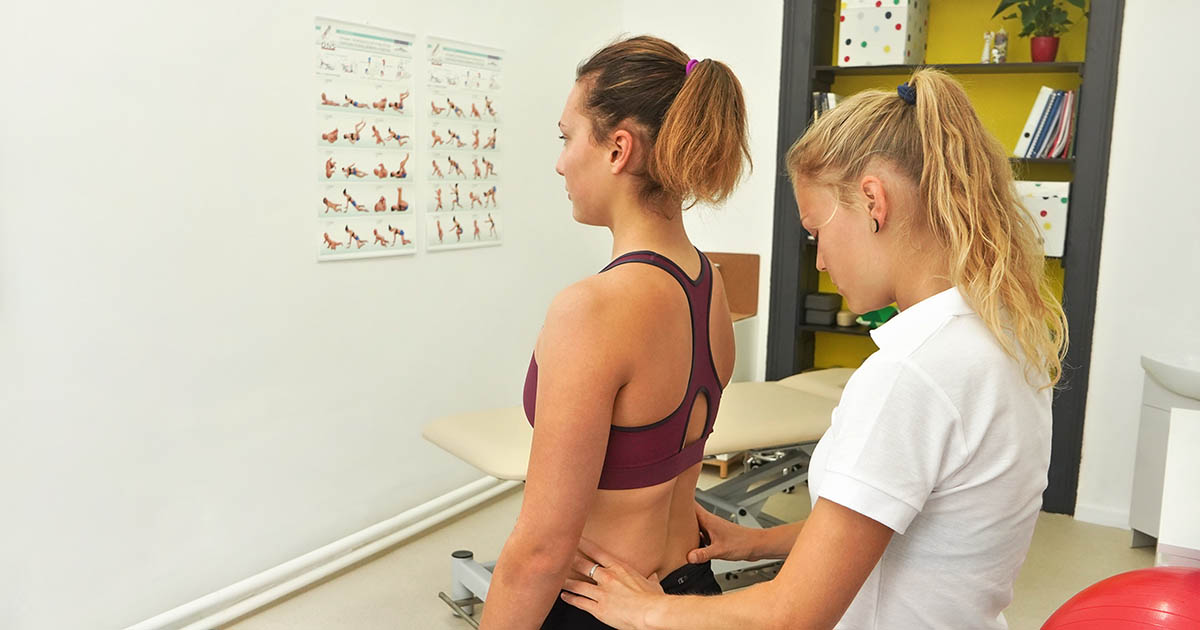


Lower back pain is one of the most common reasons patients visit our Lakewood Ranch office, and the psoas is involved more often than any one diagnosis captures. It is not a mysterious or rare culprit. It is the primary hip flexor, an essential spinal stabilizer, and one of the most chronically shortened muscles in the modern body. When it goes wrong, it mimics disc herniation, inflames the sacroiliac joint, and sends referred pain into the groin and front of the hip. Understanding it changes the conversation about lower back pain entirely.
This post walks through what the psoas actually is, how to tell if it is part of your problem, and what happens when you address it directly.
What the Psoas Is and Where It Lives
The psoas major (pronounced "SO-as") originates from the front surfaces of the lumbar vertebrae, specifically L1 through L5, with additional fibers from the last thoracic vertebra. It runs diagonally forward and down through the pelvis, combines with the iliacus muscle to form the iliopsoas, and attaches to the lesser trochanter of the femur on the inside of your upper thigh.
That path is the key detail. The psoas is the only muscle that directly connects the lumbar spine to the leg. Every step you take, every time you rise from a chair, every time you climb stairs, the psoas fires. When it functions well, it keeps your lumbar lordosis balanced and your hip flexion smooth. When it is chronically tight, it pulls the lumbar vertebrae forward and downward, compressing the posterior disc space and loading the facet joints in a way that feels, to the patient, exactly like a lumbar disc problem.
Why the Psoas Gets Tight
Sitting is the answer most people expect, and they are right, but not in the way they think. Sitting does not stretch the psoas. It holds the psoas in a shortened, contracted position for hours at a time. By the time you stand up, the muscle has partially "set" at that shortened length. Over weeks and months, this becomes structural: the resting length of the muscle shortens, the attachment points draw closer together, and the lumbar spine gets pulled into anterior tilt whether you are sitting or standing.
Other contributors:
- Repeated hip flexion at work or in sport (cycling, rowing, soccer, any activity where you repeatedly pull the knee to the chest).
- Unresolved disc injury: a painful lumbar disc triggers a protective muscle spasm in surrounding structures, the psoas included. The disc may heal while the psoas stays guarded.
- Leg length discrepancy: even a small difference in leg length loads the psoas asymmetrically, producing a tighter side that correlates almost exactly with the painful side of the low back.
- Emotional stress: the psoas shares fascial connections with the diaphragm and is directly affected by the fight-or-flight response. Chronic stress creates chronic psoas tension. Patients sometimes notice this as a sense of "clenching" deep in the abdomen during high-stress periods.
How a Tight Psoas Produces Back Pain
There are three distinct mechanisms, and in most patients we see at least two of them operating at the same time.
Mechanism 1: Direct lumbar compression
A short psoas pulls the lumbar spine into hyperextension, compressing the facet joints and narrowing the disc space on the posterior side. The pain is usually worse when standing for long periods, relieved somewhat by lying on your back with knees bent (which slackens the psoas), and aggravated by extending backward. Patients often describe it as a "deep ache" they cannot quite locate, sometimes felt more in the SI joint region than the midline.
Mechanism 2: Disc loading via anterior pelvic tilt
The psoas attaches to the lumbar vertebrae and, when tight, tips the pelvis forward. This increases the lumbar curve and shifts disc load posteriorly, exactly where most lumbar herniations occur. In patients with a known disc issue, we often find that psoas involvement is what prevents the disc from decompressing fully between episodes. This is why some patients respond partially to spinal decompression therapy but continue to re-aggravate: the underlying anterior pelvic tilt keeps reloading the disc as soon as they return to normal activity.
Mechanism 3: Nerve approximation near the lumbar plexus
The femoral nerve and portions of the lumbar plexus pass through and alongside the psoas muscle. A hypertonic (overly tight) psoas can exert mechanical pressure on these nerves, producing symptoms that run into the groin, the front of the thigh, or even down to the knee. Patients with this pattern often assume they have sciatica, but the distribution is different: true sciatica tracks down the back of the leg, while psoas-related nerve involvement typically affects the front and inside of the thigh.
In clinical practice, the difference between "I have sciatica" and "I have psoas-driven nerve pain" can look nearly identical to the patient but responds to completely different treatment. Getting the diagnosis right matters before committing to a care plan.
Signs That the Psoas Is Part of Your Problem
No single sign is definitive, but the following pattern raises strong suspicion:
- Low back pain that is worse when you stand upright after sitting for a long time, especially if you feel a pull or ache in the front of the hip as well.
- Pain that improves when you lie on your back with knees up, worsens when you lie flat.
- A sense of tightness or stiffness in the groin or front of the hip that seems connected to your back symptoms.
- Back pain that flares after cycling, stair climbing, or any repeated hip-flexion activity.
- Difficulty standing fully upright for the first several minutes after getting out of bed or a car.
- Lower back symptoms that have not responded to treatment aimed only at the posterior spine (injections, manipulation of the lumbar facets, standard physical therapy for the low back).
The last point is the one that brings many patients through our door. They have tried care elsewhere, and it helped somewhat but not completely. Often, what was missed was the anterior component: the psoas pulling the spine forward while the treatment was addressing only the posterior compression.
How We Assess Psoas Involvement in Lakewood Ranch
A psoas assessment includes several parts. The Thomas Test is the most commonly used: the patient lies supine on a table, pulls both knees to the chest, then lowers one leg. Inability to fully extend the lowered leg flat indicates psoas tightness on that side. The degree of restriction correlates roughly with the severity of anterior pull on the lumbar spine.
We also assess:
- Pelvic tilt angle (anterior vs. neutral vs. posterior)
- Hip flexion range of motion, comparing sides
- Lumbar flexion and extension patterns
- Tenderness on palpation of the psoas via the abdomen (a specific technique done gently, lateral to the navel)
- Gait analysis, because psoas tightness produces a characteristic shortened stride on the affected side
This is distinct from a standard lumbar evaluation, and it is one of the reasons a multi-component exam matters. If you have a herniated disc and a tight psoas, treating only one of them leaves the other problem actively working against your recovery.
Treatment Options When the Psoas Is Involved
Treatment depends on what else is going on in the spine, but some consistent principles apply.
Manual release of the psoas: Direct, gentle palpation and sustained pressure on the psoas body, accessed through the abdomen, can reduce resting muscle tone. This is not aggressive and patients often feel a referred sensation into the hip or thigh during the release, then a noticeable improvement in their ability to stand upright. Several sessions are typically needed, and results hold better when combined with home mobility work.
Addressing the spine structurally: The psoas is pulling the lumbar vertebrae forward. Chiropractic adjustment of the lumbar spine reduces joint restriction caused by that anterior pull and gives the muscle less to "protect." In our experience, manual psoas work and lumbar adjustment together produce faster and more durable results than either alone.
Spinal decompression for disc component: When psoas involvement has been loading the posterior disc for months, the disc itself is often involved. Spinal decompression creates negative intradiscal pressure, helping retract disc material and reduce nerve irritation. Addressing the disc load directly, alongside the psoas, is often what breaks the cycle for patients who have been in pain for more than a few months.
Class IV laser: Inflammatory changes around the psoas attachment at the lumbar spine respond well to photobiomodulation. Many patients notice a reduction in deep ache within two to three sessions when laser is added to the care plan.
Rehabilitation and movement retraining: The psoas needs to be lengthened through specific stretching, but also strengthened through hip extension and anti-rotation work. A weak psoas is as problematic as a tight one. The goal is a muscle that has its full range of motion and can fire at the right moment in the gait cycle without compensating into the lumbar spine.
What You Can Do Now
A few things are safe to start before your first appointment and may reduce your discomfort in the short term.
The kneeling hip-flexor stretch targets the psoas more directly than a standing version. Kneel on one knee (the side you want to stretch), keep your torso upright, and shift your weight forward until you feel a stretch at the front of the hip on the kneeling side. Do not let your low back arch. Hold for 30-45 seconds. Repeat 3-4 times per side. Many patients report their morning stiffness is notably better after two or three days of consistent stretching.
Also avoid prolonged sitting without breaks. Every 30-45 minutes, stand and take a short walk. This keeps the psoas from resetting to its shortened position and gives the lumbar discs a chance to rehydrate.
These steps are useful but they are not substitutes for assessment. If the psoas is genuinely pulling your lumbar spine forward, the amount of improvement from stretching alone is limited. The spinal compression has to be addressed structurally as well.