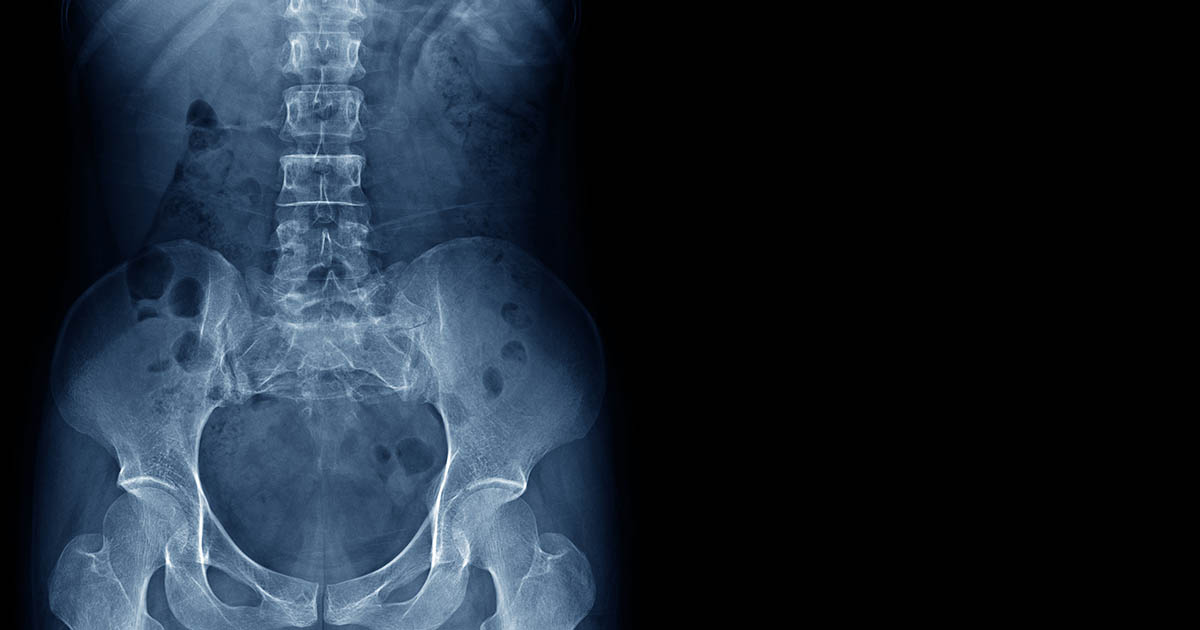


The quadratus lumborum sits at the back of your abdominal cavity, running from the top of your pelvis (the iliac crest) up to your lumbar vertebrae and 12th rib on each side. It is technically a posterior abdominal wall muscle, not a back muscle in the way people usually picture it, which is part of why it gets missed. Most patients who come into our Lakewood Ranch office with one-sided lower back pain have already been told it is their disc, or their kidney, or "just a muscle strain" without any further specifics. Sometimes those diagnoses are right. When the pain pattern fits the quadratus lumborum (usually called the QL) and nothing else has fully explained it, identifying the right target makes a real difference in how the case resolves.
This post explains what the QL does, why it develops trigger points, how to recognize its signature pain pattern, and what actually moves the needle compared to the usual rest-and-Advil approach. If you have had persistent side back pain and no one has examined this muscle specifically, keep reading. Back pain at our clinic always starts with identifying the actual driver, not just the symptom.
What the Quadratus Lumborum Actually Does
The QL has three main jobs, and it never gets a full day off. First, it laterally flexes the trunk, meaning it bends you sideways. Second, it hikes the hip, lifting one side of the pelvis to help your opposite foot clear the ground when you walk. Third, it acts as a lateral stabilizer for the lumbar spine, a guy-wire holding the spine upright against gravity when you reach, carry, or lean in any direction.
Because it is active in nearly every upright movement, the QL is one of the most consistently loaded muscles in the body. Pick up a bag of groceries in your right hand: the left QL fires to keep you from tilting. Reach across your body to buckle a seatbelt: one QL lengthens while the other contracts. Stand on one leg while you put on a shoe: both QLs are working hard. The muscle rarely gets to reset, which means chronic overloading and micro-strain accumulate faster than in muscles that get genuine rest.
Over time, that accumulated strain leads to what are called trigger points: hyper-irritable, contracted spots within the muscle fiber that do not fully relax. Trigger points in the QL refer pain to predictable zones, often far from where the trigger point itself sits. This referred pattern is what makes QL pain confusing, and it is well-documented in the clinical literature on musculoskeletal pain.
Why QL Trigger Points Produce That Stubborn One-Sided Ache
The QL's referral zones overlap with several other common diagnoses, which is exactly why it gets misidentified. Trigger points in the upper fibers typically refer pain toward the SI joint and deep into the buttock on the same side. Trigger points in the lower fibers send pain along the outer hip and sometimes into the groin. The characteristic low-level, constant ache just above the beltline on one side, worse when sitting for a while and then standing, is one of the QL's cleaner patterns.
The QL's referral zones overlap with sciatica, SI joint pain, hip bursitis, and kidney discomfort. That overlap is the main reason it gets missed. Most routine exams do not include direct palpation of this deep muscle, so unless someone is specifically looking for it, the QL stays below the radar.
The "can't stand up straight right after sitting" complaint deserves its own mention because it is so specific. When the QL is tight and loaded with trigger points, it pulls the pelvis and lumbar spine into a slight lateral tilt on the involved side. Straightening up after sitting requires lengthening that contracted muscle, and for the first few seconds the muscle resists. Patients often describe it as feeling like something is "stuck" or "catching" before they can fully extend. Once they walk around for a minute or two, the muscle warms up and it eases. That sequence, stuck on rising then loosening with movement, is a QL tell.
Disc pain, by contrast, usually worsens with prolonged standing and certain bending directions, and does not have that characteristic warmup pattern. True sciatica typically radiates below the knee and follows a dermatomal distribution. SI joint pain tends to hurt with activities like climbing stairs one step at a time or sitting with weight on one side. The QL can mimic all of these, but its own pattern is identifiable when examined properly.
Signs That Point to the QL
Not every one-sided back pain is the QL, and the muscle is rarely the only structure involved. That said, the following pattern points strongly toward QL involvement and is worth specifically mentioning to any provider you see:
- Pain on one side only, typically 1 to 3 inches lateral to the spine, above the beltline
- Stiffness on rising from a chair or from lying down, that loosens within 1 to 2 minutes of walking
- Difficulty rolling over in bed, particularly a sharp catch on the painful side
- Deep buttock ache on the same side that intensifies after long sitting
- Outer hip pain that is not associated with a labral problem or bursitis history
- Pain that worsens when you carry something on the opposite side (because the painful QL fires harder to counterbalance the load)
- No neurological symptoms below the knee: if pain radiates to the foot with numbness or tingling, a disc or nerve root cause needs to be ruled out first
The last point matters. If you have numbness, tingling, or weakness in the foot or lower leg along with back pain, that is a different clinical picture and warrants an evaluation that includes a neurological screen before anything else. QL pain alone does not cause foot drop or pins-and-needles below the knee.
Common Triggers We See in Lakewood Ranch Patients
Most QL problems do not come from a single dramatic injury. They build up. The most common setups we see:
- Prolonged sitting with a wallet in the back pocket, which puts a constant lateral tilt through the pelvis and loads one QL more than the other every time the person sits. Remove the wallet and sit on a level surface: this alone has resolved some cases.
- A leg length discrepancy, even a quarter-inch difference, forces one QL to hike the hip with every step. The asymmetry adds up over thousands of steps a day. A small heel lift on the short-leg side changes the loading pattern significantly.
- Sleeping on a sagging mattress that lets the hips sink below the shoulders, pulling the lumbar spine into lateral flexion for 7 hours a night. Both QLs try to resist the sag and neither succeeds; both accumulate trigger points.
- Repetitive lateral-motion sports: pickleball, tennis, golf, and racquetball all involve rapid hip hiking and trunk rotation. The QL takes the brunt of deceleration loads that the larger erector muscles miss.
- Asymmetric carrying habits: bags always on one shoulder, a toddler always on the same hip, carrying a toolbox in the same hand every day. The loaded side's QL works harder over months until it maxes out.
- Post-disc injury splinting: the QL tightens to protect an injured lumbar disc or SI joint and often stays locked long after the original injury has resolved, becoming the new pain source while the original injury heals.
For patients dealing with a disc component alongside QL strain, we often sequence treatment to address both: spinal decompression for the disc, and direct soft tissue and adjustment work for the QL. Treating only the disc while the QL is in spasm, or treating only the QL while an injured disc is still inflamed, tends to produce slow and frustrating progress.
What Helps (and What Just Manages the Pain)
Heat feels good on the QL because it increases local blood flow and relaxes the superficial muscles overlying it. But the QL is a deep muscle. A heating pad does not penetrate to where the trigger points are, which means heat is mostly symptom management rather than resolution. The same is true of over-the-counter anti-inflammatories for QL trigger points: inflammation is not the primary mechanism in a trigger point, so anti-inflammatories provide some comfort but do not change the underlying muscle hypertonicity. People who report "I've been taking ibuprofen for two weeks and it just keeps coming back" are usually describing a QL or deep muscle pattern rather than an acute inflammatory injury.
Stretching helps more than heat alone, but only if it addresses the right motion. The QL lengthens with contralateral lateral flexion (leaning away from the painful side) and with ipsilateral hip drop. Many people who stretch for QL pain are doing exercises that target the erectors or the hip flexors, which do not meaningfully load the QL at all. A physical therapist or chiropractor who has specifically identified the QL can show you the two or three stretches that actually reach it.
What moves the needle most, in our clinical experience with back pain in Lakewood Ranch: direct trigger point work (manual pressure on the specific hyper-irritable points in the QL to induce a release), chiropractic adjustment of the lumbar segments and pelvis to restore normal joint mechanics (which takes the protective hypertonicity signal off the QL), and Class IV laser therapy to the deep muscle to reduce local hypertonicity and accelerate tissue recovery. For patients where leg length discrepancy is confirmed, a corrective lift is added. Rehabilitative exercises to strengthen the QL bilaterally in a controlled way come later, after the acute trigger point pattern has cleared, not during the acute phase.
How We Evaluate QL Pain at the Clinic
When a new patient at Spine and Wellness Center Lakewood Ranch presents with one-sided back pain, Dr. Banman does not start by pointing at an imaging report. He starts with motion analysis: watching how the patient stands, how they walk, how they transition from sitting to standing. Asymmetric hip drop during gait, a visible lateral lean when standing still, or a compensated Trendelenburg pattern all point toward QL involvement before a single palpation happens.
Direct palpation of the QL is the next step. The muscle is accessible from the lateral approach (roughly at the level of the posterior iliac crest, slightly medial to the PSIS and lateral to the lumbar transverse processes). Significant tenderness on palpation, reproduction of the patient's familiar pain, or a palpable ropy band in the muscle all confirm that the QL is involved. Orthopedic and neurological testing rules out disc or nerve root causes, and leg length assessment is standard in our back pain intake for exactly the reason described above.
Treatment planning at that point is straightforward. For patients whose primary driver is the QL with associated lumbar joint dysfunction, most people start feeling meaningful improvement within the first two to four visits. For cases where there is also a disc component or a longer-standing structural asymmetry, the timeline is longer but still structured around a specific endpoint rather than open-ended maintenance. If you are in Lakewood Ranch, Bradenton, or Sarasota with persistent one-sided back pain that has not been fully explained, give us a call. Dr. Banman has 23-plus years of this type of evaluation, and getting the right answer early saves a lot of time and frustration.